
Numbers 22:32
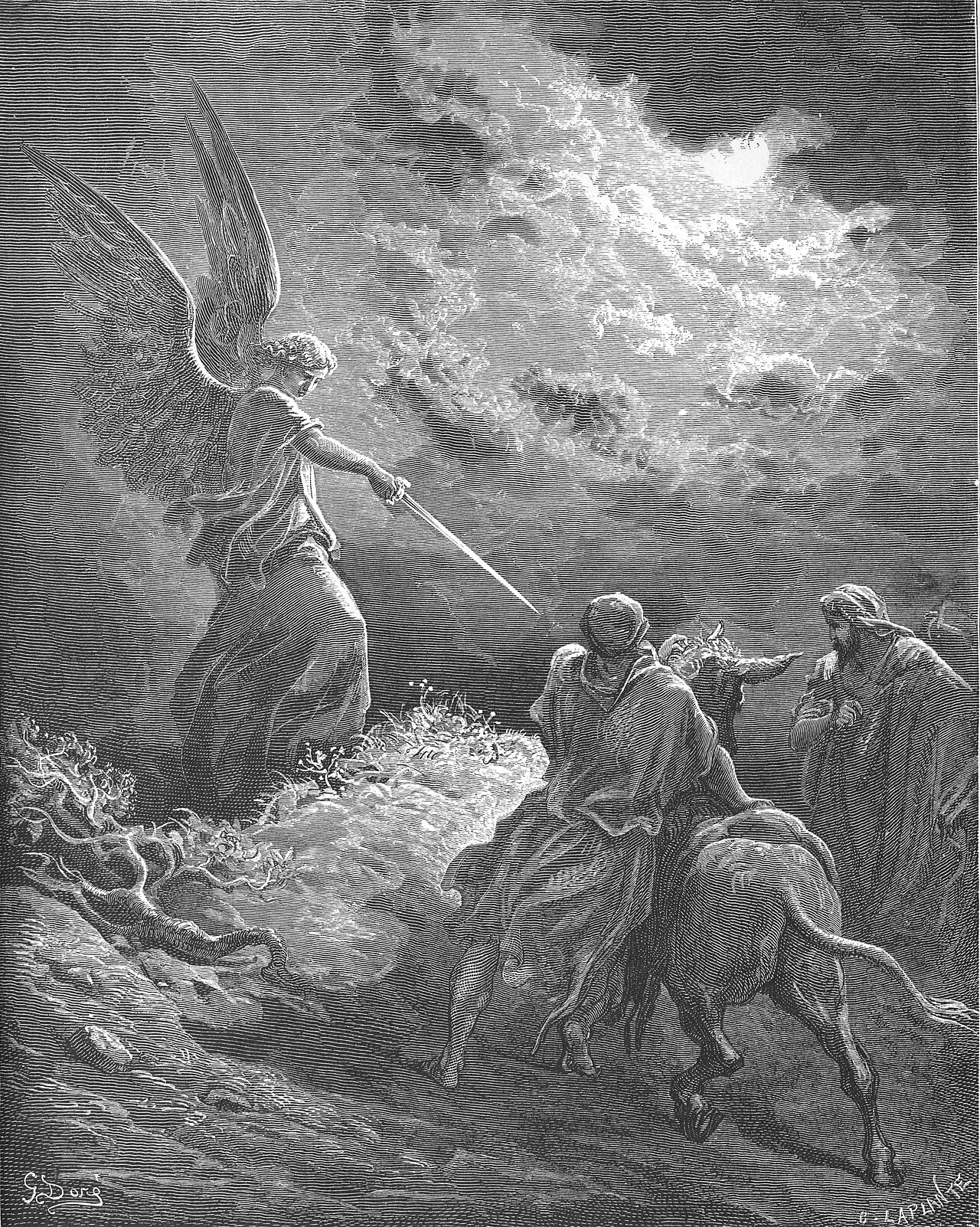
in Numbers 22The angel of the LORD asked him, “Why have you beaten your donkey these three times? Behold, I have come out to oppose you, because your way is perverse before me.
BSB
The same verse in ASV and KJV ▾
ASV
And the angel of Jehovah said unto him, Wherefore hast thou smitten thine ass these three times? behold, I am come forth for an adversary, because thy way is perverse before me:
KJV
And the angel of the Lord said unto him, Wherefore hast thou smitten thine ass these three times? behold, I went out to withstand thee, because thy way is perverse before me:
⋯
This verse in Numbers 22
Commentary
5 notes on this verseThis site's exposition
Then the LORD opened Balaam’s eyes
on Numbers 22:31-33
Both openings read opened, though the Hebrew uses one verb for a mouth and another for uncovering eyes. The seer needed his own eyes uncovered by God. He ends facedown before a figure his donkey had watched three times.
This site's exposition
your way is perverse before me
The angel's first question is about the donkey. Matthew Henry takes it that God calls men to account for the abuse of His creatures. Albert Barnes renders perverse as headlong and sets it beside 2 Peter 2:16 and the prophet's madness, a rider hurrying where he should not go.
The record, by era
The Puritans and the Awakening2 voices
And the angel of the Lord said unto him,....
Note, When our eyes are opened we shall see what danger we are in in a sinful way, and how much it was for our advantage to be crossed in it, and what fools we were to quarrel with our crosses which helped to save our lives.
The Nineteenth Century1 voice
A commentator
Albert Barnes1798–1870
Notes, Explanatory and Practical, on the Old and New Testaments (1832-1869)
proposed
Is perverse - Rather, is headlong. Compare Peter’s words 2Pe 2:16, “the madness of the prophet.”
The words behind it
20 Hebrew wordsEvery Hebrew word of this verse in the order it stands, with what it means and the door to its own study. The last column counts the times a word stands in the whole Bible: the rarer the word, the more the places it appears belong together.
| Hebrew | Sound | Meaning | Word study | In the Bible |
|---|---|---|---|---|
| וַיֹּ֤אמֶר | vaiyomer | and he said | H559 → | 5305 times |
| אֵלָיו֙ | ʾelav | to him | H413 → | 5510 times |
| מַלְאַ֣ךְ | malakh | [the] angel of | H4397 → | 213 times |
| יְהוָ֔ה | yahweh | Yahweh | H3068 → | 6520 times |
| עַל־ | ʾal- | concerning | H5921 → | 5755 times |
| מָ֗ה | mah | what? | H4100 → | 752 times |
| הִכִּ֙יתָ֙ | hikita | did you strike | H5221 → | 499 times |
| אֶת־ | ʾet- | <obj.> | H853 → | 10935 times |
| אֲתֹ֣נְךָ֔ | ʾatonekha | female donkey your | H860 → | 34 times |
| זֶ֖ה | zeh | this | H2088 → | 1180 times |
| שָׁל֣וֹשׁ | shaloosh | three | H7969 → | 432 times |
| רְגָלִ֑ים | regalim | feet | H7272 → | 247 times |
| הִנֵּ֤ה | hineh | here! | H2009 → | 843 times |
| אָנֹכִי֙ | ʾanokhi | I | H595 → | 359 times |
| יָצָ֣אתִי | yatzati | I came out | H3318 → | 1067 times |
| לְשָׂטָ֔ן | lesatan | to an adversary | H7854 → | |
| כִּֽי־ | ki- | for | H3588 → | 4482 times |
| יָרַ֥ט | yarat | it is precipitate | H3399 → | |
| הַדֶּ֖רֶךְ | haderekh | the way | H1870 → | 707 times |
| לְנֶגְדִּֽי׃ | lenegdi | to before me | H5048 → | 151 times |
וַיֹּ֤אמֶרand he said
vaiyomerH559 →5305 times
אֵלָיו֙to him
ʾelavH413 →5510 times
מַלְאַ֣ךְ[the] angel of
malakhH4397 →213 times
יְהוָ֔הYahweh
yahwehH3068 →6520 times
עַל־concerning
ʾal-H5921 →5755 times
מָ֗הwhat?
mahH4100 →752 times
הִכִּ֙יתָ֙did you strike
hikitaH5221 →499 times
אֶת־<obj.>
ʾet-H853 →10935 times
אֲתֹ֣נְךָ֔female donkey your
ʾatonekhaH860 →34 times
זֶ֖הthis
zehH2088 →1180 times
שָׁל֣וֹשׁthree
shalooshH7969 →432 times
רְגָלִ֑יםfeet
regalimH7272 →247 times
הִנֵּ֤הhere!
hinehH2009 →843 times
אָנֹכִי֙I
ʾanokhiH595 →359 times
יָצָ֣אתִיI came out
yatzatiH3318 →1067 times
לְשָׂטָ֔ןto an adversary
lesatanH7854 →
כִּֽי־for
ki-H3588 →4482 times
יָרַ֥טit is precipitate
yaratH3399 →
הַדֶּ֖רֶךְthe way
haderekhH1870 →707 times
לְנֶגְדִּֽי׃to before me
lenegdiH5048 →151 times
A shaded row is a word that stands 400 times or fewer in the Bible.
The walk
8 stopsEach card is a verse this one points to, and under it the verses that one points to in turn. Where several paths arrive at the same place, that place is listed first: the text keeps returning to it.
Through
Proverbs 28:18He who walks with integrity will be kept safe, but whoever is perverse in his ways will suddenly fall.
it leads to
- Proverbs 28:6
Better a poor man who walks with integrity than a rich man whose ways are perverse.
Reached by 2 separate paths from here.
- Proverbs 10:9
He who walks in integrity walks securely, but he who perverts his ways will be found out.
- Proverbs 28:6
Through
Acts 13:10and said, “O child of the devil and enemy of all righteousness, you are full of all kinds of deceit and trickery! Will you never stop perverting the straight ways of the Lord?
it leads to
- John 8:44
You belong to your father, the devil, and you want to carry out his desires. He was a murderer from the beginning, refusing to uphold the truth, because there is no truth in him.…
- Matthew 13:38
The field is the world, and the good seed represents the sons of the kingdom. The weeds are the sons of the evil one,
- 2 Corinthians 11:3
I am afraid, however, that just as Eve was deceived by the serpent’s cunning, your minds may be led astray from your simple and pure devotion to Christ.
- John 8:44
Through
Proverbs 28:6Better a poor man who walks with integrity than a rich man whose ways are perverse.
it leads to
- Proverbs 19:1
Better a poor man who walks with integrity than a fool whose lips are perverse.
- Luke 16:19–23
Now there was a rich man dressed in purple and fine linen, who lived each day in joyous splendor.
- Proverbs 28:18
He who walks with integrity will be kept safe, but whoever is perverse in his ways will suddenly fall.
- Proverbs 19:1
Where this verse is studied
On this page
Studies6
On this verse
On this chapter
About Numbers
This page draws on Adam Clarke, Commentary on the Bible; Albert Barnes, Notes, Explanatory and Practical, on the Old and New Testaments (1832-1869); John Gill, Exposition of the Old Testament (1748-1763); Keil and Delitzsch, Biblical Commentary on the Old Testament: The Pentateuch; Matthew Henry, Complete Commentary and Matthew Henry, Commentary on the Whole Bible.