
Numbers 22:25
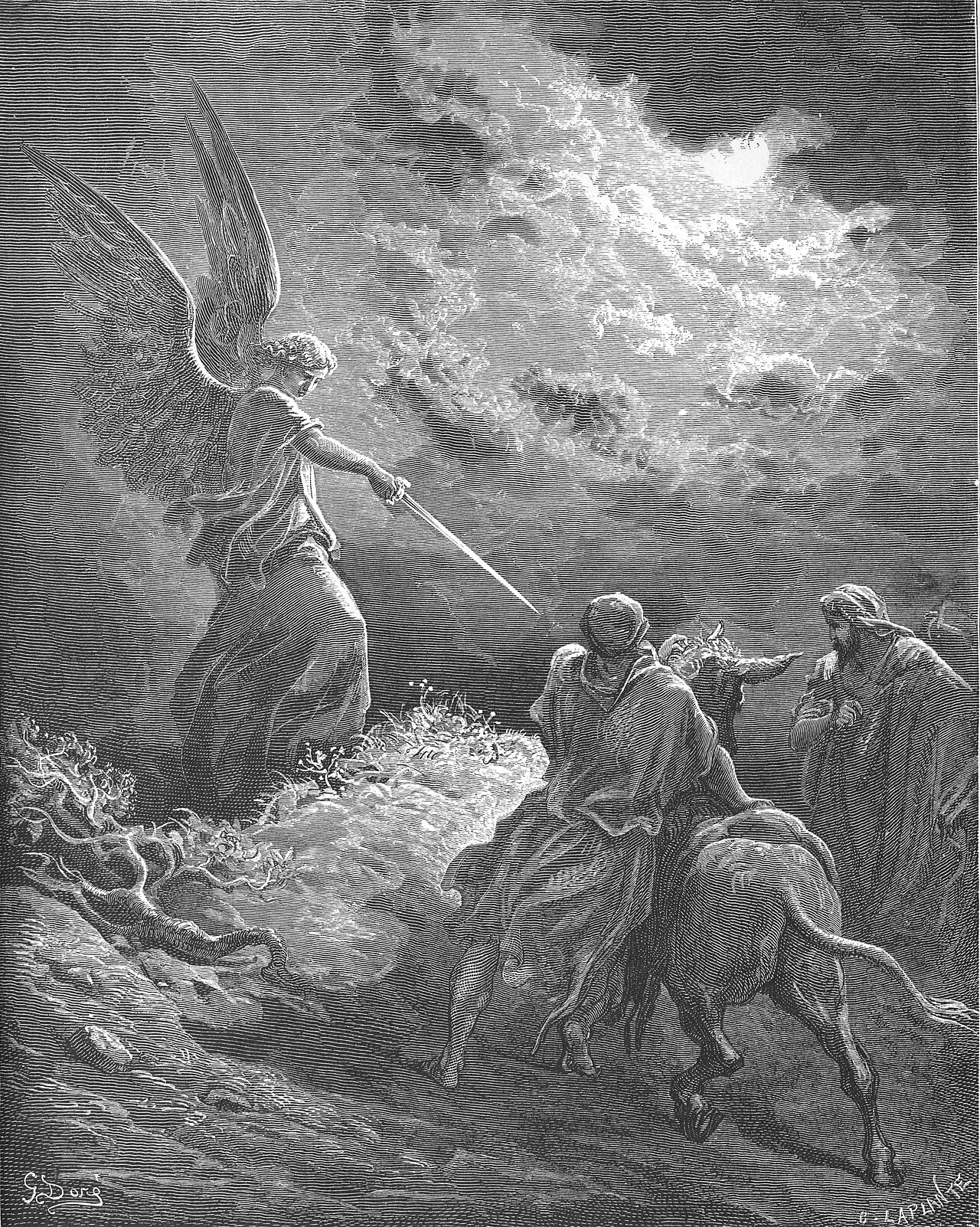
in Numbers 22And the donkey saw the angel of the LORD and pressed herself against the wall, crushing Balaam’s foot against it. So he beat her once again.
BSB
The same verse in ASV and KJV ▾
ASV
And the ass saw the angel of Jehovah, and she thrust herself unto the wall, and crushed Balaam’s foot against the wall: and he smote her again.
KJV
And when the ass saw the angel of the Lord, she thrust herself unto the wall, and crushed Balaam’s foot against the wall: and he smote her again.
⋯
This verse in Numbers 22
Commentary
6 notes on this verseThis site's exposition
she turned off the path and went into a field
on Numbers 22:23-25
The space tightens with each obstruction, first open field, then a path between two vineyard walls where a foot gets crushed. Each time the animal saves his life she is beaten for it. A man hired for his sight is riding a beast that sees what he cannot.
This site's exposition
crushing Balaam’s foot against it
The crushed foot saved Balaam's life, yet Matthew Henry notes that it only angered him. He draws from it that a mishap on the road should make a traveller ask whether his way is right. Adam Clarke quotes Ainsworth, who reads it as a light correction before a heavier one.
The record, by era
The Church Fathers1 voice
Now what was the guilt which Balaam incurred, but that he spoke one thing, and designed another? For God requires a clean vessel, not one defiled by uncleanness and pollution. Balaam therefore was tried, not approved, for he was full of deceit and treachery.
The Medieval Church1 voice
The sick are to be admonished to consider how great health of the heart is in bodily affliction, which recalls the mind to knowledge of itself, and renews the memory of infirmity which health for the most part casts away, so that the spirit, which is carried out of itself into elation, may be reminded by the smitten flesh from which it suffers to what condition it is subject. Which thing is rightly signified to Balaam (had he but been willing to follow obediently the voice of God) in the very retardation of his journey. For Balaam is on his way to attain his purpose; but the animal which is under him thwarts his desire. The ass, stopped by the prohibition, sees an angel which the human mind sees not; because for the most part the flesh, slow through afflictions, indicates to the mind from the scourge which it endures the God whom the mind itself which has the flesh under it did not see, in such sort as to impede the eagerness of the spirit which desires to advance in this world as though proceeding on a journey, until it makes known to it the invisible one who stands in its way.
The Puritans and the Awakening2 voices
And when the ass saw the angel of the Lord,....
The crushing of Balaam's foot, though it was the saving of his life, provoked him so much that he smote his ass the second time, so angry are we apt to be at that which, though a present uneasiness, yet is a real kindness.
The words behind it
16 Hebrew wordsEvery Hebrew word of this verse in the order it stands, with what it means and the door to its own study. The last column counts the times a word stands in the whole Bible: the rarer the word, the more the places it appears belong together.
| Hebrew | Sound | Meaning | Word study | In the Bible |
|---|---|---|---|---|
| וַתֵּ֨רֶא | vatere' | and it saw | H7200 → | 1300 times |
| הָאָת֜וֹן | haaton | the donkey | H860 → | 34 times |
| אֶת־ | ʾet- | <obj.> | H853 → | 10935 times |
| מַלְאַ֣ךְ | malakh | [the] angel of | H4397 → | 213 times |
| יְהוָ֗ה | yahweh | Yahweh | H3068 → | 6520 times |
| וַתִּלָּחֵץ֙ | vatilachetz | and it squeezed itself | H3905 → | |
| אֶל־ | ʾel- | to | H413 → | 5510 times |
| הַקִּ֔יר | hakir | the wall | H7023 → | 75 times |
| וַתִּלְחַ֛ץ | vatilchatz | and it squeezed | H3905 → | |
| אֶת־ | ʾet- | <obj.> | H853 → | 10935 times |
| רֶ֥גֶל | regel | [the] foot of | H7272 → | 247 times |
| בִּלְעָ֖ם | bilam | Balaam | H1109 → | 61 times |
| אֶל־ | ʾel- | to | H413 → | 5510 times |
| הַקִּ֑יר | hakir | the wall | H7023 → | 75 times |
| וַיֹּ֖סֶף | vaiyosef | and he repeated | H3254 → | 212 times |
| לְהַכֹּתָֽהּ׃ | lehakotah | to strike it | H5221 → | 499 times |
וַתֵּ֨רֶאand it saw
vatere'H7200 →1300 times
הָאָת֜וֹןthe donkey
haatonH860 →34 times
אֶת־<obj.>
ʾet-H853 →10935 times
מַלְאַ֣ךְ[the] angel of
malakhH4397 →213 times
יְהוָ֗הYahweh
yahwehH3068 →6520 times
וַתִּלָּחֵץ֙and it squeezed itself
vatilachetzH3905 →
אֶל־to
ʾel-H413 →5510 times
הַקִּ֔ירthe wall
hakirH7023 →75 times
וַתִּלְחַ֛ץand it squeezed
vatilchatzH3905 →
אֶת־<obj.>
ʾet-H853 →10935 times
רֶ֥גֶל[the] foot of
regelH7272 →247 times
בִּלְעָ֖םBalaam
bilamH1109 →61 times
אֶל־to
ʾel-H413 →5510 times
הַקִּ֑ירthe wall
hakirH7023 →75 times
וַיֹּ֖סֶףand he repeated
vaiyosefH3254 →212 times
לְהַכֹּתָֽהּ׃to strike it
lehakotahH5221 →499 times
A shaded row is a word that stands 400 times or fewer in the Bible.
The walk
5 stopsEach card is a verse this one points to, and under it the verses that one points to in turn. Where several paths arrive at the same place, that place is listed first: the text keeps returning to it.
Through
Isaiah 47:12So take your stand with your spells and with your many sorceries, with which you have wearied yourself from your youth. Perhaps you will succeed; perhaps you will inspire terror!
it leads to
- Acts 13:8–12
But Elymas the sorcerer (for that is what his name means) opposed them and tried to turn the proconsul from the faith.
- Nahum 3:4
because of the many harlotries of the harlot, the seductive mistress of sorcery, who betrays nations by her prostitution and clans by her witchcraft.
- Isaiah 47:9–10
These two things will overtake you in a moment, in a single day: loss of children, and widowhood. They will come upon you in full measure, in spite of your many sorceries and the…
- Jeremiah 2:28
But where are the gods you made for yourselves? Let them rise up in your time of trouble and save you if they can; for your gods are as numerous as your cities, O…
- Isaiah 19:3
Then the spirit of the Egyptians will be emptied out from among them, and I will frustrate their plans, so that they will resort to idols and spirits of the dead, to mediums and…
- Acts 13:8–12
Where this verse is studied
On this page
About Numbers
This page draws on Adam Clarke, Commentary on the Bible; Ambrose of Milan, Letters 41-50; Gregory the Dialogist, The Book of Pastoral Rule, Part 3; John Gill, Exposition of the Old Testament; John Gill, Exposition of the Old Testament (1748-1763); Matthew Henry, Commentary on the Whole Bible and Matthew Henry, Complete Commentary.