
Numbers 22:12
in Numbers 22But God said to Balaam, “Do not go with them. You are not to curse this people, for they are blessed.”
BSB
The same verse in ASV and KJV ▾
ASV
And God said unto Balaam, Thou shalt not go with them; thou shalt not curse the people; for they are blessed.
KJV
And God said unto Balaam, Thou shalt not go with them; thou shalt not curse the people: for they are blessed.
⋯
This verse in Numbers 22
Commentary
5 notes on this verseThou shalt not go with them; thou shalt not curse the people - That is, Thou shalt not go with them to curse the people. With them he might go, as we find he afterwards did by God’s own command, but not to curse the people; this was wholly forbidden. Probably the command, Thou shalt not go, refers here to that time, viz., the first invitation: and in this sense it was most punctually obeyed by Balaam; see Num 22:13.
This site's exposition
And Balaam said unto God
on Numbers 22:10-12
He repeats Balak's message and drops the end of it, keeping the request to curse and leaving out the king's confession that whom Balaam blesses is blessed. God answers in three parts inside one verse, do not go, do not curse, and the ground of both, for they are blessed. The ground is the point, since the blessing on that people was Abraham's and no fee alters it.
The record, by era
The Puritans and the Awakening2 voices
And God said unto Balaam, thou shalt not go with them,.... Which is a denial of the first thing Balak requested, "come now, therefore", &c.
The blessedness of those whose sin is covered comes upon them, Rom. iv. The return of the messengers without Balaam. Balaam is not faithful in returning God's answer to the messengers,
The Nineteenth Century1 voice
A commentator
Jamieson, Fausset & Brown1802–1910
Commentary Critical and Explanatory on the Whole Bible (1871)
His real character has long been a subject of discussion. Some, judging from his language, have thought him a saint; others, looking to his conduct, have described him as an irreligious charlatan; and a third class consider him a novice in the faith, who had a fear of God, but who had not acquired power over his passions [HENGSTENBERG].
How the passage was read
What the Jewish commentators add
On the verses either side of this one
[AND BALAAM ROSE UP IN THE MORNING, AND SAID] UNTO THE PRINCES OF BALAK. According to the opinion of Rashi. Above, in Verse. the elders of Midian had left [Balaam] when he told them, Lodge here this night. Verse.
This section is reception history: how the passage was read and kept in the Jewish tradition. Where a reading parts from an essential of the Christian faith, the section says so at that point.
Texts and citation data: Sefaria; each excerpt follows its version’s licence. 5 further sources are cited on this chapter that carry no English text this site may quote or only restate the verse.
The words behind it
14 Hebrew wordsEvery Hebrew word of this verse in the order it stands, with what it means and the door to its own study. The last column counts the times a word stands in the whole Bible: the rarer the word, the more the places it appears belong together.
| Hebrew | Sound | Meaning | Word study | In the Bible |
|---|---|---|---|---|
| וַיֹּ֤אמֶר | vaiyomer | and he said | H559 → | 5305 times |
| אֱלֹהִים֙ | ʾelohim | God | H430 → | 2601 times |
| אֶל־ | ʾel- | to | H413 → | 5510 times |
| בִּלְעָ֔ם | bilam | Balaam | H1109 → | 61 times |
| לֹ֥א | lo' | not | H3808 → | 5168 times |
| תֵלֵ֖ךְ | telekh | you will go | H1980 → | 1546 times |
| עִמָּהֶ֑ם | ʾimahem | with them | H5973 → | 1050 times |
| לֹ֤א | lo' | not | H3808 → | 5168 times |
| תָאֹר֙ | taor | you will curse | H779 → | 63 times |
| אֶת־ | ʾet- | <obj.> | H853 → | 10935 times |
| הָעָ֔ם | haam | the people | H5971 → | 1873 times |
| כִּ֥י | ki | for | H3588 → | 4482 times |
| בָר֖וּךְ | varukh | [is] blessed | H1288 → | 330 times |
| הֽוּא׃ | hu' | it | H1931 → | 1879 times |
וַיֹּ֤אמֶרand he said
vaiyomerH559 →5305 times
אֱלֹהִים֙God
ʾelohimH430 →2601 times
אֶל־to
ʾel-H413 →5510 times
בִּלְעָ֔םBalaam
bilamH1109 →61 times
לֹ֥אnot
lo'H3808 →5168 times
תֵלֵ֖ךְyou will go
telekhH1980 →1546 times
עִמָּהֶ֑םwith them
ʾimahemH5973 →1050 times
לֹ֤אnot
lo'H3808 →5168 times
תָאֹר֙you will curse
taorH779 →63 times
אֶת־<obj.>
ʾet-H853 →10935 times
הָעָ֔םthe people
haamH5971 →1873 times
כִּ֥יfor
kiH3588 →4482 times
בָר֖וּךְ[is] blessed
varukhH1288 →330 times
הֽוּא׃it
hu'H1931 →1879 times
A shaded row is a word that stands 400 times or fewer in the Bible.
The walk
8 stopsEach card is a verse this one points to, and under it the verses that one points to in turn. Where several paths arrive at the same place, that place is listed first: the text keeps returning to it.
Through
Ephesians 1:3Blessed be the God and Father of our Lord Jesus Christ, who has blessed us in Christ with every spiritual blessing in the heavenly realms.
it leads to
- 1 Peter 1:3
Blessed be the God and Father of our Lord Jesus Christ! By His great mercy He has given us new birth into a living hope through the resurrection of Jesus Christ from the dead,
- 2 Corinthians 1:3
Blessed be the God and Father of our Lord Jesus Christ, the Father of compassion and the God of all comfort,
- Ephesians 2:6
And God raised us up with Christ and seated us with Him in the heavenly realms in Christ Jesus,
- Genesis 22:18
And through your offspring all nations of the earth will be blessed, because you have obeyed My voice.”
- Revelation 5:9–14
And they sang a new song: “Worthy are You to take the scroll and open its seals, because You were slain, and by Your blood You purchased for God those from every tribe and…
- 1 Peter 1:3
Through
Romans 11:29For God’s gifts and His call are irrevocable.
it leads to
- Hebrews 7:21
but Jesus became a priest with an oath by the One who said to Him: “The Lord has sworn and will not change His mind: ‘You are a priest forever.’”
- Numbers 23:19
God is not a man, that He should lie, or a son of man, that He should change His mind. Does He speak and not act? Does He promise and not fulfill?
- Hebrews 7:21
Through
Genesis 12:2I will make you into a great nation, and I will bless you; I will make your name great, so that you will be a blessing.
it leads to
- 2 Samuel 7:9
I have been with you wherever you have gone, and I have cut off all your enemies from before you. Now I will make for you a name like the greatest in the land.
- 2 Samuel 7:9
Where this verse is studied
On this page
About Numbers
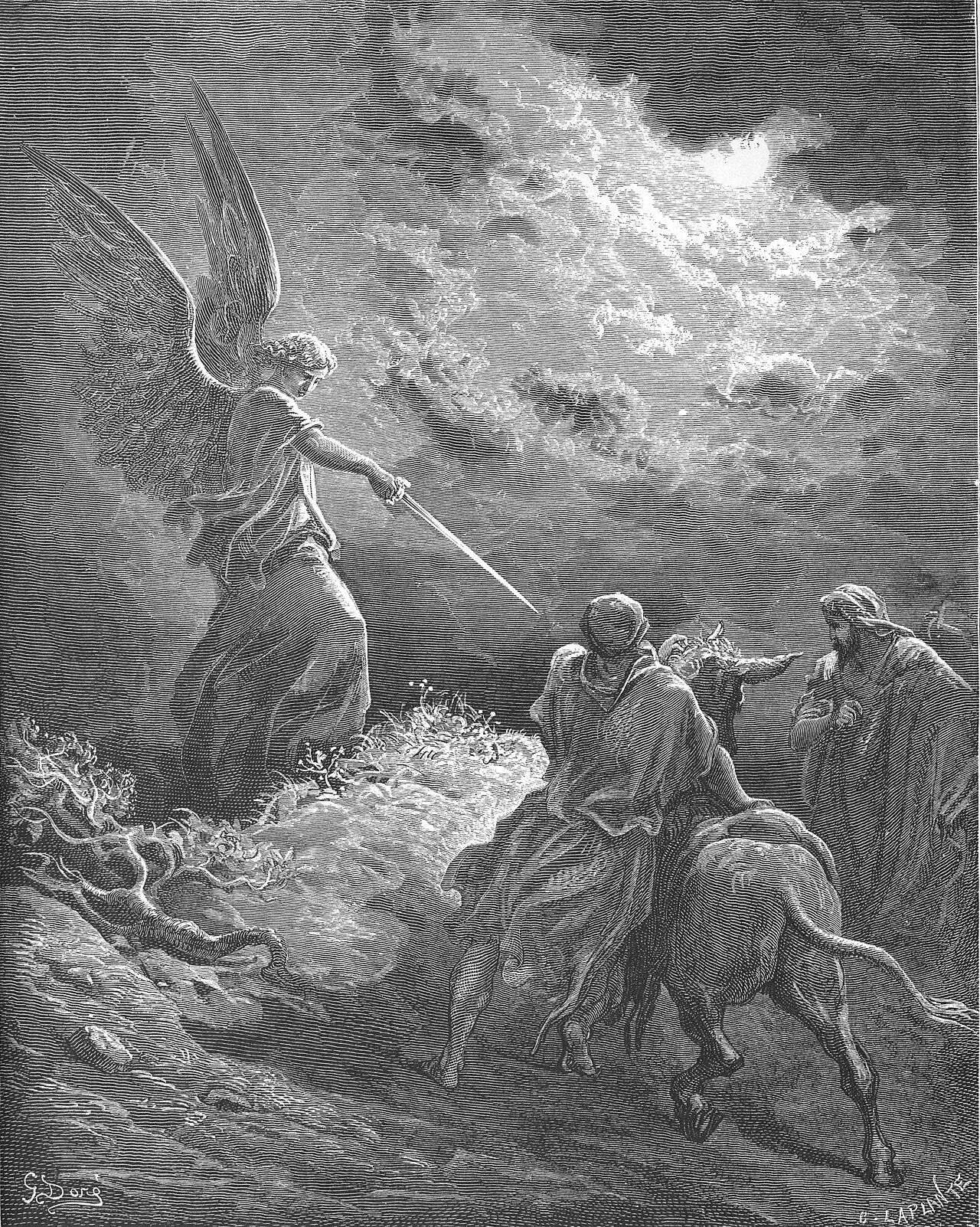
This page draws on Adam Clarke, Commentary on the Bible; Jamieson, Fausset & Brown, Commentary Critical and Explanatory on the Whole Bible; John Gill, Exposition of the Old Testament (1748-1763); Keil and Delitzsch, Biblical Commentary on the Old Testament: The Pentateuch and Matthew Henry, Commentary on the Whole Bible.