
Numbers 13:18
in Numbers 13See what the land is like and whether its people are strong or weak, few or many.
BSB
The same verse in ASV and KJV ▾
ASV
and see the land, what it is; and the people that dwell therein, whether they are strong or weak, whether they are few or many;
KJV
And see the land, what it is; and the people that dwelleth therein, whether they be strong or weak, few or many;
⋯
This verse in Numbers 13
Commentary
4 notes on this verseThis site's exposition
Go up through the Negev and into the hill country
on Numbers 13:17-20
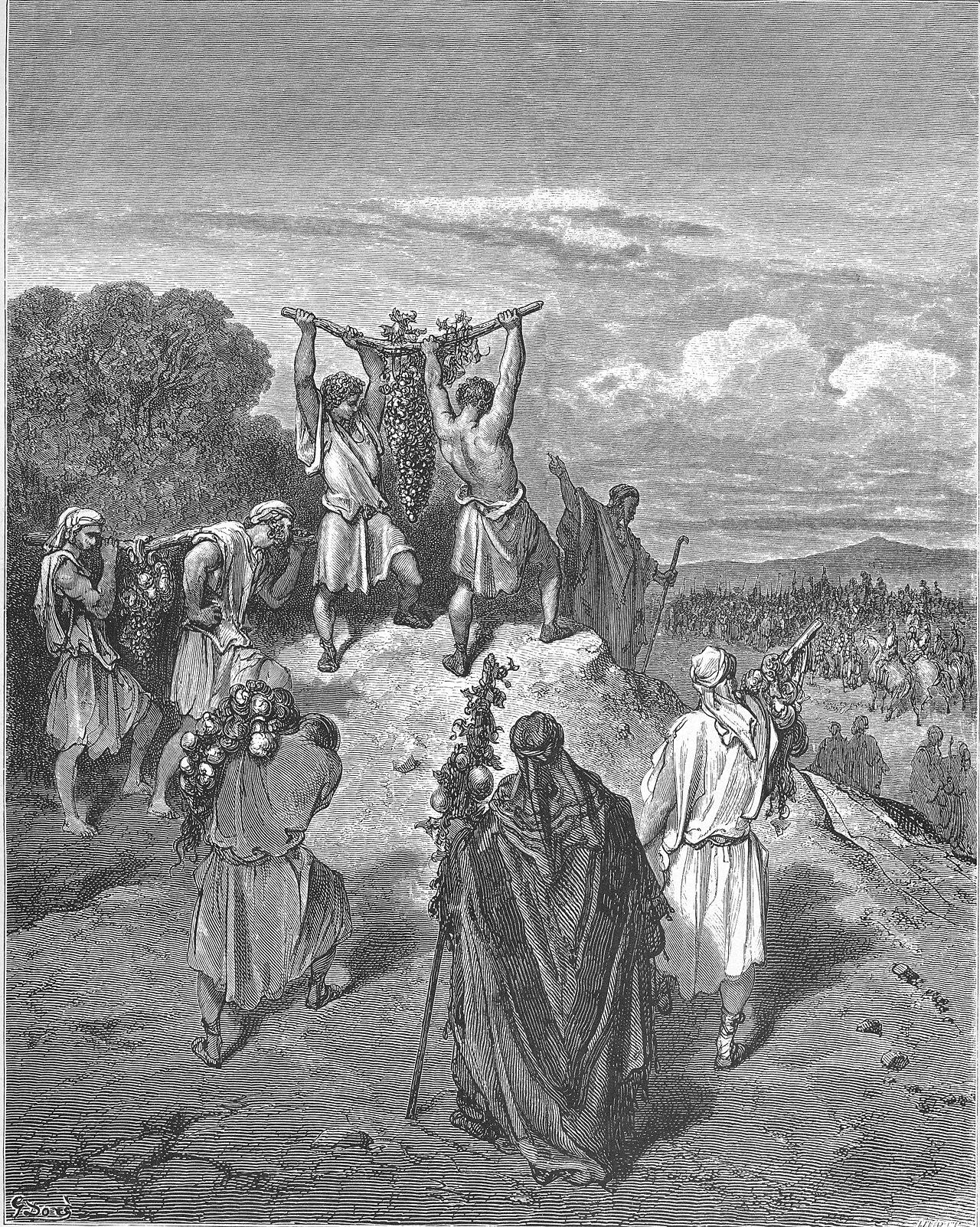
The brief is a set of questions about the land and its people, strong or weak, few or many, good or bad. Every one is answered accurately at verses 27 to 29, and the quarrel at verse 31 is over what the answers mean. Moses adds Be courageous, and Jamieson, Fausset and Brown place the season for the first ripe grapes in August.
This site's exposition
whether its people are strong or weak, few or many
Each question offers a pair, strong or weak, few or many, and every question measures the land and its people. The outcome is left to the promise of verse 2. Barnes traces the route through the Negev into the hill country of Judah and Ephraim, where these people lived.
The record, by era
The Puritans and the Awakening1 voice
And see the land what it is, and the people that dwelleth therein,....
The Nineteenth Century1 voice
See the land, what it is - What sort of a Country it is; how situated; its natural advantages or disadvantages. And the people - whether they be strong or weak - Healthy, robust, hardy men; or little, weak, and pusillanimous.
How the passage was read
What the Jewish commentators add
On the verses either side of this one
Rabbi Abraham ibn Ezra commented [that the meaning thereof is that they are to see] “if the Land is good, namely that its air is good, and its waters are good.” Then Moses continued, whether it is fat, 24 Further, Verse. meaning “capable of producing wheat” and many fruits.
This section is reception history: how the passage was read and kept in the Jewish tradition. Where a reading parts from an essential of the Christian faith, the section says so at that point.
Texts and citation data: Sefaria; each excerpt follows its version’s licence. 5 further sources are cited on this chapter that carry no English text this site may quote or only restate the verse.
The words behind it
16 Hebrew wordsEvery Hebrew word of this verse in the order it stands, with what it means and the door to its own study. The last column counts the times a word stands in the whole Bible: the rarer the word, the more the places it appears belong together.
| Hebrew | Sound | Meaning | Word study | In the Bible |
|---|---|---|---|---|
| וּרְאִיתֶ֥ם | ureitem | and you will see | H7200 → | 1300 times |
| אֶת־ | ʾet- | <obj.> | H853 → | 10935 times |
| הָאָ֖רֶץ | haaretz | the land | H776 → | 2504 times |
| מַה־ | mah- | what? | H4100 → | 752 times |
| הִ֑וא | hi' | [is] it | H1931 → | 1879 times |
| וְאֶת־ | veet | and <obj.> | H853 → | 10935 times |
| הָעָם֙ | haam | the people | H5971 → | 1873 times |
| הַיֹּשֵׁ֣ב | haiyoshev | which dwells | H3427 → | 1079 times |
| עָלֶ֔יהָ | ʾaleiha | on it | H5921 → | 5755 times |
| הֶחָזָ֥ק | hechazak | ¿ strong | H2389 → | 56 times |
| הוּא֙ | hu' | [is] it | H1931 → | 1879 times |
| הֲרָפֶ֔ה | harapeh | ¿ feeble | H7504 → | |
| הַמְעַ֥ט | hamat | ¿ few | H4592 → | 101 times |
| ה֖וּא | hu' | [is] it | H1931 → | 1879 times |
| אִם־ | ʾim- | or? | H518 → | 1069 times |
| רָֽב׃ | rav | many | H7227 → | 454 times |
וּרְאִיתֶ֥םand you will see
ureitemH7200 →1300 times
אֶת־<obj.>
ʾet-H853 →10935 times
הָאָ֖רֶץthe land
haaretzH776 →2504 times
מַה־what?
mah-H4100 →752 times
הִ֑וא[is] it
hi'H1931 →1879 times
וְאֶת־and <obj.>
veetH853 →10935 times
הָעָם֙the people
haamH5971 →1873 times
הַיֹּשֵׁ֣בwhich dwells
haiyoshevH3427 →1079 times
עָלֶ֔יהָon it
ʾaleihaH5921 →5755 times
הֶחָזָ֥ק¿ strong
hechazakH2389 →56 times
הוּא֙[is] it
hu'H1931 →1879 times
הֲרָפֶ֔ה¿ feeble
harapehH7504 →
הַמְעַ֥ט¿ few
hamatH4592 →101 times
ה֖וּא[is] it
hu'H1931 →1879 times
אִם־or?
ʾim-H518 →1069 times
רָֽב׃many
ravH7227 →454 times
A shaded row is a word that stands 400 times or fewer in the Bible.
The walk
8 stopsEach card is a verse this one points to, and under it the verses that one points to in turn. Where several paths arrive at the same place, that place is listed first: the text keeps returning to it.
Through
Exodus 3:8I have come down to rescue them from the hand of the Egyptians and to bring them up out of that land to a good and spacious land, a land flowing with milk and…
it leads to
- Genesis 50:24
Then Joseph said to his brothers, “I am about to die, but God will surely visit you and bring you up from this land to the land He promised on oath to Abraham, Isaac,…
- Exodus 3:17
And I have promised to bring you up out of your affliction in Egypt, into the land of the Canaanites, Hittites, Amorites, Perizzites, Hivites, and Jebusites—a land flowing with milk and honey.’
- Genesis 15:18–21
On that day the LORD made a covenant with Abram, saying, “To your descendants I have given this land—from the river of Egypt to the great River Euphrates—
- Deuteronomy 1:25
They took some of the fruit of the land in their hands, carried it down to us, and brought us word: “It is a good land that the LORD our God is giving us.”
- Exodus 13:5
And when the LORD brings you into the land of the Canaanites, Hittites, Amorites, Hivites, and Jebusites—the land He swore to your fathers that He would give you, a land flowing with milk and…
- Genesis 50:24
Through
Ezekiel 34:14I will feed them in good pasture, and the lofty mountains of Israel will be their grazing land. There they will lie down in a good grazing land; they will feed in rich pasture…
it leads to
- John 10:9
I am the gate. If anyone enters through Me, he will be saved. He will come in and go out and find pasture.
- Jeremiah 31:25
for I will refresh the weary soul and replenish all who are weak.”
- Psalms 23:1–2
The LORD is my shepherd; I shall not want.
- John 10:9
Where this verse is studied
About Numbers
This page draws on Adam Clarke, Commentary on the Bible; Albert Barnes, Notes, Explanatory and Practical, on the Old and New Testaments (1832-1869); Jamieson, Fausset & Brown, Commentary Critical and Explanatory on the Whole Bible and John Gill, Exposition of the Old Testament (1748-1763).