
Luke 10:27
in Luke 10He answered, “‘Love the Lord your God with all your heart and with all your soul and with all your strength and with all your mind’ and ‘Love your neighbor as yourself.’”
BSB
The same verse in ASV and KJV ▾
ASV
And he answering said, Thou shalt love the Lord thy God with all thy heart, and with all thy soul, and with all thy strength, and with all thy mind; and thy neighbor as thyself.
KJV
And he answering said, Thou shalt love the Lord thy God with all thy heart, and with all thy soul, and with all thy strength, and with all thy mind; and thy neighbour as thyself.
⋯
This verse in Luke 10
Commentary
31 notes on this verseFor he was one of those who think themselves skilled in the law, and who keep the letter of the law, while they know nothing of its spirit. From a part of the law itself our Lord proves them to be ignorant of the law, showing that at the very first the law preached the Father and the Son, and announced the sacraments of the Lord's Incarnation; for it follows, And he answering said, Thou shall love the Lord thy God with all thy heart, and with all thy soul, and with all thy strength, and with all thy mind.
This site's exposition
an expert in the law stood up to test Him
on Luke 10:25-28
Testing Him, an expert in the law asked about eternal life, a scholar probing a teacher without formal credentials. Sent back to his own text, he joined the Shema's love of God to the love of neighbor from Leviticus. Do this and you will live holds him to his answer.
This site's exposition
Love your neighbor as yourself
The lawyer joins two commands of the Law into one answer. Maximus the Confessor says the threefold love for God pulls a person away from possessions, glory and pleasure. Ambrose says such experts keep the letter of the law and miss its spirit.
The record, by era
The Church Fathers5 voices
(in Ps. 44.) By saying, with all thy mind, he does not admit of any division of love to other things, for whatever love you cast on lower things necessarily takes away from the whole. For as a vessel full of liquid, whatever flows therefrom must so much diminish its fulness; so also the soul, whatever love it has wasted upon things unlawful, has so much lessened its love to God. (Reg. fus. ad int. 2.)
With these verses belongs the text that exposes those who seem to themselves to be experts on the law, who keep the letter of the law but disregard its spirit. He teaches that they are ignorant of the law from its very first chapter. He proves this immediately at the beginning of the law. Both the Father and the Son proclaimed and announced the sacrament of the divine incarnation, saying, "You shall love the Lord your God" and "You shall love your neighbor as yourself." The Lord said to the lawyer, "Do this, and you shall live."
From these words it is undoubtingly gathered, that the life which is preached according to God the Creator of the world, and the Scriptures given by Him, is life everlasting. For the Lord Himself bears testimony to the passage from Deuteronomy, Thou shalt love the Lord thy God; (Deut. 6:5.) and from Leviticus, Thou shalt love thy neighbour as thyself. (Lev. 19:18.) But these things were spoken against the followers of Valentinus, Basil, and Marcion. For what else did he wish us to do in seeking eternal life, but what is contained in the Law and the Prophets?
(de Hom. Opif. c. 8.) the soul is divided into three faculties; one merely of growth and vegetation, such as is found in plants; another which relates to the senses, which is preserved in the nature of irrational animals; but the perfect faculty of the soul is that of reason, which is seen in human nature. By saying then the heart, He signified the bodily substance, that is, the vegetative; by the soul the middle, or the sensitive; but by saying the mind, the higher nature, that is, the intellectual or reflective faculty.
A commentator
Ephrem the SyrianCOMMENTARY ON TATIAN'S DIATESSARON 16.23 · Written before 373.
proposed
What is the greatest and first commandment of the law? He said to him, "You shall love the Lord your God, and your neighbor as yourself." … All this teaching is held high through the two commandments, as though by means of two wings, that …
23 more voices on this verse
The Church Fathers7 voices
In the true Gospel, a certain doctor of the law comes to the Lord and asks, "What shall I do to inherit eternal life? "In the heretical gospel life only is mentioned, without the attribute eternal; so that the lawyer seems to have consulted Christ simply about the life which the Creator in the law promises to prolong, and the Lord to have therefore answered him according to the law, "Thou shalt love the Lord thy God with all thy heart, and with all thy soul, and with all thy strength," since the question was concerning the conditions of mere life.
This Spirit, (according to the apostle's showing, ) meant not that the service of these gifts should be in the body, nor did He place them in the human body); and on the subject of the superiority of love above all these gifts, He even taught the apostle that it was the chief commandment, just as Christ has shown it to be: "Thou shalt love the Lord with all thine heart and soul, with all thy strength, and with all thy mind, and thy neighbour as thine own self." When he mentions the fact that "it is written in the law," how that the Creator would speak with other tongues and other lips, whilst confirming indeed the gift of tongues by such a mention, he yet cannot be thought to have affirmed that the gift was that of another god by his reference to the Creator's prediction.
Are we to paint ourselves out that our neighbours may perish? Where, then, is (the command), "Thou shall love thy neighbour as thyself? " "Care not merely about your own (things), but (about your) neighbour's? " No enunciation of the Holy Spirit ought to be (confined) to the subject immediately in hand merely, and not applied and carried out with a view to every occasion to which its application is useful.
Wherefore none of the devices of the devil shall be hidden from you, if, like Paul, ye perfectly possess that faith and love towards Christ which are the beginning and the end of life. The beginning of life is faith, and the end is love. And these two being inseparably connected together, do perfect the man of God; while all other things which are requisite to a holy life follow after them. No man making a profession of faith ought to sin, nor one possessed of love to hate his brother. For He that said, "Thou shalt love the Lord thy God," said also, "and thy neighbour as thyself." Those that profess themselves to be Christ's are known not only by what they say, but by what they practise. "For the tree is known by its fruit."
(Hom. 32. in 1 Cor.) Yet observe how, almost to the same extent of obedience he requires the performance of each command, For of God he says, with all thy heart. Of our neighbour, as thyself. Which if it were diligently kept, there would be neither slave nor free man, neither conqueror nor conquered, (or rather, neither prince nor subject,) rich nor poor, nor would the devil be even known, for the chaff would rather stand the touch of fire than the devil the fervour of love; so surpassing all things is the constancy of love.
And the saying, "Know thyself," has been taken rather more mystically from this, "Thou hast seen thy brother, thou hast seen thy God." Thus also, "Thou shalt love the Load thy God with all thy heart, and thy neighbour as thyself; " for it is said, "On these commandments the law and the prophets hang and are suspended." With these also agree the following: "These things have I spoken to you, that My joy might be fulfilled: and this is My commandment, That ye love one another, as I have loved you."
But the cavillers did not know even this, as the apostle says, "that he who loveth his brother worketh not evil; " for this, "Thou shalt not kill, thou shalt not commit adultery, thou shalt not steal; and if there be any other commandment, it is comprehended in the word, Thou shall love thy neighbour as thyself." So also is it said, "Thou shall love the Lord thy God with all thy heart, and thou shalt love thy neighbour as thyself." And "if he that loveth his neighbour worketh no evil," and if "every commandment is comprehended in this, the loving our neighbour," the commandments, by menacing with fear, work love, not hatred.
The Medieval Church5 voices
Look at how precisely the Law commands us to love the Lord. Man is the most perfect of all creatures. Although he has something in common with all of them, he also has something superior. For example, man has something in common with a stone, …
We must hereby understand that it becomes us to submit every power of the soul to the divine love, and that resolutely, not slackly. Hence it is added, And with all thy strength.
And this way led him by the hand to the truth; on account of which it is added: But he answering said: Thou shalt love the Lord thy God with thy whole heart and with thy whole soul and with all thy strength and with …
(19. Moral. c. 14.) But since it is said, Thou shalt love thy neighbour as thyself, how is he merciful in taking compassion upon another, who still, by unrighteous living, is unmerciful to himself?
To this end then the law commanded a threefold love to God, that it might pluck us away from the threefold fashion of the world, as touching possessions, glory, and pleasure, wherein also Christ was tempted.
The Puritans and the Awakening3 voices
And he answering said, thou shalt love the Lord thy God,.... This was part of their phylacteries, which they recited every day; See Gill on Mat 22:37, Mat 22:39, Mar 12:28, Mar 12:29.
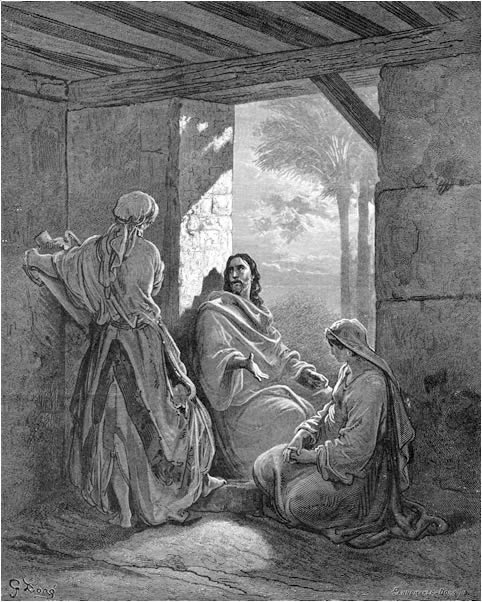
Christ's entertainment at Martha's house, the reproof he gave to her for her care about the world, and his commendation of Mary for her care about her soul,
Our love to him must be sincere, hearty, and fervent; it must be a superlative love, a love that is as strong as death, but an intelligent love, and such as we can give a good account of the grounds and reasons of. It must be an entire love; he must have our whole souls, and must be served with all that is within us.
The Nineteenth Century6 voices
OUR text is the whole story of the Samaritan, but as that is very long, let us, for our memories' sake, consider the exhortation in the 37th verse to be our text. "Go, and do you likewise." There are certain persons in the world who will not allow the preacher to speak upon anything but those doctrinal statements concerning the way of salvation which are known as "the Gospel."
A commentator
J.C. Ryle1816–1900
Expository Thoughts on the Gospels: Luke (lightly modernized text, Grace Gems edition) (1858)
proposed
We should notice in this passage — the solemn question which was addressed to our Lord Jesus Christ. We are told that a certain lawyer asked Him, "What shall I do to inherit eternal life?" The motive of this man was evidently not right. He only asked this question to "test" our Lord, and to provoke Him to say something on which His enemies might lay hold of. Yet the question he propounded was undoubtedly one of the deepest importance. It is a question which deserves the principal attention of every man, woman, and child on earth.
A commentator
J.C. Ryle1816–1900
Expository Thoughts on the Gospels: Luke (lightly modernized text, Grace Gems edition) (1858)
proposed
We should notice in this passage — the solemn question which was addressed to our Lord Jesus Christ. We are told that a certain lawyer asked Him, "What shall I do to inherit eternal life?" The motive of this man was evidently not right. He only asked this question to "test" our Lord, and to provoke Him to say something on which His enemies might lay hold of. Yet the question he propounded was undoubtedly one of the deepest importance. It is a question which deserves the principal attention of every man, woman, and child on earth. We are all sinners — dying sinners, and sinners going to be judged after death. "How shall our sins be pardoned? With what shall we come before God? How shall we escape the damnation of Hell? Where shall we flee from the wrath to come? What must we do to be saved?" These are inquiries which people of every rank ought to put to themselves — and never rest until they find an answer. It is a question which unhappily few care to consider. Thousands are constantly inquiring, "What shall we eat? What shall we drink? With what shall we be clothed? How can we get money? How can we enjoy ourselves? How can we prosper in the world?" Few, very few — will ever give a moment's thought to the salvation of their souls. They hate the subject. It makes them uncomfortable. They turn from it and put it away. Faithful and true is that saying of our Lord's, "Wide is the gate and broad is the way that leads unto destruction — and many enter through it. But small is the gate and narrow the way that leads to life — and only a few find it." (Matthew 7:13-14.) Let us not be ashamed of putting the lawyer's question to our own souls. Let us rather ponder it, think about it — and never be content until it fills the first place in our minds.
OUR text is the whole story of the Samaritan, but as that is very long, let us, for our memories' sake, consider the exhortation in the 37th verse to be our text. "Go, and do you likewise." There are certain persons in the world who will not allow the preacher to speak upon anything but those doctrinal statements concerning the way of salvation which are known as "the Gospel." If the preacher shall insist upon some virtue or practical Grace, they straightway say that he is not preaching the Gospel, that he has become legal and is a mere moral teacher. We do not stand in any awe of such criticism, for we clearly perceive that our Lord Jesus Christ, Himself, would very frequently have come under it. Read the Sermon on the Mount and judge whether certain people would be content to hear the likes of it preached to them on the Sabbath. They would condemn it as containing very little Gospel and too much about good works. Our Lord was a great practical Preacher. He frequently delivered addresses in which He made answer to questioners, or gave direction to seekers, or upbraided offenders—and He gave a prominence to practical truth such as some of His ministers dare not imitate! Jesus tells us over and over again the manner in which we are to live towards our fellow men and He lays great stress upon the love which should shine throughout the Christian character. The story of the good Samaritan, which is now before us, is a case in point, for our Lord is explaining, there, a point which arose out of the question, "What shall I do to inherit eternal life?" The question is legal and the answer is to the point. But let it never be forgotten that what the Law demands of us, the Gospel produces in us. The Law tells us what we ought to be and it is one objective of the Gospel to raise us to that condition.
Thou shalt love the Lord - See this important subject explained at large, on Mat 22:37-40 (note). Thy neighbor as thyself - See the nature of self-love explained, on Mat 19:19 (note).
A commentator
Albert Barnes1798–1870
Notes, Explanatory and Practical, on the Old and New Testaments (1832-1869)
proposed
See this subject explained in the notes at Mat 22:37-40.
Modern Voices2 voices
A commentator
GK ChestertonHeretics, Ch. 14: On Certain Modern Writers and the Institution of the Family (1905) (1905)
proposed
We make our friends; we make our enemies; but God makes our next-door neighbour. Hence he comes to us clad in all the careless terrors of nature; he is as strange as the stars, as reckless and indifferent as the rain. He is Man, the …
In the feverish summer of this fanaticism there arose the phrase that this or that part of England is being "built over." Now, there is not the slightest objection, in itself, to England being built over by men, any more than there is to its …
The words behind it
38 Greek wordsEvery Greek word of this verse in the order it stands, with what it means and the door to its own study. The last column counts the times a word stands in the whole Bible: the rarer the word, the more the places it appears belong together.
| Greek | Sound | Meaning | Word study | In the Bible |
|---|---|---|---|---|
| Ὁ | ho | <the> | G3588 → | 19766 times |
| δὲ | de | And | G1161 → | 2765 times |
| ἀποκριθεὶς | apokritheis | answering | G611 → | 231 times |
| εἶπεν· | eipen | he said; | G2036 → | 925 times |
| ἀγαπήσεις | agapeseis | 'You will love | G25 → | 143 times |
| κύριον | kurion | [the] Lord | G2962 → | 711 times |
| τὸν | ton | the | G3588 → | 19766 times |
| θεόν | theon | God | G2316 → | 1312 times |
| σου | sou | of you | G4771 → | 2973 times |
| ἐξ | ex | with | G1537 → | 911 times |
| ὅλης | holes | all | G3650 → | 109 times |
| τῆς | tes | the | G3588 → | 19766 times |
| καρδίας | kardias | heart | G2588 → | 156 times |
| σου | sou | of you | G4771 → | 2973 times |
| καὶ | kai | and | G2532 → | 9120 times |
| ἐν | en | with | G1722 → | 2738 times |
| ὅλῃ | hole | all | G3650 → | 109 times |
| τῇ | tea | the | G3588 → | 19766 times |
| ψυχῇ | psuchea | soul | G5590 → | 103 times |
| σου | sou | of you | G4771 → | 2973 times |
| καὶ | kai | and | G2532 → | 9120 times |
| ἐν | en | with | G1722 → | 2738 times |
| ὅλῃ | hole | all | G3650 → | 109 times |
| τῇ | tea | the | G3588 → | 19766 times |
| ἰσχύϊ | ischui | strength | G2479 → | |
| σου | sou | of you | G4771 → | 2973 times |
| καὶ | kai | and | G2532 → | 9120 times |
| ἐν | en | with | G1722 → | 2738 times |
| ὅλῃ | hole | all | G3650 → | 109 times |
| τῇ | tea | the | G3588 → | 19766 times |
| διανοίᾳ | dianoia | mind | G1271 → | |
| σου, | sou | of you’, | G4771 → | 2973 times |
| καὶ | kai | and | G2532 → | 9120 times |
| τὸν | ton | The | G3588 → | 19766 times |
| πλησίον | plesion | neighbour | G4139 → | 17 times |
| σου | sou | of you | G4771 → | 2973 times |
| ὡς | hos | as | G5613 → | 500 times |
| σεαυτόν.¶ | seauton | yourself.’ | G4771 → | 2973 times |
Ὁ<the>
hoG3588 →19766 times
δὲAnd
deG1161 →2765 times
ἀποκριθεὶςanswering
apokritheisG611 →231 times
εἶπεν·he said;
eipenG2036 →925 times
ἀγαπήσεις'You will love
agapeseisG25 →143 times
κύριον[the] Lord
kurionG2962 →711 times
τὸνthe
tonG3588 →19766 times
θεόνGod
theonG2316 →1312 times
σουof you
souG4771 →2973 times
ἐξwith
exG1537 →911 times
ὅληςall
holesG3650 →109 times
τῆςthe
tesG3588 →19766 times
καρδίαςheart
kardiasG2588 →156 times
σουof you
souG4771 →2973 times
καὶand
kaiG2532 →9120 times
ἐνwith
enG1722 →2738 times
ὅλῃall
holeG3650 →109 times
τῇthe
teaG3588 →19766 times
ψυχῇsoul
psucheaG5590 →103 times
σουof you
souG4771 →2973 times
καὶand
kaiG2532 →9120 times
ἐνwith
enG1722 →2738 times
ὅλῃall
holeG3650 →109 times
τῇthe
teaG3588 →19766 times
ἰσχύϊstrength
ischuiG2479 →
σουof you
souG4771 →2973 times
καὶand
kaiG2532 →9120 times
ἐνwith
enG1722 →2738 times
ὅλῃall
holeG3650 →109 times
τῇthe
teaG3588 →19766 times
διανοίᾳmind
dianoiaG1271 →
σου,of you’,
souG4771 →2973 times
καὶand
kaiG2532 →9120 times
τὸνThe
tonG3588 →19766 times
πλησίονneighbour
plesionG4139 →17 times
σουof you
souG4771 →2973 times
ὡςas
hosG5613 →500 times
σεαυτόν.¶yourself.’
seautonG4771 →2973 times
A shaded row is a word that stands 400 times or fewer in the Bible.
The walk
8 stopsEach card is a verse this one points to, and under it the verses that one points to in turn. Where several paths arrive at the same place, that place is listed first: the text keeps returning to it.
Through
Deuteronomy 6:5And you shall love the LORD your God with all your heart and with all your soul and with all your strength.
it leads to
- Mark 12:30
Love the Lord your God with all your heart and with all your soul and with all your mind and with all your strength.’
- Matthew 22:37
Jesus declared, “‘Love the Lord your God with all your heart and with all your soul and with all your mind.’
- Deuteronomy 10:12
And now, O Israel, what does the LORD your God ask of you but to fear the LORD your God by walking in all His ways, to love Him, to serve the LORD your…
- Deuteronomy 30:6
The LORD your God will circumcise your hearts and the hearts of your descendants, and you will love Him with all your heart and with all your soul, so that you may live.
- Deuteronomy 4:29
But if from there you will seek the LORD your God, you will find Him if you seek Him with all your heart and with all your soul.
- Mark 12:30
Through
Romans 13:9The commandments “Do not commit adultery,” “Do not murder,” “Do not steal,” “Do not covet,” and any other commandments, are summed up in this one decree: “Love your neighbor as yourself.”
it leads to
- Exodus 20:12–17
Honor your father and mother, so that your days may be long in the land that the LORD your God is giving you.
- Matthew 22:39
And the second is like it: ‘Love your neighbor as yourself.’
- Mark 12:31
The second is this: ‘Love your neighbor as yourself.’ No other commandment is greater than these.”
- Exodus 20:12–17
Where this verse is studied
On this page
Studies20
On this verse
On this chapter
About Luke
This page draws on 27 works. Open the list of works
This page draws on Adam Clarke, Commentary on the Bible; Albert Barnes, Notes, Explanatory and Practical, on the Old and New Testaments (1832-1869); Ambrose of Milan, Catena Aurea by Aquinas; Ambrose of Milan, Commentary on Luke; Basil of Caesarea, Catena Aurea by Aquinas; Bonaventure, Commentary on Luke, Chapter 10; Charles Spurgeon, The Metropolitan Tabernacle Pulpit, Sermon No. 1360: “The Good Samaritan” (lightly modernized text, CCEL edition); Clement of Alexandria, The Stromata Book 2; Clement of Alexandria, The Stromata Book 4; Ephrem the Syrian, COMMENTARY ON TATIAN'S DIATESSARON 16.23; GK Chesterton, Heretics, Ch. 14: On Certain Modern Writers and the Institution of the Family (1905); GK Chesterton, Alarms and Discursions, The New House (1910); Gregory of Nyssa, Catena Aurea by Aquinas; Gregory the Dialogist, Catena Aurea by Aquinas; Ignatius of Antioch, Epistle of Ignatius to the Ephesians; J.C. Ryle, Expository Thoughts on the Gospels: Luke (lightly modernized text, Grace Gems edition); John Chrysostom, Catena Aurea by Aquinas; John Gill, Exposition of the New Testament; John Gill, Exposition of the New Testament (1746-1748); Matthew Henry, Commentary on the Whole Bible; Maximus the Confessor, Catena Aurea by Aquinas; Origen of Alexandria, Catena Aurea by Aquinas; Tertullian, Against Marcion Book IV; Tertullian, Against Marcion Book V; Tertullian, On the Apparel of Women Book II; Theophylact of Ohrid, Commentary on Luke and Theophylact of Ohrid, Catena Aurea by Aquinas.