
Leviticus 16:9
in Leviticus 16he shall present the goat chosen by lot for the LORD and sacrifice it as a sin offering.
BSB
The same verse in ASV and KJV ▾
ASV
And Aaron shall present the goat upon which the lot fell for Jehovah, and offer him for a sin-offering.
KJV
And Aaron shall bring the goat upon which the Lord’s lot fell, and offer him for a sin offering.
⋯
This verse in Leviticus 16
Commentary
4 notes on this verseThis site's exposition
the goat chosen by lot for the LORD
on Leviticus 16:9-10
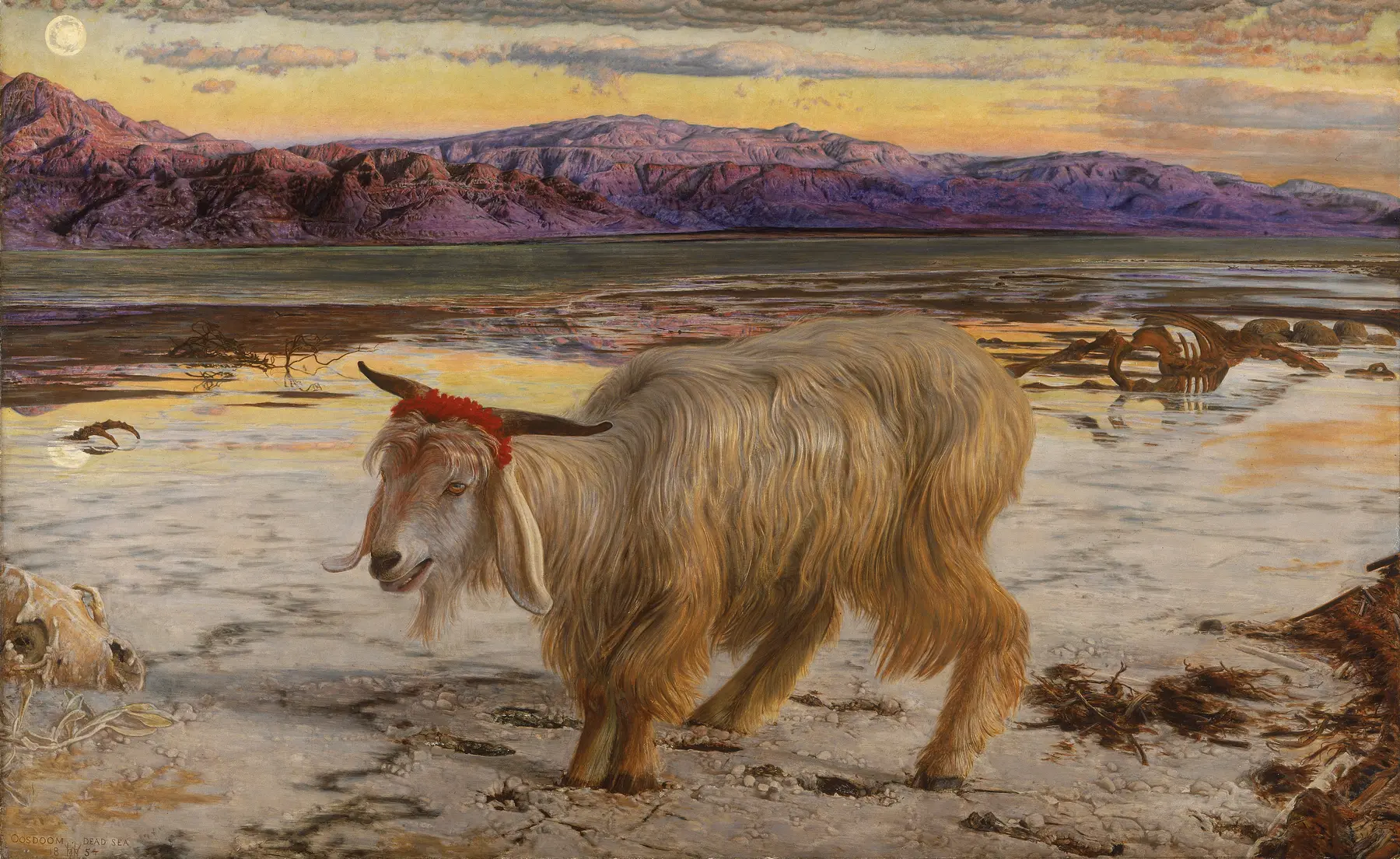
Verse 10 says the live goat is "presented alive before the LORD to make atonement" by being sent away. The text treats the pair as one offering, so the death and the carrying away are halves of a single act.
The record, by era
The Puritans and the Awakening2 voices
), then go within the veil with some of the blood of his sin-offering, burn incense, and sprinkle the blood before the mercy-seat,
quarantine:debris,scripture (2026-07-29) — leading-punctuation+unbalanced-parens; scripture-overlap:83%@v13-15
And Aaron shall bring the goat on which the Lord's lot fell,....
The Nineteenth Century1 voice
A commentator
Jamieson, Fausset & Brown1802–1910
Commentary Critical and Explanatory on the Whole Bible (1871)
proposed
shall take of the congregation . . . two kids of the goats . . . and one ram--The sacrifices were to be offered by the high priest, respectively for himself and the other priests, as well as for the people. The bullock (Le 16:3) and the goats were for sin offerings and the rams for burnt offerings.
quarantine:debris (2026-07-29) — starts-lowercase
How the passage was read
On Leviticus 16:1-34On Leviticus 16:1-34
The day Israel still fasts
This chapter founds the Day of Atonement, in Hebrew Yom Kippur, the most solemn day of the Jewish year: the one day the high priest entered the innermost room of the sanctuary with blood for the nation's sins. With no Temple standing since AD 70, the day is kept now as a full fast: roughly 25 hours with no food or drink, most of it spent in synagogue prayer, many wearing white.
The Mishnah (the first code of Jewish oral law, about AD 200) defines the day's five abstentions: eating and drinking, washing, anointing, leather shoes, and marital relations (Yoma 8:1). It also carries a saying worth any reader's time: the day atones for sins between a person and God, “but for sins between a person and his fellow, the Day of Atonement does not atone until he has appeased his fellow” (Yoma 8:9). Reconciliation with people is homework done before the day.
This section is reception history: how the passage was read and kept in the Jewish tradition. Where a reading parts from an essential of the Christian faith, the section says so at that point.
Sources: Mishnah Yoma 8:1 (the five abstentions) · Mishnah Yoma 8:9 (appease your fellow first) · The Day of Atonement (this site's study)
The words behind it
11 Hebrew wordsEvery Hebrew word of this verse in the order it stands, with what it means and the door to its own study. The last column counts the times a word stands in the whole Bible: the rarer the word, the more the places it appears belong together.
| Hebrew | Sound | Meaning | Word study | In the Bible |
|---|---|---|---|---|
| וְהִקְרִ֤יב | vehikriv | and he will present | H7126 → | 280 times |
| אַהֲרֹן֙ | ʾaharon | Aaron | H175 → | 347 times |
| אֶת־ | ʾet- | <obj.> | H853 → | 10935 times |
| הַשָּׂעִ֔יר | hasair | the male goat | H8163 → | 59 times |
| אֲשֶׁ֨ר | ʾasher | which | H834 → | 5497 times |
| עָלָ֥ה | ʾalah | it came up | H5927 → | 890 times |
| עָלָ֛יו | ʾalav | on it | H5921 → | 5755 times |
| הַגּוֹרָ֖ל | hagoral | the lot | H1486 → | 78 times |
| לַיהוָ֑ה | layahweh | for Yahweh | H3068 → | 6520 times |
| וְעָשָׂ֖הוּ | veasahu | and he will offer it | H6213 → | 2628 times |
| חַטָּֽאת׃ | chatat | a sin offering | H2403 → | 295 times |
וְהִקְרִ֤יבand he will present
vehikrivH7126 →280 times
אַהֲרֹן֙Aaron
ʾaharonH175 →347 times
אֶת־<obj.>
ʾet-H853 →10935 times
הַשָּׂעִ֔ירthe male goat
hasairH8163 →59 times
אֲשֶׁ֨רwhich
ʾasherH834 →5497 times
עָלָ֥הit came up
ʾalahH5927 →890 times
עָלָ֛יוon it
ʾalavH5921 →5755 times
הַגּוֹרָ֖לthe lot
hagoralH1486 →78 times
לַיהוָ֑הfor Yahweh
layahwehH3068 →6520 times
וְעָשָׂ֖הוּand he will offer it
veasahuH6213 →2628 times
חַטָּֽאת׃a sin offering
chatatH2403 →295 times
A shaded row is a word that stands 400 times or fewer in the Bible.
The walk
5 stopsEach card is a verse this one points to, and under it the verses that one points to in turn. Where several paths arrive at the same place, that place is listed first: the text keeps returning to it.
Through
Acts 2:23He was delivered up by God’s set plan and foreknowledge, and you, by the hands of the lawless, put Him to death by nailing Him to the cross.
it leads to
- Acts 4:28
They carried out what Your hand and will had decided beforehand would happen.
- Acts 3:18
But in this way God has fulfilled what He foretold through all the prophets, saying that His Christ would suffer.
- Luke 22:22
Indeed, the Son of Man will go as it has been determined, but woe to that man who betrays Him.”
- Genesis 50:20
As for you, what you intended against me for evil, God intended for good, in order to accomplish a day like this—to preserve the lives of many people.
- Isaiah 46:10–11
I declare the end from the beginning, and ancient times from what is still to come. I say, ‘My purpose will stand, and all My good pleasure I will accomplish.’
- Acts 4:28
Where this verse is studied
On this page
Studies17
On this chapter
About Leviticus
This page draws on Alfred Edersheim, The Temple: Its Ministry and Services; Jamieson, Fausset & Brown, Commentary Critical and Explanatory on the Whole Bible; John Gill, Exposition of the Old Testament (1748-1763); Keil and Delitzsch, Biblical Commentary on the Old Testament: The Pentateuch and Matthew Henry, Commentary on the Whole Bible.