
Genesis 37:4
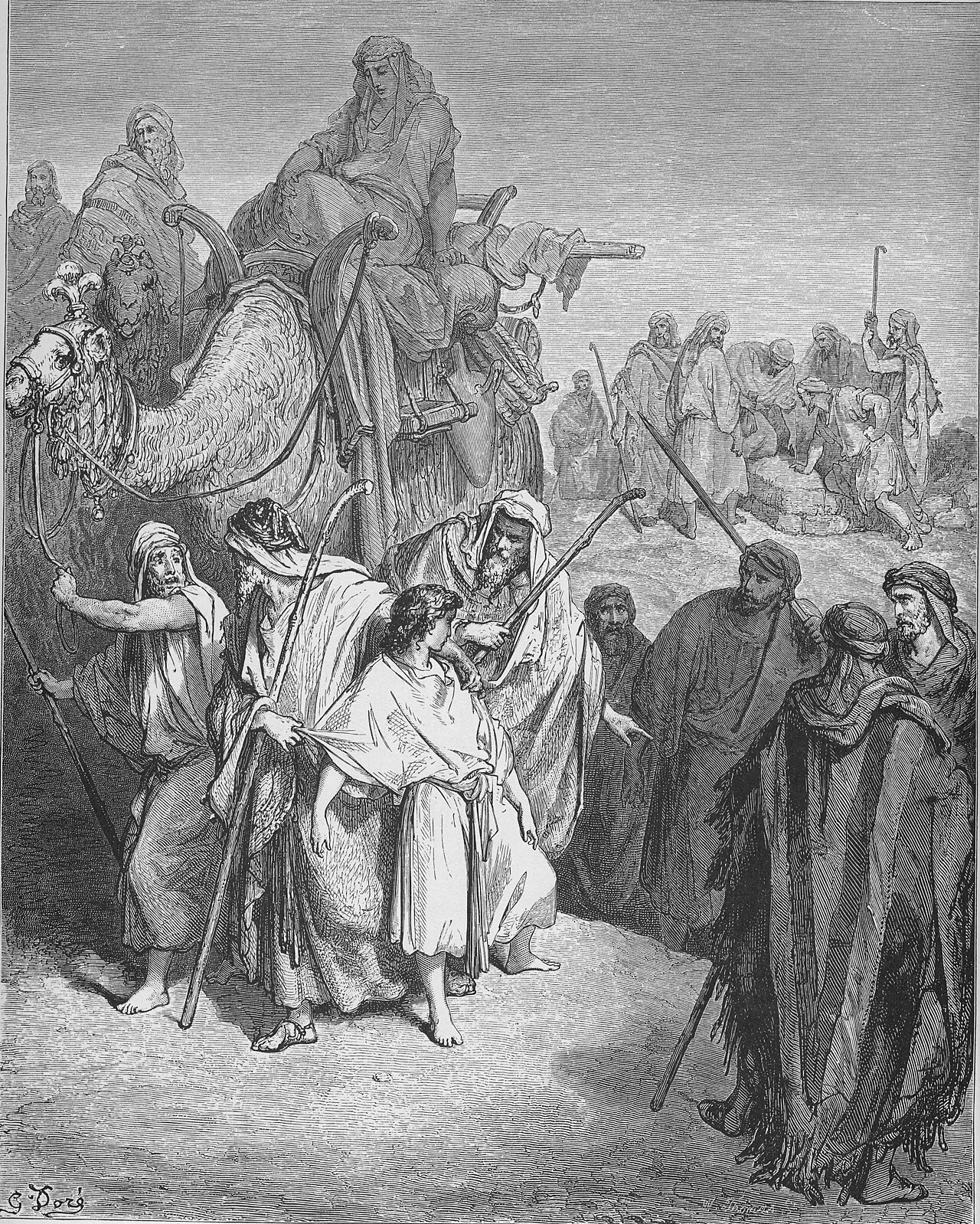
in Genesis 37When Joseph’s brothers saw that their father loved him more than any of them, they hated him and could not speak a kind word to him.
BSB
The same verse in ASV and KJV ▾
ASV
And his brethren saw that their father loved him more than all his brethren; and they hated him, and could not speak peaceably unto him.
KJV
And when his brethren saw that their father loved him more than all his brethren, they hated him, and could not speak peaceably unto him.
⋯
This verse in Genesis 37
Commentary
9 notes on this verseAnd Joseph was loved by his father a great deal. And he gave him a multicolored garment as an excellent gift and a proof of the love with which he accompanied him. And this was an incentive to envy for his brothers and a cause of hatred, as the following events will demonstrate. In fact, the Pharisees were inflamed with anger against the beloved, that is, Christ, because he had been clothed by God the Father with a multiform glory.
This site's exposition
Israel loved Joseph more than his other sons
on Genesis 37:3-4
Israel loved Joseph more than the rest, and the robe of many colors put the preference where everyone could see it. Clarke describes the garment as a long tunic reaching to the wrists and ankles, the dress of a son kept at home while his brothers worked the flocks. Isaac favored Esau and Rebekah favored Jacob at Genesis 25:28, and Jacob favored Rachel at Genesis 29:30. They hated him and had no kind word for him.
This site's exposition
could not speak a kind word to him
The Hebrew says they could not speak to him for peace, and shalom was the word of the ordinary daily greeting. The brothers withheld even that from him. Their anger fell on the son, and the choice they resented was their father's.
The record, by era
The Church Fathers2 voices
It is written concerning blessed Joseph, dearly beloved, that his brothers envied him and therefore "could not even greet him." It is true, beloved brothers, that so dangerous is the disease of envy that it cannot even spare brothers, not to mention strangers.
Envy is a terrible passion, you see, and when it affects the soul, it does not leave it before bringing it to an extremely sorry state. [It damages] the soul that gives it birth and affect[s] the object of its envy in the opposite way to that intended, rendering him more conspicuous, more esteemed, more famous—which in turn proves another severe blow to the envious person. Notice at any rate in this instance how this remarkable man is depicted as ignorant of what was going on and conversing cheerfully in great simplicity with them as his brothers who had caused the same birth pangs as he.… They for their part were in the grip of the passion of envy and were thus brought to hate him.
The Puritans and the Awakening1 voice
And when his brethren saw that their father loved him more than all his brethren,....
The Nineteenth Century2 voices
And could not speak peaceably unto him - Does not this imply, in our use of the term, that they were continually quarrelling with him? but this is no meaning of the original: ולא יכלו דברו לשלם velo yachelu dabbero leshalom, they could not speak peace to him, i. e., they would not accost him in a friendly manner. They would not even wish him well. The eastern method of salutation is, Peace be to thee! שלום לך shalom lecha, among the Hebrews, and salam, peace, or salam kebibi, peace to thee my friend, among the Arabs.
A commentator
Jamieson, Fausset & Brown1802–1910
Commentary Critical and Explanatory on the Whole Bible (1871)
proposed
could not speak peaceably unto him--did not say "peace be to thee" [Ge 43:23, &c.], the usual expression of good wishes among friends and acquaintances. It is deemed a sacred duty to give all this form of salutation; and the withholding of it is an unmistakable sign of dislike or secret hostility.
quarantine:debris (2026-07-29) — starts-lowercase
1 more voice on this verse
Modern Voices1 voice
Numbers in dreams generally represent the identical number in waking life. However, the number will probably be linked to something that needs to be interpreted symbolically. For example, when Joseph dreamed of eleven stars, the eleven was literal but the stars were symbolic and actually represented his brothers.
The words behind it
14 Hebrew wordsEvery Hebrew word of this verse in the order it stands, with what it means and the door to its own study. The last column counts the times a word stands in the whole Bible: the rarer the word, the more the places it appears belong together.
| Hebrew | Sound | Meaning | Word study | In the Bible |
|---|---|---|---|---|
| וַיִּרְא֣וּ | vaiyiru | and they saw | H7200 → | 1300 times |
| אֶחָ֗יו | ʾechav | brothers his | H251 → | 630 times |
| כִּֽי־ | ki- | that | H3588 → | 4482 times |
| אֹת֞וֹ | ʾoto | <obj.> him | H853 → | 10935 times |
| אָהַ֤ב | ʾahav | he loved | H157 → | 211 times |
| אֲבִיהֶם֙ | ʾavihem | father their | H1 → | 1212 times |
| מִכָּל־ | mikol | more than all | H3605 → | 5413 times |
| אֶחָ֔יו | ʾechav | brothers his | H251 → | 630 times |
| וַֽיִּשְׂנְא֖וּ | vaiyisneu | and they hated | H8130 → | 146 times |
| אֹת֑וֹ | ʾoto | <obj.> him | H853 → | 10935 times |
| וְלֹ֥א | velo' | and not | H3808 → | 5168 times |
| יָכְל֖וּ | yakhelu | they were able | H3201 → | 194 times |
| דַּבְּר֥וֹ | dabero | to speak to him | H1696 → | 1141 times |
| לְשָׁלֹֽם׃ | leshalom | to welfare | H7965 → | 236 times |
וַיִּרְא֣וּand they saw
vaiyiruH7200 →1300 times
אֶחָ֗יוbrothers his
ʾechavH251 →630 times
כִּֽי־that
ki-H3588 →4482 times
אֹת֞וֹ<obj.> him
ʾotoH853 →10935 times
אָהַ֤בhe loved
ʾahavH157 →211 times
אֲבִיהֶם֙father their
ʾavihemH1 →1212 times
מִכָּל־more than all
mikolH3605 →5413 times
אֶחָ֔יוbrothers his
ʾechavH251 →630 times
וַֽיִּשְׂנְא֖וּand they hated
vaiyisneuH8130 →146 times
אֹת֑וֹ<obj.> him
ʾotoH853 →10935 times
וְלֹ֥אand not
velo'H3808 →5168 times
יָכְל֖וּthey were able
yakheluH3201 →194 times
דַּבְּר֥וֹto speak to him
daberoH1696 →1141 times
לְשָׁלֹֽם׃to welfare
leshalomH7965 →236 times
A shaded row is a word that stands 400 times or fewer in the Bible.
The walk
8 stopsEach card is a verse this one points to, and under it the verses that one points to in turn. Where several paths arrive at the same place, that place is listed first: the text keeps returning to it.
Through
1 John 4:20If anyone says, “I love God,” but hates his brother, he is a liar. For anyone who does not love his brother, whom he has seen, cannot love God, whom he has not seen.
it leads to
- 1 John 3:17
If anyone with earthly possessions sees his brother in need, but withholds his compassion from him, how can the love of God abide in him?
- 1 John 2:9
If anyone claims to be in the light but hates his brother, he is still in the darkness.
- 1 John 4:12
No one has ever seen God; but if we love one another, God remains in us, and His love is perfected in us.
- 1 John 2:4
If anyone says, “I know Him,” but does not keep His commandments, he is a liar, and the truth is not in him.
- 1 John 2:11
But whoever hates his brother is in the darkness and walks in the darkness. He does not know where he is going, because the darkness has blinded his eyes.
- 1 John 3:17
Through
1 John 3:12Do not be like Cain, who belonged to the evil one and murdered his brother. And why did Cain slay him? Because his own deeds were evil, while those of his brother were righteous.
it leads to
- Hebrews 11:4
By faith Abel offered God a better sacrifice than Cain did. By faith he was commended as righteous when God gave approval to his gifts. And by faith he still speaks, even though he…
- Genesis 4:4–15
while Abel brought the best portions of the firstborn of his flock. And the LORD looked with favor on Abel and his offering,
- Hebrews 11:4
Through
1 John 2:11But whoever hates his brother is in the darkness and walks in the darkness. He does not know where he is going, because the darkness has blinded his eyes.
it leads to
- John 12:35
Then Jesus told them, “For a little while longer, the Light will be among you. Walk while you have the Light, so that darkness will not overtake you. The one who walks in the…
- John 12:35
Where this verse is studied
On this page
Studies4
On this verse
About Genesis
This page draws on 10 works. Open the list of works
This page draws on Adam Clarke, Commentary on the Bible; Caesarius of Arles, SERMON 90.1; Cyril of Alexandria, GLAPHYRA ON GENESIS, 6. 4; Jamieson, Fausset & Brown, Commentary Critical and Explanatory on the Whole Bible; John Chrysostom, HOMILIES ON GENESIS 61.4; John Gill, Exposition of the Old Testament; John Gill, Exposition of the Old Testament (1748-1763); Keil and Delitzsch, Biblical Commentary on the Old Testament; Mark Virkler, Understanding Your Prophetic Dreams! (Elijah List article) and Matthew Henry, Commentary on the Whole Bible.