
Genesis 37:15
in Genesis 37a man found him wandering in the field and asked, “What are you looking for?”
BSB
The same verse in ASV and KJV ▾
ASV
And a certain man found him, and, behold, he was wandering in the field: and the man asked him, saying, What seekest thou?
KJV
And a certain man found him, and, behold, he was wandering in the field: and the man asked him, saying, What seekest thou?
⋯
This verse in Genesis 37
Commentary
4 notes on this verse"And Joseph was wandering about," because he could not find his brothers. And it was right that he wandered about, for he was seeking those that were going astray. Yes, "the Lord knows who are his." Indeed, Jesus also, when he was wearied from his journey, sat at the well. He was wearied, for he was not finding the people of God whom he was seeking; they had gone out from the face of the Lord. The person who follows sin goes out from Christ. The sinner goes out; the just person enters in.
This site's exposition
a man found him wandering
on Genesis 37:15-17
The account stops to record a man who finds Joseph wandering in the field outside Shechem. The text leaves him nameless and gives him one line, that the brothers had moved on to Dothan. Joseph sets out after them and finds them there.
The record, by era
The Church Fathers1 voice
Jacob sent his son to manifest solicitude for his brothers, and God the Father sent his only-begotten Son to visit the human race, which was weak from sin and like lost sheep. When Joseph was looking for his brothers he wandered in the desert.
The Puritans and the Awakening1 voice
And a certain man found him,....
How the passage was read
What the Jewish commentators add
On the verses either side of this one
Scripture mentions the place from which Joseph was sent, in order to indicate that there was a great distance between father and son, and that this was the reason why the brothers did him evil: they were distant far from their father.
This section is reception history: how the passage was read and kept in the Jewish tradition. Where a reading parts from an essential of the Christian faith, the section says so at that point.
Texts and citation data: Sefaria; each excerpt follows its version’s licence. 4 further sources are cited on this chapter that carry no English text this site may quote or only restate the verse.
The words behind it
10 Hebrew wordsEvery Hebrew word of this verse in the order it stands, with what it means and the door to its own study. The last column counts the times a word stands in the whole Bible: the rarer the word, the more the places it appears belong together.
| Hebrew | Sound | Meaning | Word study | In the Bible |
|---|---|---|---|---|
| וַיִּמְצָאֵ֣הוּ | vaiyimtzaehu | and he found him | H4672 → | 455 times |
| אִ֔ישׁ | ʾish | a man | H376 → | 1663 times |
| וְהִנֵּ֥ה | vehineh | and there! | H2009 → | 843 times |
| תֹעֶ֖ה | toeh | [he was] wandering | H8582 → | 50 times |
| בַּשָּׂדֶ֑ה | basadeh | in the open country | H7704 → | 334 times |
| וַיִּשְׁאָלֵ֧הוּ | vaiyishalehu | and he asked him | H7592 → | 171 times |
| הָאִ֛ישׁ | haish | the man | H376 → | 1663 times |
| לֵאמֹ֖ר | lemor | <to> saying | H559 → | 5305 times |
| מַה־ | mah- | what? | H4100 → | 752 times |
| תְּבַקֵּֽשׁ׃ | tevakesh | are you seeking | H1245 → | 225 times |
וַיִּמְצָאֵ֣הוּand he found him
vaiyimtzaehuH4672 →455 times
אִ֔ישׁa man
ʾishH376 →1663 times
וְהִנֵּ֥הand there!
vehinehH2009 →843 times
תֹעֶ֖ה[he was] wandering
toehH8582 →50 times
בַּשָּׂדֶ֑הin the open country
basadehH7704 →334 times
וַיִּשְׁאָלֵ֧הוּand he asked him
vaiyishalehuH7592 →171 times
הָאִ֛ישׁthe man
haishH376 →1663 times
לֵאמֹ֖ר<to> saying
lemorH559 →5305 times
מַה־what?
mah-H4100 →752 times
תְּבַקֵּֽשׁ׃are you seeking
tevakeshH1245 →225 times
A shaded row is a word that stands 400 times or fewer in the Bible.
The walk
8 stopsEach card is a verse this one points to, and under it the verses that one points to in turn. Where several paths arrive at the same place, that place is listed first: the text keeps returning to it.
Through
John 1:38Jesus turned and saw them following. “What do you want?” He asked. They said to Him, “Rabbi” (which means Teacher), “where are You staying?”
it leads to
- John 18:7
So He asked them again, “Whom are you seeking?” “Jesus of Nazareth,” they answered.
- John 3:2
He came to Jesus at night and said, “Rabbi, we know that You are a teacher who has come from God. For no one could perform the signs You are doing if God were…
- John 1:49
“Rabbi,” Nathanael answered, “You are the Son of God! You are the King of Israel!”
- Proverbs 8:34
Blessed is the man who listens to me, watching daily at my doors, waiting at the posts of my doorway.
- John 18:4
Jesus, knowing all that was coming upon Him, stepped forward and asked them, “Whom are you seeking?”
- John 18:7
Through
John 4:27Just then His disciples returned and were surprised that He was speaking with a woman. But no one asked Him, “What do You want from her?” or “Why are You talking with her?”
it leads to
- Luke 7:39
When the Pharisee who had invited Jesus saw this, he said to himself, “If this man were a prophet, He would know who this is and what kind of woman is touching Him—for she…
- Luke 7:39
Through
Judges 4:22When Barak arrived in pursuit of Sisera, Jael went out to greet him and said to him, “Come, and I will show you the man you are seeking.” So he went in with her,…
it leads to
- 2 Samuel 17:10–15
Then even the most valiant soldier with the heart of a lion will melt with fear, because all Israel knows that your father is a mighty man who has valiant men with him.
- 2 Samuel 17:3
and bring all the people back to you as a bride returning to her husband. You seek the life of only one man; then all the people will be at peace.”
- 2 Samuel 17:10–15
Where this verse is studied
On this page
Studies4
On this verse
About Genesis
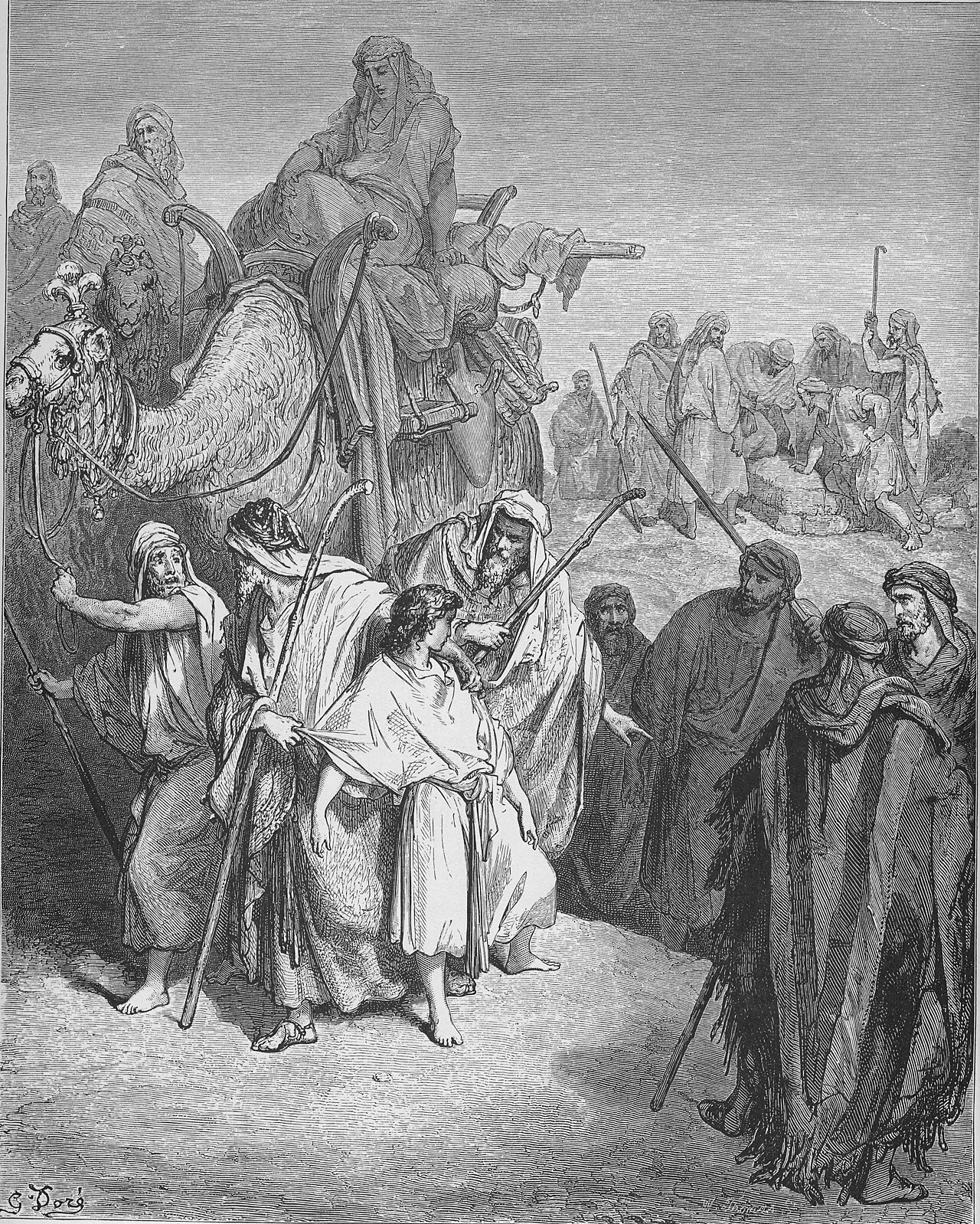
This page draws on Ambrose of Milan, On Joseph the Patriarch; Caesarius of Arles, SERMON 89.1; John Gill, Exposition of the Old Testament; John Gill, Exposition of the Old Testament (1748-1763) and Matthew Henry, Commentary on the Whole Bible.