
Genesis 27:38
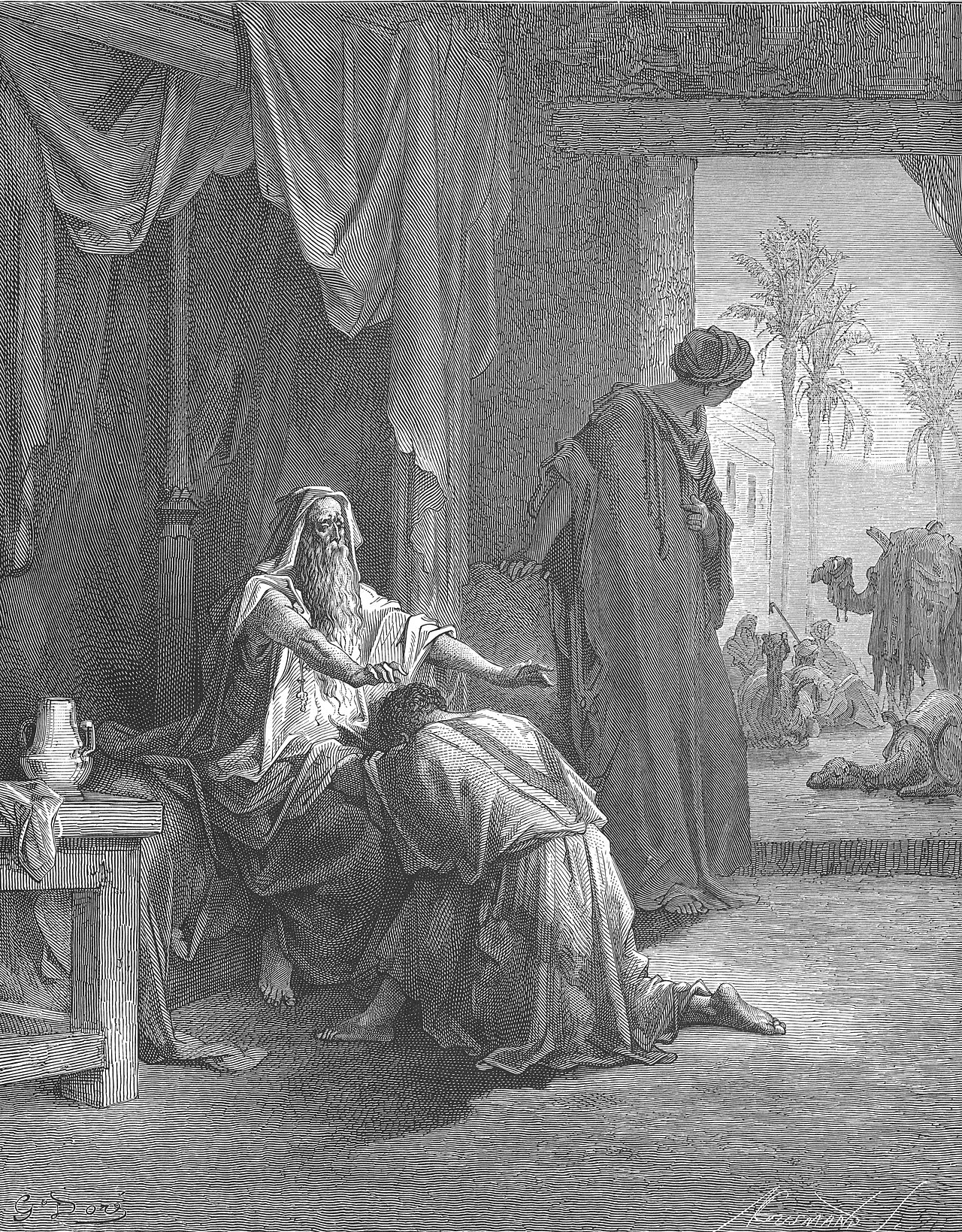
in Genesis 27Esau said to his father, “Do you have only one blessing, my father? Bless me too, O my father!” Then Esau wept aloud.
BSB
The same verse in ASV and KJV ▾
ASV
And Esau said unto his father, Hast thou but one blessing, my father? bless me, even me also, O my father. And Esau lifted up his voice, and wept.
KJV
And Esau said unto his father, Hast thou but one blessing, my father? bless me, even me also, O my father. And Esau lifted up his voice, and wept.
⋯
This verse in Genesis 27
Commentary
5 notes on this verseNote, The day is coming when those that now make light of the blessings of the covenant, and sell their title to them for a thing of nought, will in vain be importunate for them. Those that will not so much as ask and seek now will knock shortly, and cry, Lord, Lord. Slighters of Christ will then be humble suitors to him.
This site's exposition
Do you have only one blessing
on Genesis 27:38-40
Esau's portion lies away from the richness of the land and the dew of heaven. The Hebrew preposition at verse 39 can carry a share in a thing or a distance from it, and the Berean reads distance. Wesley notes that nothing in this word reaches toward Christ or the promise. Esau lives by the sword and later breaks his brother's yoke.
The record, by era
The Puritans and the Awakening1 voice
And Esau said unto his father, hast thou but one blessing, my father?....
The Nineteenth Century2 voices
A commentator
Charles Spurgeon1834–1892
The Metropolitan Tabernacle Pulpit, Sermon No. 3111: “Warning and Encouragement” (lightly modernized text, CCEL edition) · Written before 1892.
proposed
You know the story of Esau and Jacob. [See Sermons #239, Volume 5—JACOB AND ESAU and #1718, Volume 29—CERTAIN SINGULAR SUBJECTS] Esau Was the elder of the twin sons of Isaac and Rebekah. The birthright was his by right, but he despised it. He was a profane person who did not prize the hereditary privilege which was really his. He actually sold his right to it to his younger brother, Jacob, for a mess of "pottage of lentils." Time rolled on and Isaac, feeling the infirmities of age creeping upon him, determined to give to Esau the blessing to which, as his elder son, he was entitled. Rebekah wanted the blessing to be given to her younger son and, therefore, resorted to a stratagem in order to make the poor blind father believe that Jacob was Esau—and in that way Jacob gained the blessing by fraud. When Esau came in and found that the blessing was given to Jacob—and that it could not be revoked—he cried bitterly and besought his father to give him "but one blessing." The whole story reflects no credit upon any of the persons concerned. It certainly brings no credit to Isaac—he was a true Believer in God, but he was a man of an easy-going, gentle spirit who did not control his household as he ought to have done. And it appears that in his later days he craved dainty dishes to tempt his appetite—"savory meat," such as he asked Esau to prepare for him—and so he did not wait upon God for guidance as to the bestowal of his paternal blessing but, in direct opposition to the Divine purpose, determined to give the blessing to the son whom God had not chosen. It was a bad thing for the household to be divided as it was—the husband and wife at cross purposes—Rebekah seeking the blessing for her favorite son and Isaac preferring the bolder spirit of the wilder man. I cannot excuse either Rebekah or Jacob.
A commentator
Charles Spurgeon1834–1892
The Metropolitan Tabernacle Pulpit, Sermon No. 3111: “Warning and Encouragement” (lightly modernized text, CCEL edition) · Written before 1892.
proposed
You know the story of Esau and Jacob. [See Sermons #239, Volume 5—JACOB AND ESAU and #1718, Volume 29—CERTAIN SINGULAR SUBJECTS] Esau Was the elder of the twin sons of Isaac and Rebekah. The birthright was his by right, but he despised it. He was a profane person who did not prize the hereditary privilege which was really his. He actually sold his right to it to his younger brother, Jacob, for a mess of "pottage of lentils."
The words behind it
17 Hebrew wordsEvery Hebrew word of this verse in the order it stands, with what it means and the door to its own study. The last column counts the times a word stands in the whole Bible: the rarer the word, the more the places it appears belong together.
| Hebrew | Sound | Meaning | Word study | In the Bible |
|---|---|---|---|---|
| וַיֹּ֨אמֶר | vaiyomer | and he said | H559 → | 5305 times |
| עֵשָׂ֜ו | ʾesav | Esau | H6215 → | 97 times |
| אֶל־ | ʾel- | to | H413 → | 5510 times |
| אָבִ֗יו | ʾaviv | father his | H1 → | 1212 times |
| הַֽבְרָכָ֨ה | havrakhah | ¿ [does] a blessing | H1293 → | 69 times |
| אַחַ֤ת | ʾachat | one | H259 → | 971 times |
| הִֽוא־ | hi'- | it | H1931 → | 1879 times |
| לְךָ֙ | lekha | [belong] to <the> you | ||
| אָבִ֔י | ʾavi | O father my | H1 → | 1212 times |
| בָּרֲכֵ֥נִי | barakheni | bless me | H1288 → | 330 times |
| גַם־ | gam- | also | H1571 → | 769 times |
| אָ֖נִי | ʾani | me | H589 → | 874 times |
| אָבִ֑י | ʾavi | O father my | H1 → | 1212 times |
| וַיִּשָּׂ֥א | vaiyisa' | and he lifted up | H5375 → | 656 times |
| עֵשָׂ֛ו | ʾesav | Esau | H6215 → | 97 times |
| קֹל֖וֹ | kolo | voice his | H6963 → | 506 times |
| וַיֵּֽבְךְּ׃ | vaiyevek | and he wept | H1058 → | 114 times |
וַיֹּ֨אמֶרand he said
vaiyomerH559 →5305 times
עֵשָׂ֜וEsau
ʾesavH6215 →97 times
אֶל־to
ʾel-H413 →5510 times
אָבִ֗יוfather his
ʾavivH1 →1212 times
הַֽבְרָכָ֨ה¿ [does] a blessing
havrakhahH1293 →69 times
אַחַ֤תone
ʾachatH259 →971 times
הִֽוא־it
hi'-H1931 →1879 times
לְךָ֙[belong] to <the> you
lekha
אָבִ֔יO father my
ʾaviH1 →1212 times
בָּרֲכֵ֥נִיbless me
barakheniH1288 →330 times
גַם־also
gam-H1571 →769 times
אָ֖נִיme
ʾaniH589 →874 times
אָבִ֑יO father my
ʾaviH1 →1212 times
וַיִּשָּׂ֥אand he lifted up
vaiyisa'H5375 →656 times
עֵשָׂ֛וEsau
ʾesavH6215 →97 times
קֹל֖וֹvoice his
koloH6963 →506 times
וַיֵּֽבְךְּ׃and he wept
vaiyevekH1058 →114 times
A shaded row is a word that stands 400 times or fewer in the Bible.
The walk
8 stopsEach card is a verse this one points to, and under it the verses that one points to in turn. Where several paths arrive at the same place, that place is listed first: the text keeps returning to it.
Through
Hebrews 12:17For you know that afterward, when he wanted to inherit the blessing, he was rejected. He could find no ground for repentance, though he sought the blessing with tears.
it leads to
- Proverbs 1:24–31
Because you refused my call, and no one took my outstretched hand,
- Matthew 25:11–12
Later the other virgins arrived and said, ‘Lord, lord, open the door for us!’
- Matthew 7:23
Then I will tell them plainly, ‘I never knew you; depart from Me, you workers of lawlessness!’
- Hebrews 10:26–29
If we deliberately go on sinning after we have received the knowledge of the truth, no further sacrifice for sins remains,
- Hebrews 6:8
But land that produces thorns and thistles is worthless, and its curse is imminent. In the end it will be burned.
- Proverbs 1:24–31
Through
Genesis 27:34When Esau heard his father’s words, he let out a loud and bitter cry and said to his father, “Bless me too, O my father!”
it leads to
- Hebrews 12:17
For you know that afterward, when he wanted to inherit the blessing, he was rejected. He could find no ground for repentance, though he sought the blessing with tears.
- Proverbs 1:31
So they will eat the fruit of their own way, and be filled with their own devices.
- Hebrews 12:17
Through
Genesis 27:36So Esau declared, “Is he not rightly named Jacob? For he has cheated me twice. He took my birthright, and now he has taken my blessing.” Then he asked, “Haven’t you saved a blessing…
it leads to
- Genesis 25:26
After this, his brother came out grasping Esau’s heel; so he was named Jacob. And Isaac was sixty years old when the twins were born.
- Genesis 25:26
Where this verse is studied
About Genesis
Who and where
1 name in this verse with a page on the site.
This page draws on Charles Spurgeon, The Metropolitan Tabernacle Pulpit, Sermon No. 3111: “Warning and Encouragement” (lightly modernized text, CCEL edition); Jerome, Hebrew Questions on Genesis; John Gill, Exposition of the Old Testament (1748-1763); John Wesley, Explanatory Notes upon the Old Testament and Matthew Henry, Commentary on the Whole Bible.