
Genesis 27:32
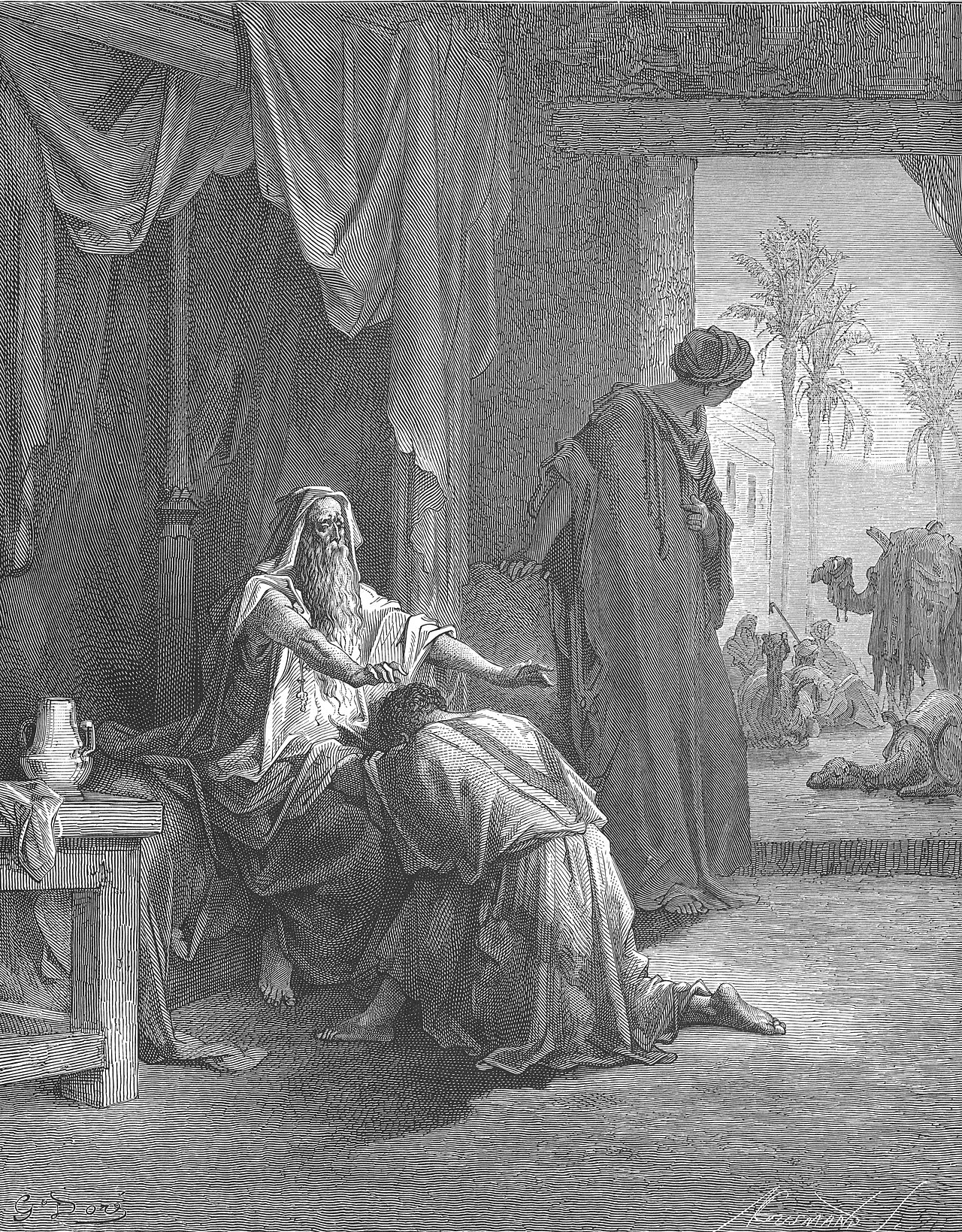
in Genesis 27But his father Isaac replied, “Who are you?” “I am Esau, your firstborn son,” he answered.
BSB
The same verse in ASV and KJV ▾
ASV
And Isaac his father said unto him, Who art thou? And he said, I am thy son, thy first-born, Esau.
KJV
And Isaac his father said unto him, Who art thou? And he said, I am thy son, thy firstborn Esau.
⋯
This verse in Genesis 27
Commentary
4 notes on this verseAnd Isaac his father said unto him, who art thou?.... Hearing another voice more like Esau's than what he had heard before surprised him, and therefore in haste puts this question: and he said, I am thy son, thy firstborn Esau; all which was true in a sense; he was his son, and he was Esau, and he was his firstborn by nature, but not by right, for he had sold his birthright.
This site's exposition
I am Esau, your firstborn son
on Genesis 27:32-33
Isaac begins to tremble violently, the heaviest phrase of its kind in Genesis. Adam Clarke renders the Hebrew literally as trembled with a great trembling greatly. Isaac could have revoked a blessing got by fraud, and he confirms it instead: indeed, he will be blessed. Hebrews 11:20 calls it faith about things to come.
The record, by era
The Puritans and the Awakening1 voice
); while the Gentiles, who, like Jacob, sought it by faith in the oracle of God, obtained it by force, with that violence which the kingdom of heaven suffers. 12 . [2.] That those who undervalue their spiritual birthright, and can afford to sell it for a morsel of meat, forfeit spiritual blessings, and it is just with God to deny them those favours they were careless of.
quarantine:debris (2026-07-29) — leading-punctuation+unbalanced-parens
The Nineteenth Century1 voice
A commentator
Jamieson, Fausset & Brown1802–1910
Commentary Critical and Explanatory on the Whole Bible (1871)
proposed
But a moment's reflection convinced the aged patriarch that the transfer of the blessing was "of the Lord," and now irrevocable. The importunities of Esau, however, overpowered him; and as the prophetic afflatus was upon the patriarch, he added what was probably as pleasing to a man of Esau's character as the other would have been.
The words behind it
11 Hebrew wordsEvery Hebrew word of this verse in the order it stands, with what it means and the door to its own study. The last column counts the times a word stands in the whole Bible: the rarer the word, the more the places it appears belong together.
| Hebrew | Sound | Meaning | Word study | In the Bible |
|---|---|---|---|---|
| וַיֹּ֥אמֶר | vaiyomer | and he said | H559 → | 5305 times |
| ל֛וֹ | lo | to <the> him | ||
| יִצְחָ֥ק | yitzchak | Isaac | H3327 → | 108 times |
| אָבִ֖יו | ʾaviv | father his | H1 → | 1212 times |
| מִי־ | mi- | who? | H4310 → | 423 times |
| אָ֑תָּה | ʾatah | [are] you | H859 → | 1094 times |
| וַיֹּ֕אמֶר | vaiyomer | and he said | H559 → | 5305 times |
| אֲנִ֛י | ʾani | I | H589 → | 874 times |
| בִּנְךָ֥ | binkha | [am] son your | H1121 → | 4930 times |
| בְכֹֽרְךָ֖ | vekhorekha | firstborn your | H1060 → | 122 times |
| עֵשָֽׂו׃ | ʾesav | Esau | H6215 → | 97 times |
וַיֹּ֥אמֶרand he said
vaiyomerH559 →5305 times
ל֛וֹto <the> him
lo
יִצְחָ֥קIsaac
yitzchakH3327 →108 times
אָבִ֖יוfather his
ʾavivH1 →1212 times
מִי־who?
mi-H4310 →423 times
אָ֑תָּה[are] you
ʾatahH859 →1094 times
וַיֹּ֕אמֶרand he said
vaiyomerH559 →5305 times
אֲנִ֛יI
ʾaniH589 →874 times
בִּנְךָ֥[am] son your
binkhaH1121 →4930 times
בְכֹֽרְךָ֖firstborn your
vekhorekhaH1060 →122 times
עֵשָֽׂו׃Esau
ʾesavH6215 →97 times
A shaded row is a word that stands 400 times or fewer in the Bible.
Where this verse is studied
About Genesis
Who and where
2 names in this verse with a page on the site.
This page draws on Adam Clarke, Commentary on the Bible; Jamieson, Fausset & Brown, Commentary Critical and Explanatory on the Whole Bible; John Gill, Exposition of the Old Testament (1748-1763) and Matthew Henry, Commentary on the Whole Bible.