
Exodus 9:6
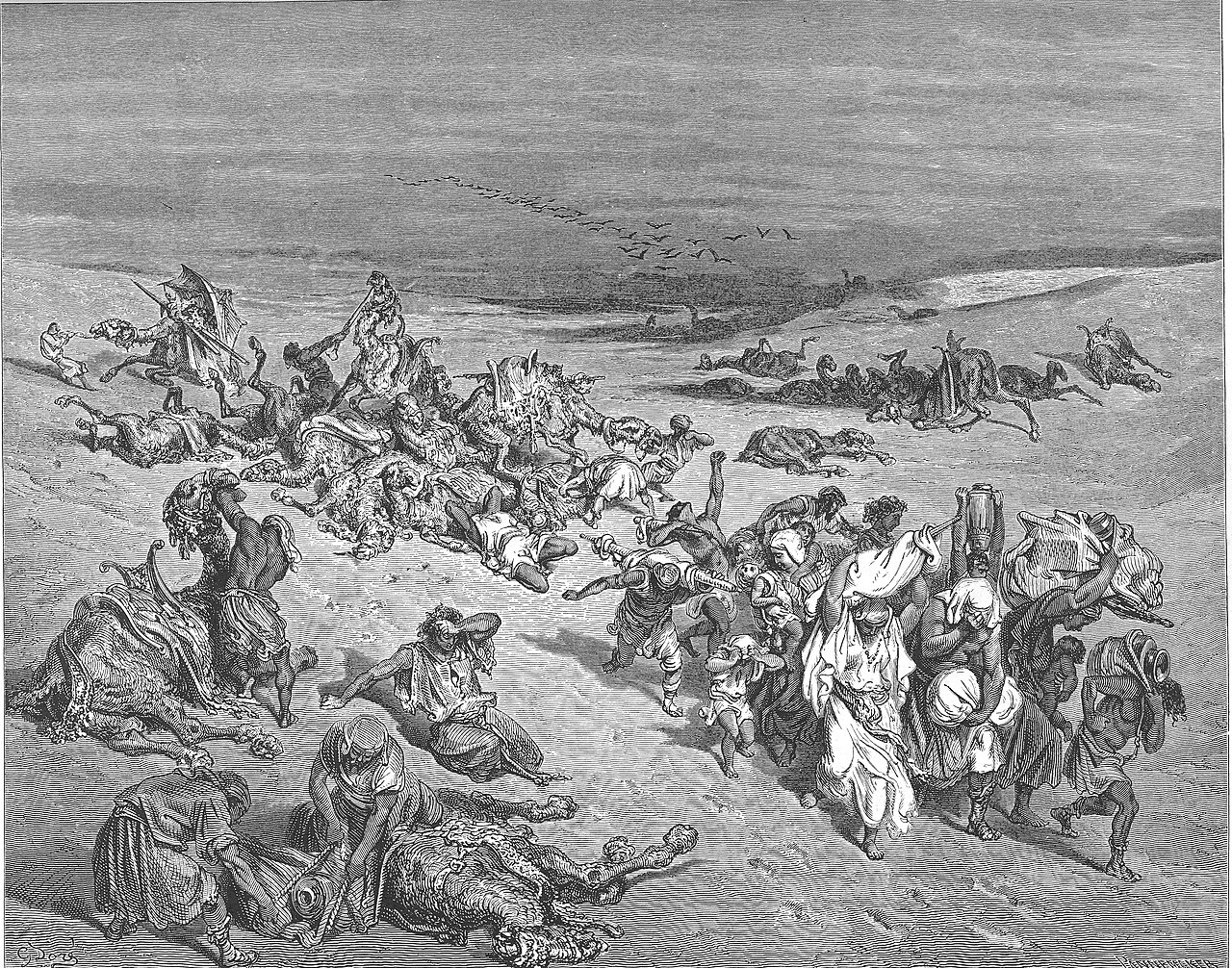
in Exodus 9And the next day the LORD did just that. All the livestock of the Egyptians died, but not one animal belonging to the Israelites died.
BSB
The same verse in ASV and KJV ▾
ASV
And Jehovah did that thing on the morrow; and all the cattle of Egypt died; but of the cattle of the children of Israel died not one.
KJV
And the Lord did that thing on the morrow, and all the cattle of Egypt died: but of the cattle of the children of Israel died not one.
⋯
This verse in Exodus 9
Commentary
9 notes on this verseAll the cattle of Egypt died - That is, All the cattle that did die belonged to the Egyptians, but not one died that belonged to the Israelites, Exo 9:4, Exo 9:6. That the whole stock of cattle belonging to the Egyptians did not die we have the fullest proof, because there were cattle both to be killed and saved alive in the ensuing plague, Exo 9:19-
This site's exposition
the Lord appointed a set time
on Exodus 9:5-6
A time is fixed in advance and the plague keeps it, which is the same device used at the frogs, where Pharaoh himself named the hour at 8:9 and 8:10. Verse 6 says all the cattle of Egypt died, and cattle stand in the field again thirteen verses later at 9:19 and 9:25. Verse 3 supplies the limit the summary leaves out, since the hand of the LORD is on the cattle which is in the field, and John Gill and Keil read the all of verse 6 inside that boundary.
This site's exposition
All the livestock of the Egyptians died
The plague falls on the livestock of Egypt on the day the LORD set, and the animals of Israel live. Egyptian livestock remain for the hail in verse 19, so the word all needs explaining. John Wesley takes it of all that were in the field, Adam Clarke of all that died, and Jamieson, Fausset & Brown add that the plague struck at Egypt's veneration of animals.
The record, by era
The Puritans and the Awakening4 voices
All the cattle died - All that were in the field. The creature is made subject to vanity by the sin of man, being liable, according to its capacity, both to serve his wickedness, and to share in his punishment. The Egyptians worshipped their cattle; it was among them that the Israelites learned to make a God of a calf; in that therefore this plague meets with them.
If less judgments do not do their work, God will send greater. Let us therefore humble ourselves under the mighty hand of God, and go forth to meet him in the way of his judgments, that his anger may be turned away from us. The signal by which this plague was summoned was the sprinkling of warm ashes from the furnace, towards heaven (
quarantine:debris (2026-07-29) — unbalanced-parens
And the Lord did that thing on the morrow,.... Brought a murrain, or a pestilential disease on the cattle.
Note, The creature is made subject to vanity by the sin of man, being liable, according to its capacity, both to serve his wickedness and to share in his punishment, as in the universal deluge. Pharaoh and the Egyptians sinned; but the sheep, what had they done? 4 , For the wickedness of the land, the beasts are consumed.
The Nineteenth Century1 voice
A commentator
Jamieson, Fausset & Brown1802–1910
Commentary Critical and Explanatory on the Whole Bible (1871)
The adaptation of this judgment consisted in Egyptians venerating the more useful animals such as the ox, the cow, and the ram; in all parts of the country temples were reared and divine honors paid to these domesticated beasts, and thus while the pestilence caused a great loss in money, it also struck a heavy blow at their superstition.
1 more voice on this verse
The Nineteenth Century1 voice
A commentator
Albert Barnes1798–1870
Notes, Explanatory and Practical, on the Old and New Testaments (1832-1869)
proposed
All the cattle - i. e. which were left in the field; compare Exo 9:19-21.
The words behind it
16 Hebrew wordsEvery Hebrew word of this verse in the order it stands, with what it means and the door to its own study. The last column counts the times a word stands in the whole Bible: the rarer the word, the more the places it appears belong together.
| Hebrew | Sound | Meaning | Word study | In the Bible |
|---|---|---|---|---|
| וַיַּ֨עַשׂ | vaiyaas | and he did | H6213 → | 2628 times |
| יְהוָ֜ה | yahweh | Yahweh | H3068 → | 6520 times |
| אֶת־ | ʾet- | <obj.> | H853 → | 10935 times |
| הַדָּבָ֤ר | hadavar | the thing | H1697 → | 1440 times |
| הַזֶּה֙ | hazeh | <the> this | H2088 → | 1180 times |
| מִֽמָּחֳרָ֔ת | mimochorat | from [the] next day | H4283 → | 32 times |
| וַיָּ֕מָת | vaiyamot | and it died | H4191 → | 839 times |
| כֹּ֖ל | kol | all | H3605 → | 5413 times |
| מִקְנֵ֣ה | mikneh | [the] livestock of | H4735 → | 76 times |
| מִצְרָ֑יִם | mitzrayim | Egypt | H4713 → | 70 times |
| וּמִמִּקְנֵ֥ה | umimikneh | and of [the] livestock of | H4735 → | 76 times |
| בְנֵֽי־ | venei- | [the] people of | H1121 → | 4930 times |
| יִשְׂרָאֵ֖ל | yisrael | Israel | H3478 → | 2507 times |
| לֹא־ | lo'- | not | H3808 → | 5168 times |
| מֵ֥ת | met | it died | H4191 → | 839 times |
| אֶחָֽד׃ | ʾechad | one | H259 → | 971 times |
וַיַּ֨עַשׂand he did
vaiyaasH6213 →2628 times
יְהוָ֜הYahweh
yahwehH3068 →6520 times
אֶת־<obj.>
ʾet-H853 →10935 times
הַדָּבָ֤רthe thing
hadavarH1697 →1440 times
הַזֶּה֙<the> this
hazehH2088 →1180 times
מִֽמָּחֳרָ֔תfrom [the] next day
mimochoratH4283 →32 times
וַיָּ֕מָתand it died
vaiyamotH4191 →839 times
כֹּ֖לall
kolH3605 →5413 times
מִקְנֵ֣ה[the] livestock of
miknehH4735 →76 times
מִצְרָ֑יִםEgypt
mitzrayimH4713 →70 times
וּמִמִּקְנֵ֥הand of [the] livestock of
umimiknehH4735 →76 times
בְנֵֽי־[the] people of
venei-H1121 →4930 times
יִשְׂרָאֵ֖לIsrael
yisraelH3478 →2507 times
לֹא־not
lo'-H3808 →5168 times
מֵ֥תit died
metH4191 →839 times
אֶחָֽד׃one
ʾechadH259 →971 times
A shaded row is a word that stands 400 times or fewer in the Bible.
The walk
8 stopsEach card is a verse this one points to, and under it the verses that one points to in turn. Where several paths arrive at the same place, that place is listed first: the text keeps returning to it.
Through
Psalms 78:50He cleared a path for His anger; He did not spare them from death but delivered their lives to the plague.
it leads to
- Ezekiel 7:4
I will not look on you with pity, nor will I spare you, but I will punish you for your ways and for the abominations among you. Then you will know that I am…
- 2 Peter 2:4–5
For if God did not spare the angels when they sinned, but cast them deep into hell, placing them in chains of darkness to be held for judgment;
- Exodus 9:3–6
then the hand of the LORD will bring a severe plague on your livestock in the field—on your horses, donkeys, camels, herds, and flocks.
- Romans 8:32
He who did not spare His own Son but gave Him up for us all, how will He not also, along with Him, freely give us all things?
- Ezekiel 8:18
Therefore I will respond with wrath. I will not look on them with pity, nor will I spare them. Although they shout loudly in My ears, I will not listen to them.”
- Ezekiel 7:4
Through
Psalms 78:48He abandoned their cattle to the hail and their livestock to bolts of lightning.
it leads to
- Exodus 9:19
So give orders now to shelter your livestock and everything you have in the field. Every man or beast that remains in the field and is not brought inside will die when the hail…
- Exodus 9:28
Pray to the LORD, for there has been enough of God’s thunder and hail. I will let you go; you do not need to stay any longer.”
- Exodus 9:19
Through
Exodus 9:25Throughout the land of Egypt, the hail struck down everything in the field, both man and beast; it beat down every plant of the field and stripped every tree.
it leads to
- Psalms 78:47
He killed their vines with hailstones and their sycamore-figs with sleet.
- Psalms 78:47
About Exodus
This page draws on Adam Clarke, Commentary on the Bible; Albert Barnes, Notes, Explanatory and Practical, on the Old and New Testaments (1832-1869); Jamieson, Fausset & Brown, Commentary Critical and Explanatory on the Whole Bible; John Gill, Exposition of the Old Testament; John Gill, Exposition of the Old Testament (1748-1763); John Wesley, Explanatory Notes upon the Old Testament; Keil and Delitzsch, Biblical Commentary on the Old Testament: The Pentateuch and Matthew Henry, Commentary on the Whole Bible.