
Exodus 2:5
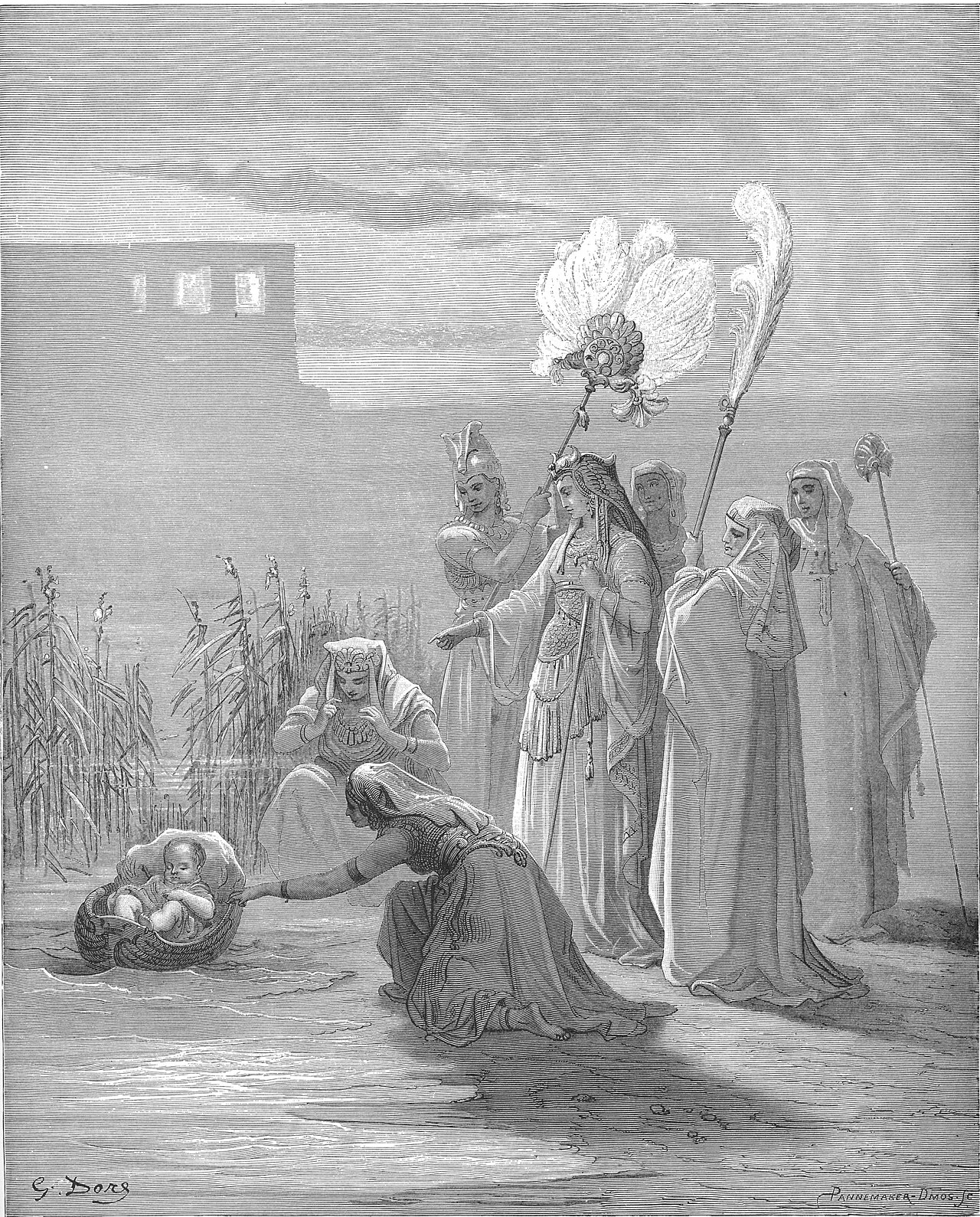
in Exodus 2Soon the daughter of Pharaoh went down to bathe in the Nile, and her attendants were walking along the riverbank. And when she saw the basket among the reeds, she sent her maidservant to retrieve it.
BSB
The same verse in ASV and KJV ▾
ASV
And the daughter of Pharaoh came down to bathe at the river; and her maidens walked along by the river-side; and she saw the ark among the flags, and sent her handmaid to fetch it.
KJV
And the daughter of Pharaoh came down to wash herself at the river; and her maidens walked along by the river’s side; and when she saw the ark among the flags, she sent her maid to fetch it.
⋯
This verse in Exodus 2
Commentary
7 notes on this verseA commentator
Albert Barnes1798–1870
Notes, Explanatory and Practical, on the Old and New Testaments (1832-1869)
The traditions which give a name to the daughter of Pharaoh are merely conjectural. Egyptian princesses held a very high and almost independent position under the ancient and middle empire, with a separate household and numerous officials. This was especially the case with the daughters of the first sovereigns of the 18th Dynasty.
This site's exposition
And his sister stood afar off
on Exodus 2:4-6
The sister posts herself downstream to see what will be done, and the chapter leaves her unnamed, though Exodus 15:20 and Numbers 26:59 give her as Miriam. Pharaoh's daughter identifies the child correctly the moment she opens the ark, saying that this is one of the Hebrews' children, and she keeps him. The decree of Exodus 1:22 is broken inside Pharaoh's own house by Pharaoh's own daughter.
This site's exposition
the daughter of Pharaoh went down to bathe
Pharaoh's daughter came to bathe in the Nile, saw the basket among the reeds and sent her maidservant to bring it. Albert Barnes notes that the traditional names given to her are conjecture, and that Egyptian princesses kept households of their own with considerable independence. Jamieson, Fausset and Brown suggest that her bathing place was fenced against crocodiles and that the way to it was known to Moses' mother.
The record, by era
The Puritans and the Awakening2 voices
And the daughter of Pharaoh came down to wash herself at the river,....
God often raises up friends for his people even among their enemies. Pharaoh cruelly seeks Israel's destruction, but his own daughter charitably compassionates a Hebrew child, and not only so, but, beyond her intention, preserves Israel's deliverer. O Lord, how wonderful are thy counsels!
The Nineteenth Century2 voices
A commentator
Jamieson, Fausset & Brown1802–1910
Commentary Critical and Explanatory on the Whole Bible (1871)
The water was there fenced off as a protection from the crocodiles; and doubtless the princess had an enclosure reserved for her own use, the road to which seems to have been well known to Jochebed. walked along--in procession or in file. she sent her maid--her immediate attendant. The term is different from that rendered "maidens."
And the daughter of Pharaoh - Josephus calls her Thermuthis, and says that “the ark was borne along by the current, and that she sent one that could swim after it; that she was struck with the figure and uncommon beauty of the child; that she inquired for a nurse, but he having refused the breasts of several, and his sister proposing to bring a Hebrew nurse, his own mother was procured.” But all this is in Josephus’s manner, as well as the long circumstantial dream that he gives to Amram concerning the future greatness of Moses, which cannot be considered in any other light than that of a fable, and not even a cunningly devised one. To wash herself at the river - Whether the daughter of Pharaoh went to bathe in the river through motives of pleasure, health, or religion, or whether she bathed at all, the text does not specify. It is merely stated by the sacred writer that she went down to the river to Wash; for the word herself is not in the original. Mr. Harmer, Observat., vol. iii., p. 529, is of opinion that the time referred to above was that in which the Nile begins to rise; and as the dancing girls in Egypt are accustomed now to plunge themselves into the river at its rising, by which act they testify their gratitude for the inestimable blessing of its inundations, so it might have been formerly; and that Pharaoh’s daughter was now coming down to the river on a similar account. I see no likelihood in all this. If she washed herself at all, it might have been a religious ablution, and yet extended no farther than to the hands and face; for the word רחץ rachats, to wash, is repeatedly used in the Pentateuch to signify religious ablutions of different kinds. […]
The words behind it
20 Hebrew wordsEvery Hebrew word of this verse in the order it stands, with what it means and the door to its own study. The last column counts the times a word stands in the whole Bible: the rarer the word, the more the places it appears belong together.
| Hebrew | Sound | Meaning | Word study | In the Bible |
|---|---|---|---|---|
| וַתֵּ֤רֶד | vatered | and she went down | H3381 → | 381 times |
| בַּת־ | bat- | [the] daughter of | H1323 → | 588 times |
| פַּרְעֹה֙ | paroh | Pharaoh | H6547 → | 274 times |
| לִרְחֹ֣ץ | lirchotz | to bathe | H7364 → | 72 times |
| עַל־ | ʾal- | at | H5921 → | 5755 times |
| הַיְאֹ֔ר | hayor | the River | H2975 → | 65 times |
| וְנַעֲרֹתֶ֥יהָ | venaaroteiha | and female attendants her | H5291 → | |
| הֹלְכֹ֖ת | holekhot | [were] walking | H1980 → | 1546 times |
| עַל־ | ʾal- | on | H5921 → | 5755 times |
| יַ֣ד | yad | [the] side of | H3027 → | 1618 times |
| הַיְאֹ֑ר | hayor | the River | H2975 → | 65 times |
| וַתֵּ֤רֶא | vatere' | and she saw | H7200 → | 1300 times |
| אֶת־ | ʾet- | <obj.> | H853 → | 10935 times |
| הַתֵּבָה֙ | hatevah | the basket | H8392 → | |
| בְּת֣וֹךְ | betokh | in among | H8432 → | 418 times |
| הַסּ֔וּף | hasuf | the rush[es] | H5488 → | 28 times |
| וַתִּשְׁלַ֥ח | vatishlach | and she sent | H7971 → | 845 times |
| אֶת־ | ʾet- | <obj.> | H853 → | 10935 times |
| אֲמָתָ֖הּ | ʾamatah | maid her | H519 → | 56 times |
| וַתִּקָּחֶֽהָ | vatikacheha | and fetched it she | H3947 → | 966 times |
וַתֵּ֤רֶדand she went down
vateredH3381 →381 times
בַּת־[the] daughter of
bat-H1323 →588 times
פַּרְעֹה֙Pharaoh
parohH6547 →274 times
לִרְחֹ֣ץto bathe
lirchotzH7364 →72 times
עַל־at
ʾal-H5921 →5755 times
הַיְאֹ֔רthe River
hayorH2975 →65 times
וְנַעֲרֹתֶ֥יהָand female attendants her
venaaroteihaH5291 →
הֹלְכֹ֖ת[were] walking
holekhotH1980 →1546 times
עַל־on
ʾal-H5921 →5755 times
יַ֣ד[the] side of
yadH3027 →1618 times
הַיְאֹ֑רthe River
hayorH2975 →65 times
וַתֵּ֤רֶאand she saw
vatere'H7200 →1300 times
אֶת־<obj.>
ʾet-H853 →10935 times
הַתֵּבָה֙the basket
hatevahH8392 →
בְּת֣וֹךְin among
betokhH8432 →418 times
הַסּ֔וּףthe rush[es]
hasufH5488 →28 times
וַתִּשְׁלַ֥חand she sent
vatishlachH7971 →845 times
אֶת־<obj.>
ʾet-H853 →10935 times
אֲמָתָ֖הּmaid her
ʾamatahH519 →56 times
וַתִּקָּחֶֽהָand fetched it she
vatikachehaH3947 →966 times
A shaded row is a word that stands 400 times or fewer in the Bible.
The walk
8 stopsEach card is a verse this one points to, and under it the verses that one points to in turn. Where several paths arrive at the same place, that place is listed first: the text keeps returning to it.
Through
Psalms 46:1God is our refuge and strength, an ever-present help in times of trouble.
it leads to
- Proverbs 18:10
The name of the LORD is a strong tower; the righteous run to it and are safe.
Reached by 2 separate paths from here.
- Psalms 145:18
The LORD is near to all who call on Him, to all who call out to Him in truth.
- Psalms 9:9
The LORD is a refuge for the oppressed, a stronghold in times of trouble.
- Psalms 62:7–8
My salvation and my honor rest on God, my strong rock; my refuge is in God.
- Psalms 91:1–9
He who dwells in the shelter of the Most High will abide in the shadow of the Almighty.
- Proverbs 18:10
Through
Psalms 12:5“For the cause of the oppressed and for the groaning of the needy, I will now arise,” says the LORD. “I will bring safety to him who yearns.”
it leads to
- Psalms 34:6
This poor man called out, and the LORD heard him; He saved him from all his troubles.
- Proverbs 14:31
Whoever oppresses the poor taunts their Maker, but whoever is kind to the needy honors Him.
- James 5:4
Look, the wages you withheld from the workmen who mowed your fields are crying out against you. The cries of the harvesters have reached the ears of the Lord of Hosts.
- Psalms 34:6
Where this verse is studied
About Exodus
This page draws on Adam Clarke, Commentary on the Bible; Albert Barnes, Notes, Explanatory and Practical, on the Old and New Testaments (1832-1869); Albert Barnes, Notes, Explanatory and Practical, on the Old and New Testaments; Jamieson, Fausset & Brown, Commentary Critical and Explanatory on the Whole Bible; Jamieson, Fausset and Brown, Commentary Critical and Explanatory on the Whole Bible; John Gill, Exposition of the Old Testament; John Gill, Exposition of the Old Testament (1748-1763) and Matthew Henry, Commentary on the Whole Bible.