
Exodus 2:9
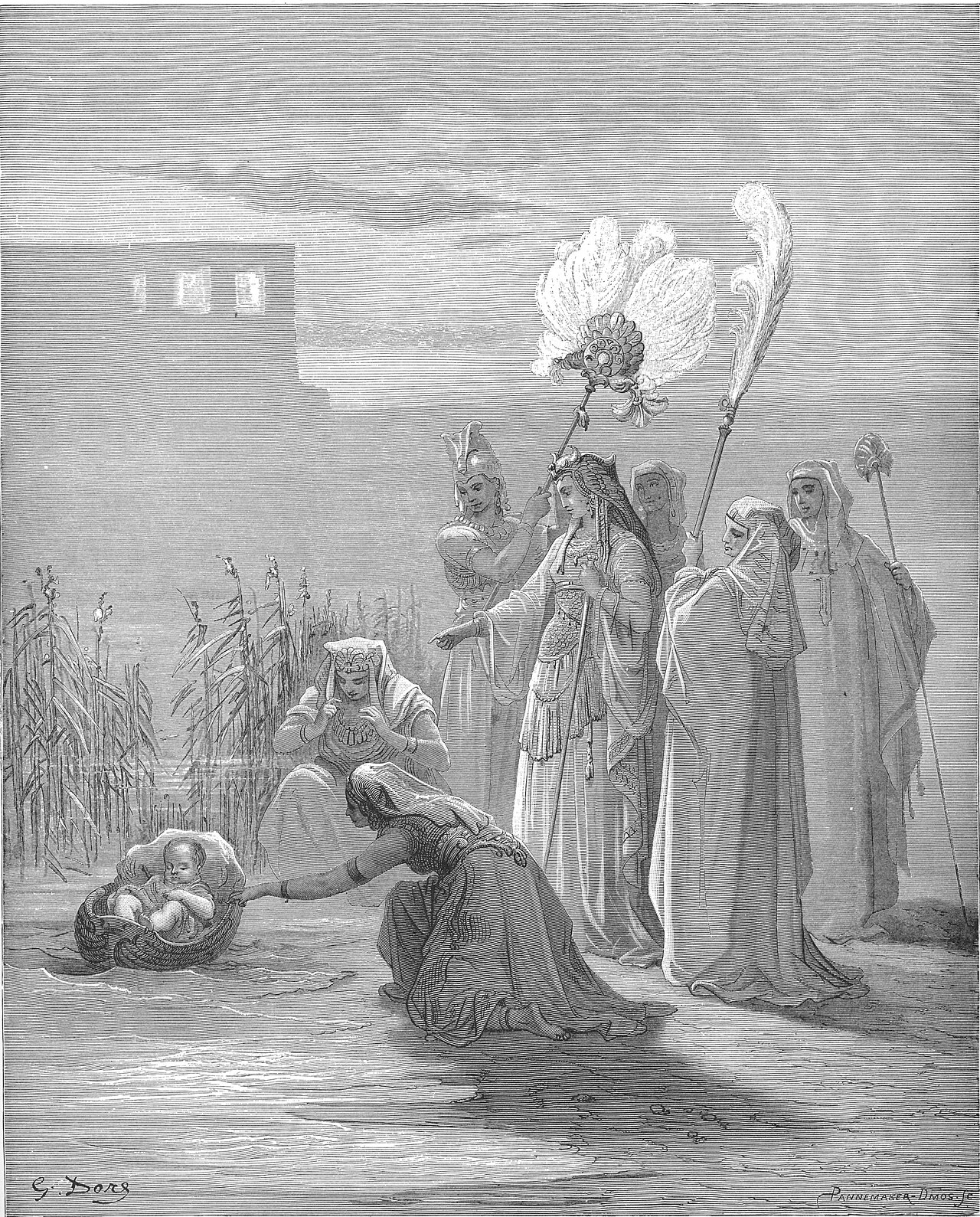
in Exodus 2Pharaoh’s daughter said to her, “Take this child and nurse him for me, and I will pay your wages.” So the woman took the boy and nursed him.
BSB
The same verse in ASV and KJV ▾
ASV
And Pharaoh’s daughter said unto her, Take this child away, and nurse it for me, and I will give thee thy wages. And the woman took the child, and nursed it.
KJV
And Pharaoh’s daughter said unto her, Take this child away, and nurse it for me, and I will give thee thy wages. And the woman took the child, and nursed it.
⋯
This verse in Exodus 2
Commentary
3 notes on this verseAnd Pharaoh's daughter said unto her,.... Being come, having made all possible haste: take this child away, and nurse it for me, and I will give thee thy wages; by which means she had not only the nursing of her own child, but was paid for it: according to a Jewish writer (t), Pharaoh's daughter agreed with her for two pieces of silver a day. (t) Dibre Hayamim; sive Chronicon Mosis, fol. 4. 1.
This site's exposition
Shall I go and call one of the Hebrew women
on Exodus 2:7-9
The sister's question puts the child back into his own mother's arms, and the Egyptian court then pays her to nurse him. An order to drown the Hebrew boys ends with Pharaoh's household funding the upbringing of the man who will lead them out.
This site's exposition
Take this child and nurse him for me
The mother who had been forced to hide her son now raised him openly under royal protection. John Gill notes that she was paid for nursing her own child. He cites a Jewish writer who set the wage at two pieces of silver a day.
The words behind it
18 Hebrew wordsEvery Hebrew word of this verse in the order it stands, with what it means and the door to its own study. The last column counts the times a word stands in the whole Bible: the rarer the word, the more the places it appears belong together.
| Hebrew | Sound | Meaning | Word study | In the Bible |
|---|---|---|---|---|
| וַתֹּ֧אמֶר | vatomer | and she said | H559 → | 5305 times |
| לָ֣הּ | lah | to <the> her | ||
| בַּת־ | bat- | [the] daughter of | H1323 → | 588 times |
| פַּרְעֹ֗ה | paroh | Pharaoh | H6547 → | 274 times |
| הֵילִ֜יכִי | heilikhi | take | H1980 → | 1546 times |
| אֶת־ | ʾet- | <obj.> | H853 → | 10935 times |
| הַיֶּ֤לֶד | haiyeled | the child | H3206 → | 89 times |
| הַזֶּה֙ | hazeh | <the> this | H2088 → | 1180 times |
| וְהֵינִקִ֣הוּ | veheinikihu | and suckle him | H3243 → | 33 times |
| לִ֔י | li | for <the> me | ||
| וַאֲנִ֖י | vaani | and I | H589 → | 874 times |
| אֶתֵּ֣ן | ʾeten | I will pay | H5414 → | 2011 times |
| אֶת־ | ʾet- | <obj.> | H853 → | 10935 times |
| שְׂכָרֵ֑ךְ | sekharekh | wage[s] your | H7939 → | |
| וַתִּקַּ֧ח | vatikach | and she took | H3947 → | 966 times |
| הָאִשָּׁ֛ה | haishah | the woman | H802 → | 781 times |
| הַיֶּ֖לֶד | haiyeled | the child | H3206 → | 89 times |
| וַתְּנִיקֵֽהוּ׃ | vatenikehu | and she suckled him | H3243 → | 33 times |
וַתֹּ֧אמֶרand she said
vatomerH559 →5305 times
לָ֣הּto <the> her
lah
בַּת־[the] daughter of
bat-H1323 →588 times
פַּרְעֹ֗הPharaoh
parohH6547 →274 times
הֵילִ֜יכִיtake
heilikhiH1980 →1546 times
אֶת־<obj.>
ʾet-H853 →10935 times
הַיֶּ֤לֶדthe child
haiyeledH3206 →89 times
הַזֶּה֙<the> this
hazehH2088 →1180 times
וְהֵינִקִ֣הוּand suckle him
veheinikihuH3243 →33 times
לִ֔יfor <the> me
li
וַאֲנִ֖יand I
vaaniH589 →874 times
אֶתֵּ֣ןI will pay
ʾetenH5414 →2011 times
אֶת־<obj.>
ʾet-H853 →10935 times
שְׂכָרֵ֑ךְwage[s] your
sekharekhH7939 →
וַתִּקַּ֧חand she took
vatikachH3947 →966 times
הָאִשָּׁ֛הthe woman
haishahH802 →781 times
הַיֶּ֖לֶדthe child
haiyeledH3206 →89 times
וַתְּנִיקֵֽהוּ׃and she suckled him
vatenikehuH3243 →33 times
A shaded row is a word that stands 400 times or fewer in the Bible.
Where this verse is studied
On this page
Studies12
On this verse
On this chapter
About Exodus
This page draws on Adam Clarke, Commentary on the Bible; John Gill, Exposition of the Old Testament (1748-1763); John Gill, Exposition of the Old Testament and Matthew Henry, Commentary on the Whole Bible.