
2 Samuel 6:19
in 2 Samuel 6Then he distributed to every man and woman among the multitude of Israel a loaf of bread, a date cake, and a raisin cake. And all the people departed, each for his own home.
BSB
The same verse in ASV and KJV ▾
ASV
And he dealt among all the people, even among the whole multitude of Israel, both to men and women, to every one a cake of bread, and a portion of flesh, and a cake of raisins. So all the people departed every one to his house.
KJV
And he dealt among all the people, even among the whole multitude of Israel, as well to the women as men, to every one a cake of bread, and a good piece of flesh, and a flagon of wine. So all the people departed every one to his house.
⋯
This verse in 2 Samuel 6
Commentary
7 notes on this verseA commentator
Albert Barnes1798–1870
Notes, Explanatory and Practical, on the Old and New Testaments (1832-1869)
A good piece of flesh - The word thus paraphrased is only found here and in marginal reference A piece of meat from the peace offerings is probably meant. From the fact that the chronicler explains the preceding cake by the more common word loaf, but leaves this obscure word unexplained, one might infer that it was already obsolete and unknown in his time.
This site's exposition
set it in his place
on 2 Samuel 6:17-19
The tabernacle David pitches for the ark in Zion is a new tent, not the tabernacle of Moses, which 1 Chronicles 16:39 and 21:29 still locate at Gibeon; for the rest of David's reign Israel's worship runs in two places until Solomon brings both together at the temple. David blesses the people in the name of the Lord of hosts, the same title given the ark back at verse 2, now spoken over the crowd that carried it home. Every person in Israel, women included, receives bread, a portion of meat and a cake of wine, a national meal that turns the ark's homecoming into a feast every household shares.
The record, by era
The Church Fathers1 voice
So it is that he who of all philosophers so praised truth, Plato, gave new life to the dying ember of Hebrew philosophy by condemning a life spent in revelry. "When I arrived," he said, "what is here called a life of pleasure, filled with Italian and Syracusan meals, was very repulsive to me. It is a life in which one gorges oneself twice a day, sleeps not only during the night, and engages in all the pastimes that go with this sort of life.
The Puritans and the Awakening3 voices
And he dealt among all the people,....
And, when we consider that the ark was both the token of God's presence and a type of Christ, we shall see that this story is very instructive. 1 Again, David gathered together all the chosen men of Israel, thirty thousand.
The feast of Purim was observed with sending portions one to another, Esth. ix. As those to whom God is merciful ought to show mercy in forgiving, so those to whom God is bountiful ought to exercise bounty in giving. [2.] To recommend himself to the people, and confirm his interest in them; for every one is a friend to him that giveth gifts.
The Nineteenth Century1 voice
A cake of bread - Such as those which are baked without leaven, and are made very thin. A good piece of flesh, and a flagon of wine - The words of flesh and of wine we add; they are not in the Hebrew. The Chaldee translates one part and one portion; but all the other versions understand the Hebrew as we do.
The words behind it
22 Hebrew wordsEvery Hebrew word of this verse in the order it stands, with what it means and the door to its own study. The last column counts the times a word stands in the whole Bible: the rarer the word, the more the places it appears belong together.
| Hebrew | Sound | Meaning | Word study | In the Bible |
|---|---|---|---|---|
| וַיְחַלֵּ֨ק | vaychalek | and he distributed | H2505 → | |
| לְכָל־ | lekhol | to all | H3605 → | 5413 times |
| הָעָ֜ם | haam | the people | H5971 → | 1873 times |
| לְכָל־ | lekhol | to all | H3605 → | 5413 times |
| הֲמ֣וֹן | hamon | [the] multitude of | H1995 → | |
| יִשְׂרָאֵל֮ | yisrael | Israel | H3478 → | 2507 times |
| לְמֵאִ֣ישׁ | lemeish | to from a man | H376 → | 1663 times |
| וְעַד־ | vead- | and unto | H5704 → | 1261 times |
| אִשָּׁה֒ | ʾishah | a woman | H802 → | 781 times |
| לְאִ֗ישׁ | leish | to each | H376 → | 1663 times |
| חַלַּ֥ת | chalat | a cake of | H2471 → | |
| לֶ֙חֶם֙ | lechem | bread | H3899 → | 298 times |
| אַחַ֔ת | ʾachat | one | H259 → | 971 times |
| וְאֶשְׁפָּ֣ר | veeshpar | and a date-cake | H829 → | |
| אֶחָ֔ד | ʾechad | one | H259 → | 971 times |
| וַאֲשִׁישָׁ֖ה | vaashishah | and a raisin-cake | H809 → | |
| אֶחָ֑ת | ʾechat | one | H259 → | 971 times |
| וַיֵּ֥לֶךְ | vaiyelekh | and it went | H1980 → | 1546 times |
| כָּל־ | kol- | all | H3605 → | 5413 times |
| הָעָ֖ם | haam | the people | H5971 → | 1873 times |
| אִ֥ישׁ | ʾish | each | H376 → | 1663 times |
| לְבֵיתֽוֹ׃ | leveito | to own house his | H1004 → | 2046 times |
וַיְחַלֵּ֨קand he distributed
vaychalekH2505 →
לְכָל־to all
lekholH3605 →5413 times
הָעָ֜םthe people
haamH5971 →1873 times
לְכָל־to all
lekholH3605 →5413 times
הֲמ֣וֹן[the] multitude of
hamonH1995 →
יִשְׂרָאֵל֮Israel
yisraelH3478 →2507 times
לְמֵאִ֣ישׁto from a man
lemeishH376 →1663 times
וְעַד־and unto
vead-H5704 →1261 times
אִשָּׁה֒a woman
ʾishahH802 →781 times
לְאִ֗ישׁto each
leishH376 →1663 times
חַלַּ֥תa cake of
chalatH2471 →
לֶ֙חֶם֙bread
lechemH3899 →298 times
אַחַ֔תone
ʾachatH259 →971 times
וְאֶשְׁפָּ֣רand a date-cake
veeshparH829 →
אֶחָ֔דone
ʾechadH259 →971 times
וַאֲשִׁישָׁ֖הand a raisin-cake
vaashishahH809 →
אֶחָ֑תone
ʾechatH259 →971 times
וַיֵּ֥לֶךְand it went
vaiyelekhH1980 →1546 times
כָּל־all
kol-H3605 →5413 times
הָעָ֖םthe people
haamH5971 →1873 times
אִ֥ישׁeach
ʾishH376 →1663 times
לְבֵיתֽוֹ׃to own house his
leveitoH1004 →2046 times
A shaded row is a word that stands 400 times or fewer in the Bible.
The walk
8 stopsEach card is a verse this one points to, and under it the verses that one points to in turn. Where several paths arrive at the same place, that place is listed first: the text keeps returning to it.
Through
Nehemiah 8:10Then Nehemiah told them, “Go and eat what is rich, drink what is sweet, and send out portions to those who have nothing prepared, since today is holy to our Lord. Do not grieve,…
it leads to
- Psalms 28:7–8
The LORD is my strength and my shield; my heart trusts in Him, and I am helped. Therefore my heart rejoices, and I give thanks to Him with my song.
- Proverbs 17:22
A joyful heart is good medicine, but a broken spirit dries up the bones.
- 2 Corinthians 12:8–9
Three times I pleaded with the Lord to take it away from me.
- Ecclesiastes 9:7
Go, eat your bread with joy, and drink your wine with a cheerful heart, for God has already approved your works:
- Isaiah 12:1–3
In that day you will say: “O LORD, I will praise You. Although You were angry with me, Your anger has turned away, and You have comforted me.
- Psalms 28:7–8
Through
2 Chronicles 30:24For Hezekiah king of Judah contributed a thousand bulls and seven thousand sheep for the assembly, and the officials contributed a thousand bulls and ten thousand sheep for the assembly, and a great number…
it leads to
- 2 Chronicles 29:34
However, since there were not enough priests to skin all the burnt offerings, their Levite brothers helped them until the work was finished and until the priests had been consecrated. For the Levites had…
- 2 Chronicles 35:7–8
From his own flocks and herds Josiah contributed 30,000 lambs and goats plus 3,000 bulls for the Passover offerings for all the people who were present.
- 2 Chronicles 29:34
Through
2 Chronicles 7:10On the twenty-third day of the seventh month, Solomon sent the people away to their homes, joyful and glad of heart for the good things that the LORD had done for David, for Solomon,…
it leads to
- 1 Kings 8:66
On the fifteenth day Solomon sent the people away. So they blessed the king and went home, joyful and glad in heart for all the good things that the LORD had done for His…
- 1 Kings 8:66
Where this verse is studied
On this page
Studies1
About 2 Samuel
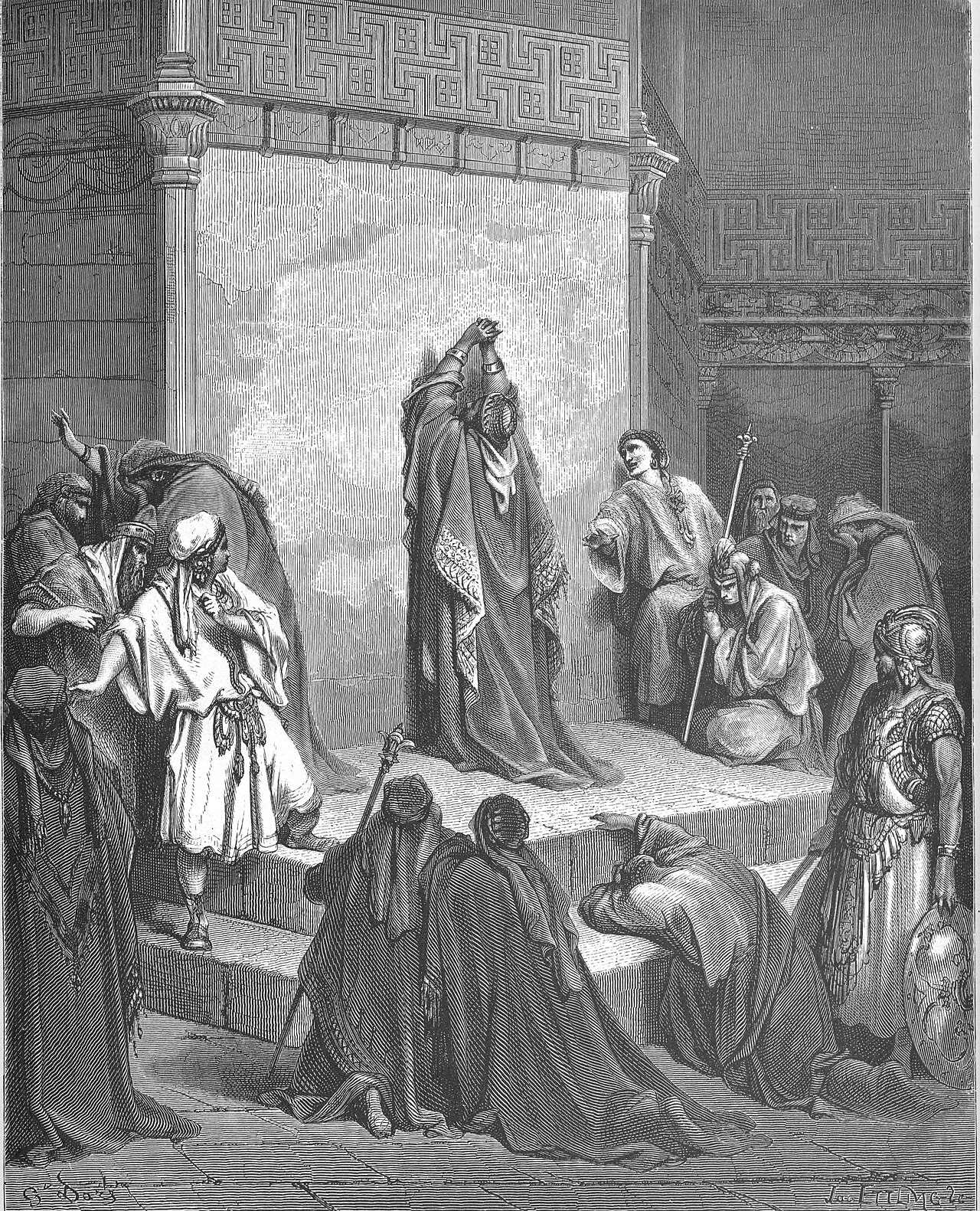
This page draws on Adam Clarke, Commentary on the Bible; Albert Barnes, Notes, Explanatory and Practical, on the Old and New Testaments (1832-1869); Albert Barnes, Notes on the Old Testament; Alfred Edersheim, Bible History: Old Testament; Clement of Alexandria, The Instructor Book 2; John Gill, Exposition of the Old Testament (1748-1763) and Matthew Henry, Commentary on the Whole Bible.