
2 Samuel 3:29
in 2 Samuel 3May it whirl over the heads of Joab and the entire house of his father, and may the house of Joab never be without one having a discharge or skin disease, or one who leans on a staff or falls by the sword or lacks food.”
BSB
The same verse in ASV and KJV ▾
ASV
let it fall upon the head of Joab, and upon all his father’s house; and let there not fail from the house of Joab one that hath an issue, or that is a leper, or that leaneth on a staff, or that falleth by the sword, or that lacketh bread.
KJV
Let it rest on the head of Joab, and on all his father’s house; and let there not fail from the house of Joab one that hath an issue, or that is a leper, or that leaneth on a staff, or that falleth on the sword, or that lacketh bread.
⋯
This verse in 2 Samuel 3
Commentary
8 notes on this verseA commentator
Albert Barnes1798–1870
Notes, Explanatory and Practical, on the Old and New Testaments (1832-1869)
The curse of David proves that Joab was not justified as blood-revenger or Goel 2Sa 3:27 in taking away Abner’s life. That leaneth on a staff - Rather, a crutch. The phrase denotes one lame or infirm. For similar instances of hereditary disease and poverty as a punishment of great sin, see 1Sa 2:31-33, 1Sa 2:36; 2Ki 5:27; Joh 9:2.
This site's exposition
guiltless before the Lord for ever
on 2 Samuel 3:28-30
David's declaration puts the whole crime on Joab's house by name, a curse naming issue, leprosy, the crutch of the lame, death by the sword and want of bread across generations, and Barnes reads the curse itself as proof David did not accept Joab's claim to have acted as an avenger of blood under the law. The narrator names Abishai beside Joab as guilty of the same killing, though Joab alone struck the blow, because he had slain their brother Asahel at Gibeon in the battle answers the crime to Asahel's death and to nothing else Abner had done.
This site's exposition
May it whirl over the heads of Joab
Adam Clarke notes that the verbs can be read as future, a prophecy that the guilt will rest on Joab. Albert Barnes reads the one who leans on a staff as a man lame or infirm. Matthew Henry reads it as blood guilt on a family.
The record, by era
The Puritans and the Awakening4 voices
David's Wives and Children. 1 Now there was long war between the house of Saul and the house of David: but David waxed stronger and stronger, and the house of Saul waxed weaker and weaker. 2 And unto David were sons born in Hebron: and his firstborn was Amnon, of Ahinoam the Jezreelitess;
quarantine:scripture (2026-07-29) — scripture-overlap:92%@v1-3
Let his posterity be stigmatized, blemished with an issue or a leprosy, which will shut them out from society; let them be beggars, or cripples, or come to some untimely end, that it may be said, He is one of Joab's race." This intimates that the guilt of blood brings a curse upon families; if men do not avenge it, God will, and will lay up the iniquity for the children.
quarantine:debris (2026-07-29) — odd-straight-quotes
Let it rest on the head of Joab,....
He washed his hands from the guilt of Abner's blood. Lest any should suspect that Joab had some secret intimation from David to do as he did (and the rather because he went so long unpunished), he here solemnly appeals to God concerning his innocency: I and my kingdom are guiltless (and my kingdom is so because I am so) before the Lord for ever,
The Nineteenth Century1 voice
Let it rest on the head - All these verbs may be rendered in the future tense: it will rest on the head of Joab, etc. This was a prophetic declaration, which sufficiently showed the displeasure of God against this execrable man.
The words behind it
20 Hebrew wordsEvery Hebrew word of this verse in the order it stands, with what it means and the door to its own study. The last column counts the times a word stands in the whole Bible: the rarer the word, the more the places it appears belong together.
| Hebrew | Sound | Meaning | Word study | In the Bible |
|---|---|---|---|---|
| יָחֻ֙לוּ֙ | yachulu | let them whirl | H2342 → | |
| עַל־ | ʾal- | over | H5921 → | 5755 times |
| רֹ֣אשׁ | rosh | [the] head of | H7218 → | 599 times |
| יוֹאָ֔ב | yoav | Joab | H3097 → | 144 times |
| וְאֶ֖ל | veel | and to | H413 → | 5510 times |
| כָּל־ | kol- | all | H3605 → | 5413 times |
| בֵּ֣ית | beit | [the] house of | H1004 → | 2046 times |
| אָבִ֑יו | ʾaviv | father his | H1 → | 1212 times |
| וְֽאַל־ | veal- | and may not | H408 → | 724 times |
| יִכָּרֵ֣ת | yikaret | he be cut off | H3772 → | 288 times |
| מִבֵּ֣ית | mibeit | from [the] house of | H1004 → | 2046 times |
| יוֹאָ֡ב | yoav | Joab | H3097 → | 144 times |
| זָ֠ב | zav | [one who] suffers a discharge | H2100 → | |
| וּמְצֹרָ֞ע | umetzora' | and [one who] has a skin disease | H6879 → | |
| וּמַחֲזִ֥יק | umachazik | and [one who] takes hold | H2388 → | 291 times |
| בַּפֶּ֛לֶךְ | bapelekh | on the spindle | H6418 → | |
| וְנֹפֵ֥ל | venofel | and [one who] falls | H5307 → | 435 times |
| בַּחֶ֖רֶב | bacherev | by the sword | H2719 → | 413 times |
| וַחֲסַר־ | vachasar- | and [one] lacking of | H2638 → | |
| לָֽחֶם׃ | lachem | bread | H3899 → | 298 times |
יָחֻ֙לוּ֙let them whirl
yachuluH2342 →
עַל־over
ʾal-H5921 →5755 times
רֹ֣אשׁ[the] head of
roshH7218 →599 times
יוֹאָ֔בJoab
yoavH3097 →144 times
וְאֶ֖לand to
veelH413 →5510 times
כָּל־all
kol-H3605 →5413 times
בֵּ֣ית[the] house of
beitH1004 →2046 times
אָבִ֑יוfather his
ʾavivH1 →1212 times
וְֽאַל־and may not
veal-H408 →724 times
יִכָּרֵ֣תhe be cut off
yikaretH3772 →288 times
מִבֵּ֣יתfrom [the] house of
mibeitH1004 →2046 times
יוֹאָ֡בJoab
yoavH3097 →144 times
זָ֠ב[one who] suffers a discharge
zavH2100 →
וּמְצֹרָ֞עand [one who] has a skin disease
umetzora'H6879 →
וּמַחֲזִ֥יקand [one who] takes hold
umachazikH2388 →291 times
בַּפֶּ֛לֶךְon the spindle
bapelekhH6418 →
וְנֹפֵ֥לand [one who] falls
venofelH5307 →435 times
בַּחֶ֖רֶבby the sword
bacherevH2719 →413 times
וַחֲסַר־and [one] lacking of
vachasar-H2638 →
לָֽחֶם׃bread
lachemH3899 →298 times
A shaded row is a word that stands 400 times or fewer in the Bible.
The walk
8 stopsEach card is a verse this one points to, and under it the verses that one points to in turn. Where several paths arrive at the same place, that place is listed first: the text keeps returning to it.
Through
Revelation 16:6For they have spilled the blood of saints and prophets, and You have given them blood to drink, as they deserve.”
it leads to
- Isaiah 49:26
I will make your oppressors eat their own flesh; they will be drunk on their own blood, as with wine. Then all mankind will know that I, the LORD, am your Savior and your…
- Revelation 6:10–11
And they cried out in a loud voice, “How long, O Lord, holy and true, until You avenge our blood and judge those who dwell upon the earth?”
- Revelation 11:18
The nations were enraged, and Your wrath has come. The time has come to judge the dead and to reward Your servants the prophets, as well as the saints and those who fear Your…
- Luke 11:49–50
Because of this, the wisdom of God said, ‘I will send them prophets and apostles; some of them they will kill and others they will persecute.’
- Revelation 18:24
And there was found in her the blood of prophets and saints, and of all who had been slain on the earth.
- Isaiah 49:26
Through
2 Samuel 1:16For David had said to the Amalekite, “Your blood be on your own head because your own mouth has testified against you, saying, ‘I killed the LORD’s anointed.’”
it leads to
- Matthew 27:25
All the people answered, “His blood be on us and on our children!”
- Luke 19:22
His master replied, ‘You wicked servant, I will judge you by your own words. So you knew that I am a harsh man, withdrawing what I did not deposit and reaping what I did…
- Matthew 27:25
Through
Leviticus 15:2“Say to the Israelites, ‘When any man has a bodily discharge, the discharge is unclean.
it leads to
- Leviticus 22:4
If a descendant of Aaron has a skin disease or a discharge, he may not eat the sacred offerings until he is clean. Whoever touches anything defiled by a corpse or by a man…
- Leviticus 22:4
Where this verse is studied
On this page
Studies1
About 2 Samuel
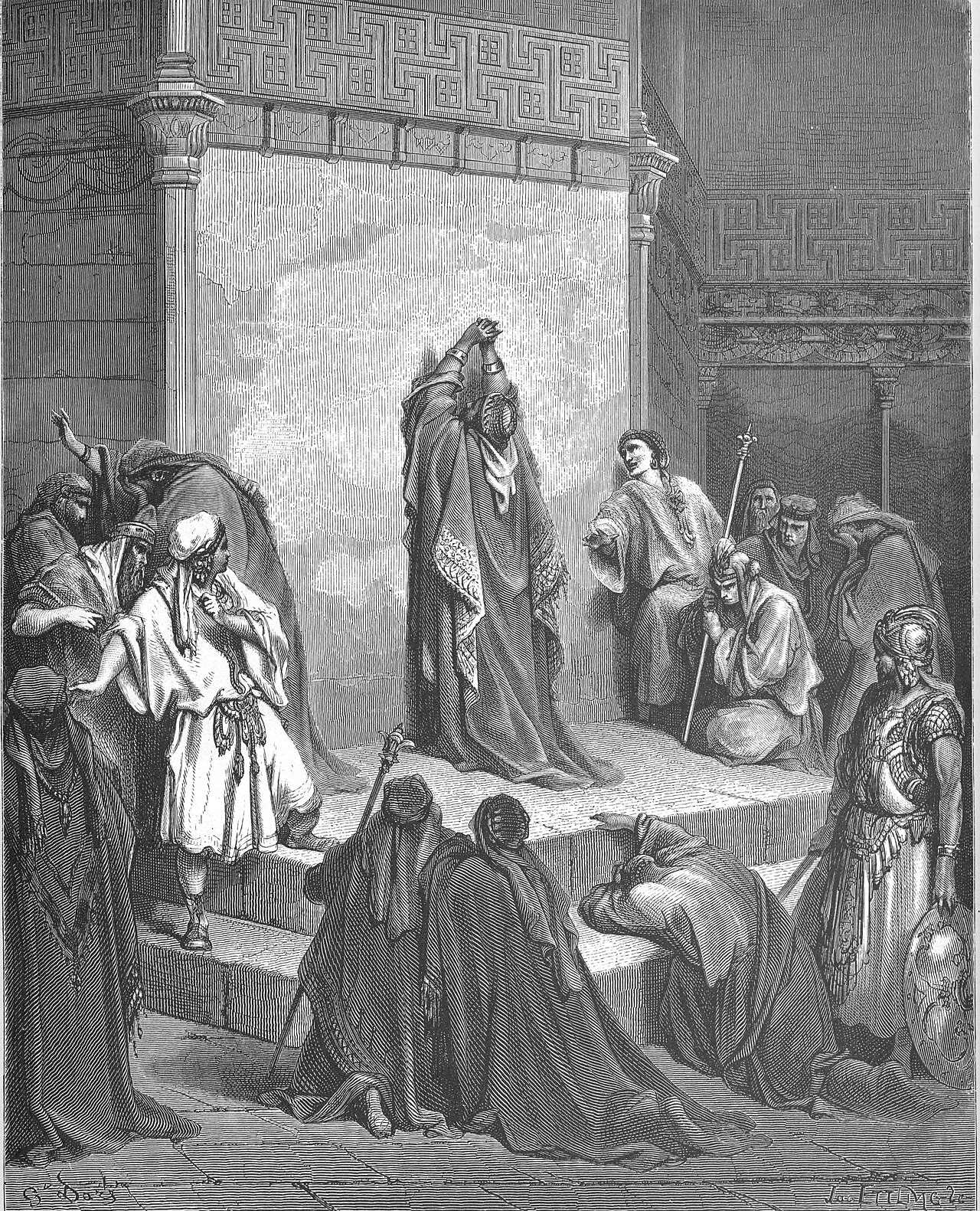
This page draws on Adam Clarke, Commentary on the Bible; Albert Barnes, Notes, Explanatory and Practical, on the Old and New Testaments (1832-1869); Albert Barnes, Notes on the Old Testament; John Gill, Exposition of the Old Testament (1748-1763); John Wesley, Explanatory Notes upon the Old Testament and Matthew Henry, Commentary on the Whole Bible.