
2 Samuel 24:12
in 2 Samuel 24“Go and tell David that this is what the LORD says: ‘I am offering you three options. Choose one of them, and I will carry it out against you.’”
BSB
The same verse in ASV and KJV ▾
ASV
Go and speak unto David, Thus saith Jehovah, I offer thee three things: choose thee one of them, that I may do it unto thee.
KJV
Go and say unto David, Thus saith the Lord, I offer thee three things; choose thee one of them, that I may do it unto thee.
⋯
This verse in 2 Samuel 24
Commentary
5 notes on this verseGod, by putting him thus to his choice, designed, [1.] To humble him the more for his sin, which we would see to be exceedingly sinful when he came to consider each of these judgments as exceedingly dreadful. Or, [2.] To upbraid him with the proud conceit he had of his own sovereignty over Israel. He that is so great a prince begins to think he may have what he will.
This site's exposition
the word of the Lord came unto the prophet Gad
on 2 Samuel 24:11-14
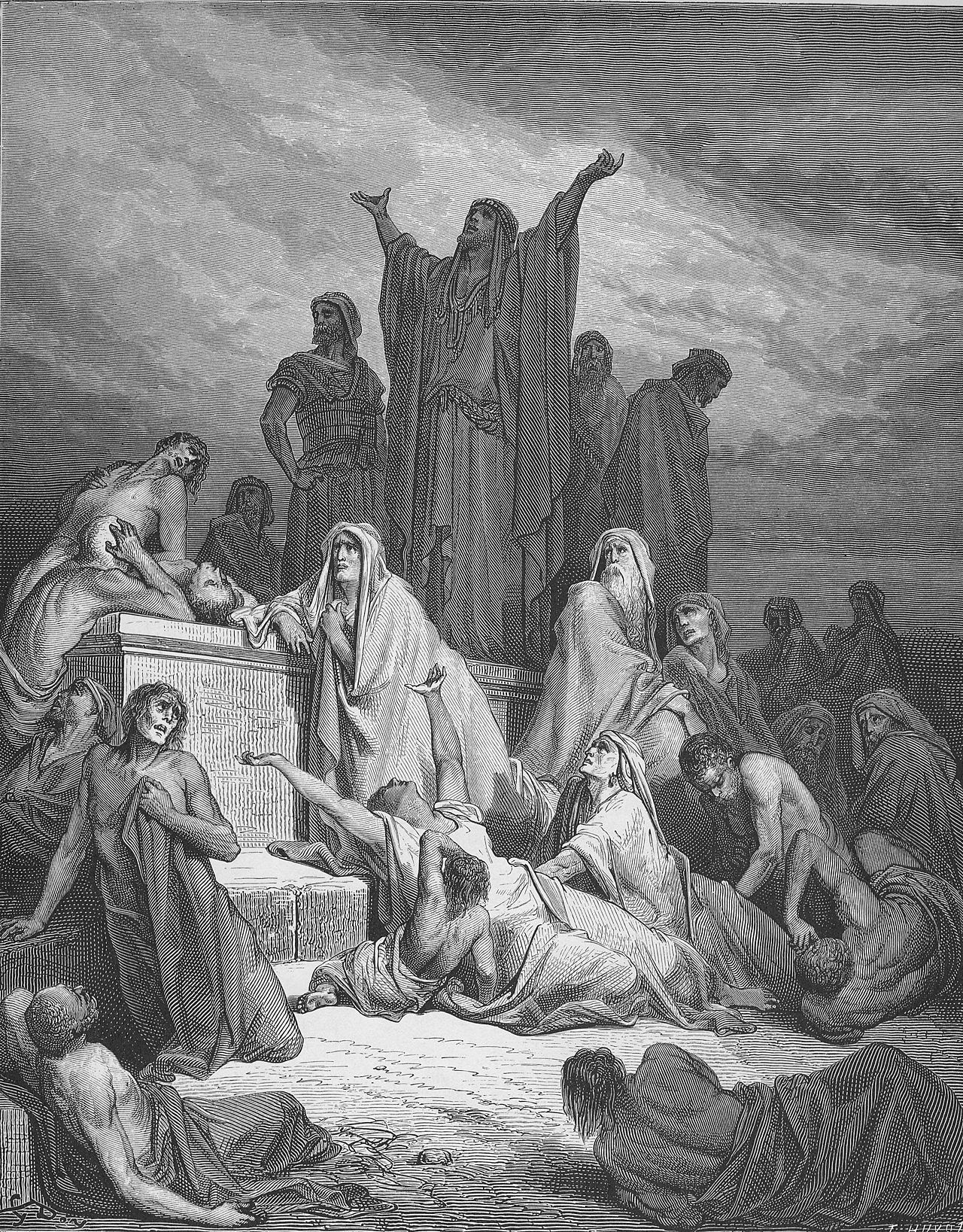
Gad is named David's seer, and the word of the Lord reaches the king through him rather than through the dream, Urim or prophet that failed Saul at 1 Samuel 28:6. Three judgments are offered, famine, flight before enemies, or pestilence, and Albert Barnes notes that Chronicles gives three years of famine where this text gives seven, a difference stated honestly rather than smoothed away. David will not choose between armies of men and settles on the third term by trusting the judge rather than bargaining the sentence, let us fall now into the hand of the Lord, for his mercies are great. Adam Clarke reads the choice as David's own nobility, since pestilence exposed him and his household to the same danger as the poorest man in Israel.
This site's exposition
I am offering you three options
Matthew Henry gives two reasons the LORD offers David three options: to humble David by weighing each judgment, and to rebuke his pride in his own power over Israel. Jamieson, Fausset and Brown note that Moses counted Israel at the command of God, so the fault lay in motive. A king who chose a count now chooses a penalty.
The record, by era
The Puritans and the Awakening1 voice
Go, and say unto David,....
The Nineteenth Century1 voice
A commentator
Jamieson, Fausset & Brown1802–1910
Commentary Critical and Explanatory on the Whole Bible (1871)
proposed
David's heart smote him after that he had numbered the people. And David said unto the Lord, I have sinned--The act of numbering the people was not in itself sinful; for Moses did it by the express authority of God.
quarantine:scripture (2026-07-29) — verbatim-run:21w-of-42
The words behind it
17 Hebrew wordsEvery Hebrew word of this verse in the order it stands, with what it means and the door to its own study. The last column counts the times a word stands in the whole Bible: the rarer the word, the more the places it appears belong together.
| Hebrew | Sound | Meaning | Word study | In the Bible |
|---|---|---|---|---|
| הָל֞וֹךְ | halokh | go | H1980 → | 1546 times |
| וְדִבַּרְתָּ֣ | vedibarta | and you will speak | H1696 → | 1141 times |
| אֶל־ | ʾel- | to | H413 → | 5510 times |
| דָּוִ֗ד | david | David | H1732 → | 999 times |
| כֹּ֚ה | koh | thus | H3541 → | 577 times |
| אָמַ֣ר | ʾamar | he says | H559 → | 5305 times |
| יְהוָ֔ה | yahweh | Yahweh | H3068 → | 6520 times |
| שָׁלֹ֕שׁ | shalosh | three [things] | H7969 → | 432 times |
| אָנֹכִ֖י | ʾanokhi | I | H595 → | 359 times |
| נוֹטֵ֣ל | notel | [am] laying | H5190 → | |
| עָלֶ֑יךָ | ʾaleikha | on you | H5921 → | 5755 times |
| בְּחַר־ | bechar- | choose | H977 → | 171 times |
| לְךָ֥ | lekha | for <the> yourself | ||
| אַֽחַת־ | ʾachat- | one | H259 → | 971 times |
| מֵהֶ֖ם | mehem | from <the> them | ||
| וְאֶֽעֱשֶׂה־ | veeeseh- | so I may do [it] | H6213 → | 2628 times |
| לָּֽךְ׃ | lakh | to <the> you |
הָל֞וֹךְgo
halokhH1980 →1546 times
וְדִבַּרְתָּ֣and you will speak
vedibartaH1696 →1141 times
אֶל־to
ʾel-H413 →5510 times
דָּוִ֗דDavid
davidH1732 →999 times
כֹּ֚הthus
kohH3541 →577 times
אָמַ֣רhe says
ʾamarH559 →5305 times
יְהוָ֔הYahweh
yahwehH3068 →6520 times
שָׁלֹ֕שׁthree [things]
shaloshH7969 →432 times
אָנֹכִ֖יI
ʾanokhiH595 →359 times
נוֹטֵ֣ל[am] laying
notelH5190 →
עָלֶ֑יךָon you
ʾaleikhaH5921 →5755 times
בְּחַר־choose
bechar-H977 →171 times
לְךָ֥for <the> yourself
lekha
אַֽחַת־one
ʾachat-H259 →971 times
מֵהֶ֖םfrom <the> them
mehem
וְאֶֽעֱשֶׂה־so I may do [it]
veeeseh-H6213 →2628 times
לָּֽךְ׃to <the> you
lakh
A shaded row is a word that stands 400 times or fewer in the Bible.
The walk
8 stopsEach card is a verse this one points to, and under it the verses that one points to in turn. Where several paths arrive at the same place, that place is listed first: the text keeps returning to it.
Through
Revelation 3:19Those I love, I rebuke and discipline. Therefore be earnest and repent.
it leads to
- Proverbs 3:11–12
My son, do not reject the discipline of the LORD, and do not loathe His rebuke;
- 1 Corinthians 11:32
But when we are judged by the Lord, we are being disciplined so that we will not be condemned with the world.
- Hebrews 12:5–11
And you have forgotten the exhortation that addresses you as sons: “My son, do not take lightly the discipline of the Lord, and do not lose heart when He rebukes you.
- Job 5:17
Blessed indeed is the man whom God corrects; so do not despise the discipline of the Almighty.
- Revelation 2:5
Therefore, keep in mind how far you have fallen. Repent and perform the deeds you did at first. But if you do not repent, I will come to you and remove your lampstand from…
- Proverbs 3:11–12
Through
Proverbs 3:12for the LORD disciplines the one He loves, as does a father the son in whom he delights.
it leads to
- Deuteronomy 8:5
So know in your heart that just as a man disciplines his son, so the LORD your God disciplines you.
- Revelation 3:19
Those I love, I rebuke and discipline. Therefore be earnest and repent.
- Proverbs 29:17
Discipline your son, and he will give you rest; he will bring delight to your soul.
- Deuteronomy 8:5
Where this verse is studied
On this page
About 2 Samuel
Who and where
1 name in this verse with a page on the site.
This page draws on Adam Clarke, Commentary on the Bible; Albert Barnes, Notes on the Old Testament; Jamieson, Fausset & Brown, Commentary Critical and Explanatory on the Whole Bible; John Gill, Exposition of the Old Testament (1748-1763) and Matthew Henry, Commentary on the Whole Bible.