
2 Samuel 13:18
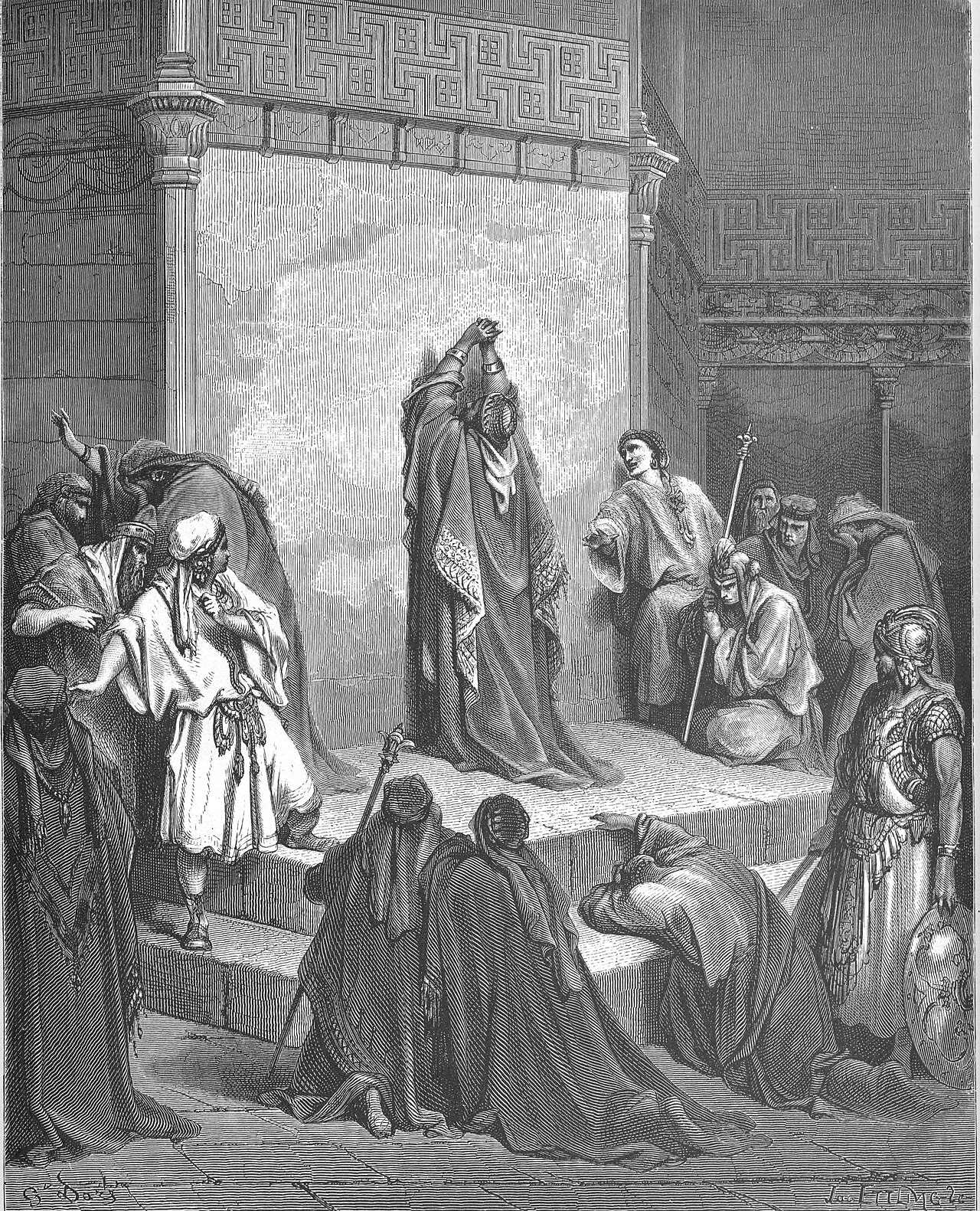
in 2 Samuel 13So Amnon’s attendant threw her out and bolted the door behind her. Now Tamar was wearing a robe of many colors, because this is what the king’s virgin daughters wore.
BSB
The same verse in ASV and KJV ▾
ASV
And she had a garment of divers colors upon her; for with such robes were the king’s daughters that were virgins apparelled. Then his servant brought her out, and bolted the door after her.
KJV
And she had a garment of divers colours upon her: for with such robes were the king’s daughters that were virgins apparelled. Then his servant brought her out, and bolted the door after her.
⋯
This verse in 2 Samuel 13
Commentary
6 notes on this verseAnd she had a garment of divers colours upon her,.... Of embroidered work, which made her the more observable, and her shame the more manifest. Whether this was interwoven with threads of various colours, or embroidered with figures of flowers, animals, &c. and wrought with the needle, or was painted with different colours, or made up of pieces of various colours, is not certain.
This site's exposition
for with such robes were
on 2 Samuel 13:18-19
Tamar's garment of divers colours marks her as a king's daughter still a virgin, and the phrase occurs in only one other place in Scripture, the coat Jacob made for Joseph at Genesis 37:3. She tears it herself, the garment meant to mark her standing now torn to mark her ruin, and puts ashes on her head, the plain sign of mourning used throughout Israel's story. The narrator lingers on the robe long enough that its tearing reads as testimony spoken in cloth, where her own household refuses to speak.
The record, by era
The Puritans and the Awakening1 voice
Having got her to him, he contrives to have her alone; for the adulterer (much more so vile an adulterer as this) is in care that no eye see him, Job xxiv. The meat is ready, but he cannot eat while he is looked at by those about him; they must all be turned out,
The Nineteenth Century3 voices
A commentator
Albert Barnes1798–1870
Notes, Explanatory and Practical, on the Old and New Testaments (1832-1869)
A garment of divers colors - See Gen 37:3. Some prefer here (and there) “a tunic with sleeves,” a tunic reaching to the extremities, i. e. the hands and feet, and worn over the common tunic, in room of a robe.
A commentator
Jamieson, Fausset & Brown1802–1910
Commentary Critical and Explanatory on the Whole Bible (1871)
proposed
Since the art of manufacturing cloth stuffs has made so great progress, dresses of this variegated description are now more common in the East. Tamar put ashes on her head, and rent her garment of divers colours . . . laid her hand on her head, and went on crying--that is, sobbing.
A garment of divers colors - See the note on Gen 37:3, where the same words occur.
The words behind it
17 Hebrew wordsEvery Hebrew word of this verse in the order it stands, with what it means and the door to its own study. The last column counts the times a word stands in the whole Bible: the rarer the word, the more the places it appears belong together.
| Hebrew | Sound | Meaning | Word study | In the Bible |
|---|---|---|---|---|
| וְעָלֶ֙יהָ֙ | vealeiha | and [was] on her | H5921 → | 5755 times |
| כְּתֹ֣נֶת | ketonet | a long garment of | H3801 → | 29 times |
| פַּסִּ֔ים | pasim | palms and soles | H6446 → | |
| כִּי֩ | ki | for | H3588 → | 4482 times |
| כֵ֨ן | khen | thus | H3651 → | 771 times |
| תִּלְבַּ֧שְׁןָ | tilbashna | they wore | H3847 → | 110 times |
| בְנוֹת־ | venot- | [the] daughters of | H1323 → | 588 times |
| הַמֶּ֛לֶךְ | hamelekh | the king | H4428 → | 2525 times |
| הַבְּתוּלֹ֖ת | habetulot | the virgins | H1330 → | |
| מְעִילִ֑ים | meilim | robes | H4598 → | |
| וַיֹּצֵ֨א | vaiyotze' | and he made go out | H3318 → | 1067 times |
| אוֹתָ֤הּ | ʾotah | <obj.> her | H853 → | 10935 times |
| מְשָֽׁרְתוֹ֙ | meshareto | servant his | H8334 → | |
| הַח֔וּץ | hachutz | the outside | H2351 → | 164 times |
| וְנָעַ֥ל | venaal | and he locked | H5274 → | |
| הַדֶּ֖לֶת | hadelet | the door | H1817 → | |
| אַחֲרֶֽיהָ׃ | ʾachareiha | after her | H310 → | 715 times |
וְעָלֶ֙יהָ֙and [was] on her
vealeihaH5921 →5755 times
כְּתֹ֣נֶתa long garment of
ketonetH3801 →29 times
פַּסִּ֔יםpalms and soles
pasimH6446 →
כִּי֩for
kiH3588 →4482 times
כֵ֨ןthus
khenH3651 →771 times
תִּלְבַּ֧שְׁןָthey wore
tilbashnaH3847 →110 times
בְנוֹת־[the] daughters of
venot-H1323 →588 times
הַמֶּ֛לֶךְthe king
hamelekhH4428 →2525 times
הַבְּתוּלֹ֖תthe virgins
habetulotH1330 →
מְעִילִ֑יםrobes
meilimH4598 →
וַיֹּצֵ֨אand he made go out
vaiyotze'H3318 →1067 times
אוֹתָ֤הּ<obj.> her
ʾotahH853 →10935 times
מְשָֽׁרְתוֹ֙servant his
mesharetoH8334 →
הַח֔וּץthe outside
hachutzH2351 →164 times
וְנָעַ֥לand he locked
venaalH5274 →
הַדֶּ֖לֶתthe door
hadeletH1817 →
אַחֲרֶֽיהָ׃after her
ʾachareihaH310 →715 times
A shaded row is a word that stands 400 times or fewer in the Bible.
The walk
8 stopsEach card is a verse this one points to, and under it the verses that one points to in turn. Where several paths arrive at the same place, that place is listed first: the text keeps returning to it.
Through
Genesis 37:23So when Joseph came to his brothers, they stripped him of his robe—the robe of many colors he was wearing—
it leads to
- Genesis 37:3
Now Israel loved Joseph more than his other sons, because Joseph had been born to him in his old age; so he made him a robe of many colors.
Reached by 3 separate paths from here.
- Matthew 27:28
They stripped Him and put a scarlet robe on Him.
- Genesis 37:31–33
Then they took Joseph’s robe, slaughtered a young goat, and dipped the robe in its blood.
- Genesis 42:21
Then they said to one another, “Surely we are being punished because of our brother. We saw his anguish when he pleaded with us, but we would not listen. That is why this distress…
- Psalms 22:18
They divide my garments among them and cast lots for my clothing.
- Genesis 37:3
Through
Judges 5:30‘Are they not finding and dividing the spoil—a girl or two for each warrior, a plunder of dyed garments for Sisera, the spoil of embroidered garments for the neck of the looter?’
it leads to
- Exodus 15:9
The enemy declared, ‘I will pursue, I will overtake. I will divide the spoils; I will gorge myself on them. I will draw my sword; my hand will destroy them.’
- Exodus 15:9
Through
Genesis 37:3Now Israel loved Joseph more than his other sons, because Joseph had been born to him in his old age; so he made him a robe of many colors.
it leads to
- Genesis 37:32
They sent the robe of many colors to their father and said, “We found this. Examine it to see whether it is your son’s robe or not.”
- John 3:35
The Father loves the Son and has placed all things in His hands.
- Genesis 37:32
Where this verse is studied
On this page
About 2 Samuel
This page draws on Adam Clarke, Commentary on the Bible; Albert Barnes, Notes on the Old Testament; Albert Barnes, Notes, Explanatory and Practical, on the Old and New Testaments (1832-1869); Jamieson, Fausset & Brown, Commentary Critical and Explanatory on the Whole Bible; John Gill, Exposition of the Old Testament (1748-1763); John Gill, Exposition of the Old Testament and Matthew Henry, Commentary on the Whole Bible.