
2 Samuel 12:7
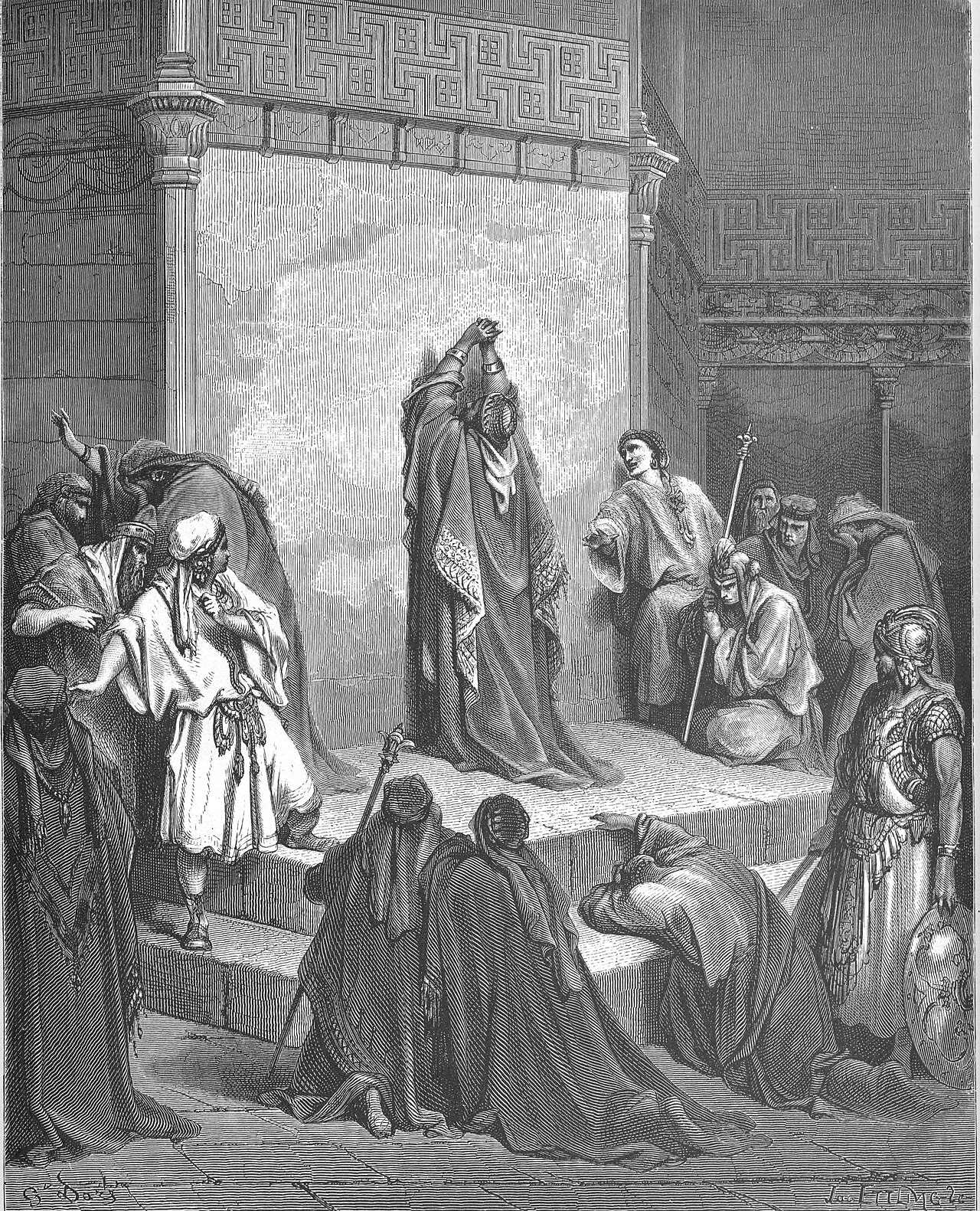
in 2 Samuel 12Then Nathan said to David, “You are that man! This is what the LORD, the God of Israel, says: ‘I anointed you king over Israel, and I delivered you from the hand of Saul.
BSB
The same verse in ASV and KJV ▾
ASV
And Nathan said to David, Thou art the man. Thus saith Jehovah, the God of Israel, I anointed thee king over Israel, and I delivered thee out of the hand of Saul;
KJV
And Nathan said to David, Thou art the man. Thus saith the Lord God of Israel, I anointed thee king over Israel, and I delivered thee out of the hand of Saul;
⋯
This verse in 2 Samuel 12
Commentary
6 notes on this verseA commentator
Jamieson, Fausset & Brown1802–1910
Commentary Critical and Explanatory on the Whole Bible (1871)
He was pardoned, so far as related to the restoration of the divine favor. But as from his high character for piety, and his eminent rank in society, his deplorable fall was calculated to do great injury to the cause of religion, it was necessary that God should testify His abhorrence of sin by leaving even His own servant to reap the bitter temporal fruits.
This site's exposition
Thou art the man
on 2 Samuel 12:7-9
Thou art the man is Nathan's whole reply, and the phrase occurs nowhere else in Scripture, the parable's judge becoming the accused in three words. Nathan recites what the Lord had given David, the kingdom, the house of Israel and Judah, and more besides for the asking, before naming what David took that was never his to take. The charge is put in the sharpest terms the text allows, thou hast killed Uriah the Hittite with the sword and hast taken his wife, with the Ammonite blade named only as the instrument David chose. Jamieson Fausset and Brown read the rebuke as necessary precisely because David's public standing made a private sin into a public wound on the name of the Lord.
The record, by era
The Church Fathers1 voice
A commentator
John ChrysostomHOMILIES ON REPENTANCE AND ALMSGIVING 2.2.9 · Written in the 5th century.
proposed
Therefore, Nathan went to David and wove a dramatic act for judgment. And what did he say? "My king, I want your judgment. There was a certain rich man and a certain poor one. The rich person possessed herds of cattle and many other flocks; and the poor one had one ewe that drank from his glass, ate from his table and slept in his embrace." Here Nathan revealed the genuine bond between a husband and wife. "When a certain stranger arrived, the rich man desired to keep his own animals, and he took the poor man's ewe and slaughtered her." Here, do you see how Nathan wove the dramatic act, mysteriously concealing the weapon in the glands of David's throat? Then what did the king say? Thinking that he had to pass judgment against someone else, he decided most severely. For such are human beings. When it concerns other people, they gladly and abruptly render decisions and publicize them. And what did David say? "As the Lord lives, the man who did this thing is worthy of death. And he shall restore the lamb fourfold." Therefore, what did Nathan reply? He did not allow the wound to be relieved for many hours; rather, he quickly stripped it naked and sharply embedded the knife deeply into it, so as not to rob it of the painful sensation. "You are the man, my king." What did the king say? "I have sinned against the Lord." He did not say, "Who are you who censures me? Who sent you to speak with such boldness? With what daring did you prevail?" He did not say anything of the sort; rather, he perceived the sin. And what did he say? "I have sinned against the Lord." Therefore, what did Nathan say to him? "And the Lord remitted your sin." You condemned yourself; I [God] remit your sentence. You confessed prudently; you annulled the sin. You appropriated a condemnatory decision against yourself; I repealed the sentence. […]
The Puritans and the Awakening2 voices
And Nathan said to David, thou art the man,....
He had given him the house of Israel and Judah. The wealth of the kingdom was at his service and every body was willing to oblige him. Nay, he was ready to bestow any thing upon him to make him easy: I would have given thee such and such things,
The Nineteenth Century1 voice
Thou art the man - What a terrible word! And by it David appears to have been transfixed, and brought into the dust before the messenger of God. Thou Art this son of death, and thou shalt restore this lamb Fourfold.
The words behind it
20 Hebrew wordsEvery Hebrew word of this verse in the order it stands, with what it means and the door to its own study. The last column counts the times a word stands in the whole Bible: the rarer the word, the more the places it appears belong together.
| Hebrew | Sound | Meaning | Word study | In the Bible |
|---|---|---|---|---|
| וַיֹּ֧אמֶר | vaiyomer | and he said | H559 → | 5305 times |
| נָתָ֛ן | natan | Nathan | H5416 → | 41 times |
| אֶל־ | ʾel- | to | H413 → | 5510 times |
| דָּוִ֖ד | david | David | H1732 → | 999 times |
| אַתָּ֣ה | ʾatah | you | H859 → | 1094 times |
| הָאִ֑ישׁ | haish | [are] the man | H376 → | 1663 times |
| כֹּה־ | koh- | thus | H3541 → | 577 times |
| אָמַ֨ר | ʾamar | he says | H559 → | 5305 times |
| יְהוָ֜ה | yahweh | Yahweh | H3068 → | 6520 times |
| אֱלֹהֵ֣י | ʾelohei | [the] God of | H430 → | 2601 times |
| יִשְׂרָאֵ֗ל | yisrael | Israel | H3478 → | 2507 times |
| אָנֹכִ֞י | ʾanokhi | I | H595 → | 359 times |
| מְשַׁחְתִּ֤יךָֽ | meshachtikha | I anointed you | H4886 → | 70 times |
| לְמֶ֙לֶךְ֙ | lemelekh | to king | H4428 → | 2525 times |
| עַל־ | ʾal- | over | H5921 → | 5755 times |
| יִשְׂרָאֵ֔ל | yisrael | Israel | H3478 → | 2507 times |
| וְאָנֹכִ֥י | veanokhi | and I | H595 → | 359 times |
| הִצַּלְתִּ֖יךָ | hitzaltikha | I delivered you | H5337 → | 212 times |
| מִיַּ֥ד | miyad | from [the] hand of | H3027 → | 1618 times |
| שָׁאֽוּל׃ | shaul | Saul | H7586 → | 402 times |
וַיֹּ֧אמֶרand he said
vaiyomerH559 →5305 times
נָתָ֛ןNathan
natanH5416 →41 times
אֶל־to
ʾel-H413 →5510 times
דָּוִ֖דDavid
davidH1732 →999 times
אַתָּ֣הyou
ʾatahH859 →1094 times
הָאִ֑ישׁ[are] the man
haishH376 →1663 times
כֹּה־thus
koh-H3541 →577 times
אָמַ֨רhe says
ʾamarH559 →5305 times
יְהוָ֜הYahweh
yahwehH3068 →6520 times
אֱלֹהֵ֣י[the] God of
ʾeloheiH430 →2601 times
יִשְׂרָאֵ֗לIsrael
yisraelH3478 →2507 times
אָנֹכִ֞יI
ʾanokhiH595 →359 times
מְשַׁחְתִּ֤יךָֽI anointed you
meshachtikhaH4886 →70 times
לְמֶ֙לֶךְ֙to king
lemelekhH4428 →2525 times
עַל־over
ʾal-H5921 →5755 times
יִשְׂרָאֵ֔לIsrael
yisraelH3478 →2507 times
וְאָנֹכִ֥יand I
veanokhiH595 →359 times
הִצַּלְתִּ֖יךָI delivered you
hitzaltikhaH5337 →212 times
מִיַּ֥דfrom [the] hand of
miyadH3027 →1618 times
שָׁאֽוּל׃Saul
shaulH7586 →402 times
A shaded row is a word that stands 400 times or fewer in the Bible.
The walk
8 stopsEach card is a verse this one points to, and under it the verses that one points to in turn. Where several paths arrive at the same place, that place is listed first: the text keeps returning to it.
Through
Matthew 14:14When He stepped ashore and saw a large crowd, He had compassion on them and healed their sick.
it leads to
- Hebrews 4:15
For we do not have a high priest who is unable to sympathize with our weaknesses, but we have one who was tempted in every way that we are, yet was without sin.
- Hebrews 2:17
For this reason He had to be made like His brothers in every way, so that He might become a merciful and faithful high priest in service to God, in order to make atonement…
- Matthew 9:36
When He saw the crowds, He was moved with compassion for them, because they were harassed and helpless, like sheep without a shepherd.
- Matthew 15:32–39
Then Jesus called His disciples to Him and said, “I have compassion for this crowd, because they have already been with Me three days and have nothing to eat. I do not want to…
- John 11:33–35
When Jesus saw her weeping, and the Jews who had come with her also weeping, He was deeply moved in spirit and troubled.
- Hebrews 4:15
Through
1 Samuel 16:13So Samuel took the horn of oil and anointed him in the presence of his brothers, and the Spirit of the LORD rushed upon David from that day forward. Then Samuel set out and…
it leads to
- 1 Samuel 10:6
Then the Spirit of the LORD will rush upon you, and you will prophesy with them; and you will be transformed into a different person.
- Hebrews 1:9
You have loved righteousness and hated wickedness; therefore God, Your God, has anointed You above Your companions with the oil of joy.”
- John 3:34
For the One whom God has sent speaks the words of God, for God gives the Spirit without limit.
- 1 Samuel 10:6
Where this verse is studied
On this page
Studies4
About 2 Samuel
Who and where
3 names in this verse with a page on the site.
- PersonUnited MonarchyDavidSecond king of united Israel, shepherd-turned-monarch, ancestor of the Messiah, and traditional author of many Psalms.
- PersonUnited monarchySaulIsrael's first king, head and shoulders above the people; began in humility, ended in rejection — sparing what God devoted, consul…
- PersonUnited monarchyNathanThe prophet at David's court who carried the covenant promise of 2 Samuel 7 and later the parable of the ewe lamb — "thou art the…
This page draws on Adam Clarke, Commentary on the Bible; Jamieson Fausset and Brown, Commentary Critical and Explanatory on the Whole Bible; Jamieson, Fausset & Brown, Commentary Critical and Explanatory on the Whole Bible; John Chrysostom, HOMILIES ON REPENTANCE AND ALMSGIVING 2.2.9; John Gill, Exposition of the Old Testament (1748-1763) and Matthew Henry, Commentary on the Whole Bible.