
Subject
Anxiety
The worry that eats tomorrow, and what Scripture says to do with it.
Part of Topics & Trials
Also called: worry, fret, care, troubled heart, afraid for tomorrow, cast down
This subject covers the worry a person carries about what has not happened yet, and what Scripture tells him to do with it. Terror in the face of something present belongs to Fear. The years spent between a promise and its answer belong to Waiting.
What Anxiety covers, and where it stops
This subject covers the worry a person carries about what has not happened yet, and what Scripture tells him to do with it. Terror in the face of something present belongs to Fear. The years spent between a promise and its answer belong to Waiting.
On this page, 7 sections
The one drawing
Across the canon
Old Testament
New Testament
The other 49 books of the canon carry none.
12 passages
Where Scripture speaks
The passages this subject stands on, in canon order.
Then Jacob was greatly afraid and distressed: and he divided the people that was with him, and the flocks, and herds, and the camels, into two bands;And she was in bitterness of soul, and prayed unto the Lord, and wept sore.Cast thy burden upon the Lord, and he shall sustain thee: he shall never suffer the righteous to be moved.In the multitude of my thoughts within me thy comforts delight my soul.Heaviness in the heart of man maketh it stoop: but a good word maketh it glad.Fear thou not; for I am with thee: be not dismayed; for I am thy God: I will strengthen thee; yea, I will help thee; yea, I will uphold thee with the right hand of my righteousness.Therefore I say unto you, Take no thought for your life, what ye shall eat, or what ye shall drink; nor yet for your body, what ye shall put on. Is not the life more than meat, and the body than raiment?Take therefore no thought for the morrow: for the morrow shall take thought for the things of itself. Sufficient unto the day is the evil thereof. And Jesus answered and said unto her, Martha, Martha, thou art careful and troubled about many things:Let not your heart be troubled: ye believe in God, believe also in me.Be careful for nothing; but in every thing by prayer and supplication with thanksgiving let your requests be made known unto God.Casting all your care upon him; for he careth for you.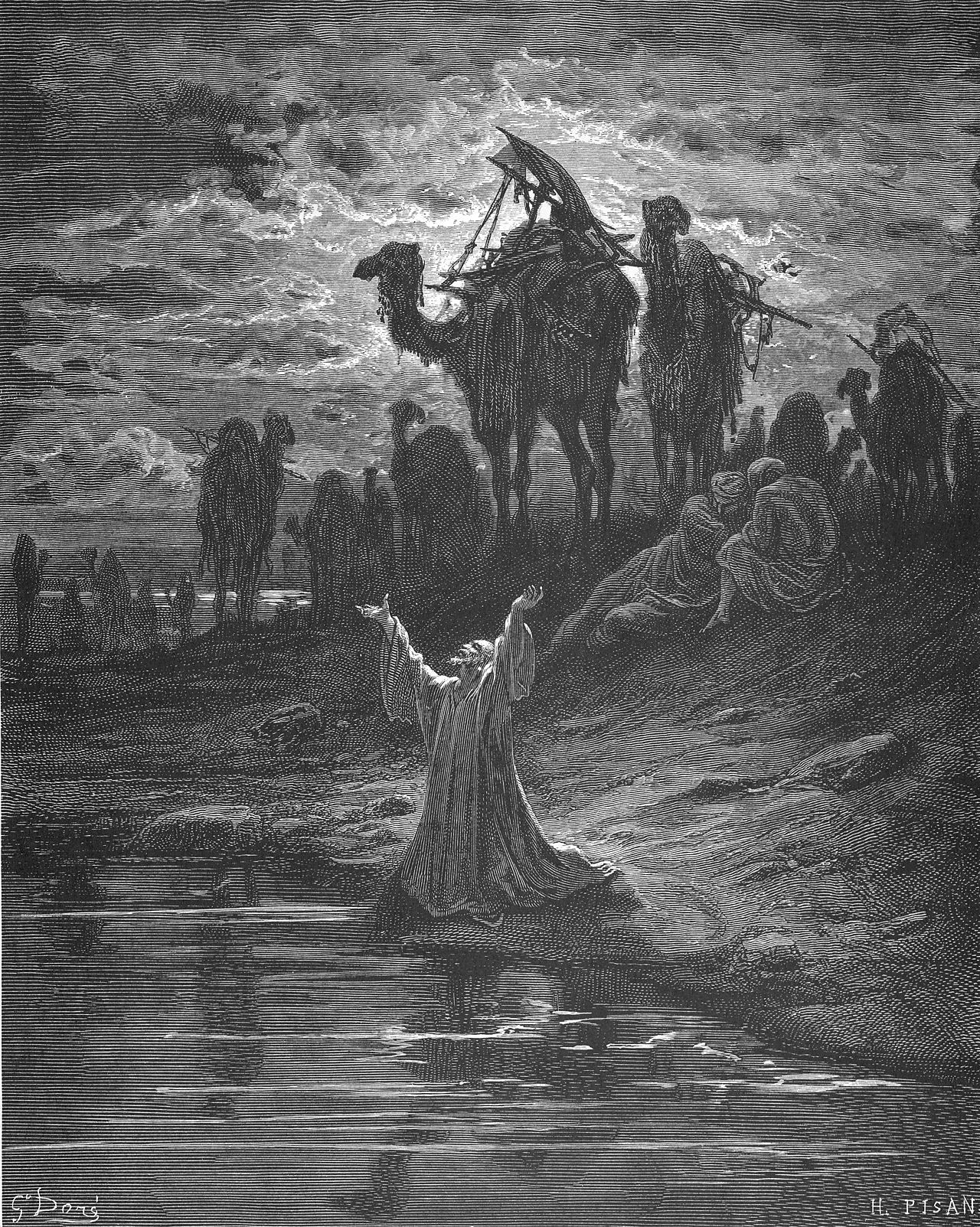
Anxiety in Scripture, in full
Anxiety in Scripture is the restless worry that gathers to itself tomorrow's troubles. Jesus addresses it in the Sermon on the Mount; Paul prescribes the replacement (prayer + thanksgiving) in Philippians 4; the Psalms record the sleepless night as a fact of the life of faith. Scripture treats anxiety seriously and offers a transfer of weight, not a dismissal of it.
4 voices
What teachers have said
“Be not anxiously solicitous; do not give place to carking care, let what will occur; for anxiety cannot chance the state or condition of any thing from bad to good, but will infallibly injure your own souls.”
Adam Clarke · Commentary on the Bible
Written before 1832.
“so he giveth his beloved sleep--that is, His providential care gives sleep which no efforts of ours can otherwise procure, and this is a reason for trust as to other things”
Jamieson, Fausset & Brown · Commentary Critical and Explanatory on the Whole Bible, 1871
“If I do not worry about the one that strays and gets lost, even the one that is strong will think it is rather fun to stray and get lost. I do indeed desire outward gains, but I am more afraid of inner losses.”
Augustine of Hippo · Sermon 46:15
Written before 430.
“But because we must always be anxious, always attentive; and because the Word of God leaps forth like a young goat, or like a fawn, the soul must always be vigilant and strive for what it seeks and desires to hold.”
Ambrose of Milan · On Isaac and the Soul, 5.38
Written before 397.
The words underneath
Each card is one Hebrew or Greek word behind anxiety. It gives the sense, the count across the canon, and the number in Strong's 1890 concordance.
amerimnos: untroubled
Greek · G275Strong's entry: not anxious
Paul's goal for a troubled heart
2 times in the New Testament · amerimnos, in full →
merimnao: to worry
Greek · G3309Strong's entry: to be anxious about
the word behind 'take no thought'
19 times in the New Testament · merimnao, in full →
daag: be anxious
Hebrew · H1672Strong's entry: be anxious
Saul's dread, David's worry over his son
7 times in the Old Testament · daag, in full →
charadah: trembling
Hebrew · H2731Strong's entry: fear, anxiety
the shudder before sudden danger
9 times in the Old Testament · charadah, in full →
25 verses
The complete list
The King James text uses the language of anxiety in 27 verses. 2 of them are quoted above and the other 25 stand here, book by book. 10 more verses above show anxiety without using one of its words, so they are outside that count. Open a book to read the references with a clause of each verse.
Leviticus4
- Leviticus 13:51And he shall look on the plague on the seventh day: if the plague be spread in the garment...
- Leviticus 13:52He shall therefore burn that garment, whether warp or woof, in woollen or in linen, or any...
- Leviticus 13:55And the priest shall look on the plague, after that it is washed: and, behold, if the plague...
- Leviticus 14:44Then the priest shall come and look, and, behold, if the plague be spread in the house, it is a...
Psalms3
- Psalms 37:1Fret not thyself because of evildoers, neither be thou envious against the workers of iniquity.
- Psalms 37:7Rest in the Lord, and wait patiently for him: fret not thyself because of him who prospereth in...
- Psalms 37:8Cease from anger, and forsake wrath: fret not thyself in any wise to do evil.
Proverbs2
Ezekiel3
- Ezekiel 12:18Son of man, eat thy bread with quaking, and drink thy water with trembling and with carefulness;
- Ezekiel 12:19And say unto the people of the land, Thus saith the Lord God of the inhabitants of Jerusalem...
- Ezekiel 16:43Because thou hast not remembered the days of thy youth, but hast fretted me in all these...
1 Corinthians1
2 Corinthians1
Philippians2
Topics & Trials
The subjects beside it
On this page
Subjects14