
Also called: haughty, arrogance, lifted up, boasting, self-exalted, high looks
This subject covers the self enthroned where God belongs, from the oldest fall to the warnings against it. Seeing yourself the size you actually are belongs to Humility. Wanting what another man has belongs to Envy.
What Pride covers, and where it stops
This subject covers the self enthroned where God belongs, from the oldest fall to the warnings against it. Seeing yourself the size you actually are belongs to Humility. Wanting what another man has belongs to Envy.
On this page, 7 sections
The one drawing
Across the canon
Old Testament
- Exodus1
- Leviticus1
- 1 Samuel2
- 2 Samuel1
- 1 Kings1
- 2 Chronicles2
- Nehemiah3
- Job9
- Psalms32
- Proverbs17
- Ecclesiastes1
- Isaiah14
- Jeremiah9
- Ezekiel6
- Daniel2
- Hosea2
- Obadiah2
- Habakkuk1
- Zephaniah2
- Zechariah3
- Malachi2
New Testament
The other 34 books of the canon carry none.
12 passages
Where Scripture speaks
The passages this subject stands on, in canon order.
For God doth know that in the day ye eat thereof, then your eyes shall be opened, and ye shall be as gods, knowing good and evil.And they said, Go to, let us build us a city and a tower, whose top may reach unto heaven; and let us make us a name, lest we be scattered abroad upon the face of the whole earth.But when he was strong, his heart was lifted up to his destruction: for he transgressed against the Lord his God, and went into the temple of the Lord to burn incense upon the altar of incense.When pride cometh, then cometh shame: but with the lowly is wisdom.Pride goeth before destruction, and an haughty spirit before a fall.For thou hast said in thine heart, I will ascend into heaven, I will exalt my throne above the stars of God: I will sit also upon the mount of the congregation, in the sides of the north:Thine heart was lifted up because of thy beauty, thou hast corrupted thy wisdom by reason of thy brightness: I will cast thee to the ground, I will lay thee before kings, that they may behold thee.The king spake, and said, Is not this great Babylon, that I have built for the house of the kingdom by the might of my power, and for the honour of my majesty?The pride of thine heart hath deceived thee, thou that dwellest in the clefts of the rock, whose habitation is high; that saith in his heart, Who shall bring me down to the ground?I tell you, this man went down to his house justified rather than the other: for every one that exalteth himself shall be abased; and he that humbleth himself shall be exalted.For I say, through the grace given unto me, to every man that is among you, not to think of himself more highly than he ought to think; but to think soberly, according as God hath dealt to every man the measure of faith.But he giveth more grace. Wherefore he saith, God resisteth the proud, but giveth grace unto the humble.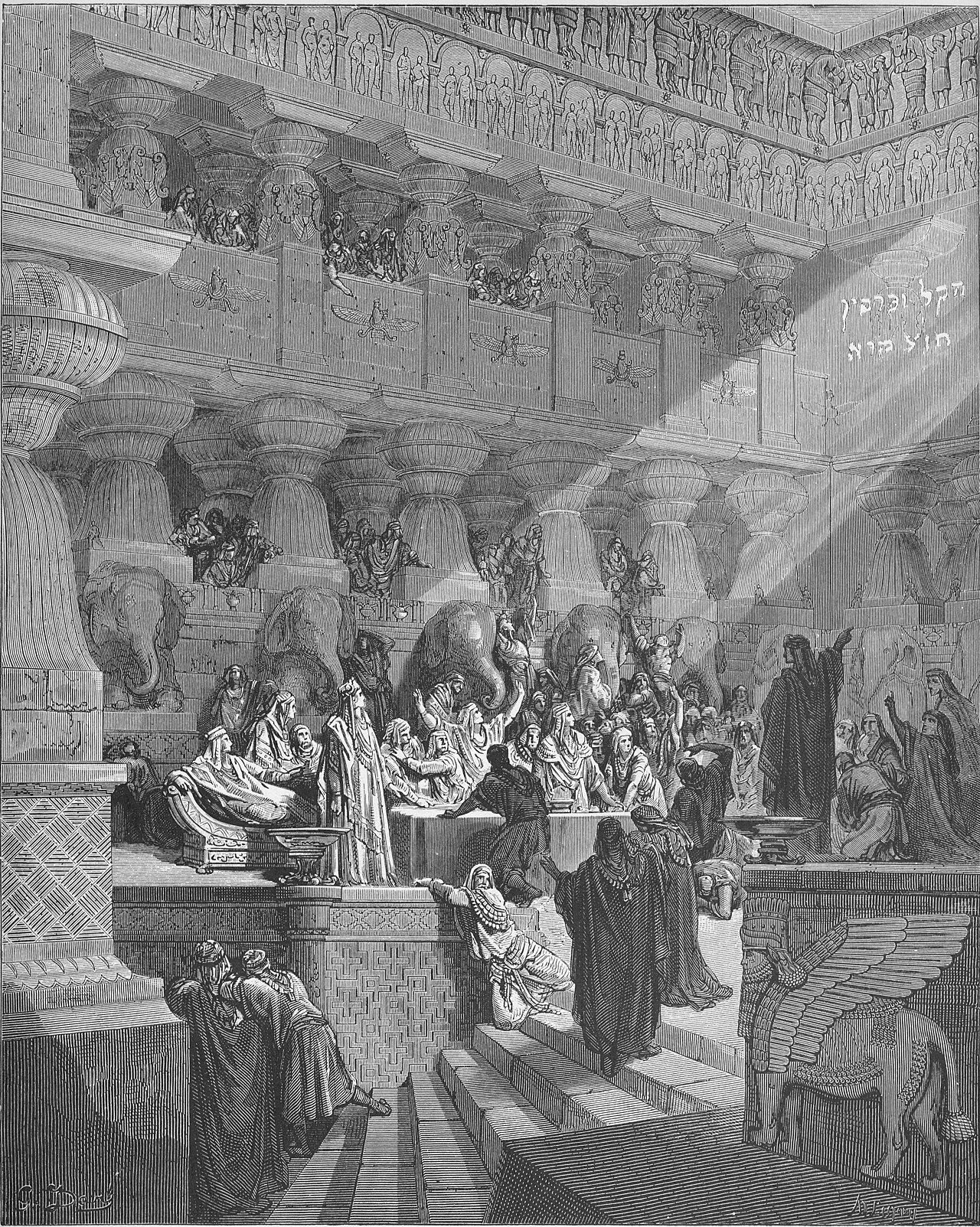
Pride in Scripture, in full
Pride in Scripture is the posture of self-exaltation and independence from God — named as the root of many sins and the opposite of the humility that receives grace. The biblical pattern is consistent: those who exalt themselves are brought low (Nebuchadnezzar, Herod Agrippa, the Pharisee in Luke 18). Pride is addressed not by self-help but by repentance.
4 voices
What teachers have said
“There is hardly a page in the holy books in which it is not shown that God resists the proud but to the humble offers grace.”
Augustine of Hippo · Christian Instruction 3:23.33
Written before 430.
“and pride and arrogance, either in states or individuals, have the peculiar abhorrence of God. Pride does not suit the sons of men; it made devils of angels, and makes fiends of men.”
Adam Clarke · Commentary on the Bible
Written before 1832.
“The minds of the arrogant are doubtless so very mad, that even in what they think rightly, they are disfigured by the deformity of their pride.”
Gregory the Dialogist · Morals on the Book of Job, Book XXIII
Written before 604.
“But he giveth greater grace - To all who shun those tempers. Therefore it - The scripture. Saith, God resisteth the proud - And pride is the great root of all unkind affections.”
John Wesley · Explanatory Notes upon the New Testament, 1755
The words underneath
Each card is one Hebrew or Greek word behind pride. It gives the sense, the count across the canon, and the number in Strong's 1890 concordance.
gaon: pride
Hebrew · H1347Strong's entry: {arrogance or majesty; by implication, (concretely) ornament}
the standard Hebrew noun for pride
49 times in the Old Testament · gaon, in full →
hyperephanos: arrogant
Greek · G5244Strong's entry: appearing above others (conspicuous), i.e. (figuratively) haughty
the Greek word for the proud
5 times in the New Testament · hyperephanos, in full →
gabahh: to exult
Hebrew · H1361Strong's entry: to soar, i.e. be lofty; figuratively, to be haughty
figuratively, to be haughty and self-exalted
34 times in the Old Testament · gabahh, in full →
rum: to exalt
Hebrew · H7311Strong's entry: to be high actively, to rise or raise (in various applications, literally or figuratively)
the root behind being 'high' or haughty
190 times in the Old Testament · rum, in full →
138 verses
The complete list
The King James text uses the language of pride in 142 verses. 4 of them are quoted above and the other 138 stand here, book by book. 8 more verses above show pride without using one of its words, so they are outside that count. Open a book to read the references with a clause of each verse.
1 Samuel2
2 Chronicles2
Nehemiah3
- Nehemiah 9:10And shewedst signs and wonders upon Pharaoh, and on all his servants, and on all the people of...
- Nehemiah 9:16But they and our fathers dealt proudly, and hardened their necks, and hearkened not to thy...
- Nehemiah 9:29And testifiedst against them, that thou mightest bring them again unto thy law: yet they dealt...
Job9
- Job 9:13If God will not withdraw his anger, the proud helpers do stoop under him.
- Job 26:12He divideth the sea with his power, and by his understanding he smiteth through the proud.
- Job 33:17That he may withdraw man from his purpose, and hide pride from man.
- Job 35:12There they cry, but none giveth answer, because of the pride of evil men.
- Job 38:11And said, Hitherto shalt thou come, but no further: and here shall thy proud waves be stayed?
- Job 40:11Cast abroad the rage of thy wrath: and behold every one that is proud, and abase him.
- Job 40:12Look on every one that is proud, and bring him low; and tread down the wicked in their place.
- Job 41:15His scales are his pride, shut up together as with a close seal.
- Job 41:34He beholdeth all high things: he is a king over all the children of pride.
Psalms32
- Psalms 10:2The wicked in his pride doth persecute the poor: let them be taken in the devices that they...
- Psalms 10:3For the wicked boasteth of his heart’s desire, and blesseth the covetous, whom the Lord...
- Psalms 10:4The wicked, through the pride of his countenance, will not seek after God: God is not in all...
- Psalms 12:3The Lord shall cut off all flattering lips, and the tongue that speaketh proud things:
- Psalms 17:10They are inclosed in their own fat: with their mouth they speak proudly.
- Psalms 31:18Let the lying lips be put to silence; which speak grievous things proudly and contemptuously...
- Psalms 31:20Thou shalt hide them in the secret of thy presence from the pride of man: thou shalt keep them...
- Psalms 31:23O love the Lord, all ye his saints: for the Lord preserveth the faithful, and plentifully...
- Psalms 34:2My soul shall make her boast in the Lord: the humble shall hear thereof, and be glad.
- Psalms 36:11Let not the foot of pride come against me, and let not the hand of the wicked remove me.
- Psalms 40:4Blessed is that man that maketh the Lord his trust, and respecteth not the proud, nor such as...
- Psalms 44:8In God we boast all the day long, and praise thy name for ever. Selah.
- Psalms 49:6They that trust in their wealth, and boast themselves in the multitude of their riches;
- Psalms 52:1Why boastest thou thyself in mischief, O mighty man? the goodness of God endureth continually.
- Psalms 59:12For the sin of their mouth and the words of their lips let them even be taken in their pride...
- Psalms 73:6Therefore pride compasseth them about as a chain; violence covereth them as a garment.
- Psalms 86:14O God, the proud are risen against me, and the assemblies of violent men have sought after my...
- Psalms 94:2Lift up thyself, thou judge of the earth: render a reward to the proud.
- Psalms 94:4How long shall they utter and speak hard things? and all the workers of iniquity boast...
- Psalms 97:7Confounded be all they that serve graven images, that boast themselves of idols: worship him...
- Psalms 101:5Whoso privily slandereth his neighbour, him will I cut off: him that hath an high look and a...
- Psalms 119:21Thou hast rebuked the proud that are cursed, which do err from thy commandments.
- Psalms 119:51The proud have had me greatly in derision: yet have I not declined from thy law.
- Psalms 119:69The proud have forged a lie against me: but I will keep thy precepts with my whole heart.
- Psalms 119:78Let the proud be ashamed; for they dealt perversely with me without a cause: but I will...
- Psalms 119:85The proud have digged pits for me, which are not after thy law.
- Psalms 119:122Be surety for thy servant for good: let not the proud oppress me.
- Psalms 123:4Our soul is exceedingly filled with the scorning of those that are at ease, and with the...
- Psalms 124:5Then the proud waters had gone over our soul.
- Psalms 131:1Lord, my heart is not haughty, nor mine eyes lofty: neither do I exercise myself in great...
- Psalms 138:6Though the Lord be high, yet hath he respect unto the lowly: but the proud he knoweth afar off.
- Psalms 140:5The proud have hid a snare for me, and cords; they have spread a net by the wayside; they have...
Proverbs15
- Proverbs 6:17A proud look, a lying tongue, and hands that shed innocent blood,
- Proverbs 8:13The fear of the Lord is to hate evil: pride, and arrogancy, and the evil way, and the froward...
- Proverbs 13:10Only by pride cometh contention: but with the well advised is wisdom.
- Proverbs 14:3In the mouth of the foolish is a rod of pride: but the lips of the wise shall preserve them.
- Proverbs 15:25The Lord will destroy the house of the proud: but he will establish the border of the widow.
- Proverbs 16:5Every one that is proud in heart is an abomination to the Lord: though hand join in hand, he...
- Proverbs 16:19Better it is to be of an humble spirit with the lowly, than to divide the spoil with the proud.
- Proverbs 18:12Before destruction the heart of man is haughty, and before honour is humility.
- Proverbs 20:14It is naught, it is naught, saith the buyer: but when he is gone his way, then he boasteth.
- Proverbs 21:4An high look, and a proud heart, and the plowing of the wicked, is sin.
- Proverbs 21:24Proud and haughty scorner is his name, who dealeth in proud wrath.
- Proverbs 25:14Whoso boasteth himself of a false gift is like clouds and wind without rain.
- Proverbs 27:1Boast not thyself of to morrow; for thou knowest not what a day may bring forth.
- Proverbs 28:25He that is of a proud heart stirreth up strife: but he that putteth his trust in the Lord shall...
- Proverbs 29:23A man’s pride shall bring him low: but honour shall uphold the humble in spirit.
Ecclesiastes1
Isaiah14
- Isaiah 2:12For the day of the Lord of hosts shall be upon every one that is proud and lofty, and upon...
- Isaiah 3:5And the people shall be oppressed, every one by another, and every one by his neighbour: the...
- Isaiah 3:16Moreover the Lord saith, Because the daughters of Zion are haughty, and walk with stretched...
- Isaiah 9:9And all the people shall know, even Ephraim and the inhabitant of Samaria, that say in the...
- Isaiah 10:15Shall the axe boast itself against him that heweth therewith? or shall the saw magnify itself...
- Isaiah 10:33Behold, the Lord, the Lord of hosts, shall lop the bough with terror: and the high ones of...
- Isaiah 13:11And I will punish the world for their evil, and the wicked for their iniquity; and I will cause...
- Isaiah 16:6We have heard of the pride of Moab; he is very proud: even of his haughtiness, and his pride...
- Isaiah 23:9The Lord of hosts hath purposed it, to stain the pride of all glory, and to bring into contempt...
- Isaiah 24:4The earth mourneth and fadeth away, the world languisheth and fadeth away, the haughty people...
- Isaiah 25:11And he shall spread forth his hands in the midst of them, as he that swimmeth spreadeth forth...
- Isaiah 28:1Woe to the crown of pride, to the drunkards of Ephraim, whose glorious beauty is a fading...
- Isaiah 28:3The crown of pride, the drunkards of Ephraim, shall be trodden under feet:
- Isaiah 61:6But ye shall be named the Priests of the Lord: men shall call you the Ministers of our God: ye...
Jeremiah9
- Jeremiah 13:9Thus saith the Lord, After this manner will I mar the pride of Judah, and the great pride of...
- Jeremiah 13:15Hear ye, and give ear; be not proud: for the Lord hath spoken.
- Jeremiah 13:17But if ye will not hear it, my soul shall weep in secret places for your pride; and mine eye...
- Jeremiah 43:2Then spake Azariah the son of Hoshaiah, and Johanan the son of Kareah, and all the proud men...
- Jeremiah 48:29We have heard the pride of Moab, (he is exceeding proud) his loftiness, and his arrogancy, and...
- Jeremiah 49:16Thy terribleness hath deceived thee, and the pride of thine heart, O thou that dwellest in the...
- Jeremiah 50:29Call together the archers against Babylon: all ye that bend the bow, camp against it round...
- Jeremiah 50:31Behold, I am against thee, O thou most proud, saith the Lord God of hosts: for thy day is come...
- Jeremiah 50:32And the most proud shall stumble and fall, and none shall raise him up: and I will kindle a...
Ezekiel6
- Ezekiel 7:10Behold the day, behold, it is come: the morning is gone forth; the rod hath blossomed, pride...
- Ezekiel 16:49Behold, this was the iniquity of thy sister Sodom, pride, fulness of bread, and abundance of...
- Ezekiel 16:50And they were haughty, and committed abomination before me: therefore I took them away as I saw...
- Ezekiel 16:56For thy sister Sodom was not mentioned by thy mouth in the day of thy pride,
- Ezekiel 30:6Thus saith the Lord; They also that uphold Egypt shall fall; and the pride of her power shall...
- Ezekiel 35:13Thus with your mouth ye have boasted against me, and have multiplied your words against me: I...
Daniel2
Hosea2
Zephaniah2
Zechariah3
- Zechariah 9:6And a bastard shall dwell in Ashdod, and I will cut off the pride of the Philistines.
- Zechariah 10:11And he shall pass through the sea with affliction, and shall smite the waves in the sea, and...
- Zechariah 11:3There is a voice of the howling of the shepherds; for their glory is spoiled: a voice of the...
Malachi2
Mark1
Romans5
- Romans 1:30Backbiters, haters of God, despiteful, proud, boasters, inventors of evil things, disobedient...
- Romans 2:17Behold, thou art called a Jew, and restest in the law, and makest thy boast of God,
- Romans 2:23Thou that makest thy boast of the law, through breaking the law dishonourest thou God?
- Romans 3:27Where is boasting then? It is excluded. By what law? of works? Nay: but by the law of faith.
- Romans 11:18Boast not against the branches. But if thou boast, thou bearest not the root, but the root thee.
2 Corinthians12
- 2 Corinthians 7:14For if I have boasted any thing to him of you, I am not ashamed; but as we spake all things to...
- 2 Corinthians 8:24Wherefore shew ye to them, and before the churches, the proof of your love, and of our boasting...
- 2 Corinthians 9:2For I know the forwardness of your mind, for which I boast of you to them of Macedonia, that...
- 2 Corinthians 9:3Yet have I sent the brethren, lest our boasting of you should be in vain in this behalf; that...
- 2 Corinthians 9:4Lest haply if they of Macedonia come with me, and find you unprepared, we (that we say not, ye)...
- 2 Corinthians 10:8For though I should boast somewhat more of our authority, which the Lord hath given us for...
- 2 Corinthians 10:13But we will not boast of things without our measure, but according to the measure of the rule...
- 2 Corinthians 10:15Not boasting of things without our measure, that is, of other men’s labours; but having hope...
- 2 Corinthians 10:16To preach the gospel in the regions beyond you, and not to boast in another man’s line of...
- 2 Corinthians 11:10As the truth of Christ is in me, no man shall stop me of this boasting in the regions of Achaia.
- 2 Corinthians 11:16I say again, Let no man think me a fool; if otherwise, yet as a fool receive me, that I may...
- 2 Corinthians 11:17That which I speak, I speak it not after the Lord, but as it were foolishly, in this confidence...
1 Timothy2
2 Timothy1
James2
Topics & Trials
The subjects beside it
On this page
Subjects14