
Matthewchapter 17
27 verses · Matthew, by tradition · AD 50 to 65 · The Gospels
Key verse
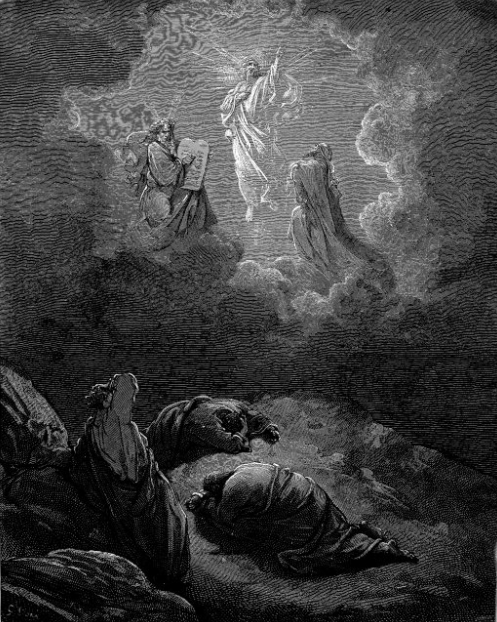
And after six days Jesus taketh Peter, James, and John his brother, and bringeth them up into an high mountain apart,
It stands in Transfigured on the High Mountain, verses 1 to 13.
The chapter
Chapter summary
Transfiguration on the mount. Moses, Elijah, the bright cloud, the Father's voice. Descent and the demoniac boy whom the disciples could not heal ('this kind goeth not out but by prayer and fasting'). Second passion prediction. The temple-tax miracle. Peter and the coin in the fish's mouth.
Context
Gospel · Matthew · Matthew overview
The world of this chapter
- Who
- Jewish readers who paid the temple tax every year of their lives
- Where
- A high mountain in the north, then back down to Capernaum
- When
- The Galilean ministry, near its close. c. AD 29
Historical context
Which mountain is not certain. The traditional site is Tabor in Galilee, but Tabor had a settlement on its summit in that period, and the story's location just after Caesarea Philippi has led many to prefer a spur of Mount Hermon, which rises over nine thousand feet nearby and is snow-capped much of the year.
Peter's offer to build three shelters is a festival reflex. At the Feast of Tabernacles, Jewish families lived a week in booths of branches, remembering the wilderness and looking for the age to come. Faced with Moses and Elijah, Peter reaches for the nearest liturgy he knows.
The tax collectors in Capernaum are not Rome's men. The two-drachma payment was the annual temple tax, rooted in Exodus, that every Jewish male over twenty paid toward the sacrifices and upkeep in Jerusalem. It was collected locally in the weeks before Passover and shipped to the city.
The coin in the fish is exact, not vague. A stater was worth four drachmas, precisely two temple taxes, one for Jesus and one for Peter. Fish in that lake, particularly the broad-mouthed species still caught there, are known to pick up and hold small objects.
Significance
The voice on the mountain repeats what was said at the baptism and adds three words: listen to him. For readers being told to listen instead to the teachers of their synagogue, that instruction settled the question of whose voice ranked highest.
The tax episode then modelled how they should live in the meantime. Sons are free, Jesus says, and pays anyway, so as not to give offence. A community with a genuine claim to freedom still chose not to make every point it could win.
Where the chapter sits
Matthew 17 falls in Parables of the Kingdom (chapters 13). Discourse 3: hidden then revealed.
Before it: Mission of the Twelve, chapters 10. After it: Community in the Kingdom, chapters 18.
The whole shape of Matthew→The structure of this chapter
People1
Places1
The heads below are this chapter's scenes. The numbered points under each are its verses.
Transfigured on the High Mountain
an high mountain apart: Six days after Peter's confession and rebuke, Jesus takes the same three he will later bring nearest him in Gethsemane, Peter, James and John, up a high mountain the tradition has argued between Tabor and Hermon, with Hermon's nearness to Caesarea Philippi favored by the older harmonists. Luke's about eight days is not a contradiction but an inclusive count against Matthew's exclusive one, both reckoning the same interval by different customary methods. Transfigured, metamorphothe in the Greek, describes a change from within shining outward, his face as the sun and his raiment white as the light, language that echoes Moses' own shining face after Sinai in Exodus 34 and anticipates the promised brightness of the resurrected in Daniel 12:3.
Matthew 17:1
“That is, so long after Christ's conversation with his disciples at Caesarea Philippi, Peter's confession of him, and the reproof he gave him, upon his intimating that he should suffer and die, and Christ's resentment of it; after he had discoursed about his disciples taking up their cross, and following him; and of men's losing and finding their lives; and after the promise, or prophecy, that he had given out, that some then present should not die, until he came into his kingdom.”
2 more voices on this verseWhat preachers and commentators have said about this verse, in their own words.
Matthew 17:1
“These verses contain one of the most remarkable events in our Lord’s earthly ministry, the event commonly called the transfiguration. The order in which it is recorded is beautiful and instructive. The latter part of the last chapter showed us the cross; here we are graciously allowed to see something of the coming reward. The hearts which have just been saddened by a plain statement of Christ’s sufferings are at once gladdened by a vision of Christ’s glory. Let us mark this. We often lose much by not tracing the connection between chapter and chapter in the Word of God.”
J.C. Ryle· Expository Thoughts on the Gospels: Matthew (1856)Reformed Evangelical
Matthew 17:1
“They were present when he raised the damsel to life, Mark v. 37 . They were afterward to be the witnesses of his agony, and this was to prepare them for that. Note, A sight of Christ's glory, while we are here in this world, is a good preparative for our sufferings with him, as these are preparatives for the sight of his glory in the other world.”
Matthew Henry· Commentary on the Whole Bible (1707-1721)puritan
Matthew 17:2
“Was transfigured - That fullness of the Godhead, which dwelt bodily in Christ, now shone forth through the human nature, and manifested to his disciples not only that Divinity which Peter had before confessed, Mat 16:16, but also the glorious resurrection body, in which they should exist in the presence of God to eternity. White as the light - But the Cod. Bezae, some of the ancient versions, and several of the fathers, read ως χιων, as snow; and this is the reading in Mar 9:3.”
Adam Clarke· Commentary on the Bible (1810-1826)evangelical
2 more voices on this verse
Matthew 17:2
“And Peter, and they that were with him, were overpowered with sleep; and when they awoke, they saw his glory, and the two men who were with him. And it happened, while they were departing from him, Peter said to Jesus, Master, it is good for us to be here: and let us make three tabernacles; one for thee, and one for Moses, and one for Elijah: not knowing what he said.”
John Calvin· Commentaries (1554)reformed
Matthew 17:2
“WHILE our Lord Jesus Christ was upon this earth, He was as much Divine as before He left His Father's court in Heaven. He never ceased to be God, nor was the Godhead for a single moment separated from His Humanity. He was, therefore, always glorious. Yet there was a greater Glory about Him than could usually be seen. This may seem to be a paradox, but it is true. For Christ to be glorious was almost a less matter than for Him to restrain or hide His Glory.”
Charles Spurgeon· written before 1892· The Metropolitan Tabernacle Pulpit, Sermon No. 2729: “Christ's Transfigured Face” (lightly modernized text, CCEL edition)Particular Baptist
Moses and Elias talking with him: Moses and Elijah stand together as the Law and the Prophets in living representation, and the older commentators add a further pairing, one who died and was buried by God's own hand in a grave no man knows, the other who never tasted death at all, so that both patterns of departure from this life stand present at once around the one who will conquer death itself. Their conversation, given by Luke as concerning his decease which he should accomplish at Jerusalem, ties the scene of glory directly to the road that leads to the cross. Their appearance also answers, in the disciples' own sight, the very question the previous chapter raised about who Jesus is beside Moses and the prophets.
Matthew 17:3
“And behold there appeared unto them,.... The disciples: Moses and Elias; Moses the giver of the law, and Elias one of the chief of the prophets: one of them had been dead near a thousand and five hundred years, and the other had been caught up to heaven, about nine hundred years before this. The Jews sometimes speak of these two as together.”
3 more voices on this verse
Matthew 17:3
“It is to be remembered also, that when the Scribes and Pharisees asked signs from heaven, He would not give any; but now, to increase the Apostles' faith, He gives a sign; Elias descends from heaven, whither he was gone up, and Moses arises from hell; (Is. 7:10.) as Ahaz is bidden by Esaias to ask him a sign in the heaven above, or in the depth beneath.”
Jerome· written before 420· Catena Aurea by Aquinaspatristic
Matthew 17:3
“There appeared Moses and Elijah - Here for the full confirmation of their faith in Jesus, Moses, the giver of the law, Elijah, the most zealous of all the prophets, and God speaking from heaven, all bore witness to him.”
John Wesley· Explanatory Notes upon the New Testament (1755)evangelical
Matthew 17:3
“Note, Communion with Christ is the delight of Christians. All the disciples of the Lord Jesus reckon it is good for them to be with him in the holy mount. It is good to be here where Christ is, and whither he brings us along with him by his appointment; it is good to be here, retired and alone with Christ; to be here, where we may behold the beauty of the Lord Jesus, Ps. xxvii.”
Matthew Henry· Commentary on the Whole Bible (1707-1721)puritan
let us make here three tabernacles: Peter's offer to build three tabernacles, one each for Jesus, Moses and Elijah, treats the three figures as equals and proposes to prolong a moment meant to pass. Gill reads the suggestion as well meant but confused, perhaps drawing on the Feast of Tabernacles' own booths, an impulse to hold the vision rather than let it point beyond itself to the voice that follows. Mark and Luke both add that Peter spoke not knowing what to say, a detail this Gospel omits but the exposition notes as the honest verdict on the proposal.
Matthew 17:4
“Yet art thou wrong, Peter, and as another Evangelist says, knowest not what thou sayest. (Luke 9:33.) Think not. of three tabernacles, when there is but one tabernacle of the Gospel in which both Law and Prophets are to be repeated. But if thou wilt have three tabernacles, set not the servants equal with their Lord, but make three tabernacles, yea make one for the Father, Son, and Holy Spirit, that They whose divinity is one, may have but one tabernacle, in thy bosom.”
Jerome· written before 420· Catena Aurea by Aquinaspatristic
1 more voice on this verse
Matthew 17:4
“Peter said - let us make, etc. - That is, when he saw Moses and Elijah ready to depart from the mount, Luk 9:33, he wished to detain them, that he might always enjoy their company with that of his Lord and Master, still supposing that Christ would set up a temporal kingdom upon earth.”
Adam Clarke· Commentary on the Bible (1810-1826)evangelical
a bright cloud overshadowed them: The bright cloud is the Shekinah, the same visible glory that filled the tabernacle and the temple, and the voice from it repeats the baptism's own words, this is my beloved Son, in whom I am well pleased, with one addition, hear ye him. Barnes reads that addition as the Father's own answer to Peter's proposal, since it sets Jesus apart from Moses and Elijah rather than alongside them, echoing Deuteronomy 18:15's promised prophet like unto Moses whom Israel must hear. The Law and the Prophets have spoken through their representatives; now the Father directs all attention to the one greater than both.
Matthew 17:5
“WHEN our Lord Jesus Christ was transfigured, there came a Voice from the bright, overshadowing cloud, which said, "This is My Beloved Son, in whom I am well pleased. Hear you Him." It was the Voice of the Father concerning His Son—a testimony to His Person, a notification of His office, an announcement of His authority to teach and to legislate. You can understand how imperative it then was for those who heard it to heed Him. But now He is gone up from us.”
Charles Spurgeon· written before 1892· The Metropolitan Tabernacle Pulpit, Sermon No. 3440: “Attention!” (lightly modernized text, CCEL edition)Particular Baptist
1 more voice on this verse
Matthew 17:5
“While they thought only of an earthly tabernacle of boughs or tents, they are overshadowed by the covering of a bright cloud; While he yet spake, there came a bright cloud and overshadowed them. (Exod. 19:9, 16.) Forasmuch as Peter had asked unwisely, he deserves not any answer; but the Father makes answer for the Son, that the Lord's word might be fulfilled, He that sent me, he beareth witness of me. (John 5:37.)”
Jerome· written before 420· Catena Aurea by Aquinaspatristic
fell on their face, and were sore afraid: The disciples fall in terror at the voice, and Jesus comes to touch them himself, the same gesture he used on the leper of chapter 8, with the same reassurance, arise, and be not afraid. When they lift their eyes the vision has resolved to its center, they saw no man, save Jesus only, Moses and Elijah having withdrawn and left him standing alone. Chrysostom reads this closing image as the whole scene's real lesson, that every lesser glory, however great, gives way before Christ and leaves him occupying the field by himself.
Matthew 17:6
“Fell on their face - Dismayed by the voice, and dazzled by the glory of the cloud. So Daniel, Dan 8:17, and Saul of Tarsus, Act 9:4.”
Adam Clarke· Commentary on the Bible (1810-1826)evangelical
1 more voice on this verse
Matthew 17:6
“Their cause of terror is threefold. Because they knew that they had done amiss; or because the bright cloud had covered them; or because they had heard the voice of God the Father speaking; for human frailty cannot endure to look upon so great glory, and falls to the earth trembling through both soul and body. And by how much higher any one has aimed, by so much lower will be his fall, if he shall be ignorant of his own measure.”
Jerome· written before 420· Catena Aurea by Aquinaspatristic
Matthew 17:7
“And whereas they were laid down, and could not raise themselves again, He approaches them, touches them gently, that by His touch their fear might be banished, and their unnerved limbs gain strength; And Jesus drew near, and touched them. But He further added His word to His hand, And said unto them, Arise, fear not. He first banishes their fear, that He may after impart teaching.”
Jerome· written before 420· Catena Aurea by Aquinaspatristic
1 more voice on this verse
Matthew 17:7
“Jesus came and touched them - Exactly parallel to this account is Dan 8:18, I was in a deep sleep, i.e. (a trance) on my face towards the ground; but he Touched me, and set me upright. From Jesus alone are we to expect Divine communications, and by his power only are we able to bear and improve them.”
Adam Clarke· Commentary on the Bible (1810-1826)evangelical
Matthew 17:8
“And when they lifted up their eyes, they saw no man, save Jesus only; which was done with good reason; for had Moses and Elias continued with the Lord, it might have seemed uncertain to which in particular the witness of the Father was borne. Also they see Jesus standing after the cloud has been removed, and Moses and Elias disappeared, because after the shadow of the Law and Prophets has departed, both are found in the Gospel.”
Jerome· written before 420· Catena Aurea by Aquinaspatristic
3 more voices on this verse
Matthew 17:8
“And when they had lift up their eyes,.... And "looked round about", as Mark says, to see whether the same objects still continued, as Moses and Elias; and the bright cloud: they saw no man; neither Moses nor Elias, who were both gone: signifying, that though the law and the prophets were till this time, they were now finished and completed, and the Mosaic economy was to be no more; as these men appeared no more after, nor will they till the second coming of Christ.”
Matthew 17:8
“The last words will suffice us for a text, “Jesus only.” When Peter saw our Lord with Moses and Elias, he exclaimed, “Master, it is good to be here,” as if he implied that it was better to be with Jesus, and Moses, and Elias, than to be with Jesus only.”
Matthew 17:8
“If sometimes we are favoured with special manifestations of divine grace, glimpses and pledges of future glory, yet they are withdrawn presently; two heavens are too much for those to expect that never deserve one. Now they saw no man, save Jesus only. Note, Christ will tarry with us when Moses and Elias are gone.”
Matthew Henry· Commentary on the Whole Bible (1707-1721)puritan
Tell the vision to no man: Coming down the mountain, Jesus renews the charge to silence but adds a limit not given elsewhere, until the Son of man be risen again from the dead, showing the silence was never meant to be permanent. Clarke notes the resurrection is the appointed key that unlocks the telling, since a transfiguration story announced before the cross would only have fed the crowd's hope for an immediate earthly kingdom the passion predictions were already correcting. The charge is kept faithfully; none of the three tells the story publicly until after the resurrection had made its full sense plain.
Matthew 17:9
“Tell the vision to no man - This vision was designed particularly to confirm them in the truth that he was the Messiah. While he was with them it was unnecessary that they should relate what they had seen. When he was crucified they would need this evidence that he was the Christ. Then they were to use it. There were three witnesses of it as many as the law required Deu 17:6; Heb 10:28, and the proof that he was the Messiah was clear.”
1 more voice on this verse
Matthew 17:9
“Note, When we return to the world again after an ordinance, it must be our care to take Christ with us, and then it may be our comfort that he is with us. As they came down, they talked of Christ. Note, When we are returning from holy ordinance, it is good to entertain ourselves and one another with discourse suitable to the work we have been about.”
Matthew Henry· Commentary on the Whole Bible (1707-1721)puritan
Elias must first come?: The disciples' question rests on Malachi 4:5-6, Elijah promised before the great and terrible day of the Lord, and Jesus answers that Elijah has come already in the person of John the Baptist, whom they knew him not, but have done unto him whatsoever they listed, a plain reference to John's execution at Herod's hand. Some commentators read this as a full and complete answer to Malachi's promise; others hold a further literal appearance of Elijah still stands ahead, pointing to the tradition later associated with the two witnesses of Revelation 11. The exposition names both readings, since the disciples' own understanding in verse 13 settles only that John fulfilled the type, not that no future fulfillment remains.
Matthew 17:10
“It was a tradition of the Pharisees following the Prophet Malachi, that Elias should come before the coming of the Saviour, and bring back the heart of the fathers to the children, and the children to the fathers, and restore all things to their ancient state. The disciples then consider that this transformation which they had seen in the mount was His coming in glory, and therefore it is said, And his disciples asked him, saying, How then say the Scribes that Elias must first come?”
Jerome· written before 420· Catena Aurea by Aquinaspatristic
3 more voices on this verse
Matthew 17:10
“And his disciples asked him, saying,.... That is, these three, Peter, James, and John, before they came to the rest; whilst they were going down the mountain, or from it, to the place where the others were; for the rest knew nothing of the appearance of Elias, and so cannot be thought to join in a question concerning him. Why then say the Scribes, that Elias must first come?”
Matthew 17:10
“His disciples - instead of His disciples, some MSS., with the Coptic, Armenian, Vulgate, all the Itala except two, and Origen, read simply, οι μαθηται, The disciples, i.e. those only who had been with him on the mount, Peter, James, and John.”
Adam Clarke· Commentary on the Bible (1810-1826)evangelical
Matthew 17:10
“Why then say the scribes, that Elijah must come first - Before the Messiah? If no man is to know of his coming? Should we not rather tell every man, that he is come, and that we have seen him, witnessing to thee as the Messiah?”
John Wesley· Explanatory Notes upon the New Testament (1755)evangelical
Matthew 17:11
“And Jesus answered and said unto them,.... By way of concession, Elias truly shall first come: this is indeed a tenet of the Scribes, and it is also certain, that there is a prophecy in Mal 4:5 of the coming of Elias; of one that goes under that name, not of Elias the Tishbite, in person, but of one that was to come in his power and spirit, and restore all things.”
2 more voices on this verse
Matthew 17:11
“Elias - shall first come, and restore all things - Or will reform, αποκαταστησει; this word our Lord quotes from the Septuagint; who render the Hebrew והשוב לב אבות על בנים vehesheb leb aboth al banim, he will cause the heart of the fathers to turn to the children, by, ος αποκαταστησει καρδιαν πατρος προς υιον, who will convert, or restore, the heart of the father to the son. We are not therefore to understand the version of the Septuagint quoted by our Lord in any other sense than the Hebrew will allow.”
Adam Clarke· Commentary on the Bible (1810-1826)evangelical
Matthew 17:11
“Note, Corrupt and mistaken glosses may be sufficiently rejected and exploded, without diminishing or derogating from the authority or dignity of the sacred text. New-Testament prophecies are true and good, and are to be received and improved, though some hot foolish men may have misinterpreted them and drawn wrong inferences from them.”
Matthew Henry· Commentary on the Whole Bible (1707-1721)puritan
Matthew 17:12
“Note, God's promises are often fulfilled, and men perceive it not, but enquire, Where is the promise? when it is already performed. Elias is come, and they knew him not; they knew him not to be the Elias promised, the forerunner of the Messiah.”
Matthew Henry· Commentary on the Whole Bible (1707-1721)puritan
2 more voices on this verse
Matthew 17:12
“The disciples who went up with Jesus remembered the traditions of the scribes concerning Elijah, that before the advent of Christ, Elijah would come and prepare for him the souls of those who would receive him. But the vision on the mountain, in which Elijah appeared, did not seem to be harmonized with what had been said, since Elijah seemed to them to have come with him rather than before him. So they say this thinking that the scribes were wrong.”
Origen of Alexandria· written before 253· COMMENTARY ON MATTHEW 13.1patristic
Matthew 17:12
“Knew him not - Or, ουκ επιγνωσαν αυτον, They have not acknowledged him. That is, the Jewish rulers have not acknowledged him, did not receive him as the forerunner of the Messiah. But it appears that all the rest acknowledged him as such; and some, from the power and demonstration of his preaching, were inclined to think he was more, even the Messiah himself: see Luk 3:15.”
Adam Clarke· Commentary on the Bible (1810-1826)evangelical
Matthew 17:13
“Then the disciples understood - When he spoke of the sufferings of this prophetic Elijah, and also of his own, which had been the subject of the conversation on the mount, during the transfiguration, they clearly apprehended that he spoke of John the Baptist.”
Adam Clarke· Commentary on the Bible (1810-1826)evangelical
1 more voice on this verse
Matthew 17:13
“It is enquired how, seeing that Herod and Herodias were they that killed John, it can be said that Jesus also was crucified by them, when we read that He was put to death by the Scribes and Pharisees? It must be answered briefly, that the party of the Pharisees consented to the death of John, and that in the Lord's crucifixion Herod united his approval, when having mocked and set Him at nought, he sent Him back to Pilate, that he should crucify Him.”
Jerome· written before 420· Catena Aurea by Aquinaspatristic
The Boy the Disciples Could Not Heal
kneeling down to him: The father's description, lunatick, selenizetai in the Greek, moonstruck, names symptoms that read closely to what medicine would later call epilepsy, falling into fire and water at intervals, and the exposition holds both facts together rather than against each other: the observable pattern matches a recognizable condition, and the text's own diagnosis, confirmed when Jesus rebukes the devil in verse 18, names a spiritual cause behind it. Gill reads the coexistence as unremarkable, since Scripture elsewhere allows a demonic affliction to produce physical symptoms indistinguishable from natural disease. The disciples' failure to cure him, stated plainly, sets up the private question that follows once the crowd has gone.
Matthew 17:14
“When they were come to the multitude - It appears that a congregation had been collected during our Lord’s stay on the mount: how great must have been the desire of these people to hear the words of Christ! The assembly is self-collected, and no delay on the preacher’s side discourages them - they continue to wait for him. In the present day how rare is this zeal!”
Adam Clarke· Commentary on the Bible (1810-1826)evangelical
2 more voices on this verse
Matthew 17:14
“A melancholy representation of the case of this child, made to Christ by the afflicted father. This was immediately upon his coming down from the mountain where he was transfigured. Note, Christ's glories do not make him unmindful of us and of our wants and miseries.”
Matthew Henry· Commentary on the Whole Bible (1707-1721)puritan
Matthew 17:14
We read in this passage another of our Lord’s great miracles. He heals a young man lunatic and possessed with a devil. The first thing we see in these verses is a lively emblem of the awful influence sometimes exercised by Satan over the young. We are told of a certain man’s son, who was “lunatic and sore vexed.” We are told of the evil spirit pressing him on to the destruction of body and soul: “Oftimes he falleth into the fire and oft into the water.”
J.C. Ryle· Expository Thoughts on the Gospels: Matthew (1856)Reformed Evangelical
Matthew 17:15
“Lord, have mercy - The word “Lord” here means “Sir,” a title of civility, not implying divinity. My son - This was an only son (Luke). He was possessed with a devil.”
1 more voice on this verse
Matthew 17:15
“And the case of afflicted children should be presented to God by faithful and fervent prayer. This child's distemper, probably, disabled him to pray for himself. Note, Parents are doubly concerned to pray for their children, not only that are weak and cannot, but much more that are wicked and will not, pray for themselves.”
Matthew Henry· Commentary on the Whole Bible (1707-1721)puritan
Matthew 17:16
“And I brought him to thy disciples,.... To the nine, whilst Christ was with the other three upon the mountain: no doubt but his design was to bring him to Christ first; but he being absent, he applied to his disciples, and, desired them to make use of their power to heal him; and which they attempted, but without success: and they could not cure him.”
2 more voices on this verse
Matthew 17:16
“Thy disciples could not cure him - No wonder, when the cure must be effected by supernatural agency, and they had not faith enough to interest the power of God in their behalf, Mat 17:20. A spiritual disorder must have a spiritual remedy: natural means, in such cases, signify just - nothing.”
Adam Clarke· Commentary on the Bible (1810-1826)evangelical
Matthew 17:16
“Note, There are some special favours which Christ reserves the bestowment of to himself; and sometimes he keeps the cistern empty; that he may bring us to himself, the Fountain. But the failures of instruments shall not hinder the operations of his grace, which will work, if not by them, yet without them. The rebukes that Christ gave to the people first, and then to the devil.”
Matthew Henry· Commentary on the Whole Bible (1707-1721)puritan
faithless and perverse generation: Jesus' sharpest rebuke in this scene, O faithless and perverse generation, how long shall I be with you, echoes Moses' own complaint against the wilderness generation in Deuteronomy 32:5, and the older commentators read it as aimed broadly, at the unbelieving crowd, the scribes who had likely been disputing with the disciples, and the disciples' own weak faith together. Henry reads the outburst as a rare moment of visible weariness in the Gospel record, a King surrounded by unbelief even at the height of his own ministry. The rebuke does not stop the healing that follows; it simply names what stood in its way.
Matthew 17:17
“Then Jesus answered and said, O faithless and perverse generation! - Perverse means that which is twisted or turned from the proper direction; and is often used of the eyes, when one or both are turned from their natural position. Applied to a generation or race of people, it means that they hold opinions turned or perverted from the truth, and that they were wicked in their conduct. Jesus applied this, probably, to the Jews, and not to his real disciples. How long shall I suffer you? - That is, how long shall I bear with you?”
3 more voices on this verse
Matthew 17:17
“They were faithless and perverse. Note, Those that are faithless will be perverse; and perverseness is sin in its worst colours. Faith is compliance with God, unbelief is opposition and contradiction to God.”
Matthew Henry· Commentary on the Whole Bible (1707-1721)puritan
Matthew 17:17
“Not that we must think that He was overcome by weariness of them, and that The meek and gentle broke out into words of wrath, but as a physician who might see the sick man acting against his injunctions, would say, How long shall I frequent your chamber? How long throw away the exercise of my skill, while I prescribe one thing, and you do another?”
Jerome· written before 420· Catena Aurea by Aquinaspatristic
Matthew 17:17
“OUR real text will be the entire narrative, but as it seems necessary to select some one sentence, we have chosen that before us as the true hinge of the story. The kingdom of our Lord Jesus Christ, while on earth, was so extensive as to touch the confines both of Heaven and Hell. We see Him at one moment discoursing with Moses and Elijah in His Glory, as though at Heaven's gates, and lo, in a few hours we see Him confronting a foul spirit, as though defying the infernal pit.”
the child was cured from that very hour: Jesus rebukes the devil directly, and it departs, with the healing formula from that very hour matching the language already used of the centurion's servant and the Canaanite woman's daughter, an instant and complete cure rather than a gradual recovery. The text names the cause plainly, the devil, even after describing symptoms that a physician might have classed under natural disease, and the exposition lets both descriptions stand together as the text gives them. What the disciples could not do in verse 16, Jesus does with a word.
Matthew 17:18
“Jesus rebuked the devil - Deprived him of all power to torment the child; and obliged him to abandon his present usurped habitation. There are some souls whose cure God reserves to himself alone, and to whom all the applications of his ministers appear to be utterly ineffectual. He sometimes does all without them, that they may know they can never do any good without him. Quesnel.”
Adam Clarke· Commentary on the Bible (1810-1826)evangelical
1 more voice on this verse
Matthew 17:18
“It was an immediate cure, and a perfect one. This is an encouragement to parents to bring their children to Christ, whose souls are under Satan's power; he is able to heal them, and as willing as he is able. Not only bring them to Christ by prayer, but bring them to the word of Christ, the ordinary means by which Satan's strongholds are demolished in the soul.”
Matthew Henry· Commentary on the Whole Bible (1707-1721)puritan
Why could not we cast him out?: Privately the disciples ask why their own attempt failed, and Jesus names unbelief, then reaches for the smallest seed known in that region to picture the largest possible confidence, faith as a grain of mustard seed able to move a mountain, recalling the parable of 13:31-32 now applied to personal prayer rather than to the kingdom's growth. Verse 21, this kind goeth not out but by prayer and fasting, is absent from a number of early manuscripts and many modern critical texts bracket it, though the KJV floor carries it in full, and the exposition notes the variant honestly rather than silently. Either way, the passage as a whole ties effective faith to a life of dependence on God rather than to technique.
Matthew 17:19
Then came the disciples to Jesus apart,.... Or "secretly", as the Vulgate Latin, and Munster's Hebrew Gospel read; that is, privately, and when alone; and as Mark says, "when he was come into the house"; and was by himself, then came the nine disciples to him, to converse with him about this matter, and said unto him, why could not we cast him out? That is, the devil, and so cure the lunatic; the Syriac and Persic versions render it, "why could not we heal him?"
3 more voices on this verse
Matthew 17:19
“Then came the disciples ... - This inquiry was made in some house to which they retired near the place where the miracle was performed (Mark). Jesus told them, in reply, that it was because of their unbelief that they had not been able to cast him out. They were appalled by the difficulty of the case and the obstinacy of the disease.”
Matthew 17:19
“They came to Jesus apart. Note, Ministers, who are to deal for Christ in public, have need to keep up a private communion with him, that they may in secret, where no eye sees, bewail their weakness and straitness, their follies and infirmities, in their public performances, and enquire into the cause of them.”
Matthew Henry· Commentary on the Whole Bible (1707-1721)puritan
Matthew 17:19
“I put these two texts together for this reason. Those of you who are acquainted with the Revised Version know that the 21st verse in the 17th chapter of Matthew is left out. There seems to be little doubt that it was inserted in certain copies by persons who thought that it ought to be there because it was in Mark's narrative. It is put in the margin of the Revised Version, but it is left out of the text.”
Charles Spurgeon· written before 1892· The Metropolitan Tabernacle Pulpit, Sermon No. 2454: “The Secret of Failure” (lightly modernized text, CCEL edition)Particular Baptist
Matthew 17:20
“Because of your unbelief - Because in this particular they had not faith. If ye have faith as a grain of mustard seed - That is, the least measure of it. But it is certain, the faith which is here spoken of does not always imply saving faith.”
John Wesley· Explanatory Notes upon the New Testament (1755)evangelical
2 more voices on this verse
Matthew 17:20
“Because of your unbelief - Are we preachers of the Gospel? Do the things of God rest upon our minds with a deep and steady conviction? Can we expect that a doctrine which we do not, from conviction, credit ourselves, can be instrumental in our hands of begetting faith in others? So we preached, end so ye believed. The word preached generally begets in the people the same spirit which the preacher possesses. Instead of απιϚιαν, unbelief, the famous Vatican MS. and Cod. Cyprius, six others, Coptic, Ethiopic, Armenian, and Arabic, Origen, and Chrysostom, read ολιγοπιϚιαν, littleness of faith.”
Adam Clarke· Commentary on the Bible (1810-1826)evangelical
Matthew 17:20
“Note, [1.] As far as faith falls short of its due strength, vigour, and activity, it may truly be said, "There is unbelief." Many are chargeable with unbelief, who yet are not to be called unbelievers. [2.] It is because of our unbelief, that we bring so little to pass in religion, and so often miscarry, and come short, in that which is good.”
Matthew Henry· Commentary on the Whole Bible (1707-1721)puritan
Note on the text · Matthew 17:21
Matthew's verse 21, "this kind goeth not out but by prayer and fasting", is absent from the earliest manuscripts and looks like a copy of Mark 9:29 that a scribe wrote into the margin.
The witnesses, and what each reads here
- Codex Sinaiticus and Codex Vaticanus · 4th centuryNo verse 21 at all, the text runs straight from verse 20 to verse 22.
- The Byzantine majority of Greek manuscripts · 9th, 15th centuries"Howbeit this kind goeth not out save by prayer and fasting." This is the reading behind the KJV.
- Old Latin and Syriac witnesses · 4th, 7th centuriesMixed, some carry the sentence, some do not.
- Mark 9:29 in the earliest manuscripts · 4th century and earlier"This kind can come forth by nothing, but by prayer", with the words "and fasting" themselves added by many later copies. The extra phrase grew in Mark before it appeared in Matthew.
Matthew 17:21
“Howbeit, this kind ... - This kind means this kind of devils - this species of possession. Where they have had long possession where they produce such painful, fixed, and alarming effects, they can be expelled only in connection with prayer and fasting. Goeth not out but by prayer and fasting - That is, in order to work miracles of this kind to cast out devils in cases so obstinate and dreadful as this, faith of the highest kind is necessary.”
3 more voices on this verse
Matthew 17:21
“This kind of devils - goeth not out but by prayer and fasting - What a testimony is here of the efficacy of fasting, when added to fervent prayer! Some kinds of devils the apostles had cast out before this, without fasting.”
John Wesley· Explanatory Notes upon the New Testament (1755)evangelical
Matthew 17:21
“If then we shall ever be required to be employed in the healing of those who are suffering any thing of this sort, we shall not adjure them, nor ask them questions, nor even speak, as though the unclean spirit could hear us, but by our fasting and our prayers drive away the evil spirits.”
Origen of Alexandria· written before 253· Catena Aurea by Aquinaspatristic
Matthew 17:21
"This kind of faith (which removeth mountains) doth not proceed, is not obtained, from God, nor is it carried up to its full growth, nor drawn out into act and exercise, but by earnest prayer." [3.] Fasting and prayer are proper means for the bringing down of Satan's power against us, and the fetching in of divine power to our assistance.
Matthew Henry· Commentary on the Whole Bible (1707-1721)puritan
The Coin in the Fish's Mouth
The Son of man shall be betrayed: Jesus repeats the passion prediction a second time while still in Galilee, adding betrayed into the hands of men to the shape already given in 16:21, and this time the text records no rebuke from Peter, only that they were exceeding sorry. Calvin reads the silence as growth, however incomplete, from the protest of the previous chapter to a grief that at least does not argue, even if full understanding still lies beyond the disciples until after the resurrection. The prediction's third day language holds steady across both sayings, the fixed point the disciples will only recognize in hindsight.
Matthew 17:22
“They abode in Galilee - Lower Galilee, where the city of Capernaum was. The Son of man shall be betrayed into the hands of men - Μελλει - παραδιδοσθαι εις χειρας - The Son of man is about to be delivered into the hands, etc. I am fully of the mind of two eminent critics, Grotius and Wakefield, that παραδιδοσθαι should be here translated delivered, or delivered up, not betrayed; and that the agency, in this case, should be referred to God, not to Judas.”
Adam Clarke· Commentary on the Bible (1810-1826)evangelical
2 more voices on this verse
Matthew 17:22
“Thus does He ever mix the joyful and the grievous; if it grieves them that He is to be put to death, they ought to be gladdened when they hear, And shall rise again the third day. That they were thus made exceeding sorrowful, came not of their lack of faith; but out of their love of their Master they could not endure to hear of any hurt or indignity for Him.”
Jerome· written before 420· Catena Aurea by Aquinaspatristic
Matthew 17:22
“And while they abode in Galilee, Jesus said unto them--Mark (Mr 9:30), as usual, is very precise here: "And they departed thence"--that is, from the scene of the last miracle--"and passed through Galilee; and He would not that any man should know it." So this was not a preaching, but a private, journey through Galilee.”
Jamieson, Fausset & Brown· Commentary Critical and Explanatory on the Whole Bible (1871)reformed
Matthew 17:23
“By this announcement of the Lord the disciples were made very sorrowful, not attending to that He said, And shall rise again the third day, nor considering what He must be to whom the space of three days was enough to destroy death.”
Origen of Alexandria· written before 253· Catena Aurea by Aquinaspatristic
1 more voice on this verse
Matthew 17:23
“They were exceeding sorry - Since the conversation on the mount, with Moses and Elijah; Peter, James, and John could have no doubt that their Lord and Master must suffer, and that it was for this end he came into the world; but, while they submitted to the counsel of God, their affection for him caused them to feel exquisite distress.”
Adam Clarke· Commentary on the Bible (1810-1826)evangelical
they that received tribute money: The tribute in question is the annual half-shekel temple tax of Exodus 30:13, collected from every Israelite male for the tabernacle and later temple service, and the collectors approach Peter rather than Jesus directly. Peter answers yes before consulting his master, and Jesus meets him first with a question rather than a rebuke, asking whether kings collect toll from their own children or from strangers, an argument from the nature of sonship that Peter answers correctly, of strangers.
Matthew 17:24
These verses contain a circumstance in our Lord’s history which is not recorded by any of the evangelists excepting St. Matthew. A remarkable miracle is worked in order to provide payment of the tribute money required for the service of the temple. There are three striking points in the narrative which deserve attentive observation. Let us in the first place observe our Lord’s perfect knowledge of everything that is said and done in this world. We are told that “those who received tribute money came to Peter and said, ‘Does not your master pay tribute? he sayeth”yes.”
J.C. Ryle· Expository Thoughts on the Gospels: Matthew (1856)Reformed Evangelical
4 more voices on this verse
Matthew 17:24
“This was the reason why they stayed till he came thither, to ask him for the tribute. Doth not your Master pay tribute? - This was a tribute or payment of a peculiar kind, being half a shekel, (that is, about fifteen pence, ) which every master of a family used to pay yearly to the service of the temple, to buy salt, and little things not otherwise provided for.”
John Wesley· Explanatory Notes upon the New Testament (1755)evangelical
Matthew 17:24
“Or otherwise; From the time of Augustus Cæsar Judæa was made tributary, and all the inhabitants were registered, as Joseph with Mary his kinswoman gave in His name at Bethlehem. Again, because the Lord was brought up at Nazareth, which is a town of Galilee subject to Capernaum, it is there that the tribute is asked of Him; but for that His miracles were so great, those who collected it did not dare to ask Himself, but make up to the disciple. Or, They enquire with malicious purpose whether He pays tribute, or resists Caesar's will.”
Jerome· written before 420· Catena Aurea by Aquinaspatristic
Matthew 17:24
“They that received tribute - This was not a tax to be paid to the Roman government; but a tax for the support of the temple. The law, Exo 30:13, obliged every male among the Jews to pay half a shekel yearly; for the support of the temple; and this was continued by them wherever dispersed, till after the time of Vespasian, see Josephus, War, book 7. c. 6, who ordered it afterwards to be paid into the Roman treasury. The word in the text, which is generally translated tribute - τα διδραχμα, signifies the didrachma, or two drachms.”
Adam Clarke· Commentary on the Bible (1810-1826)evangelical
Matthew 17:24
“For the origin of this annual tax, see Ex 30:13, 14; Thus, it will be observed, it was not a civil, but an ecclesiastical tax. The tax mentioned in Mt 17:25 was a civil one.”
Jamieson, Fausset & Brown· Commentary Critical and Explanatory on the Whole Bible (1871)reformed
Matthew 17:25
“Before any hint from Peter, the Lord puts the question to him, that His disciples might not be offended at the demand of tribute, when they, see that He knows even those things that are done in His absence. It follows, But he said, From strangers; Jesus said unto him, Then are the children free.”
Jerome· written before 420· Catena Aurea by Aquinaspatristic
3 more voices on this verse
Matthew 17:25
“He saith, yes--that is, "To be sure He does"; as if eager to remove even the suspicion of the contrary. If Peter knew--as surely he did--that there was at this time no money in the bag, this reply must be regarded as a great act of faith in his Master. And when he was come into the house--Peter's.”
Jamieson, Fausset & Brown· Commentary Critical and Explanatory on the Whole Bible (1871)reformed
Matthew 17:25
“Jesus prevented him - Just when St. Peter was going to ask him for it. Of their own sons, or of strangers? - That is, such as are not of their own family.”
John Wesley· Explanatory Notes upon the New Testament (1755)evangelical
Matthew 17:25
“He saith, Yes - From this reply of Peter, it is evident that our Lord customarily paid all taxes, tributes, etc., which were common among the people wherever he came. The children of God are subject to all civil laws in the places where they live - and should pay the taxes levied on them by public authority; and though any of these should be found unjust, They rebel not, as their business is not to reform the politics of nations, but the morals of the world.”
Adam Clarke· Commentary on the Bible (1810-1826)evangelical
Then are the children free: Jesus draws the plain conclusion, then are the children free, meaning as Son he owes the temple no such tax, yet he chooses to pay it anyway, lest we should offend them, a voluntary condescension rather than a claim of exemption pressed. The coin appears by miracle in a fish's mouth, a stater, the exact value of two half-shekels, enough for himself and Peter together, and Henry reads the provision as a quiet display of the same lordship over creation already shown in the stilling of the storm in chapter 8. The chapter that opened on a mountain of unveiled glory closes on a lakeshore where that same glory chooses to pay a tax it owed to no one.
Matthew 17:26
“Peter saith unto him, Of strangers--"of those not their children." Jesus saith unto him, Then are the children free--By "the children" our Lord cannot here mean Himself and the Twelve together, in some loose sense of their near relationship to God as their common Father.”
Jamieson, Fausset & Brown· Commentary Critical and Explanatory on the Whole Bible (1871)reformed
2 more voices on this verse
Matthew 17:26
“Then are the sons free - The sense is, This is paid for the use of the house of God. Therefore I am free from any obligation of paying this to my own Father.”
John Wesley· Explanatory Notes upon the New Testament (1755)evangelical
Matthew 17:26
“Then are the children free - As this money is levied for the support of that temple of which I am the Lord, then I am not obliged to pay the tax; and my disciples, like the priests that minister, should be exempted from the necessity of paying.”
Adam Clarke· Commentary on the Bible (1810-1826)evangelical
Matthew 17:27
“Lest we - offend them - Be a stumbling-block to the priests, or rulers of the Jews, I will pay the tribute - go thou to the sea - cast a hook, and take the first fish - thou shalt find a piece of money, στατηρα, a stater.”
Adam Clarke· Commentary on the Bible (1810-1826)evangelical
3 more voices on this verse
Matthew 17:27
“Howsoever free then He was, yet seeing He had taken to Him lowliness of the flesh, He ought to fulfil all righteousness; whence it follows, But that they should not be offended, go to the sea. I am at a loss what first to admire in this passage; whether the foreknowledge, or the mighty power of the Saviour.”
Jerome· written before 420· Catena Aurea by Aquinaspatristic
Matthew 17:27
“O what would not one of a loving spirit do for peace! Any thing which is not expressly forbidden in the word of God. A piece of money - The original word is a stater, which was in value two shillings and sixpence: just the sum that was wanted.”
John Wesley· Explanatory Notes upon the New Testament (1755)evangelical
Matthew 17:27
“Accordingly, the Lord adds, that take, and give unto them for me and thee--literally, "instead of Me and thee"; perhaps because the payment was a redemption of the person paid for (Ex 30:12) --in which view Jesus certainly was "free." If the house was Peter's, this will account for payment being provided on this occasion, not for all the Twelve, but only for him and His Lord.”
Jamieson, Fausset & Brown· Commentary Critical and Explanatory on the Whole Bible (1871)reformed
This site records the readings below for this chapter. Spelling and word-order differences that change no meaning are passed over.
- Prayer and fasting, a verse that is missing from Matthew Matthew 17:21, at the verse ↑
Keep studying
On this page
Studies7
People1
Places1
Words12
Subjects1
Sources for this chapter
The summary
Jamieson, Fausset & Brown, Commentary Critical and Explanatory; John Calvin, Commentaries; John Wesley, Explanatory Notes Upon the New Testament and Matthew Henry, Complete Commentary.
The exposition
Adam Clarke, Commentary on the Bible; Albert Barnes, Notes, Explanatory and Practical, on the Gospels; Jamieson, Fausset & Brown, Commentary Critical and Explanatory on the Whole Bible; John Calvin, Commentary on a Harmony of the Evangelists; John Chrysostom, Homilies on the Gospel of Matthew; John Gill, Exposition of the New Testament; John Lightfoot, Horae Hebraicae et Talmudicae on Matthew; John Wesley, Explanatory Notes upon the New Testament and Matthew Henry, Commentary on the Whole Bible.
The painting
The Transfiguration, Gustave Doré (engraving), public domain