
Matthew 17:20
in Matthew 17“Because you have so little faith,” He answered. “For truly I tell you, if you have faith the size of a mustard seed, you can say to this mountain, ‘Move from here to there,’ and it will move. Nothing will be impossible for you.”
BSB
The same verse in ASV and KJV ▾
ASV
And he saith unto them, Because of your little faith: for verily I say unto you, If ye have faith as a grain of mustard seed, ye shall say unto this mountain, Remove hence to yonder place; and it shall remove; and nothing shall be impossible unto you.
KJV
And Jesus said unto them, Because of your unbelief: for verily I say unto you, If ye have faith as a grain of mustard seed, ye shall say unto this mountain, Remove hence to yonder place; and it shall remove; and nothing shall be impossible unto you.
⋯
This verse in Matthew 17
Commentary
26 notes on this verseThis is what the Lord says in another place, Whatsoever ye shall ask in my name believing, ye shall receive. (John 16:23.) Therefore when we receive not, it is not the weakness of Him that gives, but the fault of them that ask. Mat. 21:22.) Some think that the faith that is compared to a grain of mustard-seed is a little faith, whereas the Apostle says, If I shall have such faith that I could remove mountains. (1 Cor. 13:2.) The faith therefore which is compared to a grain of mustard-seed is a great faith.
This site's exposition
Why could not we cast him out
on Matthew 17:19-21
Privately the disciples ask why their own attempt failed, and Jesus names unbelief, then reaches for the smallest seed known in that region to picture the largest possible confidence, faith as a grain of mustard seed able to move a mountain, recalling the parable of 13:31-32 now applied to personal prayer rather than to the kingdom's growth. Verse 21, this kind goeth not out but by prayer and fasting, is absent from a number of early manuscripts and many modern critical texts bracket it, though the KJV floor carries it in full, and the exposition notes the variant honestly rather than silently. Either way, the passage as a whole ties effective faith to a life of dependence on God rather than to technique.
The record, by era
The Church Fathers5 voices
(ubi sup.) Otherwise; That the disciples in working their miracles should not be lifted up with pride, they are warned rather by the humbleness of their faith, as by a grain of mustard-seed, to take care that they remove all pride of earth, which is signified by the mountain in this place.
The mountains here spoken of, in my opinion, are the hostile powers that have their being in a flood of great wickedness, such as are settled down, so to speak, in some souls of various people. But when someone has total faith, such that he no longer disbelieves in anything found in holy Scripture and has faith like that of Abraham, who so believed in God to such a degree that his faith was reckoned to him as righteousness, then he has all faith like a grain of mustard seed. Then such a man will say to this mountain—I mean in this case the deaf and dumb spirit in him who is said to be epileptic—"Move from here to another place." It will move. This means it will move from the suffering person to the abyss. The apostle, taking this as his starting point, said with apostolic authority, "If I have all faith, so as to remove mountains." For he who has all faith—which is like a grain of mustard seed—moves not just one mountain but also more just like it. And nothing will be impossible for the person who has so much faith.Let us examine also this statement: "This kind is not cast out except through prayer and fasting." If at any time it is necessary that we should be engaged in the healing of one suffering from such a disorder, we are not to adjure nor put questions nor speak to the impure spirit as if it heard. But [by] devoting ourselves to prayer and fasting, we may be successful as we pray for the sufferer, and by our own fasting we may thrust out the unclean spirit from him.
Or, all faith is likened to a grain of mustard-seed, because faith is looked on with contempt by men, and shows as something poor and mean; but when a seed of this kind lights upon a good heart as its soil, it becomes a great tree. The weakness of this lunatic's faith is yet so great, and Christ is so strong to heal him amidst all his evils, that He likens it to a mountain which cannot be cast out but by the whole faith of him who desires to heal afflictions of this sort.
The Apostles had believed, yet their faith was imperfect; while the Lord tarried in the mount, and they abode below with the multitude, then faith had become stagnant.
A commentator
Philoxenus of Mabbug13 Ascetic Discourses, Discourse 2 -- On Faith · Written before 523.
proposed
For this reason He urgeth with all His words, high and low, that faith should be in us, saying, "Verily I say unto you if there be in you faith like a grain of mustard seed ye shall say to this mountain, Remove hence; and …
19 more voices on this verse
The Church Fathers2 voices
(Verse 20.) However, this kind does not go out, except by prayer and fasting. While he teaches how the most wicked demon can be expelled, he instructs everyone for life.
A commentator
John ChrysostomHomily on the Gospel of Matthew 57 · Written in the 5th century.
proposed
"Then came His disciples unto Him apart, and asked Him, why they could not themselves cast out the devil." To me they seem to be in anxiety and fear, lest haply they had lost the grace, with which they had been entrusted. For they received power against unclean spirits. Wherefore also they ask, coming to Him apart; not out of shame (for if the fact had gone abroad, and they were convicted, it were superfluous after that to be ashamed of confessing it in words); but it was a secret and great matter they were about to ask Him of. What then saith Christ? "Because of your unbelief," saith He; "for if ye have faith as a grain of mustard seed, ye shall say unto this mountain, Remove, and it shall remove; and nothing shall be impossible unto you." Now if you say, "Where did they remove a mountain?" I would make this answer, that they did far greater things, having raised up innumerable dead. For it is not at all the same thing, to remove a mountain, and to remove death from a body. And certain saints after them, far inferior to them, are said actually to have removed mountains, when necessity called for it. Whereby we see that these also would have done the same, need calling on them. But if there was then no need for it, do not thou find fault. And besides, He Himself said not, "ye shall surely remove it," but "ye shall be able to do even this." And if they did it not, it was not because they were unable (how could this be, when they had power to do the greater things?), but because they would not, there being no need. And it is likely that this too may have been done, and not have been written; for we know that not all the miracles they wrought were written. Then however they were in a state by comparison very imperfect. What then? Had they not at that time so much as this faith? […]
The Medieval Church5 voices
(Mor. pref. c. 2.) The mustard-seed, unless it be bruised, does not give out its qualities, so if persecution fall upon a holy man, straightway what had seemed weak and contemptible in him is roused into the heat and fervour of virtue.
For faith gives our minds such a capacity for the heavenly gifts, that whatsoever we will we may easily obtain from a faithful Master.
Jesus said to them. Here he responds. And first he satisfies them; secondly, he proposes a general teaching, at but this kind is not cast out but by prayer and fasting. Concerning the first, first he responds to the question, and secondly he makes the …
(interlin.) So that the sense then is, Ye shall say to this mountain, that is to the proud devil, Remove hence, that is from the possessed body into the sea, that is into the depths of hell, and it shall remove, and nothing shall be impossible to you, that is, no sickness shall be incurable.
Then came the disciples to Jesus apart, and said, Why could not we cast him out? And Jesus said unto them, Because of your unbelief: for verily I say unto you, If ye have faith as a grain of mustard seed, ye shall say unto …
The Puritans and the Awakening4 voices
Because of your unbelief - Because in this particular they had not faith. If ye have faith as a grain of mustard seed - That is, the least measure of it. But it is certain, the faith which is here spoken of does not always imply saving faith.
Note, [1.] As far as faith falls short of its due strength, vigour, and activity, it may truly be said, "There is unbelief." Many are chargeable with unbelief, who yet are not to be called unbelievers. [2.] It is because of our unbelief, that we bring so little to pass in religion, and so often miscarry, and come short, in that which is good.
"If you have an active growing faith, not dead, flat, or insipid, you will not be baffled thus." But it rather refers to the quantity; "If you had but a grain of true faith, though so little that it were like that which is the least of all seeds, you would do wonders." Faith in general is a firm assent to, a compliance with, and a confidence in, all divine revelation.
And Jesus said unto them, because of your unbelief,.... The Arabic and Ethiopic versions read, "because of your little faith", or "the smallness of your faith"; and so does one Greek manuscript; and which is what is doubtless meant by their unbelief; for they were not altogether destitute of faith, but their faith was very low, and their unbelief very great.
The Nineteenth Century8 voices
Because of your unbelief - Are we preachers of the Gospel? Do the things of God rest upon our minds with a deep and steady conviction? Can we expect that a doctrine which we do not, from conviction, credit ourselves, can be instrumental in our hands of begetting faith in others? So we preached, end so ye believed. The word preached generally begets in the people the same spirit which the preacher possesses. Instead of απιϚιαν, unbelief, the famous Vatican MS. and Cod. Cyprius, six others, Coptic, Ethiopic, Armenian, and Arabic, Origen, and Chrysostom, read ολιγοπιϚιαν, littleness of faith.
We read in this passage another of our Lord’s great miracles. He heals a young man lunatic and possessed with a devil. The first thing we see in these verses is a lively emblem of the awful influence sometimes exercised by Satan over the young. We are told of a certain man’s son, who was “lunatic and sore vexed.” We are told of the evil spirit pressing him on to the destruction of body and soul: “Oftimes he falleth into the fire and oft into the water.”
A commentator
Charles Spurgeon1834–1892
The Metropolitan Tabernacle Pulpit, Sermon No. 2454: “The Secret of Failure” (lightly modernized text, CCEL edition) · Written before 1892.
I put these two texts together for this reason. Those of you who are acquainted with the Revised Version know that the 21st verse in the 17th chapter of Matthew is left out. There seems to be little doubt that it was inserted in certain copies by persons who thought that it ought to be there because it was in Mark's narrative. It is put in the margin of the Revised Version, but it is left out of the text.
We read in this passage another of our Lord’s great miracles. He heals a young man lunatic and possessed with a devil. The first thing we see in these verses is a lively emblem of the awful influence sometimes exercised by Satan over the young. We are told of a certain man’s son, who was “lunatic and sore vexed.” We are told of the evil spirit pressing him on to the destruction of body and soul: “Oftimes he falleth into the fire and oft into the water.” It was one of those cases of Satanic possession which, however common in our Lord’s times, in our own day is rarely seen; but we can easily imagine that, when they did occur, they must have been peculiarly distressing to the relations of the afflicted. It is painful enough to see the bodies of those we love wracked by disease: how much more painful must it have been to see body and mind completely under the influence of the devil! “Out of hell,” says Bishop Hall, “there could not be greater misery.” But we must not forget that there are many instances of Satan’s spiritual dominion over young people which are quite as painful, in their way, as the case described in this passage. There are thousands of young men who seem to have wholly given themselves up to Satan’s temptations, and to be led “captive at his will” (2 Timothy ). They cast off all fear of God, and all respect for his commandments; they serve divers lusts and pleasures; they run wildly into every excess of riot; they refuse to listen to the advice of parents, teachers or ministers; they fling aside all regard for health, character or worldly respectability. They do all that lies in their power to ruin themselves, body and soul, for time and eternity: they are willing bond-slaves of Satan. Who has not seen such young men? They are to be seen in town and in country; they are to be found among rich and among poor.
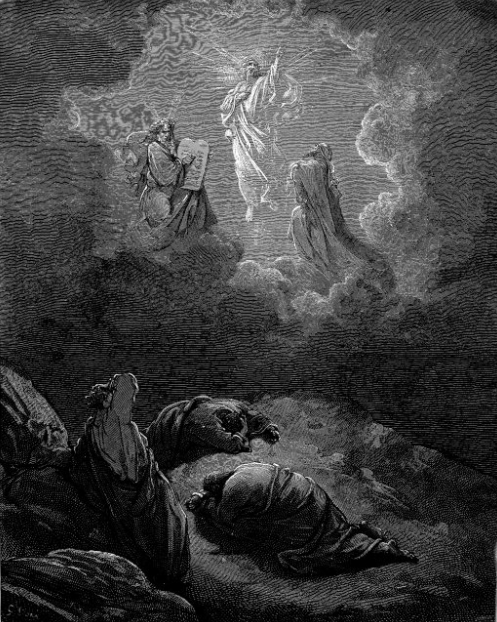
THE NARRATIVE, of which our text forms a part, describes a scene which took place immediately after the transfiguration of our Lord. Not to divorce it therefore from its connection, let us glance at the antecedents of the case, that nothing may be lost by negligence, or that peradventure we may gain something by meditation. How great the difference between Moses and Christ!
THE NARRATIVE, of which our text forms a part, describes a scene which took place immediately after the transfiguration of our Lord. Not to divorce it therefore from its connection, let us glance at the antecedents of the case, that nothing may be lost by negligence, or that peradventure we may gain something by meditation. How great the difference between Moses and Christ! When Moses had been forty days upon the mountaintop, he underwent a kind of transfiguration, so that his face shone with exceeding brightness when he came down among the people, and he was obliged to put a veil over his face; for they could not bear to look upon his glory. Not so our Saviour! He had been really transfigured with a greater glory than Moses could ever know, and yet, as he came down from the mount, whatever radiance shone upon his face, it is not written that the people could not look upon him, but rather they were amazed, and running to him, they saluted him. The glory of the law repelled; for the majesty of holiness and justice, drive the awed spirits away from God. But the greater glory of Jesus attracts; though he is holy, and just, and righteous too, yet blended with these there is so much of truth and grace that sinners run to Jesus, amazed at his goodness, attracted by the charming fascination of his love, and they salute him, become his disciples, and take him to be their Lord and Master. Some of you may be just now blinded by the dazzling brightness of the law of God. You feel its claims on your conscience, but you cannot keep it in your life. It is too high; you cannot attain to it. Not that you find fault with the law; on the contrary, it commands your profoundest esteem.
A commentator
Charles Spurgeon1834–1892
The Metropolitan Tabernacle Pulpit, Sermon No. 2454: “The Secret of Failure” (lightly modernized text, CCEL edition) · Written before 1892.
proposed
I put these two texts together for this reason. Those of you who are acquainted with the Revised Version know that the 21st verse in the 17th chapter of Matthew is left out. There seems to be little doubt that it was inserted in certain copies by persons who thought that it ought to be there because it was in Mark's narrative. It is put in the margin of the Revised Version, but it is left out of the text. It is, therefore, very satisfactory to find that the omission from Matthew's account makes no real difference because we have the words in the 29th verse of the 9th of Mark, "This kind can come forth by nothing but by prayer and fasting." Only there is this fact to be noticed—in the Revised Version this verse runs, according to Mark, "This kind can come out by nothing, save by prayer." Whether the fasting was originally there, or not, I cannot tell, but putting together the two accounts in Matthew and Mark, we believe we have a full and true report of what the Master did actually say on this occasion. I. Observe then, dear Friends, at the outset, without any further preface, that WE MAY BE THE SERVANTS OF GOD AND YET WE MAY OCCASIONALLY BE DEFEATED. Those nine disciples who remained at the foot of the mountain when the Savior took the other three to behold His Transfiguration, had, each of them, a true commission from the Lord Jesus Christ. They were nine of His chosen Apostles. He had elected them in His own good pleasure and there was no doubt about their being really called to the Apostleship. They were not only elected, but they were also qualified, for on former occasions they had healed the sick, they had cast out devils and they had preached the Word of Christ with great power.
A commentator
Albert Barnes1798–1870
Notes, Explanatory and Practical, on the Old and New Testaments (1832-1869)
proposed
As a grain of mustard-seed - See the notes at Mat 13:31-32. The mustard-seed was the smallest of all seeds. It has been supposed by some, therefore, that he meant to say, If you have the smallest or feeblest faith that is genuine, you can do all things. The mustard-seed produced the largest of all herbs. It has been supposed by others, therefore, to mean, If you have increasing, expanding, enlarged faith, growing and strengthening from small beginnings, you can perform the most difficult undertaking. There is a principle of vitality in the grain of seed stretching forward to great results, which illustrates the nature of faith. Your faith should be like that. This is probably the true meaning. Ye shall say unto this mountain ... - Probably he pointed to a mountain near, to assure them that if they had such faith they might accomplish the most difficult undertakings - things that at first would appear impossible.
The words behind it
31 Greek wordsEvery Greek word of this verse in the order it stands, with what it means and the door to its own study. The last column counts the times a word stands in the whole Bible: the rarer the word, the more the places it appears belong together.
| Greek | Sound | Meaning | Word study | In the Bible |
|---|---|---|---|---|
| Ὁ | ho | <the> | G3588 → | 19766 times |
| δὲ | de | And | G1161 → | 2765 times |
| λέγει | legei | spoke | G3004 → | 1325 times |
| αὐτοῖς· | autois | to them; | G846 → | 5565 times |
| διὰ | dia | Because of | G1223 → | 664 times |
| τὴν | ten | the | G3588 → | 19766 times |
| ὀλιγοπιστίαν | oligopistian | little faith | ||
| ὑμῶν. | humon | of you. | G4771 → | 2973 times |
| ἀμὴν | amen | Amen | G281 → | 127 times |
| γὰρ | gar | for | G1063 → | 1039 times |
| λέγω | lego | I say | G3004 → | 1325 times |
| ὑμῖν· | humin | to you; | G4771 → | 2973 times |
| ἐὰν | ean | If | G1437 → | 352 times |
| ἔχητε | echete | you shall have | G2192 → | 707 times |
| πίστιν | pistin | faith | G4102 → | 242 times |
| ὡς | hos | as | G5613 → | 500 times |
| κόκκον | kokkon | a seed | G2848 → | |
| σινάπεως, | sinapeos | of mustard, | G4615 → | |
| ἐρεῖτε | ereite | you will say | G4483 → | 46 times |
| τῷ | to | to the | G3588 → | 19766 times |
| ὄρει | orei | mountain | G3735 → | 62 times |
| τούτῳ· | touto | to this; | G3778 → | 1381 times |
| μετάβα | metaba | do move | G3327 → | 12 times |
| ἔνθεν | enthen | from here | ||
| ἐκεῖ, | ekei | to there, | G1563 → | 105 times |
| καὶ | kai | and | G2532 → | 9120 times |
| μεταβήσεται· | metabesetai | it will move; | G3327 → | 12 times |
| καὶ | kai | And | G2532 → | 9120 times |
| οὐδὲν | ouden | no [thing] | G3762 → | 232 times |
| ἀδυνατήσει | adunatesei | will be impossible | G101 → | |
| ὑμῖν.¶ | humin | for you. | G4771 → | 2973 times |
Ὁ<the>
hoG3588 →19766 times
δὲAnd
deG1161 →2765 times
λέγειspoke
legeiG3004 →1325 times
αὐτοῖς·to them;
autoisG846 →5565 times
διὰBecause of
diaG1223 →664 times
τὴνthe
tenG3588 →19766 times
ὀλιγοπιστίανlittle faith
oligopistian
ὑμῶν.of you.
humonG4771 →2973 times
ἀμὴνAmen
amenG281 →127 times
γὰρfor
garG1063 →1039 times
λέγωI say
legoG3004 →1325 times
ὑμῖν·to you;
huminG4771 →2973 times
ἐὰνIf
eanG1437 →352 times
ἔχητεyou shall have
echeteG2192 →707 times
πίστινfaith
pistinG4102 →242 times
ὡςas
hosG5613 →500 times
κόκκονa seed
kokkonG2848 →
σινάπεως,of mustard,
sinapeosG4615 →
ἐρεῖτεyou will say
ereiteG4483 →46 times
τῷto the
toG3588 →19766 times
ὄρειmountain
oreiG3735 →62 times
τούτῳ·to this;
toutoG3778 →1381 times
μετάβαdo move
metabaG3327 →12 times
ἔνθενfrom here
enthen
ἐκεῖ,to there,
ekeiG1563 →105 times
καὶand
kaiG2532 →9120 times
μεταβήσεται·it will move;
metabesetaiG3327 →12 times
καὶAnd
kaiG2532 →9120 times
οὐδὲνno [thing]
oudenG3762 →232 times
ἀδυνατήσειwill be impossible
adunateseiG101 →
ὑμῖν.¶for you.
huminG4771 →2973 times
A shaded row is a word that stands 400 times or fewer in the Bible.
The walk
8 stopsEach card is a verse this one points to, and under it the verses that one points to in turn. Where several paths arrive at the same place, that place is listed first: the text keeps returning to it.
Through
Luke 1:37For no word from God will ever fail.”
it leads to
- Matthew 19:26
Jesus looked at them and said, “With man this is impossible, but with God all things are possible.”
Reached by 2 separate paths from here.
- Jeremiah 32:17
“Oh, Lord GOD! You have made the heavens and the earth by Your great power and outstretched arm. Nothing is too difficult for You!
Reached by 2 separate paths from here.
- Jeremiah 32:27
“Behold, I am the LORD, the God of all flesh. Is anything too difficult for Me?
- Mark 10:27
Jesus looked at them and said, “With man this is impossible, but not with God. For all things are possible with God.”
- Luke 18:27
But Jesus said, “What is impossible with man is possible with God.”
- Matthew 19:26
Through
Mark 11:23“Truly I tell you that if anyone says to this mountain, ‘Be lifted up and thrown into the sea,’ and has no doubt in his heart but believes that it will happen, it will…
it leads to
- Matthew 21:21
“Truly I tell you,” Jesus replied, “if you have faith and do not doubt, not only will you do what was done to the fig tree, but even if you say to this mountain,…
Reached by 2 separate paths from here.
- John 15:7
If you remain in Me and My words remain in you, ask whatever you wish, and it will be done for you.
- Psalms 37:4
Delight yourself in the LORD, and He will give you the desires of your heart.
- Matthew 21:21
Where this verse is studied
By subject
Faith34 verses
On this page
About Matthew
This page draws on 22 works. Open the list of works
This page draws on Adam Clarke, Commentary on the Bible; Albert Barnes, Notes, Explanatory and Practical, on the Old and New Testaments (1832-1869); Augustine of Hippo, Catena Aurea by Aquinas; Charles Spurgeon, The Metropolitan Tabernacle Pulpit, Sermon No. 2454: “The Secret of Failure” (lightly modernized text, CCEL edition); Charles Spurgeon, The Metropolitan Tabernacle Pulpit, Sermon No. 549: “A Desperate Case—How to Meet It” (lightly modernized text, CCEL edition); Glossa Ordinaria, Catena Aurea by Aquinas; Gregory the Dialogist, Catena Aurea by Aquinas; Hilary of Poitiers, Catena Aurea by Aquinas; J.C. Ryle, Expository Thoughts on the Gospels: Matthew; Jerome, Catena Aurea by Aquinas; Jerome, Commentary on Matthew; John Chrysostom, Homily on the Gospel of Matthew 57; John Gill, Exposition of the New Testament; John Gill, Exposition of the New Testament (1746-1748); John Wesley, Explanatory Notes upon the New Testament; Matthew Henry, Commentary on the Whole Bible; Origen of Alexandria, COMMENTARY ON MATTHEW 13.7; Origen of Alexandria, Catena Aurea by Aquinas; Philoxenus of Mabbug, 13 Ascetic Discourses, Discourse 2 -- On Faith; Rabanus Maurus, Catena Aurea by Aquinas; Theophylact of Ohrid, Commentary on Matthew and Thomas Aquinas, Commentary on Matthew.