
Matthew 17:10
in Matthew 17The disciples asked Him, “Why then do the scribes say that Elijah must come first?”
BSB
The same verse in ASV and KJV ▾
ASV
And his disciples asked him, saying, Why then say the scribes that Elijah must first come?
KJV
And his disciples asked him, saying, Why then say the scribes that Elias must first come?
⋯
This verse in Matthew 17
Commentary
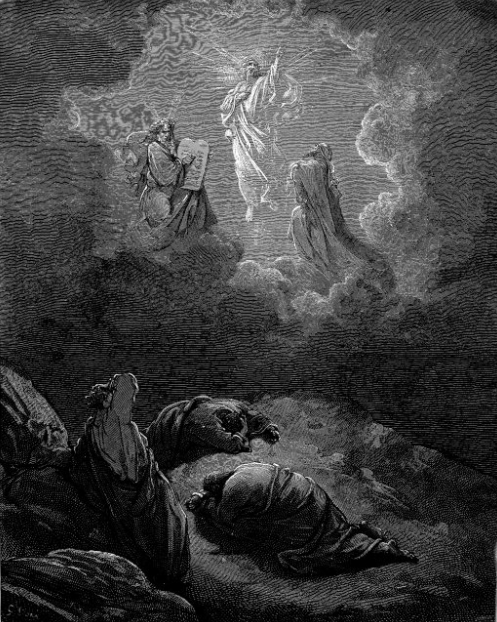
14 notes on this verseIt was a tradition of the Pharisees following the Prophet Malachi, that Elias should come before the coming of the Saviour, and bring back the heart of the fathers to the children, and the children to the fathers, and restore all things to their ancient state. The disciples then consider that this transformation which they had seen in the mount was His coming in glory, and therefore it is said, And his disciples asked him, saying, How then say the Scribes that Elias must first come?
This site's exposition
Elias must first come
on Matthew 17:10-13
The disciples' question rests on Malachi 4:5-6, Elijah promised before the great and terrible day of the Lord, and Jesus answers that Elijah has come already in the person of John the Baptist, whom they knew him not, but have done unto him whatsoever they listed, a plain reference to John's execution at Herod's hand. Some commentators read this as a full and complete answer to Malachi's promise; others hold a further literal appearance of Elijah still stands ahead, pointing to the tradition later associated with the two witnesses of Revelation 11. The exposition names both readings, since the disciples' own understanding in verse 13 settles only that John fulfilled the type, not that no future fulfillment remains.
The record, by era
The Church Fathers2 voices
A commentator
John ChrysostomHomily on the Gospel of Matthew 57 · Written in the 5th century.
proposed
Not then from the Scriptures did they know this, but the Scribes used to explain themselves, and this saying was reported abroad amongst the ignorant people; as about Christ also. Wherefore the Samaritan woman also said, "Messiah cometh; when He is come, He will tell us all things:" and they themselves asked John, "Art thou Elias, or the Prophet?" For the saying, as I said, prevailed, both that concerning the Christ and that concerning Elias, not however rightly interpreted by them. For the Scriptures speak of two advents of Christ, both this that is past, and that which is to come; and declaring these Paul said, "The grace of God, that bringeth salvation, hath appeared, teaching us, that, denying ungodliness and worldly lusts, we should live soberly, and righteously, and godly." Behold the one, hear how he declares the other also; for having said these things, he added, "Looking for the blessed hope and appearing of our great God and Saviour Jesus Christ." And the prophets too mention both; of the one, however, that is, of the second, they say Elias will be the forerunner. For of the first, John was forerunner; whom Christ called also Elias, not because he was Elias, but because he was fulfilling the ministry of that prophet. For as the one shall be forerunner of the second advent, so was the other too of the first. But the Scribes, confusing these things and perverting the people, made mention of that other only to the people, the second advent, and said, "If this man is the Christ, Elias ought to have come beforehand." Therefore the disciples too speak as follows, "How then say the Scribes, Elias must first come?" Therefore also the Pharisees sent unto John, and asked him, "Art thou Elias?" making no mention anywhere of the former advent. What then is the solution, which Christ alleged? […]
(Verse 10.) And the disciples asked him, saying, Why then do the scribes say that Elijah must come first? Unless we know the reasons why the disciples asked about the name of Elijah, their questioning seems foolish and extraordinary. For what does it matter to inquire about the coming of Elijah, which is written above? The tradition of the Pharisees is, according to the prophet Malachi (who is the last of the twelve), that Elijah will come before the coming of the Savior and restore the hearts of the fathers to the children, and the hearts of the children to the fathers, and restore everything to its former state (Malachi 4). Therefore, the disciples think that this transformation of glory, which they see on the mountain, is the one they have seen, and they say: If you have already come in glory, why does your precursor not appear, especially since they saw Elijah depart? However, when they add: The scribes say that Elijah must come first; by saying 'first,' they show that unless Elijah comes, the coming of the Savior according to the Scriptures is not fulfilled.
The Medieval Church2 voices
And the disciples asked him, etc. In this part he satisfies the question of the disciples. And first the question is presented; secondly, the response, at but he answering, etc.; thirdly, the effect, at then the disciples understood, etc. The apostles, seeing him transformed, believed …
And His disciples asked Him, saying, Why then say the scribes that Elijah must first come? The scribes were deceiving the people, saying that Jesus was not the Christ, for if He were, Elijah would first have come. But they did not know that there …
The Puritans and the Awakening1 voice
And his disciples asked him, saying,.... That is, these three, Peter, James, and John, before they came to the rest; whilst they were going down the mountain, or from it, to the place where the others were; for the rest knew nothing of the appearance of Elias, and so cannot be thought to join in a question concerning him. Why then say the Scribes, that Elias must first come?
7 more voices on this verse
The Puritans and the Awakening3 voices
Why then say the scribes, that Elijah must come first - Before the Messiah? If no man is to know of his coming? Should we not rather tell every man, that he is come, and that we have seen him, witnessing to thee as the Messiah?
Note, When we return to the world again after an ordinance, it must be our care to take Christ with us, and then it may be our comfort that he is with us. As they came down, they talked of Christ. Note, When we are returning from holy ordinance, it is good to entertain ourselves and one another with discourse suitable to the work we have been about.
Must the coming of Elias be a secret, which every body looks for?" or thus; "If the resurrection of the Messiah, and with it the beginning of his kingdom, be at hand, what becomes of that glorious preface and introduction to it, which we expect in the coming of Elias?" The scribes, who were the public expositors of the law, said this according to the scripture ( Mal. iv.
quarantine:debris (2026-07-29) — unbalanced-parens+odd-straight-quotes
The Nineteenth Century4 voices
His disciples - instead of His disciples, some MSS., with the Coptic, Armenian, Vulgate, all the Itala except two, and Origen, read simply, οι μαθηται, The disciples, i.e. those only who had been with him on the mount, Peter, James, and John.
These verses contain one of the most remarkable events in our Lord’s earthly ministry, the event commonly called the transfiguration. The order in which it is recorded is beautiful and instructive. The latter part of the last chapter showed us the cross; here we are graciously allowed to see something of the coming reward. The hearts which have just been saddened by a plain statement of Christ’s sufferings are at once gladdened by a vision of Christ’s glory. Let us mark this. We often lose much by not tracing the connection between chapter and chapter in the Word of God.
These verses contain one of the most remarkable events in our Lord’s earthly ministry, the event commonly called the transfiguration. The order in which it is recorded is beautiful and instructive. The latter part of the last chapter showed us the cross; here we are graciously allowed to see something of the coming reward. The hearts which have just been saddened by a plain statement of Christ’s sufferings are at once gladdened by a vision of Christ’s glory. Let us mark this. We often lose much by not tracing the connection between chapter and chapter in the Word of God. There are some mysterious things, no doubt, in the vision here described. It must needs be so. We are yet in the body. Our senses are conversant with gross and material things; our ideas and perceptions about glorified bodies and dead saints must necessarily be vague and imperfect. Let us content ourselves with endeavoring to mark out the practical lessons which the transfiguration is meant to teach us. In the first place we have in these verses a striking pattern of the glory in which Christ and his people will appear when he comes the second time. There can be little question that this was one main object of this wonderful vision. It was meant to encourage the disciples by giving them a glimpse of good things yet to come. That face “shining as the sun” and that raiment “white as the light” were intended to give the disciples some idea of the majesty in which Jesus will appear to the world when he comes the second time, and all his saints with him. The corner of the veil was lifted up to show them their Master’s true dignity. They were taught that if he did not yet appear to the world in the guise of a King, it was only because the time for putting on his royal apparel was not yet come. It is impossible to draw any other conclusion from St. Peter’s language when writing on the subject.
A commentator
Albert Barnes1798–1870
Notes, Explanatory and Practical, on the Old and New Testaments (1832-1869)
proposed
See also Mar 9:11-13. Why then say the scribes ... - The disciples appear to have been satisfied now that he was the Messiah. The transfiguration had taken away all their doubts, but they recollected that it was a common doctrine among the Jews that Elijah would appear before the Messiah came, and they did not then recollect that he had appeared. To this difficulty the word then refers. “We are satisfied that thou art the Christ, but Elijah has not yet come, as was expected; what, then, is the meaning of the common opinions of our learned men, the scribes? Were they right or wrong in their expectation of Elijah?” See the notes at Mat 11:14. Mat 17:11 Elias truly shall first come, and restore all things - He did not mean by this that Elijah was yet to come, for he tells them immediately Mat 17:12 that he had come; but he meant to affirm that it was a true doctrine which the scribes taught, that Elijah would appear before the coming of the Messiah. To “restore” means to put into the former situation. See Mat 12:13. Hence, it means to heal, to correct, to put in proper order. Here it means that Elijah would put things in a proper state; he would be the instrument of reforming the people, or of restoring them, in some measure, to proper notions about the Messiah and preparing them for his coming. Before the coming of John their views were erroneous, their expectations were worldly, and their conduct were exceedingly depraved. He corrected many of their notions about the Messiah (see Matt. 3), and he was the instrument of an extensive reformation, and thus restored them, in some degree, to correct views of their own system and of the Messiah, and to a preparation for his advent. Mat 17:12 Elias is come already - That is, John the Baptist has come, in the spirit and power of Elias. […]
The words behind it
16 Greek wordsEvery Greek word of this verse in the order it stands, with what it means and the door to its own study. The last column counts the times a word stands in the whole Bible: the rarer the word, the more the places it appears belong together.
| Greek | Sound | Meaning | Word study | In the Bible |
|---|---|---|---|---|
| Καὶ | kai | And | G2532 → | 9120 times |
| ἐπηρώτησαν | eperotesan | asked | G1905 → | 56 times |
| αὐτὸν | auton | Him | G846 → | 5565 times |
| οἱ | hoi | the | G3588 → | 19766 times |
| μαθηταὶ | mathetai | disciples | G3101 → | 260 times |
| λέγοντες· | legontes | saying; | G3004 → | 1325 times |
| τί | ti | Why | G5101 → | 563 times |
| οὖν | oun | then | G3767 → | 497 times |
| οἱ | hoi | the | G3588 → | 19766 times |
| γραμματεῖς | grammateis | scribes | G1122 → | 62 times |
| λέγουσιν | legousin | say | G3004 → | 1325 times |
| ὅτι | hoti | that | G3754 → | 1292 times |
| Ἠλίαν | elian | Elijah | G2243 → | 29 times |
| δεῖ | dei | it behooves | G1163 → | 101 times |
| ἐλθεῖν | elthein | to come | G2064 → | 628 times |
| πρῶτον;¶ | proton | first? | G4413 → | 152 times |
ΚαὶAnd
kaiG2532 →9120 times
ἐπηρώτησανasked
eperotesanG1905 →56 times
αὐτὸνHim
autonG846 →5565 times
οἱthe
hoiG3588 →19766 times
μαθηταὶdisciples
mathetaiG3101 →260 times
λέγοντες·saying;
legontesG3004 →1325 times
τίWhy
tiG5101 →563 times
οὖνthen
ounG3767 →497 times
οἱthe
hoiG3588 →19766 times
γραμματεῖςscribes
grammateisG1122 →62 times
λέγουσινsay
legousinG3004 →1325 times
ὅτιthat
hotiG3754 →1292 times
ἨλίανElijah
elianG2243 →29 times
δεῖit behooves
deiG1163 →101 times
ἐλθεῖνto come
eltheinG2064 →628 times
πρῶτον;¶first?
protonG4413 →152 times
A shaded row is a word that stands 400 times or fewer in the Bible.
The walk
8 stopsEach card is a verse this one points to, and under it the verses that one points to in turn. Where several paths arrive at the same place, that place is listed first: the text keeps returning to it.
Through
Matthew 11:14And if you are willing to accept it, he is the Elijah who was to come.
it leads to
- Malachi 4:5
Behold, I will send you Elijah the prophet before the coming of the great and awesome Day of the LORD.
Reached by 3 separate paths from here.
- Mark 9:11–13
And they asked Jesus, “Why do the scribes say that Elijah must come first?”
- Matthew 17:10–13
The disciples asked Him, “Why then do the scribes say that Elijah must come first?”
- Luke 1:17
And he will go on before the Lord in the spirit and power of Elijah, to turn the hearts of the fathers to their children and the disobedient to the wisdom of the righteous—to…
- John 1:21–23
“Then who are you?” they inquired. “Are you Elijah?” He said, “I am not.” “Are you the Prophet?” He answered, “No.”
- Malachi 4:5
Through
John 1:21“Then who are you?” they inquired. “Are you Elijah?” He said, “I am not.” “Are you the Prophet?” He answered, “No.”
it leads to
- Matthew 11:14
And if you are willing to accept it, he is the Elijah who was to come.
Reached by 2 separate paths from here.
- Deuteronomy 18:15–18
The LORD your God will raise up for you a prophet like me from among your brothers. You must listen to him.
- Matthew 11:14
Through
Mark 9:11And they asked Jesus, “Why do the scribes say that Elijah must come first?”
it leads to
- Malachi 3:1
“Behold, I will send My messenger, who will prepare the way before Me. Then the Lord whom you seek will suddenly come to His temple—the Messenger of the covenant, in whom you delight—see, He…
- Malachi 3:1
Where this verse is studied
About Matthew
Who and where
1 name in this verse with a page on the site.
This page draws on 13 works. Open the list of works
This page draws on Adam Clarke, Commentary on the Bible; Albert Barnes, Notes, Explanatory and Practical, on the Gospels; Albert Barnes, Notes, Explanatory and Practical, on the Old and New Testaments (1832-1869); J.C. Ryle, Expository Thoughts on the Gospels: Matthew; Jamieson, Fausset & Brown, Commentary Critical and Explanatory on the Whole Bible; Jerome, Catena Aurea by Aquinas; Jerome, Commentary on Matthew; John Chrysostom, Homily on the Gospel of Matthew 57; John Gill, Exposition of the New Testament (1746-1748); John Wesley, Explanatory Notes upon the New Testament; Matthew Henry, Commentary on the Whole Bible; Theophylact of Ohrid, Commentary on Matthew and Thomas Aquinas, Commentary on Matthew.