
Matthew 17:9
in Matthew 17As they were coming down the mountain, Jesus commanded them, “Do not tell anyone about this vision until the Son of Man has been raised from the dead.”
BSB
The same verse in ASV and KJV ▾
ASV
And as they were coming down from the mountain, Jesus commanded them, saying, Tell the vision to no man, until the Son of man be risen from the dead.
KJV
And as they came down from the mountain, Jesus charged them, saying, Tell the vision to no man, until the Son of man be risen again from the dead.
⋯
This verse in Matthew 17
Commentary
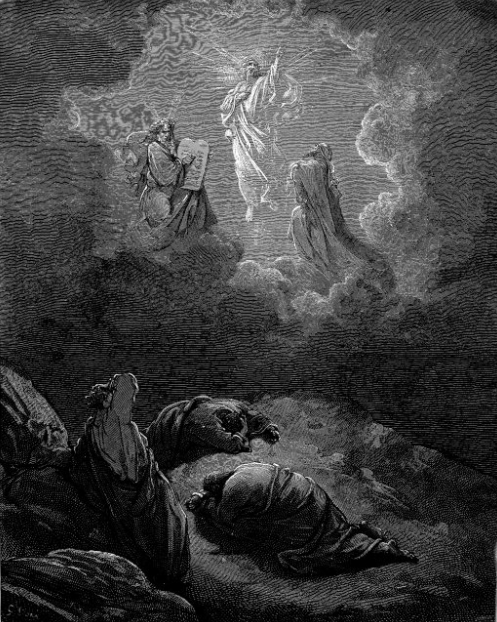
15 notes on this verse(Verse 9) And as they were coming down the mountain, Jesus commanded them, saying: Tell no one the vision, until the Son of Man rises from the dead. The anticipation of the coming kingdom, and the glory of the triumphant one, had been shown on the mountain. Therefore, He does not want this to be preached to the people, lest it be regarded as unbelievable for the greatness of the matter, and lest the cross, following such glory, would become a stumbling block to simple minds.
This site's exposition
Tell the vision to no man
Coming down the mountain, Jesus renews the charge to silence but adds a limit not given elsewhere, until the Son of man be risen again from the dead, showing the silence was never meant to be permanent. Clarke notes the resurrection is the appointed key that unlocks the telling, since a transfiguration story announced before the cross would only have fed the crowd's hope for an immediate earthly kingdom the passion predictions were already correcting. The charge is kept faithfully; none of the three tells the story publicly until after the resurrection had made its full sense plain.
The record, by era
The Church Fathers4 voices
He enjoins silence respecting what they had seen, for this reason, that when they should be filled with the Holy Spirit, they should then become witnesses of these spiritual deeds.
Or, because if His majesty should be published among the people, they should hinder the dispensation of His passion, by resistance to the chief Priests; and thus the redemption of the human race should suffer impediment.
And as they came down from the mount, Jesus charged them, saying, Tell no man this vision, until the Son of Man shall rise from the dead. He will not be preached among the people, lest the marvel of the thing should seem incredible, and lest the cross following after so great glory should cause offence.
A commentator
John ChrysostomHomily on the Gospel of Matthew 56 · Written in the 5th century.
proposed
For "as they came down from the mount, He charged them to tell the vision to no man, until He were risen from the dead." For the greater the things spoken of Him, the harder to be received by the generality at that time; and the offense also from the cross was the more increased thereby. Therefore He bids them hold their peace; and not merely so, but He again reminds them of the passion, and all but tells them also the cause, for which indeed He requires them to keep silence. For He did not, you see, command them never to tell any man, but "until He were risen from the dead." And saying nothing of the painful part, He expresses the good only. What then? Would they not afterwards be offended? By no means. For the point required was the time before the crucifixion. Since afterwards they both had the spirit vouchsafed them, and the voice that proceeded from the miracles pleading with them, and whatsoever they said was thenceforth easy to be received, the course of events proclaiming His might more clearly than a trumpet, and no offense of that sort interrupting what they were about.
The Medieval Church1 voice
And as they came down from the mountain, Jesus charged them, saying, Tell the vision to no man, until the Son of Man be risen again from the dead. Out of humility He orders them to tell no one, and also, so that those who …
8 more voices on this verse
The Medieval Church1 voice
Then the command to defer the revelation of this vision is presented; hence he says and as they came down from the mountain, Jesus commanded them, saying: tell the vision to no man. But what is the reason? It is threefold. The first is that, …
The Puritans and the Awakening3 voices
Note, When we return to the world again after an ordinance, it must be our care to take Christ with us, and then it may be our comfort that he is with us. As they came down, they talked of Christ. Note, When we are returning from holy ordinance, it is good to entertain ourselves and one another with discourse suitable to the work we have been about.
Every thing is beautiful in its season. Christ's resurrection was properly the beginning of the gospel state and kingdom, to which all before was but preparatory and by way of preface; and therefore, though this was transacted before, it must not be produced as evidence till then (and then it appears to have been much insisted on by 2 Pet. i.
quarantine:debris (2026-07-29) — unbalanced-parens
And as they came down from the mountain,.... Where all these things had been transacted, Jesus charged them, saying, tell the vision to no man: by the "vision" is meant, as it is explained in Mark, "what things they had seen"; as Moses and Elias, and the bright cloud that overshadowed them, and Christ transfigured before them, in a surprising, glorious manner.
The Nineteenth Century4 voices
A commentator
Albert Barnes1798–1870
Notes, Explanatory and Practical, on the Old and New Testaments (1832-1869)
Tell the vision to no man - This vision was designed particularly to confirm them in the truth that he was the Messiah. While he was with them it was unnecessary that they should relate what they had seen. When he was crucified they would need this evidence that he was the Christ. Then they were to use it. There were three witnesses of it as many as the law required Deu 17:6; Heb 10:28, and the proof that he was the Messiah was clear.
These verses contain one of the most remarkable events in our Lord’s earthly ministry, the event commonly called the transfiguration. The order in which it is recorded is beautiful and instructive. The latter part of the last chapter showed us the cross; here we are graciously allowed to see something of the coming reward. The hearts which have just been saddened by a plain statement of Christ’s sufferings are at once gladdened by a vision of Christ’s glory. Let us mark this. We often lose much by not tracing the connection between chapter and chapter in the Word of God.
These verses contain one of the most remarkable events in our Lord’s earthly ministry, the event commonly called the transfiguration. The order in which it is recorded is beautiful and instructive. The latter part of the last chapter showed us the cross; here we are graciously allowed to see something of the coming reward. The hearts which have just been saddened by a plain statement of Christ’s sufferings are at once gladdened by a vision of Christ’s glory. Let us mark this. We often lose much by not tracing the connection between chapter and chapter in the Word of God. There are some mysterious things, no doubt, in the vision here described. It must needs be so. We are yet in the body. Our senses are conversant with gross and material things; our ideas and perceptions about glorified bodies and dead saints must necessarily be vague and imperfect. Let us content ourselves with endeavoring to mark out the practical lessons which the transfiguration is meant to teach us. In the first place we have in these verses a striking pattern of the glory in which Christ and his people will appear when he comes the second time. There can be little question that this was one main object of this wonderful vision. It was meant to encourage the disciples by giving them a glimpse of good things yet to come. That face “shining as the sun” and that raiment “white as the light” were intended to give the disciples some idea of the majesty in which Jesus will appear to the world when he comes the second time, and all his saints with him. The corner of the veil was lifted up to show them their Master’s true dignity. They were taught that if he did not yet appear to the world in the guise of a King, it was only because the time for putting on his royal apparel was not yet come. It is impossible to draw any other conclusion from St. Peter’s language when writing on the subject.
Tell the vision to no man - See the note on Mat 16:20; and farther observe, that as this transfiguration was intended to show forth the final abolition of the whole ceremonial law, it was necessary that a matter which could not fail to irritate the Jewish rulers and people should be kept secret, till Jesus had accomplished vision and prophecy by his death and resurrection. The whole of this emblematic transaction appears to me to be intended to prove, 1st. The reality of the world of spirits, and the immortality of the soul. 2dly. The resurrection of the body, and the doctrine of future rewards and punishments, see Mat 16:27. 3dly. The abolition of the Mosaic institutions, and, the fulfillment of the predictions of the prophets relative to the person, nature, sufferings, death, and resurrection of Christ, and the glory that should follow. 4thly. The establishment of the mild, light-bringing, and life-giving Gospel of the Son of God. And 5thly. That as the old Jewish covenant and Mediatorship had ended, Jesus was now to be considered as the sole Teacher, the only availing offering for sin, and the grand Mediator between God and man. There are many very useful remarks on this transaction, by the late venerable Bp. Porteus.
The words behind it
24 Greek wordsEvery Greek word of this verse in the order it stands, with what it means and the door to its own study. The last column counts the times a word stands in the whole Bible: the rarer the word, the more the places it appears belong together.
| Greek | Sound | Meaning | Word study | In the Bible |
|---|---|---|---|---|
| Καὶ | kai | And | G2532 → | 9120 times |
| καταβαινόντων | katabainonton | when are descending | G2597 → | 81 times |
| αὐτῶν | auton | they | G846 → | 5565 times |
| ἐκ | ek | from | G1537 → | 911 times |
| τοῦ | tou | the | G3588 → | 19766 times |
| ὄρους | orous | mountain | G3735 → | 62 times |
| ἐνετείλατο | eneteilato | instructed | G1781 → | 14 times |
| αὐτοῖς | autois | them | G846 → | 5565 times |
| ὁ | ho | <the> | G3588 → | 19766 times |
| Ἰησοῦς | iesous | Jesus | G2424 → | 908 times |
| λέγων· | legon | saying; | G3004 → | 1325 times |
| μηδενὶ | medeni | To no one | G3367 → | 90 times |
| εἴπητε | eipete | shall tell | G2036 → | 925 times |
| τὸ | to | the | G3588 → | 19766 times |
| ὅραμα | horama | vision | G3705 → | |
| ἕως | he'os | until | G2193 → | 146 times |
| οὗ | hou | that | G3739 → | 1405 times |
| ὁ | ho | the | G3588 → | 19766 times |
| υἱὸς | huios | Son | G5207 → | 377 times |
| τοῦ | tou | <the> | G3588 → | 19766 times |
| ἀνθρώπου | anthropou | of Man | G444 → | 549 times |
| ἐκ | ek | out from | G1537 → | 911 times |
| νεκρῶν | nekron | [the] dead | G3498 → | 128 times |
| ἐγερθῇ.¶ | egerthea | may be risen. | G1453 → | 142 times |
ΚαὶAnd
kaiG2532 →9120 times
καταβαινόντωνwhen are descending
katabainontonG2597 →81 times
αὐτῶνthey
autonG846 →5565 times
ἐκfrom
ekG1537 →911 times
τοῦthe
touG3588 →19766 times
ὄρουςmountain
orousG3735 →62 times
ἐνετείλατοinstructed
eneteilatoG1781 →14 times
αὐτοῖςthem
autoisG846 →5565 times
ὁ<the>
hoG3588 →19766 times
ἸησοῦςJesus
iesousG2424 →908 times
λέγων·saying;
legonG3004 →1325 times
μηδενὶTo no one
medeniG3367 →90 times
εἴπητεshall tell
eipeteG2036 →925 times
τὸthe
toG3588 →19766 times
ὅραμαvision
horamaG3705 →
ἕωςuntil
he'osG2193 →146 times
οὗthat
houG3739 →1405 times
ὁthe
hoG3588 →19766 times
υἱὸςSon
huiosG5207 →377 times
τοῦ<the>
touG3588 →19766 times
ἀνθρώπουof Man
anthropouG444 →549 times
ἐκout from
ekG1537 →911 times
νεκρῶν[the] dead
nekronG3498 →128 times
ἐγερθῇ.¶may be risen.
egertheaG1453 →142 times
A shaded row is a word that stands 400 times or fewer in the Bible.
The walk
8 stopsEach card is a verse this one points to, and under it the verses that one points to in turn. Where several paths arrive at the same place, that place is listed first: the text keeps returning to it.
Through
Matthew 8:20Jesus replied, “Foxes have dens and birds of the air have nests, but the Son of Man has no place to lay His head.”
it leads to
- Psalms 84:3
Even the sparrow has found a home, and the swallow a nest for herself, where she places her young near Your altars, O LORD of Hosts, my King and my God.
- Luke 2:7
And she gave birth to her firstborn, a Son. She wrapped Him in swaddling cloths and laid Him in a manger, because there was no room for them in the inn.
- Isaiah 53:2–3
He grew up before Him like a tender shoot, and like a root out of dry ground. He had no stately form or majesty to attract us, no beauty that we should desire Him.
- Psalms 84:3
Through
Mark 8:30And Jesus warned them not to tell anyone about Him.
it leads to
- Luke 9:21
Jesus strictly warned them not to tell this to anyone.
- Matthew 16:20
Then He admonished the disciples not to tell anyone that He was the Christ.
- Luke 9:21
Through
Matthew 17:23They will kill Him, and on the third day He will be raised to life.” And the disciples were deeply grieved.
it leads to
- Isaiah 53:10–12
Yet it was the LORD’s will to crush Him and to cause Him to suffer; and when His soul is made a guilt offering, He will see His offspring, He will prolong His days,…
- Matthew 16:21
From that time on Jesus began to show His disciples that He must go to Jerusalem and suffer many things at the hands of the elders, chief priests, and scribes, and that He must…
- Zechariah 13:7
Awake, O sword, against My Shepherd, against the man who is My Companion, declares the LORD of Hosts. Strike the Shepherd, and the sheep will be scattered, and I will turn My hand against…
- Isaiah 53:10–12
Where this verse is studied
About Matthew
This page draws on 13 works. Open the list of works
This page draws on Adam Clarke, Commentary on the Bible; Albert Barnes, Notes, Explanatory and Practical, on the Old and New Testaments (1832-1869); Hilary of Poitiers, Catena Aurea by Aquinas; J.C. Ryle, Expository Thoughts on the Gospels: Matthew; Jerome, Commentary on Matthew; Jerome, Catena Aurea by Aquinas; John Calvin, Commentary on a Harmony of the Evangelists; John Chrysostom, Homily on the Gospel of Matthew 56; John Gill, Exposition of the New Testament (1746-1748); Matthew Henry, Commentary on the Whole Bible; Remigius of Rheims, Catena Aurea by Aquinas; Theophylact of Ohrid, Commentary on Matthew and Thomas Aquinas, Commentary on Matthew.