
Matthew 17:11
in Matthew 17Jesus replied, “Elijah does indeed come, and he will restore all things.
BSB
The same verse in ASV and KJV ▾
ASV
And he answered and said, Elijah indeed cometh, and shall restore all things:
KJV
And Jesus answered and said unto them, Elias truly shall first come, and restore all things.
⋯
This verse in Matthew 17
Commentary
16 notes on this verse(Verse 11, 12.) But he answered and said unto them, Elias indeed cometh first, and restoreth all things; and how it is written of the Son of man, that he must suffer many things, and be set at nought. But I say unto you, That Elias is indeed come, and they have done unto him whatsoever they listed, as it is written of him. And they did not recognize him; but they did to him whatever they wanted: That is, they despised him, and beheaded him.
This site's exposition
Elias must first come
on Matthew 17:10-13
The disciples' question rests on Malachi 4:5-6, Elijah promised before the great and terrible day of the Lord, and Jesus answers that Elijah has come already in the person of John the Baptist, whom they knew him not, but have done unto him whatsoever they listed, a plain reference to John's execution at Herod's hand. Some commentators read this as a full and complete answer to Malachi's promise; others hold a further literal appearance of Elijah still stands ahead, pointing to the tradition later associated with the two witnesses of Revelation 11. The exposition names both readings, since the disciples' own understanding in verse 13 settles only that John fulfilled the type, not that no future fulfillment remains.
The record, by era
The Church Fathers4 voices
(Quaest. Ev. i. 21.) Or; He shall restore all things, that is those whom the persecution of Antichrist shall have overthrown; as He Himself should restore by His death those whom He ought.
Therefore there will be a forerunner of his second coming about the time of the consummation. Also this time he is to restore all to true knowledge, restoring everyone who obeys him. The scribes deceived the people when they said that Elijah comes before the …
A commentator
John ChrysostomHomily on the Gospel of Matthew 57 · Written in the 5th century.
proposed
Not then from the Scriptures did they know this, but the Scribes used to explain themselves, and this saying was reported abroad amongst the ignorant people; as about Christ also. Wherefore the Samaritan woman also said, "Messiah cometh; when He is come, He will tell us all things:" and they themselves asked John, "Art thou Elias, or the Prophet?" For the saying, as I said, prevailed, both that concerning the Christ and that concerning Elias, not however rightly interpreted by them. For the Scriptures speak of two advents of Christ, both this that is past, and that which is to come; and declaring these Paul said, "The grace of God, that bringeth salvation, hath appeared, teaching us, that, denying ungodliness and worldly lusts, we should live soberly, and righteously, and godly." Behold the one, hear how he declares the other also; for having said these things, he added, "Looking for the blessed hope and appearing of our great God and Saviour Jesus Christ." And the prophets too mention both; of the one, however, that is, of the second, they say Elias will be the forerunner. For of the first, John was forerunner; whom Christ called also Elias, not because he was Elias, but because he was fulfilling the ministry of that prophet. For as the one shall be forerunner of the second advent, so was the other too of the first. But the Scribes, confusing these things and perverting the people, made mention of that other only to the people, the second advent, and said, "If this man is the Christ, Elias ought to have come beforehand." Therefore the disciples too speak as follows, "How then say the Scribes, Elias must first come?" Therefore also the Pharisees sent unto John, and asked him, "Art thou Elias?" making no mention anywhere of the former advent. What then is the solution, which Christ alleged? […]
He then who at the Saviour's second coming should come in the truth of His body, come now in John in power and spirit. It follows, And they knew him not, but did unto him whatsoever they would, that is, despised and beheaded him.
The Medieval Church1 voice
A commentator
BonaventureCollations on the Hexaemeron, Collation 15 · Written in the 13th century.
proposed
The fifth time, at the end, is that of the restoration of ruins, for "Elias indeed is to come and to restore all things," and with him Henoch will come too. For "the beast will conquer them." And so, it is necessary that they fail, …
9 more voices on this verse
The Medieval Church3 voices
The Lord satisfies this doubt. And first he touches upon the future coming; secondly, the past. Hence he says but he answering said to them: Elijah indeed shall come. Hence he speaks of a twofold Elijah, namely, of Elijah in his own person who is …
And Jesus answered and said unto them, Elijah truly shall first come, and restore all things. By saying, "Elijah truly shall come," Christ shows that he has not yet come, but that he will appear as the forerunner of the second coming; and when he …
A commentator
BonaventureCollations on the Hexaemeron, Collation 16 · Written in the 13th century.
proposed
Once more, times are compared five by five: the times of the establishment of natures, the inspiration of patriarchs, the institution of laws, the revelation of prophets, and the restoration of ruins; and, in the New Testament, the times of the diffusion of charismatic gifts, …
The Puritans and the Awakening3 voices
And Jesus answered and said unto them,.... By way of concession, Elias truly shall first come: this is indeed a tenet of the Scribes, and it is also certain, that there is a prophecy in Mal 4:5 of the coming of Elias; of one that goes under that name, not of Elias the Tishbite, in person, but of one that was to come in his power and spirit, and restore all things.
Note, When we return to the world again after an ordinance, it must be our care to take Christ with us, and then it may be our comfort that he is with us. As they came down, they talked of Christ. Note, When we are returning from holy ordinance, it is good to entertain ourselves and one another with discourse suitable to the work we have been about.
Note, Corrupt and mistaken glosses may be sufficiently rejected and exploded, without diminishing or derogating from the authority or dignity of the sacred text. New-Testament prophecies are true and good, and are to be received and improved, though some hot foolish men may have misinterpreted them and drawn wrong inferences from them.
The Nineteenth Century3 voices
Elias - shall first come, and restore all things - Or will reform, αποκαταστησει; this word our Lord quotes from the Septuagint; who render the Hebrew והשוב לב אבות על בנים vehesheb leb aboth al banim, he will cause the heart of the fathers to turn to the children, by, ος αποκαταστησει καρδιαν πατρος προς υιον, who will convert, or restore, the heart of the father to the son. We are not therefore to understand the version of the Septuagint quoted by our Lord in any other sense than the Hebrew will allow.
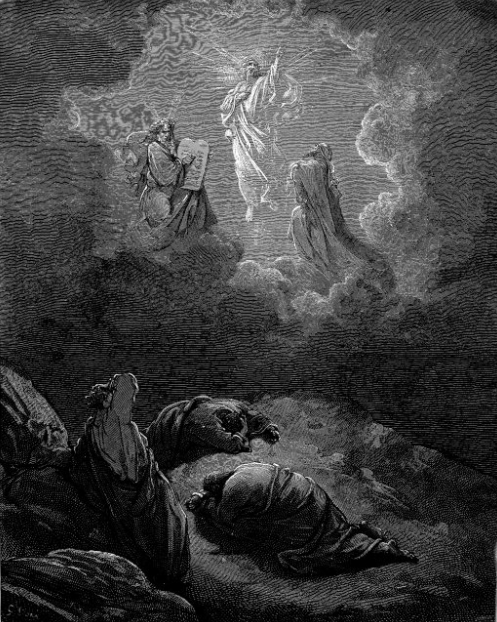
These verses contain one of the most remarkable events in our Lord’s earthly ministry, the event commonly called the transfiguration. The order in which it is recorded is beautiful and instructive. The latter part of the last chapter showed us the cross; here we are graciously allowed to see something of the coming reward. The hearts which have just been saddened by a plain statement of Christ’s sufferings are at once gladdened by a vision of Christ’s glory. Let us mark this. We often lose much by not tracing the connection between chapter and chapter in the Word of God.
These verses contain one of the most remarkable events in our Lord’s earthly ministry, the event commonly called the transfiguration. The order in which it is recorded is beautiful and instructive. The latter part of the last chapter showed us the cross; here we are graciously allowed to see something of the coming reward. The hearts which have just been saddened by a plain statement of Christ’s sufferings are at once gladdened by a vision of Christ’s glory. Let us mark this. We often lose much by not tracing the connection between chapter and chapter in the Word of God. There are some mysterious things, no doubt, in the vision here described. It must needs be so. We are yet in the body. Our senses are conversant with gross and material things; our ideas and perceptions about glorified bodies and dead saints must necessarily be vague and imperfect. Let us content ourselves with endeavoring to mark out the practical lessons which the transfiguration is meant to teach us. In the first place we have in these verses a striking pattern of the glory in which Christ and his people will appear when he comes the second time. There can be little question that this was one main object of this wonderful vision. It was meant to encourage the disciples by giving them a glimpse of good things yet to come. That face “shining as the sun” and that raiment “white as the light” were intended to give the disciples some idea of the majesty in which Jesus will appear to the world when he comes the second time, and all his saints with him. The corner of the veil was lifted up to show them their Master’s true dignity. They were taught that if he did not yet appear to the world in the guise of a King, it was only because the time for putting on his royal apparel was not yet come. It is impossible to draw any other conclusion from St. Peter’s language when writing on the subject.
The words behind it
10 Greek wordsEvery Greek word of this verse in the order it stands, with what it means and the door to its own study. The last column counts the times a word stands in the whole Bible: the rarer the word, the more the places it appears belong together.
| Greek | Sound | Meaning | Word study | In the Bible |
|---|---|---|---|---|
| Ὁ | ho | <the> | G3588 → | 19766 times |
| δὲ | de | And | G1161 → | 2765 times |
| ἀποκριθεὶς | apokritheis | answering | G611 → | 231 times |
| εἶπεν | eipen | He said | G2036 → | 925 times |
| Ἠλίας | elias | Elijah | G2243 → | 29 times |
| μὲν | men | indeed | G3303 → | 176 times |
| ἔρχεται | erchetai | comes | G2064 → | 628 times |
| καὶ | kai | and | G2532 → | 9120 times |
| ἀποκαταστήσει | apokatastesei | will restore | G600 → | |
| πάντα· | panta | all things; | G3956 → | 1235 times |
Ὁ<the>
hoG3588 →19766 times
δὲAnd
deG1161 →2765 times
ἀποκριθεὶςanswering
apokritheisG611 →231 times
εἶπενHe said
eipenG2036 →925 times
ἨλίαςElijah
eliasG2243 →29 times
μὲνindeed
menG3303 →176 times
ἔρχεταιcomes
erchetaiG2064 →628 times
καὶand
kaiG2532 →9120 times
ἀποκαταστήσειwill restore
apokatasteseiG600 →
πάντα·all things;
pantaG3956 →1235 times
A shaded row is a word that stands 400 times or fewer in the Bible.
The walk
8 stopsEach card is a verse this one points to, and under it the verses that one points to in turn. Where several paths arrive at the same place, that place is listed first: the text keeps returning to it.
Through
Malachi 4:6And he will turn the hearts of the fathers to their children, and the hearts of the children to their fathers. Otherwise, I will come and strike the land with a curse.”
it leads to
- Luke 1:16–17
Many of the sons of Israel he will turn back to the Lord their God.
- Isaiah 11:4
but with righteousness He will judge the poor, and with equity He will decide for the lowly of the earth. He will strike the earth with the rod of His mouth and slay the…
- Hebrews 10:26–31
If we deliberately go on sinning after we have received the knowledge of the truth, no further sacrifice for sins remains,
- Daniel 9:11
All Israel has transgressed Your law and turned away, refusing to obey Your voice; so the oath and the curse written in the Law of Moses the servant of God has been poured out…
- Matthew 23:35–38
And so upon you will come all the righteous blood shed on earth, from the blood of righteous Abel to the blood of Zechariah son of Berechiah, whom you murdered between the temple and…
- Luke 1:16–17
Through
Acts 3:21Heaven must take Him in until the time comes for the restoration of all things, which God announced long ago through His holy prophets.
it leads to
- Romans 8:21
that the creation itself will be set free from its bondage to decay and brought into the glorious freedom of the children of God.
- Isaiah 1:26
I will restore your judges as at first, and your counselors as at the beginning. After that you will be called the City of Righteousness, the Faithful City.”
- Acts 1:11
“Men of Galilee,” they said, “why do you stand here looking into the sky? This same Jesus, who has been taken from you into heaven, will come back in the same way you have…
- Romans 8:21
Where this verse is studied
About Matthew
Who and where
1 name in this verse with a page on the site.
This page draws on 15 works. Open the list of works
This page draws on Adam Clarke, Commentary on the Bible; Albert Barnes, Notes, Explanatory and Practical, on the Gospels; Augustine of Hippo, Catena Aurea by Aquinas; Bonaventure, Collations on the Hexaemeron, Collation 15; Bonaventure, Collations on the Hexaemeron, Collation 16; J.C. Ryle, Expository Thoughts on the Gospels: Matthew; Jamieson, Fausset & Brown, Commentary Critical and Explanatory on the Whole Bible; Jerome, Commentary on Matthew; Jerome, Catena Aurea by Aquinas; John Chrysostom, Homily on the Gospel of Matthew 57; John Gill, Exposition of the New Testament (1746-1748); Matthew Henry, Commentary on the Whole Bible; Theodore of Mopsuestia, FRAGMENT 94; Theophylact of Ohrid, Commentary on Matthew and Thomas Aquinas, Commentary on Matthew.