
Matthew 17:26
in Matthew 17“From others,” Peter answered. “Then the sons are exempt,” Jesus declared.
BSB
The same verse in ASV and KJV ▾
ASV
And when he said, From strangers, Jesus said unto him, Therefore the sons are free.
KJV
Peter saith unto him, Of strangers. Jesus saith unto him, Then are the children free.
⋯
This verse in Matthew 17
Commentary
16 notes on this verseBefore any hint from Peter, the Lord puts the question to him, that His disciples might not be offended at the demand of tribute, when they, see that He knows even those things that are done in His absence. It follows, But he said, From strangers; Jesus said unto him, Then are the children free.
This site's exposition
Then are the children free
on Matthew 17:26-27
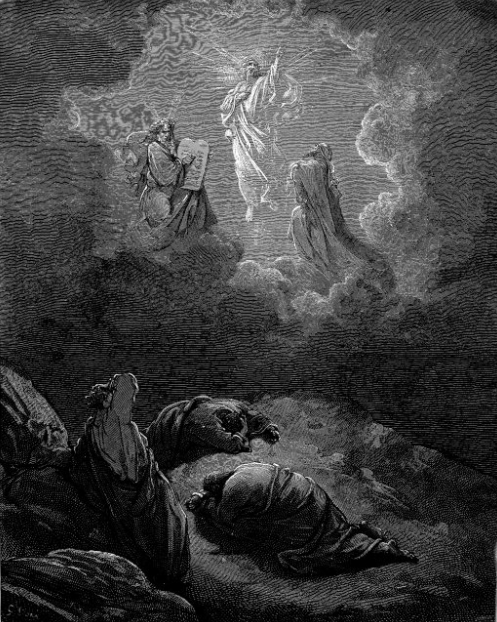
Jesus draws the plain conclusion, then are the children free, meaning as Son he owes the temple no such tax, yet he chooses to pay it anyway, lest we should offend them, a voluntary condescension rather than a claim of exemption pressed. The coin appears by miracle in a fish's mouth, a stater, the exact value of two half-shekels, enough for himself and Peter together, and Henry reads the provision as a quiet display of the same lordship over creation already shown in the stilling of the storm in chapter 8. The chapter that opened on a mountain of unveiled glory closes on a lakeshore where that same glory chooses to pay a tax it owed to no one.
The record, by era
The Church Fathers5 voices
(Quæst. Ev. i. 23.) For, saith He, in every kingdom the children are free, that is, not under tax. Much more therefore should they be free in any earthly kingdom, who are children of that very kingdom under which are all the kingdoms of the earth.
This speech has a twofold meaning. First, that the children of the kings of the earth are free with the kings of the earth; but strangers, foreigners in the land, are not free, because of those that oppress them, as the Egyptians did the children of Israel. The second sense is; forasmuch as there be some who are strangers to the sons of the kings of the earth, and are yet sons of God, therefore it is they that abide in the words of Jesus; these are free, for they have known the truth, and the truth has set them free from the service of sin; but the sons of the kings of the earth are not free; for whoso doth sin, he is the servant of sin. (John 8:34.) We may hence gather as a consequence of this, that when any come with justice demanding our earthly goods, it is the kings of the earth that send them, to claim of us what is their own; and by His own example the Lord forbids any offence to be given even to these, whether that they should sin no more, or that they should be saved. For the Son of God, who did no servile work, yet as having the form of a slave, which He took on Him for man's sake, gave custom and tribute.
But our Lord was the son of the king, both according to the flesh, and according to the Spirit; whether as sprung of the seed of David, or as the Word of the Almighty Father; therefore as the king's son He owed no tribute.
(Verse 25) What do you think, Simon? Do the kings of the earth receive tribute or census from their sons or from strangers? And he said: From strangers. Jesus said to him: Therefore, the sons are free. Our Lord, both according to the flesh and according to the spirit, was the son of a king, either born of the lineage of David or begotten by the Almighty Word of the Father. Therefore, as a son of a king, he should not have to pay taxes, but because he took on the humility of the flesh, he had to fulfill all righteousness. And we, who are unhappy, are called by the name of Christ and yet do nothing worthy of such majesty: He endured the cross and paid tributes for us, we do not pay tributes for His honor, and we are like children of a king who are immune to paying taxes.
A commentator
John ChrysostomHomily on the Gospel of Matthew 58 · Written in the 5th century.
proposed
What then saith Peter? "He saith, Yea:" and to these indeed he said, that He payeth, but to Him he said it not, blushing perhaps to speak to Him of these things. Wherefore that gentle one, well knowing as He did all things, prevented him, "saying, What thinkest thou, Simon? Of whom do the kings of the earth take custom or tribute? of their own sons, or of strangers;" and when he said "of strangers," He replied, "Then are the sons free." For lest Peter should suppose Him to say so, being told it by the others, He prevents him, partly indicating what hath been said, partly giving him leave to speak freely, backward as he was to speak first of these things. And what He saith is like this, "I am indeed free from paying tribute. For if the kings of the earth take it not of their sons, but of their subjects; much more ought I to be freed from this demand, I who am Son, not of an earthly king, but of the King of Heaven, and myself a King." Seest thou how He hath distinguished the sons from them that are not sons? And if He were not a Son, to no purpose hath He brought in the example also of the kings. "Yea," one may say, "He is a Son, but not truly begotten." Then is He not a Son; and if not a Son, nor truly begotten, neither doth He belong to God, but to some other. But if He belong to another, then neither hath the comparison its proper force. For He is discoursing not of the sons generally, but of the genuine sons, men's very own; of them that share the kingdom with their parents. Wherefore also in contradistinction He hath mentioned the "strangers;" meaning by "strangers," such as are not born of them, but by "their own," those whom they have begotten of themselves. And I would have thee mark this also; how the high doctrine, revealed to Peter, He doth hereby again confirm. […]
9 more voices on this verse
The Church Fathers1 voice
(Verse 26) But that we may not offend them: go to the sea, and cast in a hook, and that fish which shall first come up, take: and when thou hast opened its mouth, thou shalt find a stater: take that, and give it to them for me and thee. What I should first admire in this place, I know not, whether the foreknowledge, or the greatness of the Saviour. The foreknowledge that he knew the fish would have a stater in its mouth, and that he himself would be the first to be caught.
The Medieval Church2 voices
And when he was come into the house, Jesus spake first to him, saying, What thinkest thou, Simon? Of whom do the kings of the earth take custom or tribute? Of their own sons, or of strangers? Peter saith unto him, Of strangers. Jesus saith …
And he said: from strangers. Then Christ's response is presented, because kings spare their own sons. Isaiah 3:15: why do you crush my people, and grind the faces of the poor? For it seems just. For he who presides ought to have care of his …
The Puritans and the Awakening3 voices
Then are the sons free - The sense is, This is paid for the use of the house of God. Therefore I am free from any obligation of paying this to my own Father.
Peter saith unto him,....
So that here is Christ, the Brightness of his Father's glory, by himself purging our sins, paying our debts, and destroying for us him that had the power of death, that is, the devil. Thus were the several indications of Christ's gracious intentions admirable interwoven.
The Nineteenth Century3 voices
Then are the children free - As this money is levied for the support of that temple of which I am the Lord, then I am not obliged to pay the tax; and my disciples, like the priests that minister, should be exempted from the necessity of paying.
A commentator
Jamieson, Fausset & Brown1802–1910
Commentary Critical and Explanatory on the Whole Bible (1871)
Peter saith unto him, Of strangers--"of those not their children." Jesus saith unto him, Then are the children free--By "the children" our Lord cannot here mean Himself and the Twelve together, in some loose sense of their near relationship to God as their common Father.
These verses contain a circumstance in our Lord’s history which is not recorded by any of the evangelists excepting St. Matthew. A remarkable miracle is worked in order to provide payment of the tribute money required for the service of the temple. There are three striking points in the narrative which deserve attentive observation. Let us in the first place observe our Lord’s perfect knowledge of everything that is said and done in this world. We are told that “those who received tribute money came to Peter and said, ‘Does not your master pay tribute? he sayeth”yes.” It is evident that our Lord was not present when the question was asked and the answer given; and yet no sooner did Peter come into the house than our Lord asked him, “What thinkest thou Simon of whom do the kings of the earth take custom or tribute?” He howed that he was as well acquainted with the conversation as if he had been listening or standing by. There is something unspeakably solemn in the thought that the Lord Jesus knows all things. There is an eye that sees all our daily conduct; there is an ear that hears all our daily words. All things are naked and opened unto the eyes of him with whom we have to do. Concealment is impossible; hypocrisy is useless. We may deceive ministers; we may impose upon our relations and neighbors: but the Lord sees us through and through. We cannot deceive Christ. We ought to endeavor to make practical use of this truth. We should strive to live as in the Lord’s sight and, like Abraham, to “walk before” him ( Genesis 17:1 ). Let it be our daily aim to say nothing we would not like Christ to hear, and to do nothing we would not like Christ to see. Let us measure every difficult question as to right and wrong by one simple test: “How would I behave if Jesus were standing by my side?” Such a standard is not extravagant and absurd.
The words behind it
15 Greek wordsEvery Greek word of this verse in the order it stands, with what it means and the door to its own study. The last column counts the times a word stands in the whole Bible: the rarer the word, the more the places it appears belong together.
| Greek | Sound | Meaning | Word study | In the Bible |
|---|---|---|---|---|
| εἰπόντος | eipontos | When saying | G2036 → | 925 times |
| δὲ | de | now | G1161 → | 2765 times |
| ἀπὸ | apo | From | G575 → | 640 times |
| τῶν | ton | the | G3588 → | 19766 times |
| ἀλλοτρίων, | allotrion | strangers, | G245 → | |
| ἔφη | ephe | one was saying | G5346 → | 66 times |
| αὐτῷ | auto | to him | G846 → | 5565 times |
| ὁ | ho | <the> | G3588 → | 19766 times |
| Ἰησοῦς· | iesous | Jesus; | G2424 → | 908 times |
| ἄρα | ara | Then | G686 → | 49 times |
| γε | ge | surely | G1065 → | 27 times |
| ἐλεύθεροί | eleutheroi | free | G1658 → | |
| εἰσιν | eisin | are | G1510 → | 2333 times |
| οἱ | hoi | the | G3588 → | 19766 times |
| υἱοί. | huioi | sons. | G5207 → | 377 times |
εἰπόντοςWhen saying
eipontosG2036 →925 times
δὲnow
deG1161 →2765 times
ἀπὸFrom
apoG575 →640 times
τῶνthe
tonG3588 →19766 times
ἀλλοτρίων,strangers,
allotrionG245 →
ἔφηone was saying
epheG5346 →66 times
αὐτῷto him
autoG846 →5565 times
ὁ<the>
hoG3588 →19766 times
Ἰησοῦς·Jesus;
iesousG2424 →908 times
ἄραThen
araG686 →49 times
γεsurely
geG1065 →27 times
ἐλεύθεροίfree
eleutheroiG1658 →
εἰσινare
eisinG1510 →2333 times
οἱthe
hoiG3588 →19766 times
υἱοί.sons.
huioiG5207 →377 times
A shaded row is a word that stands 400 times or fewer in the Bible.
Where this verse is studied
About Matthew
This page draws on 13 works. Open the list of works
This page draws on Adam Clarke, Commentary on the Bible; Augustine of Hippo, Catena Aurea by Aquinas; J.C. Ryle, Expository Thoughts on the Gospels: Matthew; Jamieson, Fausset & Brown, Commentary Critical and Explanatory on the Whole Bible; Jerome, Catena Aurea by Aquinas; Jerome, Commentary on Matthew; John Chrysostom, Homily on the Gospel of Matthew 58; John Gill, Exposition of the New Testament (1746-1748); John Wesley, Explanatory Notes upon the New Testament; Matthew Henry, Commentary on the Whole Bible; Origen of Alexandria, Catena Aurea by Aquinas; Theophylact of Ohrid, Commentary on Matthew and Thomas Aquinas, Commentary on Matthew.