
Matthew 17:27
in Matthew 17“But so that we may not offend them, go to the sea, cast a hook, and take the first fish you catch. When you open its mouth, you will find a four-drachma coin. Take it and give it to them for My tax and yours.”
BSB
The same verse in ASV and KJV ▾
ASV
But, lest we cause them to stumble, go thou to the sea, and cast a hook, and take up the fish that first cometh up; and when thou hast opened his mouth, thou shalt find a shekel: that take, and give unto them for me and thee.
KJV
Notwithstanding, lest we should offend them, go thou to the sea, and cast an hook, and take up the fish that first cometh up; and when thou hast opened his mouth, thou shalt find a piece of money: that take, and give unto them for me and thee.
⋯
This verse in Matthew 17
Commentary
19 notes on this verseHowsoever free then He was, yet seeing He had taken to Him lowliness of the flesh, He ought to fulfil all righteousness; whence it follows, But that they should not be offended, go to the sea. I am at a loss what first to admire in this passage; whether the foreknowledge, or the mighty power of the Saviour.
This site's exposition
Then are the children free
on Matthew 17:26-27
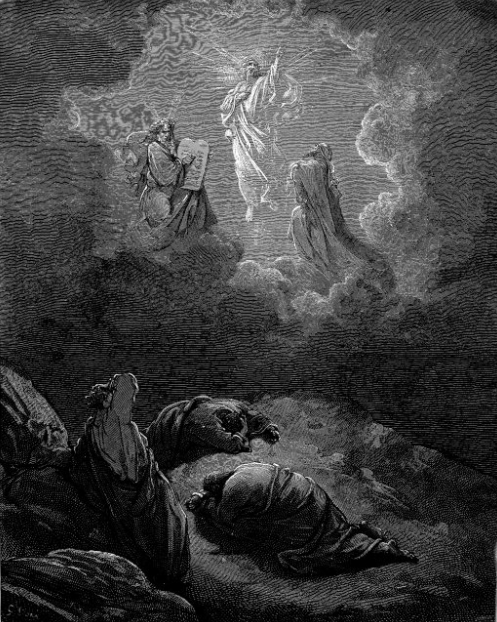
Jesus draws the plain conclusion, then are the children free, meaning as Son he owes the temple no such tax, yet he chooses to pay it anyway, lest we should offend them, a voluntary condescension rather than a claim of exemption pressed. The coin appears by miracle in a fish's mouth, a stater, the exact value of two half-shekels, enough for himself and Peter together, and Henry reads the provision as a quiet display of the same lordship over creation already shown in the stilling of the storm in chapter 8. The chapter that opened on a mountain of unveiled glory closes on a lakeshore where that same glory chooses to pay a tax it owed to no one.
The record, by era
The Church Fathers5 voices
This coin was not in Jesus' house but happened to be in the mouth of a fish in the sea. This too, I think, was a result of God's kindness. It was caught and came up on the hook belonging to Peter, who was the fisher of men. That which is figuratively called a fish was caught in order that the coin with the image of Caesar might be taken from it, that it might take its place among those which were caught by them who have learned to become fishers of men. Let him, then, who has the things of Caesar render them to Caesar, that afterwards he may be able to render to God the things of God. But since Jesus is the image of God the unseen and did not have the image of Caesar (for there was nothing in him that had anything to do with the prince of this world), he therefore took the image of Caesar from a suitable place in the sea, so as to pay it to the kings of the earth as the contribution of himself and his disciple. Jesus did this so that those taking the half-shekel might not suppose Jesus to be in debt either to them or to the kings of the earth. For he paid the debt, one he had never taken on or possessed or used to buy anything or made his personal possession, to prevent the image of Caesar ever being alongside the image of the invisible God.
Mystically; In the field of comfort, (for so is Capernaum expounded,) He comforts each one of His disciples, and pronounces him to be a son and free, and gives him the power of taking the first fish, that after His ascension Peter may have comfort over that which he has caught. And when you see any miser rebuked by some Peter who takes the speech of his money out of his mouth, you may say that he is risen out of the sea of covetousness to the hook of reason, and is caught and saved by some Peter, who has taught him the truth, that he should change his stater for the image of God, that is for the oracles of God.
When Peter is instructed to take the first fish, it is shown therein that he shall catch more than one. The blessed first martyr Stephen was the first that came up, having in his mouth a stater, which contained the didrachma of the new preaching, divided as two denarii, for he preached as he beheld in his passion the glory of God, and Christ the Lord.
He was also able to take the coin out of the earth, but he did not do so. [Instead he] made the miracle out of the sea, so that he might teach us the mystery rich in contemplation. For we are the fish snatched from the bitter disturbances of life. It is just as if we have been caught out of the sea on the apostles' hooks. In their mouths the fish have Christ the royal coin, which was rendered in payment of debt for two things, for our soul and for our body. Also for two peoples, the Jews and the Gentiles. Also in the same way for the poor and the wealthy, since the old law clearly demanded the payment of the half-shekel from both rich and poor alike.
A commentator
John ChrysostomHomily on the Gospel of Matthew 58 · Written in the 5th century.
proposed
For after thus speaking, He saith, "But lest we should offend them, go thou and cast an hook into the sea, and take up the fish that first cometh up, and thou shall find therein a piece of money; that take, and give unto them for me and thee." See how He neither declines the tribute, nor simply commands to pay it, but having first proved Himself not liable to it, then He gives it: the one to save the people, the other, those around Him, from offense. For He gives it not at all as a debt, but as doing the best for their weakness. Elsewhere, however, He despises the offense, when He was discoursing of meats, teaching us to know at what seasons we ought to consider them that are offended, and at what to disregard them. And indeed by the very mode of giving He discloses Himself again. For wherefore doth He not command him to give of what they have laid up? That, as I have said, herein also He might signify Himself to be God of all, and the sea also to be under His rule. For He had indeed signified this even already, by His rebuke, and by His commanding this same Peter to walk on the waves; but He now again signifies the self-same thing, though in another way, yet so as to cause herein great amazement. […]
12 more voices on this verse
The Medieval Church6 voices
A commentator
BonaventureDisputed Questions on Evangelical Perfection, Question 2 · Written in the 13th century.
proposed
Likewise, on that passage of Matthew 17: Go to the sea; the Gloss says: "The Lord was of such great poverty that He did not have the means to pay the tribute: Judas indeed had the common funds in the purse, but He deemed it …
(in Ezech. 7. 4.) For we must cast about how, as far as we may without sin, to avoid giving scandal to our neighbours. But if offence is taken from truth, it is better that offence should come, though truth be forsaken.
But that we may not scandalize them, etc. It is true that the Lord is free, but because he took the form of a servant, as is found in Philippians 2, therefore he did not refuse to pay, and in this he gave an example …
(non occ.) Or because Jesus had not any image of Cæsar, (for the prince of this world had nothing in Him,) therefore He furnished an image of Cæsar, not out of their own stock, but out of the sea. But He takes not the stater into His own possession, that there should never be found an image of Cæsar upon the Image of the invisible God.
(ap. Anselm.) For by custom every several man paid a didrachma for himself; now a stater is equal to two didrachmas.
Notwithstanding, lest we should offend them, go thou to the sea, and cast a hook, and take up the fish that first cometh up; and when thou hast opened his mouth, thou shalt find a piece of money: that take, and give unto them for …
The Puritans and the Awakening3 voices
O what would not one of a loving spirit do for peace! Any thing which is not expressly forbidden in the word of God. A piece of money - The original word is a stater, which was in value two shillings and sixpence: just the sum that was wanted.
Notwithstanding, lest we should offend them,....
So that here is Christ, the Brightness of his Father's glory, by himself purging our sins, paying our debts, and destroying for us him that had the power of death, that is, the devil. Thus were the several indications of Christ's gracious intentions admirable interwoven.
The Nineteenth Century3 voices
Lest we - offend them - Be a stumbling-block to the priests, or rulers of the Jews, I will pay the tribute - go thou to the sea - cast a hook, and take the first fish - thou shalt find a piece of money, στατηρα, a stater.
A commentator
Jamieson, Fausset & Brown1802–1910
Commentary Critical and Explanatory on the Whole Bible (1871)
Accordingly, the Lord adds, that take, and give unto them for me and thee--literally, "instead of Me and thee"; perhaps because the payment was a redemption of the person paid for (Ex 30:12) --in which view Jesus certainly was "free." If the house was Peter's, this will account for payment being provided on this occasion, not for all the Twelve, but only for him and His Lord.
These verses contain a circumstance in our Lord’s history which is not recorded by any of the evangelists excepting St. Matthew. A remarkable miracle is worked in order to provide payment of the tribute money required for the service of the temple. There are three striking points in the narrative which deserve attentive observation. Let us in the first place observe our Lord’s perfect knowledge of everything that is said and done in this world. We are told that “those who received tribute money came to Peter and said, ‘Does not your master pay tribute? he sayeth”yes.” It is evident that our Lord was not present when the question was asked and the answer given; and yet no sooner did Peter come into the house than our Lord asked him, “What thinkest thou Simon of whom do the kings of the earth take custom or tribute?” He howed that he was as well acquainted with the conversation as if he had been listening or standing by. There is something unspeakably solemn in the thought that the Lord Jesus knows all things. There is an eye that sees all our daily conduct; there is an ear that hears all our daily words. All things are naked and opened unto the eyes of him with whom we have to do. Concealment is impossible; hypocrisy is useless. We may deceive ministers; we may impose upon our relations and neighbors: but the Lord sees us through and through. We cannot deceive Christ. We ought to endeavor to make practical use of this truth. We should strive to live as in the Lord’s sight and, like Abraham, to “walk before” him ( Genesis 17:1 ). Let it be our daily aim to say nothing we would not like Christ to hear, and to do nothing we would not like Christ to see. Let us measure every difficult question as to right and wrong by one simple test: “How would I behave if Jesus were standing by my side?” Such a standard is not extravagant and absurd.
The words behind it
31 Greek wordsEvery Greek word of this verse in the order it stands, with what it means and the door to its own study. The last column counts the times a word stands in the whole Bible: the rarer the word, the more the places it appears belong together.
| Greek | Sound | Meaning | Word study | In the Bible |
|---|---|---|---|---|
| ἵνα | ina | That | G2443 → | 668 times |
| δὲ | de | however | G1161 → | 2765 times |
| μὴ | me | not | G3361 → | 1066 times |
| σκανδαλίσωμεν | skandalisomen | we may offend | G4624 → | 29 times |
| αὐτούς, | autous | them, | G846 → | 5565 times |
| πορευθεὶς | poreutheis | having gone | G4198 → | 147 times |
| εἰς | eis | to | G1519 → | 1755 times |
| θάλασσαν | thalassan | sea | G2281 → | 90 times |
| βάλε | bale | do cast | G906 → | 121 times |
| ἄγκιστρον | agkistron | a hook | G44 → | |
| καὶ | kai | and | G2532 → | 9120 times |
| τὸν | ton | the | G3588 → | 19766 times |
| ἀναβάντα | anabanta | having raised | G305 → | 82 times |
| πρῶτον | proton | first | G4413 → | 152 times |
| ἰχθὺν | ichthun | fish | G2486 → | 20 times |
| ἆρον· | aron | do take; | G142 → | 100 times |
| καὶ | kai | and | G2532 → | 9120 times |
| ἀνοίξας | anoixas | having opened | G455 → | 77 times |
| τὸ | to | the | G3588 → | 19766 times |
| στόμα | stoma | mouth | G4750 → | 78 times |
| αὐτοῦ | autou | of it | G846 → | 5565 times |
| εὑρήσεις | heureseis | you will find | G2147 → | 175 times |
| στατῆρα. | statera | a four-drachma coin. | G4715 → | |
| ἐκεῖνον | ekeinon | That [which] | G1565 → | 260 times |
| λαβὼν | labon | having taken | G2983 → | 257 times |
| δὸς | dos | do give | G1325 → | 412 times |
| αὐτοῖς | autois | to them | G846 → | 5565 times |
| ἀντὶ | anti | for | G473 → | 22 times |
| ἐμοῦ | emou | Me | G1473 → | 839 times |
| καὶ | kai | and | G2532 → | 9120 times |
| σοῦ.¶ | sou | yourself. | G4771 → | 2973 times |
ἵναThat
inaG2443 →668 times
δὲhowever
deG1161 →2765 times
μὴnot
meG3361 →1066 times
σκανδαλίσωμενwe may offend
skandalisomenG4624 →29 times
αὐτούς,them,
autousG846 →5565 times
πορευθεὶςhaving gone
poreutheisG4198 →147 times
εἰςto
eisG1519 →1755 times
θάλασσανsea
thalassanG2281 →90 times
βάλεdo cast
baleG906 →121 times
ἄγκιστρονa hook
agkistronG44 →
καὶand
kaiG2532 →9120 times
τὸνthe
tonG3588 →19766 times
ἀναβάνταhaving raised
anabantaG305 →82 times
πρῶτονfirst
protonG4413 →152 times
ἰχθὺνfish
ichthunG2486 →20 times
ἆρον·do take;
aronG142 →100 times
καὶand
kaiG2532 →9120 times
ἀνοίξαςhaving opened
anoixasG455 →77 times
τὸthe
toG3588 →19766 times
στόμαmouth
stomaG4750 →78 times
αὐτοῦof it
autouG846 →5565 times
εὑρήσειςyou will find
heureseisG2147 →175 times
στατῆρα.a four-drachma coin.
stateraG4715 →
ἐκεῖνονThat [which]
ekeinonG1565 →260 times
λαβὼνhaving taken
labonG2983 →257 times
δὸςdo give
dosG1325 →412 times
αὐτοῖςto them
autoisG846 →5565 times
ἀντὶfor
antiG473 →22 times
ἐμοῦMe
emouG1473 →839 times
καὶand
kaiG2532 →9120 times
σοῦ.¶yourself.
souG4771 →2973 times
A shaded row is a word that stands 400 times or fewer in the Bible.
The walk
8 stopsEach card is a verse this one points to, and under it the verses that one points to in turn. Where several paths arrive at the same place, that place is listed first: the text keeps returning to it.
Through
2 Corinthians 8:9For you know the grace of our Lord Jesus Christ, that though He was rich, yet for your sakes He became poor, so that you through His poverty might become rich.
it leads to
- Romans 8:32
He who did not spare His own Son but gave Him up for us all, how will He not also, along with Him, freely give us all things?
- Philippians 2:6–8
Who, existing in the form of God, did not consider equality with God something to be grasped,
- Matthew 20:28
just as the Son of Man did not come to be served, but to serve, and to give His life as a ransom for many.”
- Romans 5:8
But God proves His love for us in this: While we were still sinners, Christ died for us.
- 2 Corinthians 6:10
sorrowful, yet always rejoicing; poor, yet making many rich; having nothing, and yet possessing everything.
- Romans 8:32
Through
1 Corinthians 8:9Be careful, however, that your freedom does not become a stumbling block to the weak.
it leads to
- Galatians 5:13
For you, brothers, were called to freedom; but do not use your freedom as an opportunity for the flesh. Rather, serve one another in love.
- Romans 14:20–21
Do not destroy the work of God for the sake of food. All food is clean, but it is wrong for a man to let his eating be a stumbling block.
- Galatians 5:13
Through
1 Corinthians 8:13Therefore, if what I eat causes my brother to stumble, I will never eat meat again, so that I will not cause him to stumble.
it leads to
- Romans 14:21
It is better not to eat meat or drink wine or to do anything to cause your brother to stumble.
- Romans 14:21
Where this verse is studied
On this page
About Matthew
This page draws on 17 works. Open the list of works
This page draws on Adam Clarke, Commentary on the Bible; Bonaventure, Disputed Questions on Evangelical Perfection, Question 2; Cyril of Alexandria, FRAGMENT 212; Glossa Ordinaria, Catena Aurea by Aquinas; Gregory the Dialogist, Catena Aurea by Aquinas; Hilary of Poitiers, Catena Aurea by Aquinas; J.C. Ryle, Expository Thoughts on the Gospels: Matthew; Jamieson, Fausset & Brown, Commentary Critical and Explanatory on the Whole Bible; Jerome, Catena Aurea by Aquinas; John Chrysostom, Homily on the Gospel of Matthew 58; John Gill, Exposition of the New Testament (1746-1748); John Wesley, Explanatory Notes upon the New Testament; Matthew Henry, Commentary on the Whole Bible; Origen of Alexandria, COMMENTARY ON MATTHEW 13.10; Origen of Alexandria, Catena Aurea by Aquinas; Theophylact of Ohrid, Commentary on Matthew and Thomas Aquinas, Commentary on Matthew.