
Jeremiahchapter 36
32 verses · Jeremiah, written by Baruch · 7th to 6th century BC · The Prophets
In the fourth year of Jehoiakim son of Josiah king of Judah, this word came to Jeremiah from the LORD:
Introduction
Jeremiah, written by Baruch, The Prophets, Jeremiah Overview.
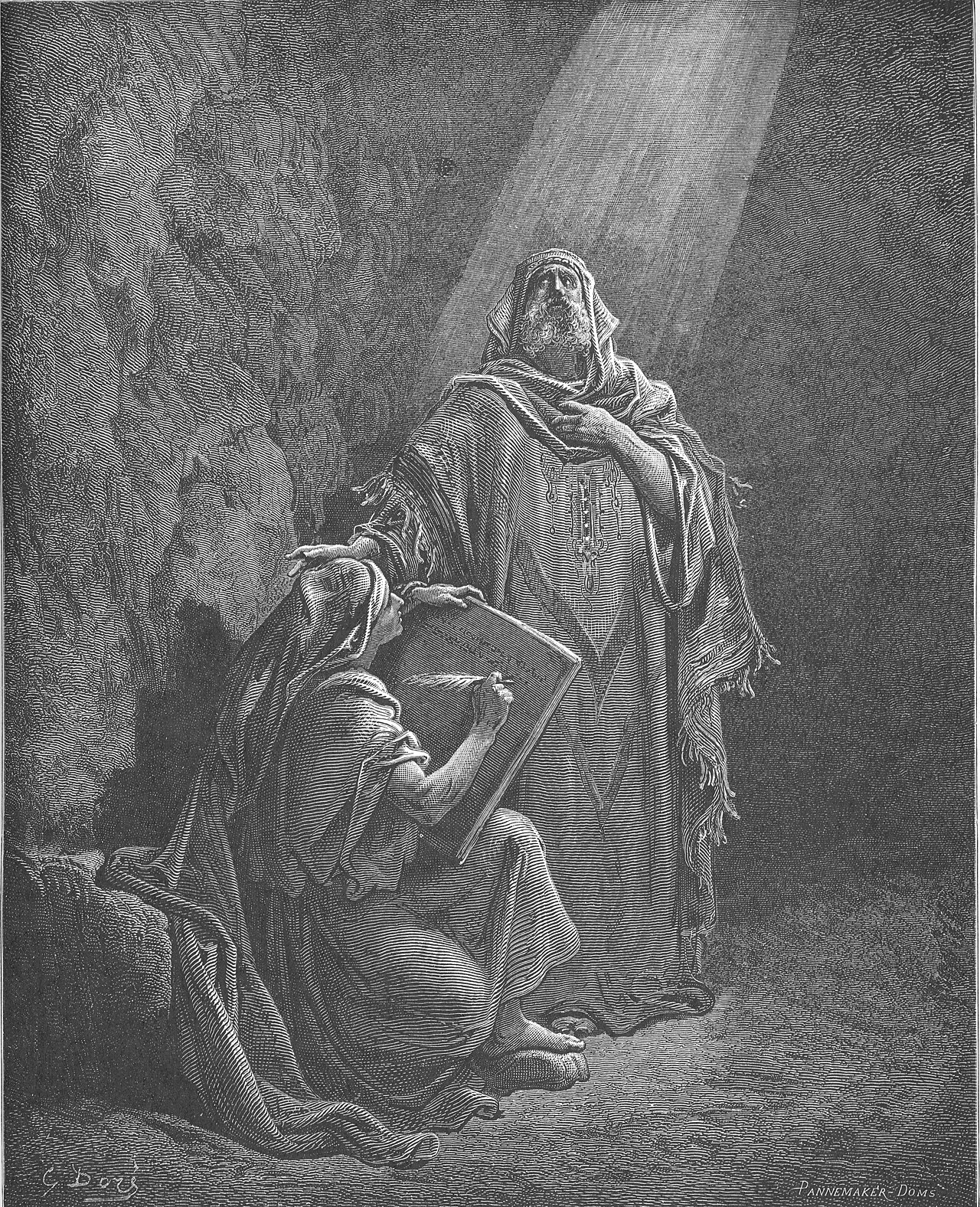
This chapter tells how the words of Jeremiah first came to be written down, in the fourth and fifth years of King Jehoiakim. Babylon had just defeated Egypt at Carchemish, and Judah now lived in the shadow of the new power. Jeremiah was barred from the temple, so the work fell to his scribe, Baruch. The first hearers remembered how King Josiah had received the scroll found in the temple a generation before. Listen for how each group that hears the scroll responds, from the crowd to the officials to the king. The chapter shows the cost of writing the word and the cost of refusing it.
Context
- Who
- Everyone who wondered how the words of a banned preacher ever got into a book
- What
- An account of Baruch writing Jeremiah's words on a scroll, reading them in the temple and to the officials, the king burning the scroll, and a second scroll written.
- Where
- Jerusalem: the chamber of Gemariah son of Shaphan in the upper court of the temple, the scribe's room in the palace, and the king's winter house.
- When
- The fourth and fifth years of Jehoiakim, 605 to 604 BC, soon after the Babylonian victory at Carchemish.
- Why
- To record how the prophet's words were kept in writing and to show that a king's contempt could not destroy them.
Historical context
This chapter shows the machinery of Scripture being made. Jeremiah, barred from the temple, dictates twenty-three years of preaching to Baruch son of Neriah. Baruch writes with a reed pen cut to a chisel point and ink made of soot and gum, on a roll made of papyrus sheets or prepared skin, in narrow columns read from right to left.
Show the rest of the historical context, 3 more paragraphs
A clay seal impression reading belonging to Berekhyahu son of Neriyahu the scribe is well known and matches this man's full name exactly, though it surfaced through the antiquities trade rather than a controlled dig, so its authenticity is argued over and it cannot carry weight on its own. A seal impression of Gemariah son of Shaphan, the official whose temple chamber Baruch reads from in this chapter, was found in place in the burnt debris of the City of David, and that one is not in doubt.
The reading happens on a proclaimed fast day, when country people had come into the city, the largest possible audience. Baruch reads, an official reports it, the scroll is read again to the officials, who go pale and tell the two men to hide.
Then the king. It is the ninth month, winter, and Jehoiakim is in the winter house with a brazier burning in front of him. As each three or four columns are read, he cuts them off with a scribe's knife and drops them in the fire until the whole roll is burned, and nobody tears their clothes. A second scroll is written with many similar words added.
Significance
For the first hearers the contrast between two kings would have been unmissable. Josiah heard a scroll and tore his clothes. His son heard a scroll and took a knife to it.
Show the rest of the significance, 1 more paragraph
And the scroll came back longer. That is the durable point: the words survived the man who burned them, and the fire is the reason we know their author's name and his scribe's.
This chapter in Jewish lifeWhat this chapter is in Jewish life and reading.
What is done
The site's own table in src/lib/hebraic/readings.ts, probed for this lane, printed no weekly portion and no Haftarah from this chapter, and no festival reading for the book. That table carries the Haftarah of each of the fifty-four weekly portions and the books read whole at the feasts, and it carries nothing for the special Sabbaths or the fast days. This card therefore names no public reading of the chapter and leaves that question to a source that holds those readings.
The corpus joins the chapter to the weeks of the Torah portions through the works arranged by portion. Under the twenty-third verse it carries Midrash Tanchuma, Shmini 9:1.
How it is read
Rashi is the one commentator on this chapter whose English the corpus carries, quoted here from The Judaica Press complete Tanach with Rashi, translated by A. J. Rosenberg, which Sefaria reports as CC-BY. Every quotation of it is held to fifty words or fewer because the translation is modern, and his headwords, which carry the verse in that translation's wording, are never quoted.
Rashi's notes on the scroll are few. The new gate of the tenth verse is "the Eastern Gate; so did Jonathan translate" (Rashi on Jeremiah 36:10:1). The officials' resolve to tell the king carries the hope "Perhaps he will hear" (Rashi on Jeremiah 36:16:1).
The fire in the brazier he reads two ways. The Rabbis in Shabbat 21a define the word as a kind of wood. By the plain sense it is "a vessel upon which they kindle fire before the princes" (Rashi on Jeremiah 36:22:1).
The cutting of the scroll draws the longest note. From Moed Katan 26a Rashi reports that the scroll was Lamentations, read to the king verse by verse. Rashi says of the king that "Despite all this, he was not troubled" (Rashi on Jeremiah 36:23:1). At the line on the adversaries becoming the head, the king saw his crown lost and cut the scroll with a scribe's razor.
The corpus carries seventeen further notes on this chapter without an English text. Each is marked linked because Sefaria holds no English version of the ref, so each is cited here and none is quoted. The notes of Radak are cited at Radak on Jeremiah 36:1:1, 36:2:1, 36:6:1, 36:11:1, 36:12:1, 36:18:1, 36:19:1, 36:24:1 and 36:26:1. The notes of Metzudat David are cited at Metzudat David on Jeremiah 36:3:1, 36:4:1, 36:7:1, 36:9:1, 36:14:1, 36:17:1 and 36:21:1. The note of Malbim is cited at Malbim on Jeremiah 36:8:1.
What the rabbis say
The corpus carries forty rabbinic locators on this chapter and the text of none, so each is cited and linked here rather than quoted. On the fifth verse it holds Midrash Tannaim on Deuteronomy 16:8:3, Sifrei Bamidbar 151:1 and Yalkut Shimoni on Torah 782:20. On the sixth verse it holds Sifrei Bamidbar 99:1 and Yalkut Shimoni on Torah 737:12. On the tenth verse it holds Introductions to Tanaitic Literature, Introduction to Halakhic Midrashim, Halakhic Midrash 27. On the eighteenth verse it holds Bava Batra 15a:5, Eikhah Rabbah, Petichta 23, Ein Yaakov (Glick Edition), Bava Batra 1:29, Ein Yaakov, Bava Batra 1:32, Ein Yaakov, Menakhot 3:10 and Jerusalem Talmud Megillah 4:1:9. It holds Kohelet Rabbah 12:7:1, Megillah 19a:3, Menachot 30a:8, Menachot 34a:13, Midrash Lekach Tov, Deuteronomy 34:5:1 and Midrash Lekach Tov, Deuteronomy 6:9:1 there as well. On the twenty-second verse it holds Midrash Tehillim 53:2, Otzar Midrashim, Baraita on Mazalot 1:5 and Shabbat 20a:8.
On the twenty-third verse it holds Bereshit Rabbah 42:3, Ein Yaakov (Glick Edition), Moed Katan 3:11, Ein Yaakov, Moed Katan 3:27, Esther Rabbah, Petichta 10, Esther Rabbah, Petichta 11 and Jerusalem Talmud Moed Katan 3:7:10. It holds Midrash Tanchuma, Shmini 9:1, Moed Katan 26a:15, Otzar Midrashim, Baraita of Rabbi Pinchas Ben Yair 1:33, Ruth Rabbah (Lerner) 1:7:1 and Ruth Rabbah, Petichta 7 there as well. On the twenty-fourth verse it holds Moed Katan 26a:17 and Shemot Rabbah 25:8. On the twenty-fifth verse it holds Jerusalem Talmud Moed Katan 3:7:11. On the twenty-seventh verse it holds Moed Katan 26a:19. On the thirty-second verse it holds Eikhah Rabbah 3:1, Eikhah Rabbah, Petichta 28 and Mekhilta DeRabbi Yishmael, Tractate Pischa 1:17.
The corpus also prints one locator anchored past the chapter's last verse, the thirty-second, cited here with the anchor it gives. It prints Aggadat Bereshit 6:2 at Jeremiah 36:35. What each of them teaches is a saying of the rabbis, and is reported as theirs wherever this site quotes one. The quotations wait on a fetch that carries the text.
Sources: Rashi, Rashi on Jeremiah 36:10:1 to 36:23:1, The Judaica Press complete Tanach with Rashi, translated by A. J. Rosenberg, reported CC-BY; Radak, Radak on Jeremiah 36:1:1, 36:2:1, 36:6:1, 36:11:1, 36:12:1, 36:18:1, 36:19:1, 36:24:1 and 36:26:1, cited by ref because the corpus carries no English text; Metzudat David, Metzudat David on Jeremiah 36:3:1, 36:4:1, 36:7:1, 36:9:1, 36:14:1, 36:17:1 and 36:21:1, cited by ref because the corpus carries no English text; Malbim, Malbim on Jeremiah 36:8:1, cited by ref because the corpus carries no English text; The Sefaria corpus, scripts/data/sources/sefaria/jeremiah/36.json, the 40 Talmud and Midrash locators of this chapter; The site's own files, src/lib/hebraic/readings.ts, printing no portion and no Haftarah for this chapter and no festival reading for this book.
The heads below are this chapter's scenes. The numbered points under each are its verses.
Baruch Writes the Scroll and Reads It in the Temple
Jeremiah 36:1-4
The scroll gathers every word spoken to Jeremiah “concerning Israel, Judah, and all the nations” from Josiah to Jehoiakim’s fourth year. The purpose is given before a word is written: “Then I will forgive their iniquity and their sin.” Baruch son of Neriah first appears here as the scribe.
Jeremiah 36:1
“In the fourth year of Jehoiakim - See Jer 25:1 note. The present chapter belongs to the very end of that year. The capture of Jerusalem by Nebuchadnezzar took place early in Jehoiakim’s fourth year, long before the writing of Jehoiakim’s scroll. The humiliation seems to have sunk deeply into the heart of Jehoiakim, and when Jeremiah prophesied extended dominion to the Chaldaeans Jer 36:29, his anger knew no bounds.”
Jamieson, Fausset and Brown read the command as gathering all the words spoken during the reign of Josiah and after onto one scroll. Barnes describes the scroll as skins sewn together and rolled up. Twenty-three years of words went onto it.
Jeremiah 36:2
“Take thee a roll of a book - Take a sufficient quantity of parchment; cut and stitch it together, that it may make a roll on which to write the words that I have already spoken, that they may serve for a testimony to future generations. The Jewish rolls, several of which now lie before me, were made of vellum, or of sheep-skins dressed in the half-tanned or Basil manner. These were cut into certain lengths, and those parts were all stitched together, and rolled upon a roller. The matter was written on these skins in columns or pages.”
Adam Clarke · Commentary on the Bible (1810-1826)evangelical
each of them will turn from his wicked way: The scroll was written so that the people of Judah would hear, turn from the wicked way, and be forgiven, the three steps Clarke names. Henry reads the LORD's readiness to forgive iniquity and sin as mercy that waits for the people to turn. Barnes sets this beside Jeremiah 26:3.
Jeremiah 36:3
“It may be that the house of Judah will hear - It was yet possible to avert the judgments which had been so often denounced against them. But in order to this they must - 1. Hear what God has spoken. 2. Every man turn from his evil way. 3. If they do so, God graciously promises to forgive their iniquity and their sin.”
Adam Clarke · Commentary on the Bible (1810-1826)evangelical
1 more voice on this verse
Jeremiah 36:3
“This plainly implies the honour of God's justice, with which it is not consistent that he should forgive the sin unless the sinner repent of it and turn from it; but it plainly expresses the honour of his mercy, that he is very ready to forgive sin and only waits till the sinner be qualified to receive forgiveness, and therefore uses various means to bring us to repentance, that he may forgive.”
Matthew Henry · Commentary on the Whole Bible (1707-1721)puritan
Jeremiah called Baruch son of Neriah: Baruch wrote at dictation, word for word. Clarke notes that scribe was an office, marking a learned man in public service who knew the laws and customs, as well as a writer. When the officials later ask how the scroll was written, Baruch's answer in verse 18 matches this verse.
Jeremiah 36:4
“Then Jeremiah called Baruch - This man, so useful to the prophet, and so faithfully attached to him, was by office a scribe; which signifies, not only a writer, but also a man in office; a chancellor, secretary, etc., a learned man; one acquainted with laws and customs.”
Adam Clarke · Commentary on the Bible (1810-1826)evangelical
Jeremiah 36:5-8
Jeremiah says, “I am restricted; I cannot enter the house of the LORD,” so the reading falls to Baruch. Gill and Clarke connect the restriction with the hostility after his trial in chapter 26. Verse 8 records that he did everything Jeremiah had commanded him.
Jeremiah 36:5
“I am shut up--not in prison, for there is no account of his imprisonment under Jehoiakim, and Jer 36:19, 26 are inconsistent with it: but, "I am prevented," namely, by some hindrance; or, through fear of the king, to whose anger Baruch was less exposed, as not being the author of the prophecy.”
Jamieson, Fausset & Brown · Commentary Critical and Explanatory on the Whole Bible (1871)reformed
on a day of fasting: A fast day brought people from every town of Judah into the temple, as John Wesley notes. Jamieson, Fausset and Brown mark this fast as an extraordinary one in the ninth month, apart from the Day of Atonement in the seventh. Baruch waited for it, as verse 9 shows.
Jeremiah 36:6
“Upon the fasting day - A day when multitudes of people would be gathered together from all parts to implore the mercy of God. This was a favorable time to read these tremendous prophecies.”
Adam Clarke · Commentary on the Bible (1810-1826)evangelical
Perhaps they will bring their petition before the LORD: The Hebrew for bringing a petition pictures a request that falls before the LORD. Clarke reads it as the people falling down before God, and Barnes says the words carry the hope that the LORD would hear. Jeremiah uses the same words with Zedekiah in 37:20.
Jeremiah 36:7
“Present their supplication - “Let their supplication fall,” that they may fall down before God, and deplore their sins.”
Adam Clarke · Commentary on the Bible (1810-1826)evangelical
1 more voice on this verse
Jeremiah 36:7
“They will present their supplication - i. e., humbly. See the margin. The phrase also contained the idea of the prayer being accepted.”
So Baruch son of Neriah did everything: Verse 8 sums up what verse 9 tells in detail. Matthew Henry notes the gap between the command in the fourth year and the great reading in the fifth. He suggests Baruch read from the book to smaller gatherings in the meantime.
Jeremiah 36:9-10
The fast comes in the ninth month of the fifth year, about a year after the command. Baruch reads from the chamber of Gemariah son of Shaphan, “in the upper courtyard at the opening of the New Gate,” a public place. Shaphan’s son Ahikam had protected Jeremiah in 26:24.
Jeremiah 36:9
“The ninth month answers to our December, and the fast was probably in commemoration of the capture of Jerusalem by the Chaldaeans in the previous year.”
1 more voice on this verse
Jeremiah 36:9
“But some think that the writing of the book fairly over took up so much time that it was another year ere it was perfected; and yet perhaps it might not be past a month or two; he might begin in the latter end of the fourth year and finish it in the beginning of the fifth, for thee ninth month refers to the computation of the year in general, not to the year of that reign.”
Matthew Henry · Commentary on the Whole Bible (1707-1721)puritan
From the chamber of Gemariah son of Shaphan the scribe: Barnes explains the setting. The upper courtyard was the inner court, closed to the people, yet Gemariah's chamber could be reached from the outer court. Gemariah, Ahikam's brother, held the scribe's office his father Shaphan had held under Josiah.
Jeremiah 36:10
“Gemariah seems to have inherited his father’s office of public scribe or secretary of state (see 2Ki 22:3). As brother of Ahikam, he would be favorable to Jeremiah. The higher court - The inner court; into which it was not lawful for the people to enter, but the chamber probably itself formed one of its sides, and could be approached from the outer court.”
The Princes Hear It and Tell Them to Hide
Jeremiah 36:11-13
When Micaiah son of Gemariah, the son of Shaphan: Micaiah, grandson of Shaphan, hears the reading and goes down to the scribe’s chamber in the king’s palace. He reports “all the words he had heard Baruch read.” Gill notes the house of Shaphan at the turning points: Ahikam protects Jeremiah in 26:24, and Gedaliah governs in chapter 40.
Jeremiah 36:11
“Probably as his father had lent Jeremiah the hall, Michaiah had been commanded to bring Gemariah Jer 36:12 tidings, as soon as the reading was over, of the nature of the prophet’s words, and the effect produced by them upon the people.”
the scribe’s chamber in the king’s palace: The officials were already sitting when Micaiah arrived. Barnes calls the scribe's chamber the chancery where the king's business was done, and he takes the meeting to concern the war with Babylon. Matthew Henry hopes Micaiah came to press the warning on them, his father having lent Baruch the room.
Jeremiah 36:12
“The scribe’s chamber - The chancery in which the king’s business was conducted. Probably Elishama was one of the “principal scribes of the host” Jer 52:25, i. e., the secretary of state for war. The business which had brought together “all the princes” would have reference to the Chaldaean war.”
Micaiah reported to them all the words: Micaiah carried the whole reading from the temple court down to the palace. Barnes suggests that his father Gemariah, who had lent the chamber, had asked him to report both the words and their effect on the people. The officials heard the substance before they saw the scroll.
Jeremiah 36:14-16
The officials send Jehudi to bring Baruch and the scroll. When they had heard it, “they turned to one another in fear.” Their decision, “Surely we must report all these words to the king,” sends the scroll up to the one man who can act on it.
Jeremiah 36:14
“Jehudi signifies a Jew and Cushi an Ethiopian, but it seems reasonable to conclude that they are genuine, proper names.”
The officials received Baruch with courtesy and asked him to sit. Henry compares Paul, who laid his message privately before those of reputation in Galatians 2, and reads the private reading as the same wise accommodation.
they turned to one another in fear: The officials turned to one another in fear, and Barnes reads it as trembling passed from one man to the next by look and gesture. They had to report the words to the king. Jamieson, Fausset and Brown see some fear of God, too weak to risk the king's favor.
Jeremiah 36:16
“They were afraid both one and other - literally, “they trembled each to his neighbor,” i. e., they showed their alarm by their looks and gestures one to another. They felt that what he had so consistently prophesied for a period of 23 years would in all probability be fulfilled. We will surely tell - Rather, We must tell the king. It was their official duty.”
1 more voice on this verse
Jeremiah 36:16
“They were all convinced that it was worthy to be regarded, but none of them had courage to second it, only they agreed to tell the king of all these words; and, if he think fit to give credit to them, they will, otherwise not, no, though it were to prevent the ruin of the nation.”
Matthew Henry · Commentary on the Whole Bible (1707-1721)puritan
Jeremiah 36:17-19
The officials ask how the scroll was written. Baruch answers, “He recited all these words to me and I wrote them in ink on the scroll.” Before they go to the king, the officials warn them, “You and Jeremiah must hide yourselves and tell no one where you are.”
Jeremiah 36:17
“What they wished to know was, whether what Baruch had read to them was written by him from memory after hearing Jeremiah repeating his prophecies continuously, or accurately from the prophet's own dictation.”
Jamieson, Fausset & Brown · Commentary Critical and Explanatory on the Whole Bible (1871)reformed
The officials needed to know whether the words were Jeremiah's own or Baruch's recollection of them. Barnes and Jamieson, Fausset and Brown both read the mention of ink to mean that Baruch added nothing but hand, pen and ink. The scroll's authority rested on the prophet.
Jeremiah 36:18
“He pronounced - He used to say aloud, he dictated. Baruch’s office was merely mechanical. He contributed nothing but hand, pen, and ink.”
The officials expected the king's anger and moved first to protect the prophet and his scribe. Adam Clarke reads the warning as a sign that they believed the prophecy came from God. Matthew Henry credits their escape to God alone.
Jeremiah 36:19
“Then said the princes unto Baruch,.... Being satisfied with his answer: go hide thee, thou and Jeremiah, and let no man know where ye be.”
1 more voice on this verse
Jeremiah 36:19
“Go, hide thee, thou and Jeremiah - They saw that the king would be displeased, and most probably seek their lives; and as they believed the prophecy was from God, they wished to save both the prophet and his scribe; but they were obliged to inform the king of what they had heard.”
Adam Clarke · Commentary on the Bible (1810-1826)evangelical
Jehoiakim Cuts the Scroll with a Penknife
Jeremiah 36:20-21
having stored the scroll in the chamber of Elishama the scribe: The officials leave the scroll in the chamber of Elishama and report its contents to the king. Jehudi reads it “in the hearing of the king and all the officials who were standing beside him.” The words that frightened the officials in verse 16 now come before the king himself.
Jeremiah 36:20
“The court - i. e., The inner quadrangle of the palace, in which was the royal residence. They laid up the roll - They left the scroll in charge, i. e., in the care of someone.”
the king sent Jehudi to get the scroll: Jehudi, who had summoned Baruch in verse 14, now fetches the scroll and reads it himself. John Gill points out that he is the same messenger. The officials who heard it earlier stand beside the king as it is read a third time.
Jeremiah 36:22-23
the king was sitting in his winter quarters: During “the ninth month” the king sits “in his winter quarters with a fire burning before him.” As Jehudi reads “three or four columns,” the king cuts them off with a scribe’s knife. The act is repeated column by column “until the entire scroll had been consumed by the fire.”
Jeremiah 36:22
“Winterhouse - A warm apartment suited to the season of the year, (December), when in Palestine there is often snow upon the ground, though it does not last long. A fire on the hearth - a pan or brazier of burning coals. This is the case to the present day. In cold weather the rich burn wood in brass or earthen pans, placed in any part of the room; the indigent burn sticks on the floor.”
Adam Clarke · Commentary on the Bible (1810-1826)evangelical
Jehoiakim would cut them off with a scribe’s knife: Barnes calls it a scribe's tool for pens and erasures. Jamieson, Fausset and Brown read the verse to mean the whole scroll was heard as it was cut away, column by column. Theodoret of Cyrus remarks that the sheet burned while the divine law stayed unharmed.
Jeremiah 36:23
"He" refers to the king (Jer 36:22). As often as Jehudi read three or four columns, the king cut asunder the part of the roll read; and so he treated the whole, until all the parts read consecutively were cut and burnt; Jer 36:24, "all these words," implies that the whole volume was read through, not merely the first three or four columns (1Ki 22:8).
Jamieson, Fausset & Brown · Commentary Critical and Explanatory on the Whole Bible (1871)reformed
2 more voices on this verse
Jeremiah 36:23
“The God of all orders Jeremiah to write the former words in another book. The sheet of paper was burned, but the divine law remained unharmed. So also when the body assumed by the Word suffered, the Word remained free from suffering.”
Theodoret of Cyrus · written before 458 · On Jeremiah 7:36patristic
Jeremiah 36:23
“Leaves - Columns: literally folding-doors; the word exactly describes the shape of the columns of writing upon the scroll. Penknife - “Scribe’s knife;” used to shape the reed for writing, and to make erasures in the parchment. On the hearth - Or, in the fire-pan. The conduct of the king shows how violent was his temper.”
Jeremiah 36:24-26
the king and his servants did not become frightened or tear their garments: The king and his servants “did not become frightened or tear their garments,” though the officials had turned in fear. Elnathan, Delaiah, and Gemariah urge the king not to burn the scroll, and he orders Baruch and Jeremiah seized. Verse 26 ends, “But the LORD had hidden them.”
Elnathan, Delaiah, and Gemariah urged the king: Elnathan's plea stands out. Barnes recalls that this same man had led the party that brought the prophet Urijah back from Egypt to his death in Jeremiah 26:22. Jamieson, Fausset and Brown read the king's refusal of three of his own officials as a mark of hardening.
Jeremiah 36:25
“The "nevertheless" aggravates the king's sin; though God would have drawn him back through their intercession, he persisted: judicial blindness and reprobation!”
Jamieson, Fausset & Brown · Commentary Critical and Explanatory on the Whole Bible (1871)reformed
But the LORD had hidden them: Jamieson, Fausset and Brown take Hammelech as a name, since Jehoiakim's son Jeconiah was a boy of eleven. Barnes allows a name or a prince of the royal house. Adam Clarke joins the means of escape: the officials' counsel to hide, and the LORD keeping the search from finding them.
Jeremiah 36:26
“But the Lord hid them - They had, at the counsel of some of the princes hidden themselves, Jer 36:19. And now, though a diligent search was made, the Lord did not permit them to be found.”
Adam Clarke · Commentary on the Bible (1810-1826)evangelical
1 more voice on this verse
Jeremiah 36:26
“Hammelech - Either a proper name or a prince of the blood royal (see the margin; Jer 38:6; 1Ki 22:26).”
A Second Scroll, with Many Like Words Added
Jeremiah 36:27-31
After the king had burned the scroll: After the burning, Jeremiah is told to write “the very words that were on the original scroll.” The sentence on Jehoiakim follows: “He will have no one to sit on David’s throne.” Verse 31 extends the judgment to his descendants, his servants, and the people of Jerusalem and Judah.
Jeremiah 36:27
“8 And Baruch the son of Neriah did according to all that Jeremiah the prophet commanded him, reading in the book the words of the L ORD in the L ORD 's house. In the beginning of Ezekiel's prophecy we meet with a roll written in vision, for discovery of the things therein contained to the prophet himself, who was to receive and digest them, Ezek. ii.”
Matthew Henry · Commentary on the Whole Bible (1707-1721)puritan
Adam Clarke notes that no copy of the first scroll survived, so the second had to come again from God through the prophet. The words were the same. What changed was a sentence on Jehoiakim himself, which verses 29 to 31 add.
Jeremiah 36:28
“Take thee again another roll - There was no duplicate of the former preserved; and now God inspired the prophet with the same matter that he had given him before; and there is to be added the heavy judgment that is to fall on Jehoiakim and his courtiers.”
Adam Clarke · Commentary on the Bible (1810-1826)evangelical
The king's question names what angered him. Barnes notes that Nebuchadnezzar had already come once, and he places the offense in the last words, a coming that would leave the land empty. Jamieson, Fausset and Brown add that this word reached Jehoiakim in writing, with Jeremiah in hiding.
Jeremiah 36:29
“The king of Babylon ... - These words do not prove that Nebuchadnezzar had not already come, and compelled Jehoiakim to become his vassal. The force lies in the last words, which predict such a coming as would make the land utterly desolate: and this would be the result of the king throwing off the Chaldaean yoke.”
1 more voice on this verse
Jeremiah 36:29
“He did so ( 2 Chron. xxxvi. 6, 7 ) in his third year, Dan. i. So that God and his prophets had therefore become his enemies because they told him the truth, told him of the desolation that was coming, but at the same time putting him into a fair way to prevent it.”
Matthew Henry · Commentary on the Whole Bible (1707-1721)puritan
He will have no one to sit on David’s throne: His son Jeconiah did reign, briefly. Barnes holds that a reign of three months had too little real power to count. Jamieson, Fausset and Brown add that Zedekiah, who followed, was Jeconiah's uncle, and they tie the exposed body to Jeremiah 22:18 and 19.
Jeremiah 36:30
“Zedekiah was not the son, but the uncle of Jeconiah, and was raised to the throne in contempt of him and his father Jehoiakim (Jer 22:30). dead body . . . cast out-- (Jer 22:18, 19). day . . . heat . . . night . . . frost--There are often these variations of temperature in the East between night and day (Ge 31:40).”
Jamieson, Fausset & Brown · Commentary Critical and Explanatory on the Whole Bible (1871)reformed
I will punish him and his descendants and servants: The calamity reaches the king's descendants, his servants and all Judah. Henry says the king had burned a copy, while the LORD kept the words themselves, to be written again in what came upon the city.
Jeremiah 36:31
“That all the evil pronounced against Judah and Jerusalem in that roll shall be brought upon them. Though the copy be burnt, the original remains in the divine counsel, which shall again be copied out after another manner in bloody characters. Note, There is no escaping God's judgments by struggling with them.”
Matthew Henry · Commentary on the Whole Bible (1707-1721)puritan
Then Jeremiah took another scroll: Jeremiah takes another scroll, and Baruch writes on it all the words Jehoiakim had burned. The chapter closes, “And many similar words were added to them,” so the scroll comes back larger than before the fire. The king’s knife and fire did not remove the words he had heard.
Jeremiah 36:32
“There were added - many like words - All the first roll, with many other threatening and perhaps more minute declarations which were merely of a temporary importance and local application; and the Holy Spirit did not think proper to record them here.”
Adam Clarke · Commentary on the Bible (1810-1826)evangelical
Keep studying
Sources for this chapter
The summary
Jamieson, Fausset & Brown, Commentary Critical and Explanatory; John Calvin, Commentaries; John Wesley, Notes on the Old Testament and Matthew Henry, Complete Commentary.
The exposition
Adam Clarke, Commentary on the Bible; Albert Barnes; Carl Friedrich Keil, The Prophecies of Jeremiah; Jamieson, Fausset & Brown, Commentary Critical and Explanatory on the Whole Bible; John Gill; John Wesley, Explanatory Notes upon the Old Testament; Matthew Henry, Commentary on the Whole Bible and Theodoret of Cyrus, ON JEREMIAH 7:36.