
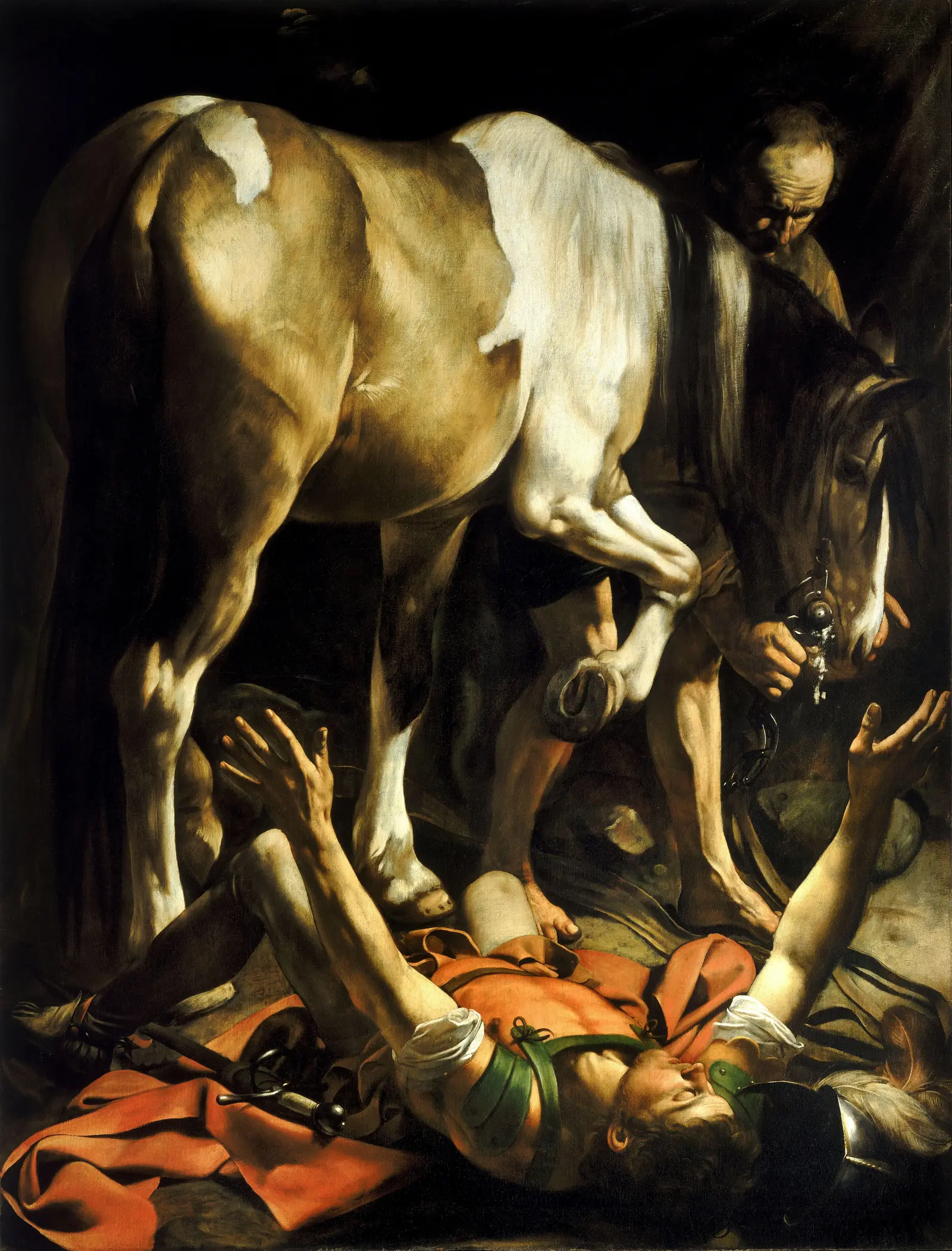
Galatianschapter 1
24 verses · Paul · AD 48 or 49 · Paul's letters
Paul, an apostle—sent not from men nor by man, but by Jesus Christ and God the Father, who raised Him from the dead—
Introduction
Paul, Paul's letters, Galatians Overview.
Paul wrote this letter to churches he had founded in the Roman region of Galatia, in the heart of what is now Turkey. Teachers had come after him and told the Gentile believers that faith in Christ was incomplete without circumcision and the law of Moses. They also questioned whether Paul was a true apostle at all. The first chapter answers that second charge. Listen for the missing word of thanks at the start, where every other letter of Paul has one. Then follow the dates and places, since each one is part of a sworn account.
Context
- Who
- Gentile converts being told by newcomers that faith in Christ was not quite enough.
- What
- The opening of a letter of rebuke, followed by Paul's account of how he received his gospel and his calling.
- Where
- Sent to the churches of Galatia in Asia Minor, from a place the letter leaves unnamed; the account itself moves from Judea to Damascus, Arabia, Jerusalem, Syria and Cilicia.
- When
- Written about AD 48 to 57, the date turning on which Galatia is meant; the events told run from Paul's conversion, about AD 33 to 35, through the years after it.
- Why
- To defend the gospel the Galatians first received by showing that it came to Paul by revelation from Jesus Christ.
Historical context
Whether "Galatia" means the southern cities Paul evangelized on his first journey, Pisidian Antioch, Iconium, Lystra, Derbe, or ethnic Galatian territory further north has been argued for centuries. The southern view, which allows the earliest date, is the traditional reading and fits the churches Acts actually describes; the northern view has serious defenders. The choice affects the letter's date, not its argument.
Show the rest of the historical context, 3 more paragraphs
Ancient letters normally opened with thanksgiving for the recipients. Paul skips it entirely and goes straight to astonishment that they are deserting so quickly. First hearers would have felt the missing paragraph like a slap.
The word he uses for their desertion was used of soldiers changing sides and of people turning to a different philosophy. "So quickly" suggests months, not years.
His account of his own past is a formal defence of independence: he did not receive the gospel from any man, he did not go up to Jerusalem to consult the apostles, and when he finally visited Peter three years later it was for a fortnight. Everything hangs on the claim that his message came by revelation, because his opponents evidently argued he was a second-hand messenger who had softened the terms.
Significance
The Galatians were being told that the issue was not a matter of preference between teachers. There is no other gospel, and anyone preaching a different one, even an angel from heaven, is under a curse. Paul says it twice.
Show the rest of the significance, 1 more paragraph
And the credential he offers is not a letter or a lineage but a history his hearers could verify: the churches in Judea had only heard that the man who once persecuted them was now preaching the faith, and they glorified God because of him.
The heads below are this chapter's scenes. The numbered points under each are its verses.
He Gave Himself to Rescue Us From This Evil Age
Galatians 1:1-2
Paul opens with his credentials before he opens with grace. Not of men denies any human origin for his apostleship, and neither by man denies any human channel for it. The office came straight from Jesus Christ and God the Father who raised him from the dead.
Galatians 1:1
“Not of men - Not commissioned from them, but from God the Father. Neither by man - Neither by any man as an instrument, but by Jesus Christ. Who raised him from the dead - Of which it was the peculiar business of an apostle to bear witness.”
John Wesley · Explanatory Notes upon the New Testament (1755)evangelical
2 more voices on this verseWhat preachers and commentators have said about this verse, in their own words.
Galatians 1:1
“Not in pride, as some suppose, but by necessity, he said that he was not an apostle from men or through man … so that by this he might confound those who were alleging that Paul was not one of the twelve apostles or ordained by his elders. This might also be taken as aimed obliquely at Peter and the others, because the gospel was committed to him not by the apostles but by the same Jesus Christ who had chosen those apostles.”
Jerome · written before 420 · Epistle to the Galatians 1.1.1patristic
Galatians 1:1
“Paul an apostle - See the note at Rom 1:1. This is the usual form in which he commences his epistles; and it was of special importance to commence the Epistle in this manner, because it was one design to vindicate his apostleship, or to show that he had received his commission directly from the Lord Jesus. Not of men - “Not from ἀπ ̓ ap' men.” That is, he was not “from” any body of people, or commissioned by people.”
To the churches of Galatia: Paul writes to the churches of Galatia, and all the brothers with him join the greeting. Readers divide over which Galatia is meant, the northern Celtic region or the Roman province where Paul first preached in Acts 13 and 14. The greeting holds no praise for the churches.
Galatians 1:2
“And all the brethren which are with me - It is very likely that this refers to those who were his assistants in preaching the Gospel, and not to any private members of the Church. Churches of Galatia - Galatia was a region or province of Asia Minor; there was neither city nor town of this name. See the preface. But as, in this province, St. Paul had planted several Churches, he directs the epistle to the whole of them; for it seems they were all pretty nearly in the same state, and needed the same instructions.”
Adam Clarke · Commentary on the Bible (1810-1826)evangelical
1 more voice on this verse
Galatians 1:2
“The first Epistle of Peter is addressed to Jewish Christians sojourning in Galatia (1Pe 1:1), among other places mentioned. It is interesting thus to find the apostle of the circumcision, as well as the apostle of the uncircumcision, once at issue (Ga 2:7-15), co-operating to build up the same churches.”
Jamieson, Fausset & Brown · Commentary Critical and Explanatory on the Whole Bible (1871)reformed
Galatians 1:3-5
Grace and peace to you: The greeting is standard, grace and peace, but verse 4 loads it at once with the letter's argument. Christ gave himself for our sins to deliver us out of this present evil age.
Galatians 1:3
“Grace to be you,.... After the inscription above, in which the writer of the epistle, and the persons joined to him, are described, and the churches to whom it is written, follows the salutation in these words, and which is common to all the epistles of this apostle; of the sense of which; see Gill on Rom 1:7. The Alexandrian copy reads, "from God our Father, and the Lord Jesus Christ"; and the Ethiopic version reads, "our Father".”
who gave Himself for our sins: The greeting names the cross before any argument. Christ gave Himself to rescue believers from the present evil age, by the will of God the Father. The Galatians were being taught to add the law to that rescue, and this verse calls it complete.
Galatians 1:4
“Who gave himself for our sins - Who became a sin-offering to God in behalf of mankind, that they might be saved from their sins. Deliver us from this present evil world - These words cannot mean created nature, or the earth and its productions, nor even wicked men.”
Adam Clarke · Commentary on the Bible (1810-1826)evangelical
1 more voice on this verse
Galatians 1:4
“Neither did the Son give himself without the Father's will, nor did the Father give up the Son without the Son's will.… The Son gave himself, that he himself, as righteousness, might do away with the unrighteousness in us. Wisdom gave itself that it might oust foolishness.”
Jerome · written before 420 · Epistle to the Galatians 1.1.3patristic
to whom be glory forever and ever: Glory goes to God the Father for the rescue of verse 4, forever and ever. The other letters of Paul place a thanksgiving for the churches here, and this one gives glory to God alone. The rebuke of verse 6 follows at once.
Galatians 1:5
“To whom be glory ... - Let Him have all the praise and honor of the plan and its execution. It is not uncommon for Paul to introduce an ascription of praise in the midst of an argument: see the note at Rom 1:25. It results from the strong desire which he had, that all the glory should be given to God, and showed that he believed that all blessings had their origin in God, and that God should be always acknowledged.”
So Quickly Deserting: Let Him Be Accursed
Galatians 1:6-7
I am amazed how quickly you are deserting: Every other letter of Paul opens with thanksgiving for the church addressed, and here I am amazed stands in its place. Deserting translates metatithesthe, a present tense verb for changing sides or leaving a post.
Galatians 1:6
“Ro 5:15, "the gift by (Greek, 'in') grace (Greek, 'the grace') of (the) one man." "The grace of Christ," is Christ's gratuitously purchased and bestowed justification, reconciliation, and eternal life. another--rather, as Greek, "a second and different gospel," that is, into a so-called gospel, different altogether from the only true Gospel.”
Jamieson, Fausset & Brown · Commentary Critical and Explanatory on the Whole Bible (1871)reformed
1 more voice on this verse
Galatians 1:6
“I marvel that ye are removed so soon - After my leaving you. From him who called you by the grace of Christ - His gracious gospel, and his gracious power.”
John Wesley · Explanatory Notes upon the New Testament (1755)evangelical
which is not even a gospel: Paul corrects his own word at once: a different gospel is no gospel of Christ at all. Distort translates metastrepsai, to turn a thing into its opposite. The people troubling the Galatians kept the words of the gospel and reversed its sense.
Galatians 1:7
“Which is not another,.... It is no Gospel, no joyful sound, no good news, and glad tidings; the doctrine which attributes justification to the works of the law, or mixes grace and works in the business of salvation, which was the doctrine of these false teachers, is no Gospel; not truly so, however it may be called; nor does it bring any solid peace and joy to distressed minds.”
1 more voice on this verse
Galatians 1:7
“Which, indeed, is not properly another gospel. For what ye have now received is no gospel at all; it is not glad, but heavy, tidings, as setting your acceptance with God upon terms impossible to be performed.”
John Wesley · Explanatory Notes upon the New Testament (1755)evangelical
Galatians 1:8-9
or an angel from heaven: Paul pronounces the curse in two successive verses, a double anathema on one point found nowhere else in the canon. He widens it to an angel from heaven, so that no messenger's rank could shield a false gospel.
Galatians 1:8
“But though we, or an angel from heaven,.... The apostle, in order to assert the more strongly the truth, purity, and perfection of the Gospel, as preached by him; and to deter persons from preaching another Gospel, and others from receiving it, supposes a case impossible; and, in such a case, denounces his anathemas.”
2 more voices on this verse
Galatians 1:8
“But though we, or an angel - That Gospel which I have already preached to you is the only true Gospel; were I to preach any other, I should incur the curse of God. If your false teachers pretend, as many in early times did, that they received their accounts by the ministry of an angel, let them be accursed; separate them from your company, and have no religious communion with them. Leave them to that God who will show his displeasure against all who corrupt, all who add to, and all who take from the word of his revelation.”
Adam Clarke · Commentary on the Bible (1810-1826)evangelical
Galatians 1:8
“But if we - I and all the apostles. Or an angel from heaven - If it were possible. Preach another gospel, let him be accursed - Cut off from Christ and God.”
John Wesley · Explanatory Notes upon the New Testament (1755)evangelical
As we have said before: The curse is repeated almost word for word, with one change. Verse 8 spoke of a gospel preached, and verse 9 of a gospel received, so the test is the gospel the Galatians already hold. The words said before may point to a warning given on an earlier visit.
Galatians 1:9
“Have said before - Many times, in effect, if not in terms. So I say - All those brethren knew the truth of the gospel. St. Paul knew the Galatians had received the true gospel.”
John Wesley · Explanatory Notes upon the New Testament (1755)evangelical
1 more voice on this verse
Galatians 1:9
“He indicates that he initially, fearing this very thing, denounced an anathema on those who would preach in this way. Now, after it has been preached, he decrees the anathema that he formerly predicted.”
Jerome · written before 420 · Epistle to the Galatians 1.1.8patristic
a servant of Christ: Paul turns back on itself the accusation that his gospel was crafted to please Gentile converts. A man who still sought to please men would not be Christ's servant at all.
Galatians 1:10
“If I still - Since I was an apostle. Pleased men - Studied to please them; if this were my motive of action; nay, if I did in fact please the men who know not God. I should not be the servant of Christ - Hear this, all ye who vainly hope to keep in favour both with God and with the world!”
John Wesley · Explanatory Notes upon the New Testament (1755)evangelical
1 more voice on this verse
Galatians 1:10
“Do I now persuade men, or God? - The words πειθειν τον Θεον may be rendered to court or solicit the favor of God as the after clause sufficiently proves. This acceptation of πειθειν is very common in Greek authors. While the apostle was a persecutor of the Christians, he was the servant of men, and pleased men. When he embraced the Christian doctrine, he became the servant of God, and pleased Him. He therefore intimates that he was a widely different person now from what he had been while a Jew.”
Adam Clarke · Commentary on the Bible (1810-1826)evangelical
Not From Man: Arabia, Damascus, and the Silent Years
Galatians 1:11-12
the gospel I preached was not devised by man: Paul states his thesis before he proves it: the gospel I preached was not devised by man, kata anthropon in the Greek. He received it by revelation from Jesus Christ.
Galatians 1:11
“But I certify you, brethren -- he does not till now give them even this appellation. That the gospel which was preached by me among you is not according to man - Not from man, not by man, not suited to the taste of man.”
John Wesley · Explanatory Notes upon the New Testament (1755)evangelical
1 more voice on this verse
Galatians 1:11
“To me it is a pitiful sight to see Paul defending himself as an Apostle and, doing this, not against the gainsaying world, but against cold-hearted members of the Church! They said that he was not truly an Apostle, for he had not seen the Lord. And they uttered a great many other things derogatory to him. To maintain his claim to the Apostleship, he was driven to commence his Epistles with, "Paul, an Apostle of Jesus Christ," though his work was a self-evident proof of his call.”
I received it by revelation from Jesus Christ: Paul names two ordinary routes to a doctrine and closes both, receiving it from a man and being taught it. The third route is revelation, a disclosure from Jesus Christ Himself. That claim puts his gospel on the same footing as the gospel of the Twelve.
Galatians 1:12
“Translate, "For not even did I myself (any more than the other apostles) receive it from man, nor was I taught it (by man)." "Received it," implies the absence of labor in acquiring it. "Taught it," implies the labor of learning. by the revelation of Jesus Christ--Translate, "by revelation of [that is, from] Jesus Christ." By His revealing it to me.”
Jamieson, Fausset & Brown · Commentary Critical and Explanatory on the Whole Bible (1871)reformed
2 more voices on this verse
Galatians 1:12
“For neither did I receive it - At once. Nor was I taught it - Slowly and gradually, by any man. But by the Revelation of Jesus Christ - Our Lord revealed to him at first, his resurrection, ascension, and the calling of the gentiles, and his own apostleship; and told him then, there were other things for which he would appear to him.”
John Wesley · Explanatory Notes upon the New Testament (1755)evangelical
Galatians 1:12
“Do you see how he constantly affirms that he became God's disciple, in contrast to the claim of those who imposed the circumcision upon the Galatians, arguing that those who become disciples of Christ, i.e. Peter and James and John, permit the circumcision, whereas he is a disciple of the disciples and, therefore, they should not pay attention to them rather than to him?”
John Damascene · written before 749 · Commentary (church-history corpus)patristic
Galatians 1:13-14
persecuted the church of God: Paul's proof begins with the last man anyone would expect to carry a gospel to the Gentiles. He persecuted the church of God and tried to destroy it and was extremely zealous for the traditions handed down to him.
Galatians 1:13
"Israelite," the highest title, the religious privileges, as a member of the theocracy. the church--Here singular, marking its unity, though constituted of many particular churches, under the one Head, Christ. of God--added to mark the greatness of his sinful alienation from God (1Co 15:19). wasted--laid it waste: the opposite of "building it up."
Jamieson, Fausset & Brown · Commentary Critical and Explanatory on the Whole Bible (1871)reformed
extremely zealous for the traditions of my fathers: Paul's traditions of my fathers are the oral rulings of the Pharisees, handed down beside the written law. Paul had outpaced men of his own age in keeping them. His zeal for them is his proof that no human teacher turned him toward Christ.
Galatians 1:14
“And profited in the Jews’ religion - The apostle does not mean that he became more exemplary in the love and practice of the pure law of God than any of his countrymen, but that he was more profoundly skilled in the traditions of the fathers than most of his fellow students were, or, as the word συνηλικιωτας may mean his contemporaries.”
Adam Clarke · Commentary on the Bible (1810-1826)evangelical
1 more voice on this verse
Galatians 1:14
“He prudently inserts the statement that he served not so much God's law as the paternal traditions—that is, those of the Pharisees, who teach doctrines and precepts of men and reject the law of God to set up their own traditions.”
Jerome · written before 420 · Epistle to the Galatians 1.1.13patristic
Galatians 1:15-17
who set me apart from my mother’s womb: Paul describes his call in words that echo Jeremiah 1:5, God set me apart from my mother’s womb. So God's purpose for him came before his own choices, zeal included.
Galatians 1:15
“Who separated me from my mother's womb - Set me apart for an apostle, as he did Jeremiah for a prophet. Such an unconditional predestination as this may consist, both with God's justice and mercy. And called me by his grace - By his free and almighty love, to be both a Christian and an apostle.”
John Wesley · Explanatory Notes upon the New Testament (1755)evangelical
2 more voices on this verse
Galatians 1:15
WE will read the whole verse from which our text is taken—"But when it pleased God, who separated me from my mother's womb, and called me by His Grace." You will perceive, I think, in these words, that the Divine plan of salvation is very clearly laid down. It begins, you see, in the will and pleasure of God—"when it pleased God." The foundation of salvation is not laid in the will of man. "It is not of him that wills, nor of him that runs, but of God that shows mercy."
Charles Spurgeon · written before 1892 · The Metropolitan Tabernacle Pulpit, Sermon No. 3202: “'It Pleased God'” (lightly modernized text, CCEL edition)Particular Baptist
Galatians 1:15
Now, that the Word of God forms us in the womb, He says to Jeremiah, "Before I formed thee in the womb, I knew thee; and before thou wentest forth from the belly, I sanctified thee, and appointed thee a prophet among the nations." And Paul, too, says in like manner, "But when it pleased God, who separated me from my mother's womb, that I might declare Him among the nations."
Irenaeus · written before 202 · Against Heresies Book Vpatristic
to reveal His Son in me: The revelation came within Paul as well as to him, a change worked in the man himself. Its purpose was a mission to the Gentiles. The phrase flesh and blood names ordinary human advisers, and Paul sought none of them after his call.
Galatians 1:16
“To reveal his Son in me - To make me know Jesus Christ, and the power of his resurrection. That I might preach him among the heathen - For it was to the Gentiles, and the dispersed Jews among the Gentiles, that St. Paul was especially sent. Peter was sent more particularly to the Jews in the land of Judea; Paul to those in the different Greek provinces.”
Adam Clarke · Commentary on the Bible (1810-1826)evangelical
2 more voices on this verse
Galatians 1:16
“If something is revealed to someone, that may be revealed to him which was not in him before; but if it is revealed in him, that is revealed which was previously in him and had been subsequently revealed … from which it clearly appears that there is natural knowledge of God in all.”
Jerome · written before 420 · Epistle to the Galatians 1.1.15patristic
Galatians 1:16
“It denotes the sudden fitness of the apostle. So Ac 9:20, "Straightway he preached Christ in the synagogue." I conferred not--Greek, "I had not further (namely, in addition to revelation) recourse to . . . for the purpose of consulting." The divine revelation was sufficient for me [BENGEL]. flesh and blood-- (Mt 16:17).”
Jamieson, Fausset & Brown · Commentary Critical and Explanatory on the Whole Bible (1871)reformed
but I went into Arabia: Arabia here likely means the Nabatean kingdom east and south of Damascus. The letter records no preaching there. Readers differ on whether Paul went to preach or to pray, and either way he kept away from Jerusalem and the apostles.
Galatians 1:17
“Neither went I up to Jerusalem - That is, I did not go there at once. I did not go to consult with the apostles there, or to be instructed by them in regard to the nature of the Christian religion. The design of this statement is to show that, in no sense, did he derive his commission from man. To them which were apostles before me - This implies that Paul then regarded himself to be an apostle.”
2 more voices on this verse
Galatians 1:17
“How are we to explain this narrative, if we read later that Paul went immediately to Arabia after the revelation of Christ? … He teaches that the Old Testament, that is, the son of the bondwoman, was established in Arabia. And so, as soon as Paul believed, he turned to the Law, the Prophets and the symbols of the Old Testament that were then lying in obscurity and sought in them the Christ whom he was commanded to preach to the Gentiles.”
Jerome · written before 420 · Epistle to the Galatians 1.1.17patristic
Galatians 1:17
His familiarity with the scene of the giving of the law, and the meditations and revelations which he had there, appear in Ga 4:24, 25; The Lord from heaven communed with him, as He on earth in the days of His flesh communed with the other apostles. returned--Greek "returned back again."
Jamieson, Fausset & Brown · Commentary Critical and Explanatory on the Whole Bible (1871)reformed
Galatians 1:18-20
after three years: The first Jerusalem visit comes only after three years, and even then Paul saw Cephas and James, the Lord’s brother, alone, for fifteen days. That stay was too short to have supplied his gospel. His oath in verse 20 makes it sworn testimony.
Galatians 1:18
“After three years I went up to Jerusalem to see Peter - These three years may be reckoned either from the departure of Paul from Jerusalem, or from his return from Arabia to Damascus. To see Peter - Ιστορησαι Πετρον, to become personally acquainted with Peter; for this is the proper import of the verb ἱστορειν, from which we have the word ἱστορια, history, which signifies a relation of things from personal knowledge and actual acquaintance. How far this is, now, from the sense in which we must take the word, ninety-nine of every hundred of our histories sufficiently show.”
Adam Clarke · Commentary on the Bible (1810-1826)evangelical
James, the Lord’s brother: This James led the church at Jerusalem, and he appears again in Acts 15 and in the letter of James. The title marks him apart from James the son of Zebedee. Readers since Jerome have debated whether he was a full brother, a half brother or a cousin.
Galatians 1:19
“But other of the apostles I saw none, save James the brother (that is, the kinsman) of the Lord - Therefore when Barnabas is said to have "brought him into the apostles," Acts ix, 27, only St. Peter and St James are meant.”
John Wesley · Explanatory Notes upon the New Testament (1755)evangelical
is no lie: Paul takes an oath at this point, before God. The visit to Cephas, the fifteen days and the meeting with James were facts the churches could check. Any denial of them would charge Paul with a lie.
Galatians 1:20
“Before God I lie not - This he speaks in reference to having seen only Peter and James at Jerusalem; and consequently to prove that he had not learned the Gospel from the assembly of the apostles at Jerusalem, nor consequently received his commission from them.”
Adam Clarke · Commentary on the Bible (1810-1826)evangelical
1 more voice on this verse
Galatians 1:20
“Solemn asseveration that his statement is true that his visit was but for fifteen days and that he saw no apostle save Peter and James. Probably it had been reported by Judaizers that he had received a long course of instruction from the apostles in Jerusalem from the first; hence his earnestness in asserting the contrary facts.”
Jamieson, Fausset & Brown · Commentary Critical and Explanatory on the Whole Bible (1871)reformed
Galatians 1:21-24
regions of Syria and Cilicia: Paul's next years in Syria and Cilicia kept him personally unknown to the Judean churches. They had only the report that their former persecutor now preached the faith he once destroyed.
Galatians 1:21
“Afterward I came ... - In this account be has omitted a circumstance recorded by Luke Act 9:29, of the controversy which he had with the Grecians (Hellenists). It was not material to the purpose which he has here in view, which is to state that he was not indebted to the apostles for his knowledge of the doctrines of Christianity. He therefore merely states that he left Jerusalem soon after he went there, and traveled to other places. The regions of Syria - Syria was between Jerusalem and Cilicia.”
1 more voice on this verse
Galatians 1:21
“Syria and Cilicia--"preaching the faith" (Ga 1:23), and so, no doubt, founding the churches in Syria and Cilicia, which he subsequently confirmed in the faith (Ac 15:23, 41).”
Jamieson, Fausset & Brown · Commentary Critical and Explanatory on the Whole Bible (1871)reformed
I was personally unknown: The churches of Judea in Christ knew of Paul only by report. They had never seen his face. No teacher in those churches could claim to have trained him after God called him.
Galatians 1:22
“So far was I from being a disciple of the apostles, that I was even unknown in the churches of Judea (excepting Jerusalem, Ac 9:26-29), which were the chief scene of their labors.”
Jamieson, Fausset & Brown · Commentary Critical and Explanatory on the Whole Bible (1871)reformed
The report is quoted in its own words. It sets the persecutor and the preacher side by side in one sentence. The faith here is the gospel believed, the same faith Paul had once tried to wipe away.
Galatians 1:23
Translate as Greek, "They were hearing": tidings were brought them from time to time [CONYBEARE and HOWSON]. he which persecuted us in times past--"our former persecutor" [ALFORD]. The designation by which he was known among Christians still better than by his name "Saul." destroyed--Greek, "was destroying."
Jamieson, Fausset & Brown · Commentary Critical and Explanatory on the Whole Bible (1871)reformed
1 more voice on this verse
Galatians 1:23
“But they had heard only ... - They had not seen me; but the remarkable fact of my conversion had been reported to them. It was a fact that could hardly be concealed; see the note at Act 26:26.”
And they glorified God because of me: The Judean churches praised God for what He had done in Paul. Their praise was the verdict of the very churches Paul had once harried. The Galatians were now doubting the man those churches had received.
Galatians 1:24
“They glorified God in me - Hearing now that I preached that faith which before I had persecuted and endeavored to destroy, they glorified God for the grace which had wrought my conversion. I owe nothing to them; I owe all to God; and they themselves acknowledge this. I received all from God, and God has all the glory. 1. It appeared of great importance to St. Paul to defend and vindicate his Divine mission. As he had none from man, it was the more necessary that he should be able to show plainly that he had one from God.”
Adam Clarke · Commentary on the Bible (1810-1826)evangelical
How this psalm is built
The form: An apostle's defense of his calling, made by necessity against those who said he was taught by men, as Jerome classes it.
The patterns in this chapter
| Device | What it does | Where to see it |
|---|---|---|
| The thanksgiving that is missing | Every other letter Paul wrote to a church moves from the greeting to thanks for its readers. Here the greeting runs into a doxology to God and then straight into I am amazed. Theophylact marks the same silence in the address itself, where Paul calls the Galatians neither beloved nor sanctified.Theophylact of Ohrid, Commentary on Galatians, on Galatians 1:2. | Galatians 1:2, Galatians 1:5, Galatians 1:6 |
| The curse said twice | Verses 8 and 9 pronounce the same curse in nearly the same words, first on a gospel preached and then on a gospel received. Theophylact holds that Paul names himself and the angels so that no rank, his own or Peter's or James's, could shield a different gospel.Theophylact of Ohrid, Commentary on Galatians, on Galatians 1:8. | Galatians 1:8, Galatians 1:9 |
| From men, by man, by revelation | The chapter opens by denying that Paul's office came from men or through a man, and verses 11 and 12 deny the same of his gospel. The history that follows proves both claims, and the chapter closes with the Judean churches giving glory to God for him.Jerome, Commentary on Galatians, on Galatians 1:1. | Galatians 1:1, Galatians 1:11, Galatians 1:12, Galatians 1:24 |
The structure
7 more paragraphs on the patterns
The chapter falls into three parts. Verses 1 to 5 are the address and greeting, already weighted with the letter's argument. Verses 6 to 10 state the crisis and pronounce the curse twice. Verses 11 to 24 begin a narrative that runs to the end of chapter 2, told to prove one claim, that Paul's gospel came by revelation.
Where the chapter stands in the letter
This chapter opens the first of the letter's three movements. Chapters 1 and 2 defend Paul's gospel by his history, chapters 3 and 4 defend it from Scripture, and chapters 5 and 6 apply it to life in the Spirit. The narrative begun at verse 13 hands on to chapter 2 at the second visit to Jerusalem, fourteen years later.
The debate: which Galatia
Readers divide over the address of verse 2. J. B. Lightfoot held that the letter went to the Celtic territory of north Galatia, which Paul reached on his later travels (Saint Paul's Epistle to the Galatians, Introduction). Others read it of the Roman province, which included the southern cities of Acts 13 and 14 and allows an earlier date. The choice moves the date of the letter by several years and changes which visit to Jerusalem chapter 2 describes.
Where the Old Testament stands behind it
Verse 15 echoes the call of Jeremiah, set apart before birth (Jeremiah 1:5), and the servant of Isaiah 49:1, called from the womb and sent as a light to the nations. Paul tells his call in the words of the prophets' calls.
Keep studying
Studies9
Words12
Subjects1
Sources for this chapter
The summary
Jamieson, Fausset & Brown, Commentary Critical and Explanatory; John Calvin, Commentaries; John Wesley, Explanatory Notes Upon the New Testament and Matthew Henry, Complete Commentary.
The form and classifications
Jerome, Commentary on Galatians, on Galatians 1:1; John Chrysostom, Homily on Galatians 1, on Galatians 1:1 and Theophylact of Ohrid, Commentary on Galatians, on Galatians 1:2.
The exposition
Adam Clarke, Commentary on the Bible; Albert Barnes, Notes on the New Testament; J. B. Lightfoot, Saint Paul's Epistle to the Galatians; Jamieson, Fausset & Brown, Commentary Critical and Explanatory on the Whole Bible; John Calvin, Commentary on Galatians; John Chrysostom, Commentary on Galatians; John Gill, Exposition of the New Testament; John Wesley, Explanatory Notes upon the New Testament and Matthew Henry, Commentary on the Whole Bible.