
Galatians 1:17
in Galatians 1nor did I go up to Jerusalem to the apostles who came before me, but I went into Arabia and later returned to Damascus.
BSB
The same verse in ASV and KJV ▾
ASV
neither went I up to Jerusalem to them that were apostles before me: but I went away into Arabia; and again I returned unto Damascus.
KJV
Neither went I up to Jerusalem to them which were apostles before me; but I went into Arabia, and returned again unto Damascus.
⋯
This verse in Galatians 1
Commentary
18 notes on this verseHow are we to explain this narrative, if we read later that Paul went immediately to Arabia after the revelation of Christ? … He teaches that the Old Testament, that is, the son of the bondwoman, was established in Arabia. And so, as soon as Paul believed, he turned to the Law, the Prophets and the symbols of the Old Testament that were then lying in obscurity and sought in them the Christ whom he was commanded to preach to the Gentiles.
This site's exposition
who set me apart from my mother’s womb
on Galatians 1:15-17
Paul describes his call in words that echo Jeremiah 1:5, God set me apart from my mother’s womb. So God's purpose for him came before his own choices, zeal included.
This site's exposition
but I went into Arabia
Arabia here likely means the Nabatean kingdom east and south of Damascus. The letter records no preaching there. Readers differ on whether Paul went to preach or to pray, and either way he kept away from Jerusalem and the apostles.
The record, by era
The Church Fathers5 voices
[PHOTIUS] Paul said this more clearly, showing that he was not taught by the apostles but by Christ himself. He did not, he says, go up to Jerusalem to see the apostles before me and to learn anything from them. For he did go up …
He set out from Damascus to Arabia, therefore, to preach where none of the apostles had been and where Judaizing had not been promoted through the intrigues of pseudoapostles. And from there he returned again to Damascus so that he could attend to those who …
(Verse 17.) Nor did I go to Jerusalem to the apostles before me. If he had mentioned the apostles, I did not confer with flesh and blood. So why was it necessary to repeat the same thing by saying, Nor did I go to Jerusalem to the apostles before me? Therefore, we must maintain the meaning that we explained above. But I went into Arabia and then returned to Damascus. It does not seem to fit with the order of the story, as recounted by Luke in the Acts of the Apostles (Acts IX), that after Paul spoke boldly about the Gospel of Christ for many days in Damascus, plots were made against him and he was lowered in a basket through the wall at night, and he came to Jerusalem trying to join the disciples. But when they avoided him and were afraid to approach him, he was brought to the apostles by Barnabas and he told them how he had seen the Lord on the road and had acted confidently in the name of the Lord (some versions add Jesus) while in Damascus. He was, he said, with them, going in and out in Jerusalem, boldly acting in the name of the Lord. He also spoke and debated with the Greeks, but they sought to kill him. When the brothers learned of this, they brought him down to Caesarea and sent him off to Tarsus. But he says that he first went to Arabia, and then returned to Damascus after three years, and went to Jerusalem, saw Peter, and stayed with him for fifteen days, and did not see anyone else except James, the brother of the Lord. […]
Let us then inquire into the intention of Paul in thus writing, let us consider his scope, and general deportment towards the Apostles, that we may arrive at his present meaning. Neither formerly, nor in this case, did he speak with a view of disparaging the Apostles or of extolling himself, (how so? when he included himself under his anathema?) but always in order to guard the integrity of the Gospel. Since the troublers of the Church said that they ought to obey the Apostles who suffered these observances, and not Paul who forbade them, and hence the Judaizing heresy had gradually crept in, it was necessary for him manfully to resist them, from a desire of repressing the arrogance of those who improperly exalted themselves, and not of speaking ill of the Apostles. And therefore he says, "I conferred not with flesh and blood;" for it would have been extremely absurd for one who had been taught by God, afterwards to refer himself to men. For it is right that he who learns from men should in turn take men as his counsellors. But he to whom that divine and blessed voice had been vouchsafed, and who had been fully instructed by Him that possesses all the treasures of wisdom, wherefore should he afterwards confer with men? It were meet that he should teach, not be taught by them.
Therefore he thus spoke, not arrogantly, but to exhibit the dignity of his own commission. "Neither went I up," says he, "to them." Because they were continually repeating that the Apostles were before him, and were called before him, he says, "I went not up to them." Had it been needful for him to communicate with them, He, who revealed to him his commission, would have given him this injunction. Is it true, however, that he did not go up thither? nay, he went up, and not merely so, but in order to learn somewhat of them. When a question arose on our present subject in the city of Antioch, in the Church which had from the beginning shown so much zeal, and it was discussed whether the Gentile believers ought to be circumcised, or were under no necessity to undergo the rite, this very Paul himself and Silas went up. How is it then that he says, I went not up, nor conferred? First, because he went not up of his own accord, but was sent by others; next, because he came not to learn, but to bring others over. For he was from the first of that opinion, which the Apostles subsequently ratified, that circumcision was unnecessary. But when these persons deemed him unworthy of credit and applied to those at Jerusalem he went up not to be farther instructed, but to convince the gainsayers that those at Jerusalem agreed with him.
10 more voices on this verse
The Church Fathers3 voices
"But I went away into Arabia." Behold a fervent soul! he longed to occupy regions not yet tilled, but lying in a wild state. Had he remained with the Apostles, as he had nothing to learn, his preaching would have been straitened, for it behooved them to spread the word every where. Thus this blessed man, fervent in spirit, straightway undertook to teach wild barbarians, choosing a life full of battle and labor. Having said, "I went into Arabia," he adds, "and again I returned unto Damascus." Here observe his humility; he speaks not of his successes, nor of whom or of how many he instructed. Yet such was his zeal immediately on his baptism, that he confounded the Jews, and so exasperated them, that they and the Greeks lay in wait for him with a view to kill him. This would not have been the case, had he not greatly added to the numbers of the faithful; since they were vanquished in doctrine, they had recourse to murder, which was a manifest sign of Paul's superiority. But Christ suffered him not to be put to death, preserving him for his mission. Of these successes, however, he says nothing, and so in all his discourses, his motive is not ambition, nor to be honored more highly than the Apostles, nor because he is mortified at being lightly esteemed, but it is a fear lest any detriment should accrue to his mission.
For he calls himself, "one born out of due time," and "the first of sinners," and "the last of the Apostles," and, "not meet to be called an Apostle." And this he said, who had labored more than all of them; which is real humility; for he who, conscious of no excellence, speaks humbly of himself, is candid but not humble; but to say so after such trophies, is to be practised in self-control. "And again I returned unto Damascus." But what great things did he not probably achieve in this city? for he tells us that the governor under Aretas the king set guards about the whole of it, hoping to entrap this blessed man. Which is a proof of the strongest kind that he was violently persecuted by the Jews. Here, however, he says nothing of this, but mentioning his arrival and departure is silent concerning the events which there occurred, nor would he have mentioned them in the place I have referred to, had not circumstances required their narration.
"Neither went I up to Jerusalem to them which were Apostles before me." These words weighed by themselves seem to breath an arrogant spirit, and to be foreign to the Apostolic temper. For to give one's suffrage for one's self, and to admit no man to share one's counsel, is a sign of folly. It is said, "Seest thou a man wise in his own conceit? there is more hope of a fool than of him;" and, "Woe unto them that are wise in their own eyes, and prudent in their own sight!" and Paul himself in another place, "Be not wise in your own conceits." Surely one who had been thus taught, and had thus admonished others, would not fall into such an error, even were he an ordinary man; much less then Paul himself. Nevertheless, as I said, this expression nakedly considered may easily prove a snare and offence to many hearers. But if the cause of it is subjoined, all will applaud and admire the speaker.
The Medieval Church2 voices
Furthermore, his conversion was perfect with respect to his understanding, because he was so instructed by Christ that there was no need to be instructed by the apostles; hence he says, "Neither went I to Jerusalem," i.e., to be instructed by them. Again, it was …
In what way could the apostle have said this? Had he become so proud that he considered himself self-sufficient and having no need of advisors? And had he not heard the saying: "Be not wise in your own eyes" (Prov. 3:7); and: "Woe to those …
The Puritans and the Awakening2 voices
Neither did I go up to Jerusalem - The residence of the apostles. But I immediately went again into Arabia, and returned again to Damascus - He presupposes the journey to Damascus, in which he was converted, as being known to them all.
Neither went I up to Jerusalem,....
The Nineteenth Century3 voices
A commentator
Albert Barnes1798–1870
Notes, Explanatory and Practical, on the Old and New Testaments (1832-1869)
Neither went I up to Jerusalem - That is, I did not go there at once. I did not go to consult with the apostles there, or to be instructed by them in regard to the nature of the Christian religion. The design of this statement is to show that, in no sense, did he derive his commission from man. To them which were apostles before me - This implies that Paul then regarded himself to be an apostle.
A commentator
Jamieson, Fausset & Brown1802–1910
Commentary Critical and Explanatory on the Whole Bible (1871)
His familiarity with the scene of the giving of the law, and the meditations and revelations which he had there, appear in Ga 4:24, 25; The Lord from heaven communed with him, as He on earth in the days of His flesh communed with the other apostles. returned--Greek "returned back again."
Neither went I up to Jerusalem - The aim of the apostle is to show that he had his call so immediately and pointedly from God himself, that he had no need of the concurrence even of the apostles, being appointed by the same authority, and fitted to the work by the same grace and Spirit, as they were. But I went into Arabia - That part of Arabia which was contiguous to Damascus, over which Aretas was then king. Of this journey into Arabia we have no other account. As St. Luke was not then with him, it is not inserted in the Acts of the Apostles. See introduction to this epistle. Jerusalem was the stated residence of the apostles; and, when all the other believers were scattered throughout the regions of Judea and Samaria, we find the apostles still remaining, unmolested, at Jerusalem! Act 8:1.
The words behind it
18 Greek wordsEvery Greek word of this verse in the order it stands, with what it means and the door to its own study. The last column counts the times a word stands in the whole Bible: the rarer the word, the more the places it appears belong together.
| Greek | Sound | Meaning | Word study | In the Bible |
|---|---|---|---|---|
| οὐδὲ | oude | nor | G3761 → | 141 times |
| ἀνῆλθον | anelthon | did I go up | G424 → | |
| εἰς | eis | to | G1519 → | 1755 times |
| Ἱεροσόλυμα | hi'erosoluma | Jerusalem | G2414 → | 62 times |
| πρὸς | pros | to | G4314 → | 700 times |
| τοὺς | tous | the | G3588 → | 19766 times |
| πρὸ | pro | before | G4253 → | 47 times |
| ἐμοῦ | emou | me | G1473 → | 839 times |
| ἀποστόλους, | apostolous | apostles, | G652 → | 79 times |
| ἀλλ᾽ | all᾽ | but | G235 → | 635 times |
| ἀπῆλθον | apelthon | I went away | G565 → | |
| εἰς | eis | into | G1519 → | 1755 times |
| Ἀραβίαν | arabian | Arabia | G688 → | |
| καὶ | kai | and | G2532 → | 9120 times |
| πάλιν | palin | again | G3825 → | 139 times |
| ὑπέστρεψα | hupestrepsa | returned | G5290 → | |
| εἰς | eis | to | G1519 → | 1755 times |
| Δαμασκόν. | damaskon | Damascus. | G1154 → |
οὐδὲnor
oudeG3761 →141 times
ἀνῆλθονdid I go up
anelthonG424 →
εἰςto
eisG1519 →1755 times
ἹεροσόλυμαJerusalem
hi'erosolumaG2414 →62 times
πρὸςto
prosG4314 →700 times
τοὺςthe
tousG3588 →19766 times
πρὸbefore
proG4253 →47 times
ἐμοῦme
emouG1473 →839 times
ἀποστόλους,apostles,
apostolousG652 →79 times
ἀλλ᾽but
all᾽G235 →635 times
ἀπῆλθονI went away
apelthonG565 →
εἰςinto
eisG1519 →1755 times
ἈραβίανArabia
arabianG688 →
καὶand
kaiG2532 →9120 times
πάλινagain
palinG3825 →139 times
ὑπέστρεψαreturned
hupestrepsaG5290 →
εἰςto
eisG1519 →1755 times
Δαμασκόν.Damascus.
damaskonG1154 →
A shaded row is a word that stands 400 times or fewer in the Bible.
The walk
3 stopsEach card is a verse this one points to, and under it the verses that one points to in turn. Where several paths arrive at the same place, that place is listed first: the text keeps returning to it.
Through
Galatians 1:18Only after three years did I go up to Jerusalem to confer with Cephas, and I stayed with him fifteen days.
it leads to
- Acts 9:22–23
But Saul was empowered all the more, and he confounded the Jews living in Damascus by proving that Jesus is the Christ.
- Acts 22:17–18
Later, when I had returned to Jerusalem and was praying at the temple, I fell into a trance
- Acts 9:26–29
When Saul arrived in Jerusalem, he tried to join the disciples, but they were all afraid of him, not believing that he was a disciple.
- Acts 9:22–23
Where this verse is studied
On this page
Studies6
About Galatians
Who and where
2 names in this verse with a page on the site.
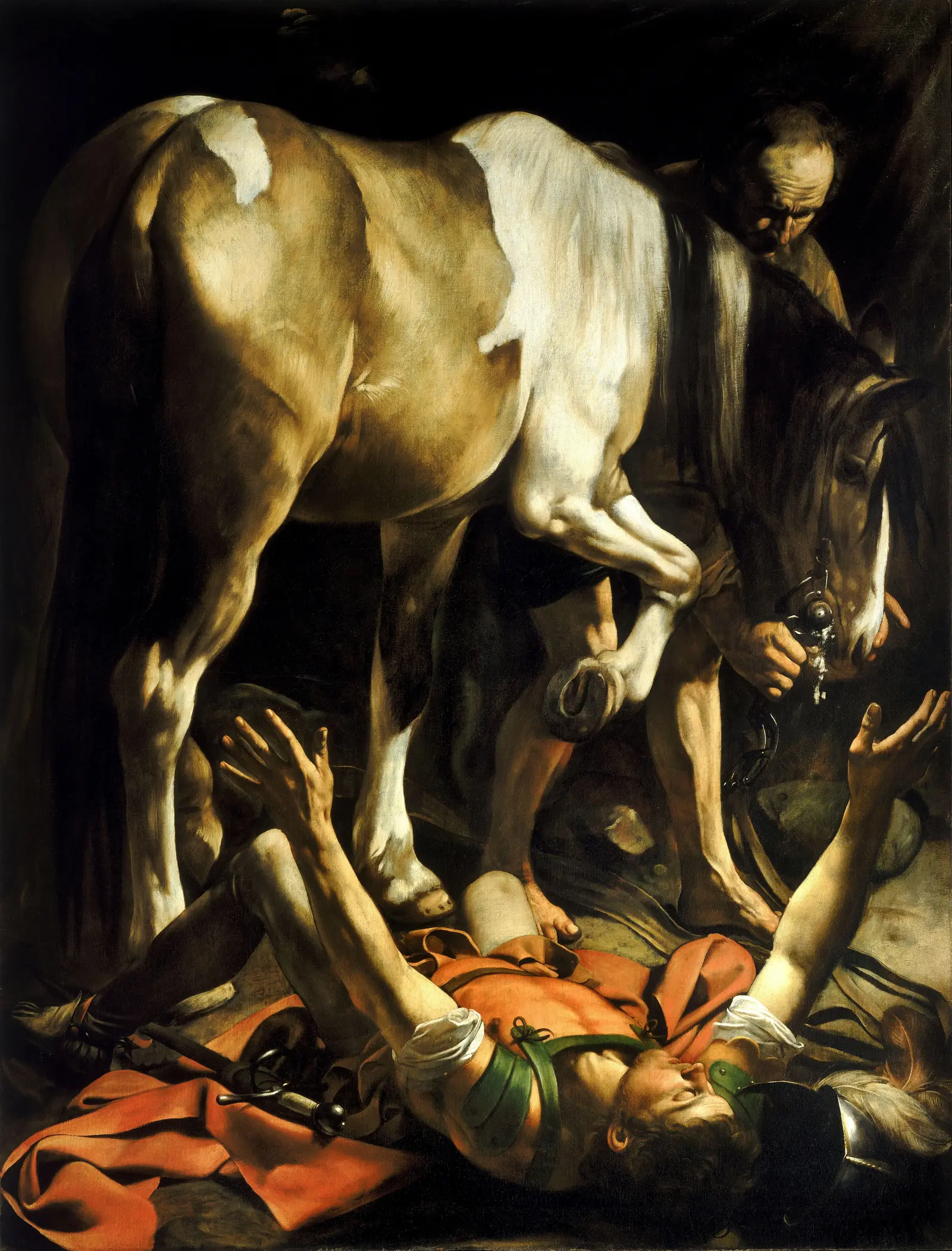
- PlaceSyriaDamascusThe Syrian city Saul was travelling to with letters of arrest when the light stopped him on the road; he entered it blind and left…
- PlaceJerusalemJerusalemThe city David took from the Jebusites and made his capital, where Solomon built the temple, where Christ was crucified and rose,…
This page draws on 15 works. Open the list of works
This page draws on Adam Clarke, Commentary on the Bible; Albert Barnes, Notes on the New Testament; Albert Barnes, Notes, Explanatory and Practical, on the Old and New Testaments (1832-1869); Ambrosiaster, EPISTLE TO THE GALATIANS 1.17.2; J. B. Lightfoot, Saint Paul's Epistle to the Galatians; Jamieson, Fausset & Brown, Commentary Critical and Explanatory on the Whole Bible; Jerome, EPISTLE TO THE GALATIANS 1.1.17; Jerome, Commentary on Galatians; John Calvin, Commentary on Galatians; John Chrysostom, Homily on Galatians 1; John Gill, Exposition of the New Testament (1746-1748); John Wesley, Explanatory Notes upon the New Testament; Oecumenius, Commentary on Galatians; Theophylact of Ohrid, Commentary on Galatians and Thomas Aquinas, Commentary on Galatians.