
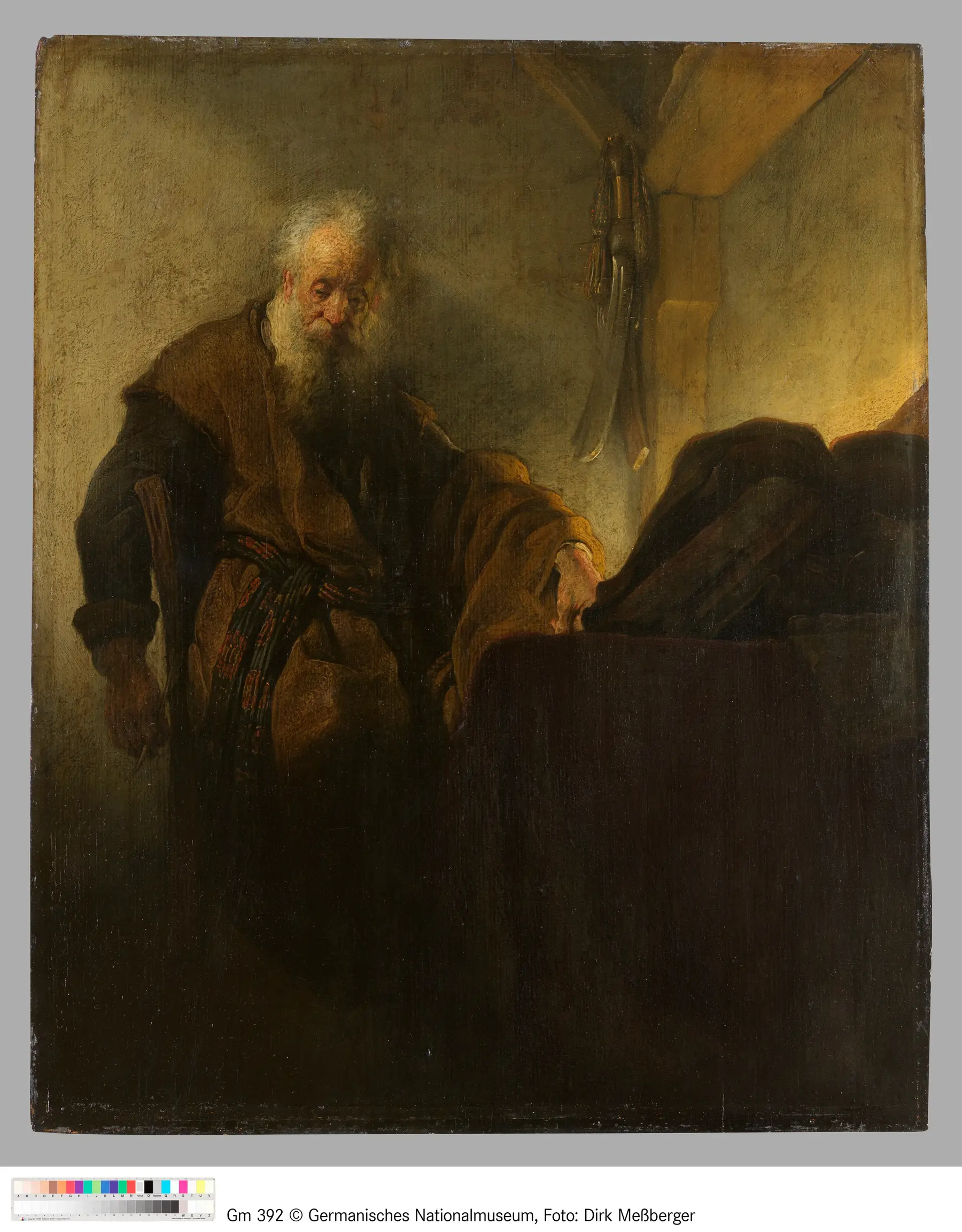
Ephesianschapter 2
22 verses · Paul, by tradition · AD 60 to 62 · Paul's letters
For He Himself is our peace, who has made the two one and has torn down the dividing wall of hostility
Introduction
Paul, by tradition, Paul's letters, Ephesians Overview.
Paul wrote this chapter to Gentile believers who had grown up outside Israel's covenants and outside its temple courts. It speaks to them in two movements, each set between a before and an after. The first concerns their standing with God and the second their standing with God's people. Listen for the long wait before the main verb of the opening sentence arrives, and for the building words that crowd the closing verses. Read it as a letter's answer to the question of how outsiders became members of the household.
Context
- Who
- Gentile believers in Asia who had never had a share in Israel's covenants.
- What
- An account of salvation by grace, followed by the joining of Jews and Gentiles into one new people in Christ.
- Where
- Written from Paul's custody, traditionally at Rome, to the churches of Asia, with the Jerusalem temple's barrier in the background.
- When
- About AD 60 to 62 on the traditional dating, while the Jerusalem temple and its barrier still stood.
- Why
- To show Gentile believers that God saved them by grace and made them full members of His household and temple.
Historical context
The list of what Gentiles once were is a legal and religious inventory: separated from Christ, alienated from the commonwealth of Israel, strangers to the covenants of promise, without hope and without God in the world. Each phrase describes a status, not a mood.
Show the rest of the historical context, 3 more paragraphs
The dividing wall of hostility almost certainly points at a real structure. The temple in Jerusalem had a stone barrier separating the outer court, where Gentiles could go, from the inner courts, where they could not. Inscriptions in Greek and Latin warned that any foreigner passing it had only himself to blame for his death, and two of those stones have been recovered.
Saying that Christ broke down that wall in his flesh, making one new humanity out of two, was a startling claim to make to people who had stood on the wrong side of it, and Paul was in prison partly because of an accusation that he had taken a Gentile past it.
The building imagery at the end reverses the temple picture. Instead of a barrier, a structure joined together and growing into a holy temple, with the Gentile readers themselves being built into it as a dwelling place for God.
Significance
The first hearers were told they were saved by grace through faith, not by works, so that no one could boast, and then immediately that they were God's workmanship, created for good works prepared beforehand.
Show the rest of the significance, 1 more paragraph
The second half gave them citizenship. No longer strangers and sojourners, the legal terms for resident foreigners without civic rights, but fellow citizens with the saints and members of the household of God.
The heads below are this chapter's scenes. The numbered points under each are its verses.
Dead in Trespasses, Made Alive With Christ
Ephesians 2:1-3
dead in your trespasses and sins: The diagnosis is death, and the dead walk. They conformed to the ways of this world and of the ruler of the power of the air, a real ruler named again at 6:12.
Ephesians 2:1
“OUR translators, as you observe, have put in the words, "has He quickened," because Paul had thrown the sense a little farther on and it was possible for the reader not to catch it. They have but anticipated the statement of the fourth and fifth verses—"God, who is rich in mercy, for His great love wherewith He loved us, even when we were dead in sins, has quickened us together with Christ." Here is the point. God has quickened us who were dead in trespasses and sins, spiritually dead.”
Charles Spurgeon · written before 1892 · The Metropolitan Tabernacle Pulpit, Sermon No. 2267: “Life From the Dead” (lightly modernized text, CCEL edition)Particular Baptist
3 more voices on this verseWhat preachers and commentators have said about this verse, in their own words.
Ephesians 2:1
“The miserable condition of the Ephesians by nature is here in part described. Unregenerate souls are dead in trespasses and sins. All those who are in their sins, are dead in sins; yea, in trespasses and sins, which may signify all sorts of sins, habitual and actual, sins of heart and of life.”
Matthew Henry · Commentary on the Whole Bible (1707-1721)puritan
Ephesians 2:1
“But what has this to do with the kingdom of God? What has it to do with a happy life, so long as every sentiment of the mind, and every act of the will, is death? Let this, then, be held as a fixed principle, that the union of our soul with God is the true and only life; and that out of Christ we are altogether dead, because sin, the cause of death, reigns in us.”
John Calvin · Commentaries (1554)reformed
Ephesians 2:1
“I found that faith was the sovereign gift of God; that I could not get it as of myself; and could not oblige God to bestow it upon me by any of my performances.”
David Brainerd · The Life and Diary of David Brainerd (ed. Jonathan Edwards), conviction narrative, Chapter I (1749)Colonial American Presbyterian
the ruler of the power of the air: Behind the ways of this world stands aion, age, and Barnes takes it of people living by the world's customs. Chrysostom says the devil rules by persuasion and guile, and disobedience names the untractable will he draws to himself. Calvin reads the old walk as outward proof of sin's reign.
Ephesians 2:2
“Wherein in time past ye walked - There is much force in these expressions; the Ephesians had not sinned casually, or now and then, but continually; it was their continual employment; they walked in trespasses and sins: and this was not a solitary case, all the nations of the earth acted in the same way; it was the course of this world, κατα τον αιωνα του κοσμου τουτου, according to the life, mode of living, or successive ages of this world.”
Adam Clarke · Commentary on the Bible (1810-1826)evangelical
3 more voices on this verse
Ephesians 2:2
“As the good Spirit works that which is good in obedient souls, so this evil spirit works that which is evil in wicked men; and he now works, not only heretofore, but even since the world has been blessed with the light of the glorious gospel.”
Matthew Henry · Commentary on the Whole Bible (1707-1721)puritan
Ephesians 2:2
“Just as if any one, being an apostate, and seizing in a hostile manner another man's territory, should harass the inhabitants of it, in order that he might claim for himself the glory of a king among those ignorant of his apostasy and robbery; so likewise also the devil, being one among those angels who are placed over the spirit of the air, as the Apostle Paul has declared in his Epistle to the Ephesians, becoming envious of man, was rendered an apostate from the divine law: for envy is a thing foreign to God.”
Irenaeus · written before 202 · Against Heresies Book Vpatristic
Ephesians 2:2
“The evil spirits are united under one head, the seat of whose dominion is in the air. Here he sometimes raises storms, sometimes makes visionary representations, and is continually roving to and fro.”
John Wesley · Explanatory Notes upon the New Testament (1755)evangelical
by nature children of wrath: Physei, by nature, carries the weight of the clause, and Jamieson, Fausset and Brown set it against grace in 2:5. Augustine separates nature as first created without fault from nature as now born under the penalty of condemnation. Jerome separates sins of the flesh from sins of the mind.
Ephesians 2:3
“We all had our conversation - see the notes at 2Co 1:12; compare 1Pe 4:3. In the lusts of our flesh - Living to gratify the flesh, or the propensities of a corrupt nature. It is observable here that the apostle changes the form of the address from “ye” to “we,” thus including himself with others, and saying that this was true of “all” before their conversion. He means undoubtedly to say, that whatever might have been the place of their birth, or the differences of religion under which they had been trained, they were substantially alike by nature.”
3 more voices on this verse
Ephesians 2:3
“Also, formerly had our conversation: doing the will of the flesh - In gross, brutal sins. And of the mind - By spiritual, diabolical wickedness. In the former clause, flesh denotes the whole evil nature; in the latter, the body opposed to the soul.”
John Wesley · Explanatory Notes upon the New Testament (1755)evangelical
Ephesians 2:3
“There is a difference between sin of the flesh and sin of the mind. The sin of the flesh is indecency and profligacy and whatever might act as instrument to its lusts. The transgression of the mind pertains to doctrine contrary to truth and to the baseness of heretics.”
Jerome · written before 420 · Commentary on Ephesians 2:1-5patristic
Ephesians 2:3
“The Greek order more emphatically marks this innate corruption: "Those who in their (very) nature are children of wrath"; Eph 2:5, "grace" is opposed to "nature" here; and salvation (implied in Eph 2:5, 8, "saved") to "wrath." Compare Article IX, Church of England Common Prayer Book.”
Jamieson, Fausset & Brown · Commentary Critical and Explanatory on the Whole Bible (1871)reformed
Ephesians 2:4-5
rich in mercy: The sentence that began with death turns on But, and mercy breaks in. God, who is rich in mercy, made us alive with Christ even when we were dead in our trespasses. So the dead add nothing to their own raising.
Ephesians 2:4
“God, who is rich--Greek "(as) being rich in mercy." for--that is, "because of His great love." This was the special ground of God's saving us; as "rich in mercy" (compare Eph 2:7; 10:12) was the general ground. "Mercy takes away misery; love confers salvation" [BENGEL].”
Jamieson, Fausset & Brown · Commentary Critical and Explanatory on the Whole Bible (1871)reformed
2 more voices on this verse
Ephesians 2:4
“Love is his inclination to do us good considered simply as creatures; mercy respects us as apostate and as miserable creatures. Observe, God's eternal love or good-will towards his creatures is the fountain whence all his mercies vouch-safed to us proceed; and that love of God is great love, and that mercy of his is rich mercy, inexpressibly great and inexhaustibly rich.”
Matthew Henry · Commentary on the Whole Bible (1707-1721)puritan
Ephesians 2:4
“Do ye therefore, clothing yourselves with meekness, become the imitators of His sufferings, and of His love, wherewith He loved us when He gave Himself a ransom for us, that He might cleanse us by His blood from our old ungodliness, and bestow life on us when we were almost on the point of perishing through the depravity that was in us.”
Ignatius of Antioch · written before 108 · Epistle of Ignatius to the Trallianspatristic
It is by grace you have been saved!: The Greek perfect, Jamieson, Fausset and Brown note, describes a saved state already entered, as in John 5:24. Clarke compares the quickening to Christ's own rising, a resurrection from sin as complete as his body's from the grave. Wesley sees Jew and Gentile alike in nature and grace.
Ephesians 2:5
“What God wrought in Christ, He wrought (by the very fact) in all united to Christ, and one with Him. by grace ye are saved--Greek, "Ye are in a saved state." Not merely "ye are being saved," but ye "are passed from death unto life" (Joh 5:24). Salvation is to the Christian not a thing to be waited for hereafter, but already realized (1Jo 3:14).”
Jamieson, Fausset & Brown · Commentary Critical and Explanatory on the Whole Bible (1871)reformed
2 more voices on this verse
Ephesians 2:5
“He hath quickened us together with Christ - In conformity to him, and by virtue of our union with him. By grace ye are saved - Grace is both the beginning and end. The apostle speaks indifferently either in the first or second person; the Jews and gentiles being in the same circumstance, both by nature and by grace.”
John Wesley · Explanatory Notes upon the New Testament (1755)evangelical
Ephesians 2:5
“Even when we were dead in sins - notes, Eph 2:1; compare Rom 5:8. The construction here is, “God, who is rich in mercy, on account of the great love which he bare unto us, even being dead in sin, hath quickened us,” etc. It does not mean that he quickened us when we were dead in sin, but that he loved us then, and made provision for our salvation. It was love to the children of wrath; love to those who had no love to return to him; love to the alienated and the lost.”
Ephesians 2:6-7
raised us up with Christ: God raised us up with Christ and seated us with Him, the verbs of Christ's own history at 1:20. What was done to the Head is counted true of the members, a standing already granted and still to be known in full.
Ephesians 2:6
“And hath raised us up together in Christ - Or rather, by Christ; his resurrection being the proof that he had made the full atonement, and that we might be justified by his blood. Believing, therefore, the record which God gave of his Son, we received this atonement, and were raised from a death of sin to a life of righteousness; and now we sit in heavenly places - we have a right to the kingdom of God, anticipate this glory, and are indescribably happy in the possession of this salvation, and in our fellowship with Christ Jesus.”
Adam Clarke · Commentary on the Bible (1810-1826)evangelical
3 more voices on this verse
Ephesians 2:6
“Above he said that God raised Christ from the dead and seated him at his right hand.… Some may ask how God who has saved us and raised us with him has also made us sit with Christ. A simple response would be indeed that, in the light of God's foreknowledge, Paul is speaking of what is to come as though it had already been done.… One who understands the resurrection and the kingdom of Christ spiritually does not scruple to say that the saints already sit and reign with Christ!”
Jerome · written before 420 · Commentary on Ephesians 2:1-5patristic
Ephesians 2:6
“And hath raised us up together - Both Jews and gentiles already in spirit; and ere long our bodies too will be raised. And made us all sit together in heavenly places - This is spoken by way of anticipation. Believers are not yet possessed of their seats in heaven; but each of them has a place prepared for him.”
John Wesley · Explanatory Notes upon the New Testament (1755)evangelical
Ephesians 2:6
"Christ Jesus" is the phrase mostly used in this Epistle, in which the office of the Christ, the Anointed Prophet, Priest and King, is the prominent thought; when the Person is prominent, "Jesus Christ" is the phrase used.
Jamieson, Fausset & Brown · Commentary Critical and Explanatory on the Whole Bible (1871)reformed
in the coming ages: The verb stands in the middle voice, which Jamieson, Fausset and Brown take as God displaying grace for his own glory. They set the coming ages against the age of this world in 2:2. Clarke calls the Ephesian converts a record kept for all generations.
Ephesians 2:7
“God, therefore, is one and the same, who rolls up the heaven as a book, and renews the face of the earth; who made the things of time for man, so that coming to maturity in them, he may produce the fruit of immortality; and who, through His kindness, also bestows [upon him] eternal things, "that in the ages to come He may show the exceeding riches of His grace;" who was announced by the law and the prophets, whom Christ confessed as His Father.”
Irenaeus · written before 202 · Irenaeus Against Heresies Book 4patristic
2 more voices on this verse
Ephesians 2:7
“FROM this verse it is clear that Paul fully expected the Gospel of the Grace of God to be preached in the ages to come. He had no notion of a temporary Gospel to develop into a better, but he was assured that the same Gospel would be preached to the end of the dispensation. Nor this alone, for as I take it, he looked to the perpetuity of the Gospel, not only through the ages which have already elapsed since the first Advent of our blessed Lord, but throughout the ages after He shall have come a second time.”
Ephesians 2:7
“Greek, "That He might show forth (middle reflexive voice; for His own glory, Eph 1:6, 12, 14) in the ages which are coming on," that is, the blessed ages of the Gospel which supersede "the age (Greek, for 'course') of this world" (Eph 2:2), and the past "ages" from which the mystery was hidden (Col 1:26, 27).”
Jamieson, Fausset & Brown · Commentary Critical and Explanatory on the Whole Bible (1871)reformed
Ephesians 2:8-9
this not from yourselves: The Greek behind this not from yourselves is the neuter touto, which reaches past the feminine word for faith to the whole. All of it is therefore the gift of God, not by works, so that no one can boast.
Ephesians 2:8
“By grace ye are saved through faith - Grace, without any respect to human worthiness, confers the glorious gift. Faith, with an empty hand, and without any pretense to personal desert, receives the heavenly blessing. And this is not of yourselves - This refers to the whole preceding clause, That ye are saved through faith, is the gift of God.”
John Wesley · Explanatory Notes upon the New Testament (1755)evangelical
1 more voice on this verse
Ephesians 2:8
“You have become a good son from a wicked servant; therefore, presume not from your own works, but from the grace of Christ: for by grace you have been saved, says the Apostle. Therefore, this is not arrogance, but faith: to preach what you have received is not pride, but devotion.”
Ambrose of Milan · written before 397 · On the Sacraments 5.4.19patristic
so that no one can boast: Jamieson, Fausset and Brown set the clause about works against by grace in verse 8, citing Romans 4:4-5 and 11:6. Chrysostom says God found people destitute of works and saved them by grace. He then points to verse 10 as a guard against idleness.
Ephesians 2:9
“I shall call your attention to the near neighborhood of these two phrases, "Not of works" and, "Created in Christ Jesus unto good works." The text reads with a singular sound, for it seems strange to the ear that good works should be given such a negative description as to the cause of salvation and then should be spoken of as the great end of it! You may put it down among what the Puritans called, "Orthodox Paradoxes," if you please, though it is hardly so difficult a matter as to deserve the name.”
we are God’s workmanship: Workmanship is poiema, a thing made, the word the Greek Old Testament uses for God's works in creation. Believers are his making twice over, created in Christ Jesus.
Ephesians 2:10
“For we are his workmanship - So far is this salvation from being our own work, or granted for our own works’ sake, that we are ourselves not only the creatures of God, but our new creation was produced by his power; for we are created in Christ Jesus unto good works. He has saved us that we may show forth the virtues of Him who called us from darkness into his marvelous light.”
Adam Clarke · Commentary on the Bible (1810-1826)evangelical
2 more voices on this verse
Ephesians 2:10
“For we are his workmanship - Which proves both that salvation is by faith, and that faith is the gift of God. Created unto good works - That afterwards we might give ourselves to them.”
John Wesley · Explanatory Notes upon the New Testament (1755)evangelical
Ephesians 2:10
We are his creation. This means that it is from him that we live, breathe, understand and are able to believe, because he is the One who made us. And note carefully that he did not say "we are his fashioning and molding" but "we are his creation." Molding starts with the mud of the earth, but creation from the outset is "according to the image and likeness of God."
Jerome · written before 420 · Commentary on Ephesians 2:10patristic
The Dividing Wall Torn Down
Ephesians 2:11-12
Gentiles in the flesh: Verse 12 counts five losses, and Gentile distance is measured from Israel, her commonwealth and her covenants. The nations are brought near to promises that were and remain Israel's.
Ephesians 2:11
“Who were accordingly called the uncircumcision - By way of reproach. By that which is called the circumcision - By those who call themselves the circumcised, and think this a proof that they are the people of God; and who indeed have that outward circumcision which is performed by hands in the flesh.”
John Wesley · Explanatory Notes upon the New Testament (1755)evangelical
2 more voices on this verse
Ephesians 2:11
“By calling the Ephesians "Gentiles in the flesh," he shows that in the spirit they are not Gentiles, just as conversely the Jews are Gentiles in spirit and Israelites in the flesh.”
Jerome · written before 420 · Commentary on Ephesians 2:12patristic
Ephesians 2:11
“The Greek order in the oldest manuscripts is, "That in time past (literally, once) ye," &c. Such remembrance sharpens gratitude and strengthens faith (Eph 2:19) [BENGEL].”
Jamieson, Fausset & Brown · Commentary Critical and Explanatory on the Whole Bible (1871)reformed
without hope and without God: Jerome grants that the Ephesians worshiped many gods before faith. His point is that without the true God they had no god worthy of the name, though in God's foreknowledge they were already his. Alienated, Jamieson, Fausset and Brown observe, is stronger than separated and describes a state of estrangement.
Ephesians 2:12
“Were at that time without Christ - Having no faith in, or knowledge of, him. Being aliens from the commonwealth of Israel - Both as to their temporal privileges and spiritual blessings. And strangers to the covenants of promise - The great promise in both the Jewish and Christian covenant was the Messiah.”
John Wesley · Explanatory Notes upon the New Testament (1755)evangelical
2 more voices on this verse
Ephesians 2:12
“When he says "having no hope, without God in the world," he does not deny that the Ephesians had many gods before they believed in Christ. His point is that one who is without the true God has no god worthy of the name. And the next phrase, "without God in the world," is significant: The Gentiles in a sense already had God indeed in the form of anticipation, because God knew beforehand that he would have them. In God's foreknowledge they were never without God. But enmeshed in the world they were without God.”
Jerome · written before 420 · Commentary on Ephesians 2:12patristic
Ephesians 2:12
“A different Greek word (aneu) would be required to express, "Christ was not present with you" [TITTMANN]. aliens--Greek, "alienated from," not merely "separated from." The Israelites were cut off from the commonwealth of God, but it was as being self-righteous, indolent, and unworthy, not as aliens and strangers [CHRYSOSTOM].”
Jamieson, Fausset & Brown · Commentary Critical and Explanatory on the Whole Bible (1871)reformed
brought near through the blood of Christ: Far off and made nigh is the synagogue's language for the Gentile brought in, the proselyte made nigh under the wings of the Shekinah. Here the blood of Christ brings near, in place of circumcision and the proselyte's bath.
Ephesians 2:13
“But now, in Christ Jesus - By the coming and atonement of the Lord Jesus, and by the gospel which he preached. Ye who sometimes were afar off - Who were “formerly” - ποτὲ pote Tyndale translates it, “a whyle agoo.” The phrase “afar off” - μακρὰν makran - means that they were formerly far off from God and his people. The expression is derived from the custom of speaking among the Hebrews. God was supposed to reside in the temple. It was a privilege to be near the temple.”
2 more voices on this verse
Ephesians 2:13
And everywhere, when [referring to] the passion of our Lord, and to His human nature, and His subjection to death, he employs the name of Christ, as in that passage: "Destroy not him with thy meat for whom Christ died." And again: "But now, in Christ, ye who sometimes were far off are made nigh by the blood of Christ." And again: "Christ has redeemed us from the curse of the law, being made a curse for us: for it is written, Cursed is every one that hangeth upon a tree."
Irenaeus · written before 202 · Against Heresies Book IIIpatristic
Ephesians 2:13
“Far off from God and from the people of God (Eph 2:17; Ac 2:39). are--Greek, "have been." by--Greek, "in." Thus "the blood of Christ" is made the seal of a covenant IN which their nearness to God consists. In Eph 1:7, where the blood is more directly spoken of as the instrument, it is "through His blood" [ALFORD].”
Jamieson, Fausset & Brown · Commentary Critical and Explanatory on the Whole Bible (1871)reformed
Ephesians 2:14-15
the dividing wall of hostility: The wall had stone under it: the soreg ringed the temple's inner courts, its inscriptions warning any foreigner that passing meant death. Paul, once accused of taking Trophimus the Ephesian past it (Acts 21:29), writes that Christ has torn down the dividing wall of hostility.
Ephesians 2:14
“For he is our peace - Jesus Christ has died for both Jews and Gentiles, and has become a peace-offering, שלום shalom, to reconcile both to God and to each other. Who hath made both one - Formed one Church out of the believers of both people. The middle wall of partition - By abolishing the law of Jewish ordinances, he has removed that which kept the two parties, not only in a state of separation, but also at variance.”
Adam Clarke · Commentary on the Bible (1810-1826)evangelical
3 more voices on this verse
Ephesians 2:14
" For the Creator's righteousness no less than His peace was announced in Christ, as we have often shown already. Therefore he says: "He is our peace, who hath made both one" -that is, the Jewish nation and the Gentile world.
Tertullian · written before 220 · Against Marcion Book Vpatristic
Ephesians 2:14
“For he is our peace - Not only as he purchased it, but as he is the very bond and center of union. He who hath made both - Jews and gentiles, one church.”
John Wesley · Explanatory Notes upon the New Testament (1755)evangelical
Ephesians 2:14
“Thus this twofold wall represented the Sinaitic law, which both severed all men, even the Jews, from access to God (through sin, which is the violation of the law), and also separated the Gentiles from the Jews. As the term "wall" implies the strength of the partition, so "fence" implies that it was easily removed by God when the due time came.”
Jamieson, Fausset & Brown · Commentary Critical and Explanatory on the Whole Bible (1871)reformed
one new man out of the two: Katargeo means to bring to nothing, and Barnes reads in His flesh as the sacrifice of Christ's body on the cross. Chrysostom separates the commandments from the decrees and takes the decrees as faith, or as Christ's own precepts. Tertullian links create to the workmanship of 2:10.
Ephesians 2:15
“Thus he made in himself of twain one new man. He framed both these parties into one new society, or body of God's people, uniting them to himself as their common head, they being renewed by the Holy Ghost, and now concurring in a new way of gospel worship, so making peace between these two parties, who were so much at variance before.”
Matthew Henry · Commentary on the Whole Bible (1707-1721)puritan
3 more voices on this verse
Ephesians 2:15
“Having abolished - Having brought to naught, or put an end to it - καταργήσας katargēsas. In his flesh - By the sacrifice of his body on the cross. It was not by instruction merely; it was not by communicating the knowledge of God; it was not as a teacher; it was not by the mere exertion of power; it was by his flesh - his human nature - and this can mean only that he did it by his sacrifice of himself.”
Ephesians 2:15
“If, then, any one allege that in this respect the flesh of the Lord was different from ours, because it indeed did not commit sin, neither was deceit found in His soul, while we, on the other hand, are sinners, he says what is the fact. But if he pretends that the Lord possessed another substance of flesh, the sayings respecting reconciliation will not agree with that man. For that thing is reconciled which had formerly been in enmity.”
Irenaeus · written before 202 · Irenaeus Against Heresies Book 5patristic
Ephesians 2:15
“And hath broken down the middle wall of partition - Alluding to that wall of old, which separated the court of Israel from the court of the gentiles. Such a wall was the ceremonial law, which Christ had now taken away.”
John Wesley · Explanatory Notes upon the New Testament (1755)evangelical
in one body through the cross: The reconciling is double, both of them to God and to each other, in one body through the cross. By the cross He extinguished their hostility, and so the peace holds.
Ephesians 2:16
"For to create in Himself of twain," for He who had made is also the same who creates (just as we have found it stated above: "For we are His workmanship, created in Christ Jesus"), "one new man, making peace" (really new, and really man-no phantom-but new, and newly born of a virgin by the Spirit of God), "that He might reconcile both unto God" (even the God whom both races had offended-both Jew and Gentile), "in one body," says he, "having in it slain the enmity by the cross."
Tertullian · written before 220 · Against Marcion Book Vpatristic
2 more voices on this verse
Ephesians 2:16
“That he might reconcile both - in one body - That the Jews and Gentiles, believing on the Lord Jesus, might lay aside all their causes of contention, and become one spiritual body, or society of men, influenced by the Spirit, and acting according to the precepts of the Gospel. Having slain the enmity thereby - Having, by his death upon the cross, made reconciliation between God and man, and by his Spirit in their hearts removed the enmity of their fallen, sinful nature.”
Adam Clarke · Commentary on the Bible (1810-1826)evangelical
Ephesians 2:16
“By His being slain, He slew it (compare Heb 2:14). thereby--Greek, "therein"; "in" or "by the cross," that is, His crucifixion (Col 2:15).”
Jamieson, Fausset & Brown · Commentary Critical and Explanatory on the Whole Bible (1871)reformed
Ephesians 2:17-18
preached peace to you who were far away: Verse 18 is a Trinitarian line, access to the Father through Him by one Spirit. Prosagoge, access, is the word for being led into a royal presence, and both peoples come in by the same introduction.
Ephesians 2:17
“And came and preached peace - That is, the system of religion which he proclaimed, was adapted to produce peace with God. This he preached personally to those who “were nigh,” that is, the Jews; to those who were “afar off “ - the Gentiles - he preached it by his apostles. He was the author of the system which proclaimed salvation to both. The word “peace” here refers to reconciliation with God. To you which were afar off, ... - see the notes at Eph 2:13; compare the notes at Act 2:39.”
access to the Father by one Spirit: Chrysostom stresses equal standing: Gentile and Jew come by one and the same grace. Henry divides the work, with Christ purchasing leave to come and the Spirit giving the heart and strength to come. Jerome places the full reconciliation beyond this world.
Ephesians 2:18
“For through him - Christ Jesus, we both - Jews and Gentiles, have access by one Spirit - through the influence of the Holy Ghost, unto the Father - God Almighty. This text is a plain proof of the holy Trinity. Jews and Gentiles are to be presented unto God the Father; the Spirit of God works in their hearts, and prepares them for this presentation; and Jesus Christ himself introduces them. No soul can have access to God but by Jesus Christ, and he introduces none but such as receive his Holy Spirit.”
Adam Clarke · Commentary on the Bible (1810-1826)evangelical
3 more voices on this verse
Ephesians 2:18
“For through him, we both - Jews and gentiles. Have access - Liberty of approaching, by the guidance and aid of one Spirit to God as our Father. Christ, the Spirit, and the Father, the three-one God, stand frequently in the same order.”
John Wesley · Explanatory Notes upon the New Testament (1755)evangelical
Ephesians 2:18
“However, it should not be thought possible to achieve perfect and complete reconciliation in this world.… The making of the new person in Christ will be fully consummated when earthly and heavenly things have been reconciled, when we come to the Father in one Spirit and with one affection and understanding.”
Jerome · written before 420 · Commentary on Ephesians 2:1-5patristic
Ephesians 2:18
“Translate, "For it is through Him (Joh 14:6; Heb 10:19) that we have our access (Eph 3:12; Ro 5:2), both of us, in (that is, united in, that is, "by," 1Co 12:13, Greek) one Spirit to the Father," namely, as our common Father, reconciled to both alike; whence flows the removal of all separation between Jew and Gentile.”
Jamieson, Fausset & Brown · Commentary Critical and Explanatory on the Whole Bible (1871)reformed
No Longer Strangers: A Temple Rising Together
Ephesians 2:19-20
no longer strangers and foreigners: Christ Jesus Himself as the cornerstone is the stone of Isaiah 28:16 and Psalm 118:22. It is the one piece that sets every line of the building.
Ephesians 2:19
“Now therefore ye are no more strangers and foreigners - You are reckoned with the people of God. You are entitled to their privileges, and are not to be regarded as outcasts and aliens. The meaning is, that they belonged to the same community - the same family - as the people of God. The word rendered “strangers” - ξένοι xenoi - means “foreigners in state,” as opposed to citizens.”
1 more voice on this verse
Ephesians 2:19
“Observe here, The church is compared to a city, and every converted sinner is free of it. It is also compared to a house, and every converted sinner is one of the domestics, one of the family, a servant and a child in God's house.”
Matthew Henry · Commentary on the Whole Bible (1707-1721)puritan
the foundation of the apostles and prophets: Chrysostom notes that the apostles stand first though they came later in time, so both groups form one foundation for one building. Origen cites the verse against any who assign the prophets and the apostles to two different gods. Tertullian records that Marcion erased the prophets from it.
Ephesians 2:20
“The apostles and prophets are the foundation of that building. They may be so called in a secondary sense, Christ himself being the primary foundation; but we are rather to understand it of the doctrine delivered by the prophets of the Old Testament and the apostles of the New. It follows, Jesus Christ himself being the chief corner-stone.”
Matthew Henry · Commentary on the Whole Bible (1707-1721)puritan
4 more voices on this verse
Ephesians 2:20
“And are built upon the foundation - Following the same metaphor, comparing the Church of Christ to a city, and to the temple, the believing Ephesians are represented as parts of that building; the living stones out of which it is principally formed, 1Pe 2:4, 1Pe 2:5, having for foundation - the ground plan, specification, and principle on which it was builded, the doctrine taught by the prophets in the Old Testament, and the apostles in the New.”
Adam Clarke · Commentary on the Bible (1810-1826)evangelical
Ephesians 2:20
“In short, as he says, "they roll as sacred stones," and not like soldiers fight. Stones are they, even foundation stones, upon which we are ourselves edified-"built," as St. Paul says, "upon the foundation of the apostles," who, like "consecrated stones," were rolled up and down exposed to the attack of all men.”
Tertullian · written before 220 · Against Marcion Book IVpatristic
Ephesians 2:20
“The image of a building is appropriate also to the Jew-Christians; as the temple at Jerusalem was the stronghold of Judaism; as Diana's temple, of paganism. foundation of the apostles, &c.--that is, upon their ministry and living example (compare Mt 16:18). Christ Himself, the only true Foundation, was the grand subject of their ministry, and spring of their life.”
Jamieson, Fausset & Brown · Commentary Critical and Explanatory on the Whole Bible (1871)reformed
Ephesians 2:20
“On whom all the building fitly framed together - The whole fabric of the universal church rises up like a great pile of living materials. Into an holy temple in the Lord - Dedicated to Christ, and inhabited by him, in which he displays his presence, and is worshipped and glorified. What is the temple of Diana of the Ephesians, whom ye formerly worshipped, to this?”
John Wesley · Explanatory Notes upon the New Testament (1755)evangelical
Ephesians 2:21-22
the whole building is fitted together: The building is alive: the whole building is fitted together and grows into a holy temple in the Lord, masonry described with a plant's verb. The Ephesian Gentiles are its stones, a sanctuary built of persons and a dwelling place for God in His Spirit.
Ephesians 2:21
“It is maintained by some that the whole edifice built on the foundation of the apostles and prophets comprises not only human souls but also angelic powers, so that all equally will become the abode of God. They argue that it would be absurd if angels and all the blessed forces who serve God in heaven would have no part in this blessedness. For in this is a building, put together harmoniously, that is growing into a holy temple of God to be an abode of God in the Spirit.”
Jerome · written before 420 · Commentary on Ephesians 2:1-5patristic
2 more voices on this verse
Ephesians 2:21
“In whom - That is, “by” whom, or “upon” whom. It was in connection with him, or by being reared on him as a foundation. All the building - The whole church of Christ. Fitly framed together - The word used here means “to joint together,” as a carpenter does the frame-work of a building. The materials are accurately and carefully united by mortises and tenons. so that the building shall be firm.”
Ephesians 2:21
“So "in the Lord" (Christ) answers to "through the Spirit" (Eph 2:22; compare Eph 3:16, 17). "Christ is the inclusive Head of all the building, the element in which it has its being and now its growth" [ALFORD].”
Jamieson, Fausset & Brown · Commentary Critical and Explanatory on the Whole Bible (1871)reformed
a dwelling place for God: Chrysostom holds both senses at once: each believer is a temple, and all together form one temple. Henry extends the name to each local church as well as the church universal. Barnes sets this against God's former home in the temple.
Ephesians 2:22
“UNDER THE OLD Mosaic dispensation God had a visible dwelling-place among men. The bright shekinah was seen between the wings of the cherubim which overehadowed the mercy-seat; and in the tabernacle while Israel journeyed in the wilderness, and in the temple afterwards, when they were established in their own land, there was a visible manifestation of the presence of Jehovah in the place which was dedicated to his service. Now, everything under the Mosaic dispensation was but a type, a picture, a symbol of something higher and nobler.”
1 more voice on this verse
Ephesians 2:22
“Observe, Not only the universal church is called the temple of God, but particular churches; and even every true believer is a living temple, is a habitation of God through the Spirit.”
Matthew Henry · Commentary on the Whole Bible (1707-1721)puritan
How this psalm is built
The form: A sentence whose main verb is held back until verses 4 and 5, so the reader hears of death before hearing that God made the dead alive, as Spurgeon classes it.
The patterns in this chapter
| Device | What it does | Where to see it |
|---|---|---|
| Formerly, but now | Both halves of the chapter turn on a before and an after. Verses 1 to 3 describe the dead and verse 4 turns on God's great love. Verses 11 and 12 describe the Gentiles at that time, and verse 13 turns on the words But now. Calvin reads the former walk of verse 2 as the proof that sin once reigned in them.John Calvin, Commentaries, on Ephesians 2:2. | Ephesians 2:1, Ephesians 2:4, Ephesians 2:11, Ephesians 2:13 |
| Peace, four times | The word peace stands four times in the Berean text of verses 14 to 17, once in verse 14, once in verse 15 and twice in verse 17. Wesley reads verse 14 as naming Christ Himself the bond and centre of union between Jews and Gentiles.John Wesley, Explanatory Notes upon the New Testament, on Ephesians 2:14. | Ephesians 2:14, Ephesians 2:15, Ephesians 2:17 |
| The building words | Verses 19 to 22 gather a builder's vocabulary: household, built, foundation, cornerstone, building, fitted together, temple and dwelling place. Matthew Henry reads the church as built on Christ the foundation-stone, joined in Him as the corner-stone and at last glorified in Him as the top-stone.Matthew Henry, Commentary on the Whole Bible, on Ephesians 2:21. | Ephesians 2:19, Ephesians 2:20, Ephesians 2:21, Ephesians 2:22 |
The structure
7 more paragraphs on the patterns
The chapter runs in two halves of the same shape. Verses 1 to 10 move from death to life, with the turn at verse 4, and verses 11 to 22 move from far away to near, with the turn at verse 13. Each half closes on God's work: His workmanship in verse 10 and His dwelling place in verse 22. The Berean text opens verse 11 with Therefore, which ties the second half to the first.
The sentence of verses 1 to 5
Charles Spurgeon records that the main verb of the opening sentence comes only in verses 4 and 5, where God made the dead alive with Christ. He adds that older translators supplied it early to help the reader (The Metropolitan Tabernacle Pulpit, Sermon No. 2267, on Ephesians 2:1). The Berean text keeps the verb in verse 5.
The debate: by nature children of wrath
Verse 3 is read in two ways. Augustine of Hippo reads it of the nature in which every person is born after Adam, under the penalty of condemnation (On Nature and Grace 81). Jerome reads the chapter's sins of the flesh and of the mind as two kinds of transgression, one of the body's lusts and one of false doctrine (Commentary on Ephesians, on Ephesians 2:1 to 5). Each position is stated by its holder and the page settles neither.
Where the chapter reaches
Verse 17 echoes Isaiah 57:19, peace to the far and to the near, and verse 20 draws on the cornerstone of Isaiah 28:16. Chapter 3 opens by naming Paul the prisoner for the sake of these same Gentiles, so the next chapter carries the joining of the two into Paul's own commission.
Keep studying
Studies33
- Reconciliation
- The Pauline Epistles
- Covenant Theology and Dispensationalism
- Cut Off from Among His People
- Entering the Kingdom
- God and the Nations, from Abraham to the New Jerusalem
Show the next 6 titles
- God Dwelling with His People, from Eden to the New Jerusalem
- The Words Philoxenia and Ger
- How Greek Works
- Jesus on Discipleship
- Kindness
- The Kindness of God Leads to Repentance
Show the next 6 titles
Words12
Sources for this chapter
The summary
Jamieson, Fausset & Brown, Commentary Critical and Explanatory; John Calvin, Commentaries; John Wesley, Explanatory Notes Upon the New Testament and Matthew Henry, Complete Commentary.
The context
Charles Hodge, A Commentary on the Epistle to the Ephesians and Michael Heiser, The Unseen Realm.
The form and classifications
Charles Spurgeon, The Metropolitan Tabernacle Pulpit, Sermon No. 2267, "Life From the Dead", on Ephesians 2:1; John Wesley, Explanatory Notes upon the New Testament, on Ephesians 2:14 and Tertullian, Against Marcion, Book V, on Ephesians 2:14.
The exposition
Adam Clarke, Commentary on the Bible; Albert Barnes; Alfred Edersheim, The Temple: Its Ministry and Services; Augustine of Hippo, ON NATURE AND GRACE 81; Jamieson, Fausset & Brown, Commentary Critical and Explanatory on the Whole Bible; Jerome; John Calvin; John Chrysostom; John Gill, Exposition of the New Testament; John Wesley, Explanatory Notes upon the New Testament; Matthew Henry, Commentary on the Whole Bible; Origen of Alexandria, EPISTLE TO THE EPHESIANS and Tertullian, Against Marcion Book V.