
John 2:17 · Value 36 of 41 · Featured Study
Zeal
Zeal in Scripture is a burning devotion to God and to His house, which the Bible praises when it is joined to knowledge and love.
Paul summed up his life before Christ in one line: “as to zeal, persecuting the church” (Philippians 3:6).
His disciples remembered that it is written: “Zeal for Your house will consume Me.”
Summary
Scripture speaks of zeal first as God's own. The LORD is jealous for His name and for His people, and His zeal carries out what He has promised. His people are called to share that zeal for His honour and His house. Jesus showed it in full when He cleared the temple courts, and He died to make a people eager to do good. Scripture also warns that zeal can run ahead of knowledge, cool into indifference or sour into envy.
- God names Himself Jealous because He will not share His people's worship with any other god.
- Scripture commands believers to keep their zeal burning.
- Zeal pleases God when it knows His righteousness and serves what is good.
- Christ warns a church that has cooled and calls it back to earnest repentance.
What Zeal Is
Three Hebrew words and two Greek words carry zeal in Scripture.
Zeal runs through Scripture from the law given at Sinai to the letters of the risen Christ to His churches. Priests, prophets and apostles were zealous for the LORD, and the Gospels show the same fire in Jesus. This study of zeal asks what Scripture means by the word, where zeal comes from in God, and how it is kept true and kept warm. It gives the words, the key texts, the ground of zeal in God, Christ and zeal, the people who showed it, its practice and its two opposites. It ends with the stories, the voices and three questions on which readers disagree.
Qinah, zeal and jealousy
The Hebrew noun qinah (H7068) names zeal for God, a husband's jealousy and the envy of a rival. Through Zechariah the LORD says, “I am jealous for Zion with great zeal.”
Qana, to be zealous or envious
The Hebrew verb qana (H7065) is used both of zeal for the LORD and of envy. Its first use tells of Isaac's wealth in Gerar: “the Philistines envied him.”
Qanna, jealous
The Hebrew adjective qanna (H7067) is said of the LORD in every verse where it stands. Moses warned the people, “For the LORD your God is a consuming fire, a jealous God.”
Zelos, zeal
The Greek noun zelos (G2205) names zeal and jealousy alike. Paul writes to the Corinthians, “I am jealous for you with a godly jealousy.”
Zeloo, to be eager or to envy
The Greek verb zeloo (G2206) means to burn for something, in desire or in envy. Paul uses it of what love will not do: “It does not envy.”
Qinah, zeal and jealousy, Qana, to be zealous or envious, Qanna, jealous, Zelos, zeal, Zeloo, to be eager or to envy, The Words Qinah and Zelos, the study in brief
The Key Texts of Zeal
The Law, the psalms, the wisdom books, the prophets and the letters speak of the LORD's jealousy and of His people's zeal.
Law
For you must not worship any other god, for the LORD, whose name is Jealous, is a jealous God.
God gives His own name as Jealous when He renews the covenant after the golden calf.
Exodus 34:14BSB
Psalms
because zeal for Your house has consumed me, and the insults of those who insult You have fallen on me.
The psalmist's zeal for God's house is what brings reproach on him.
Psalm 69:9BSB
Wisdom
Even zeal is no good without knowledge, and he who hurries his footsteps misses the mark.
The proverb joins zeal to knowledge and warns against the haste that misses the mark.
Prophets
Then the LORD became jealous for His land, and He spared His people.
Joel tells how the LORD's jealousy for His land turned into mercy on His people.
Joel 2:18BSB
Epistles
For I testify about them that they are zealous for God, but not on the basis of knowledge.
Paul grants his own people zeal for God and grieves that it lacks knowledge.
Romans 10:2BSB
Psalm 69:9, Proverbs 19:2, Joel 2:18, Romans 10:2
Zeal Begins in God
God's jealousy guards a covenant bond and claims for Him the worship that belongs to Him alone.
At Sinai the LORD forbade His people to bow to idols, “for I, the LORD your God, am a jealous God” (Exodus 20:5). Scripture forbids envy in people and keeps God's jealousy apart from it.
The prophets speak of the LORD's zeal as the force that keeps His promise, fights for His people and redeems them.
| Text | What His zeal does | The Berean words |
|---|---|---|
| Isaiah 9:7 | It establishes the reign of the promised Son | “The zeal of the LORD of Hosts will accomplish this.” |
| Isaiah 42:13 | It goes out to battle | “He stirs up His zeal like a warrior.” |
| Isaiah 59:17 | It clothes Him as Redeemer | “He put on garments of vengeance and wrapped Himself in a cloak of zeal.” |
| Isaiah 63:15 | His people pray for it to return | “Where are Your zeal and might? Your yearning and compassion for me are restrained.” |
| Ezekiel 39:25 | It restores Israel for the sake of His name | “I will have compassion on the whole house of Israel, and I will be jealous for My holy name.” |
A table of five texts from Isaiah and Ezekiel, each with its Berean words., The Ten Commandments, the study in brief
Christ and Zeal
Jesus showed zeal for His Father's house, rebuked a zeal that reached for fire and gave Himself to make a people zealous for good.
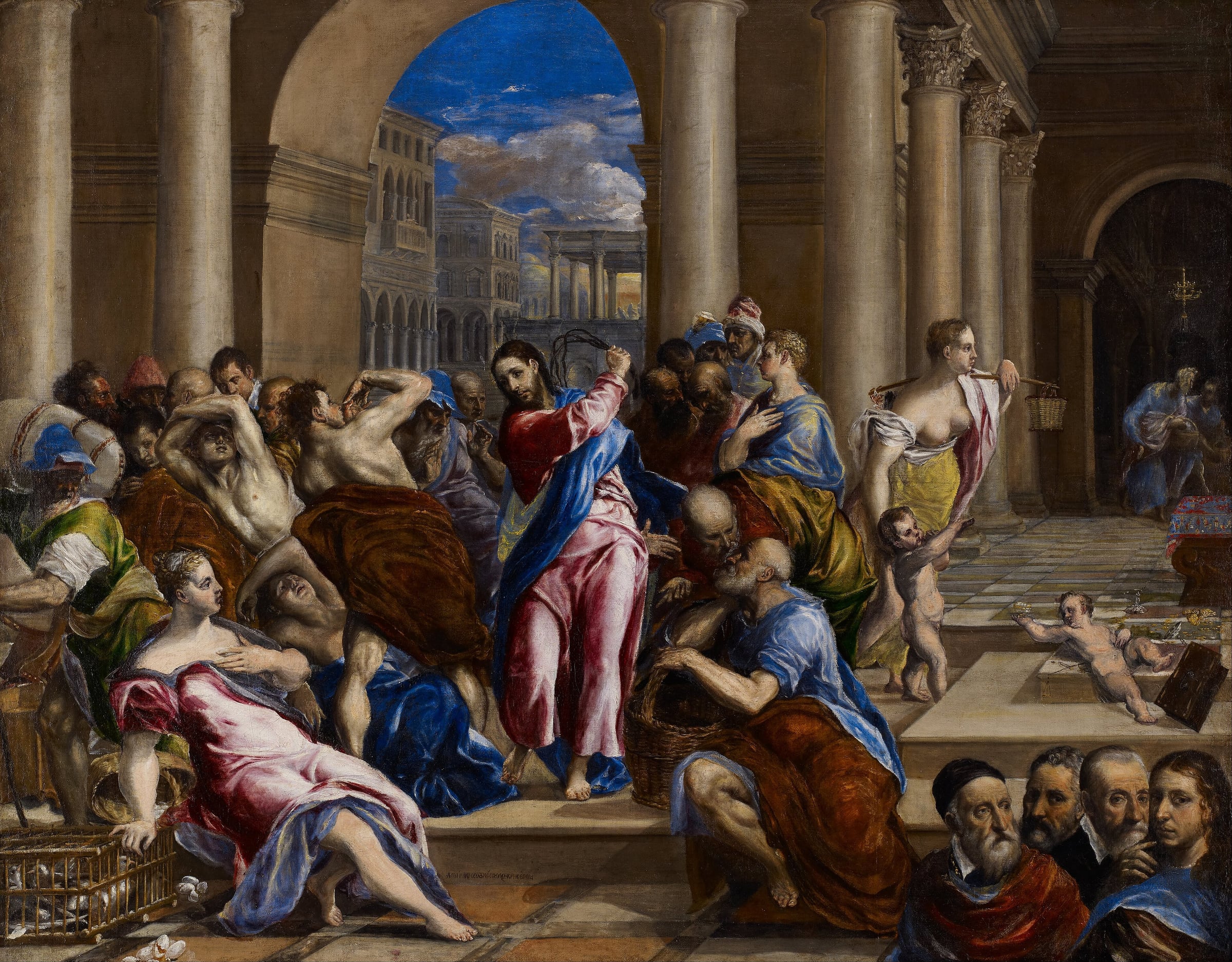
He cleared His Father's houseJohn 2
At the Passover Jesus found cattle, sheep and doves for sale in the temple courts and money changers at their tables (John 2:14). He made a whip of cords and drove the traders out. Two chapters later He told His disciples, “My food is to do the will of Him who sent Me and to finish His work” (John 4:34).
To those selling doves He said, “Get these out of here! How dare you turn My Father’s house into a marketplace!”
John 2:16BSB Jesus gives His reason in the name He uses for the temple, My Father's house.
Read the study of Zeal for Your House 9 sections, 4 verses set out
He rebuked zeal that reached for fireLuke 9
On the night of His arrest Peter cut off the ear of the high priest's servant, and Jesus told him, “Put your sword back in its sheath!” (John 18:11). Earlier, a Samaritan village had refused to welcome Jesus because He was heading for Jerusalem (Luke 9:53).
When the disciples James and John saw this, they asked, “Lord, do You want us to call down fire from heaven to consume them?” But Jesus turned and rebuked them.
Luke 9:54 to 55BSB Jesus turns on His own disciples when their zeal asks for fire on those who refused Him.
Read the page on Jesus 33 sections, 35 verses set out
He gave Himself for a people zealous for goodTitus 2
Paul wrote to Titus that “the grace of God has appeared, bringing salvation to everyone” (Titus 2:11). Three verses later he says why Christ gave Himself.
He gave Himself for us to redeem us from all lawlessness and to purify for Himself a people for His own possession, zealous for good deeds.
Titus 2:14BSB The verse ties the zeal of Christ's people to His death.
Read the story of the Crucifixion 12 sections, 12 verses set out
He rebuked zeal that reached for fire (Luke 9), He gave Himself for a people zealous for good (Titus 2)
Two Men and Two Churches Named for Zeal
Scripture names the zeal of an apostle, of a psalmist and of the churches of Jerusalem and Corinth.
Simon the Zealot
Luke names him among the Twelve as “Simon called the Zealot”, and Matthew and Mark give him a second title of the same meaning, Kananites.
Luke 6:15The psalmist of Psalm 119
He wrote, “My zeal has consumed me because my foes forget Your words.”
Psalm 119:139The church in Jerusalem
James and the elders told Paul that thousands of Jews had believed, “and all of them are zealous for the law.”
Acts 21:20The church in Corinth
After Paul's sharp letter their sorrow produced “what longing, what zeal, what vindication!”
2 Corinthians 7:11
The church in Jerusalem, The church in Corinth
The Practice of Zeal
Scripture names four practices of zeal, each in the words of the verse that gives it.
- 1Keep the fire lit“Do not let your zeal subside; keep your spiritual fervor, serving the Lord.”Romans 12:11
- 2Spend it on a noble purpose“Nevertheless, it is good to be zealous if it serves a noble purpose.”Galatians 4:18
- 3Be zealous for what is good“Who can harm you if you are zealous for what is good?”1 Peter 3:13
- 4Desire what builds others up“Earnestly pursue love and eagerly desire spiritual gifts, especially the gift of prophecy.”1 Corinthians 14:1
Spend it on a noble purpose, Be zealous for what is good, Desire what builds others up
What Stands Against Zeal
Scripture sets zeal between two failures, a heart that cools and a heart that turns its heat into envy.
The risen Christ told the church at Laodicea, “I know your deeds; you are neither cold nor hot” (Revelation 3:15).
James warns against harbouring “bitter jealousy and selfish ambition” (James 3:14), and Paul lists jealousy among the works of the flesh beside hatred, discord and rage (Galatians 5:20).
For where jealousy and selfish ambition exist, there will be disorder and every evil practice.James traces disorder in a church to the jealousy that has taken the place of zeal.
Do not let your heart envy sinners, but always continue in the fear of the LORD.The proverb turns the heart away from envying sinners and toward the fear of the LORD.
The Lukewarm Church, the study in brief, a paragraph, James 3:16, Proverbs 23:17
Zeal in the Stories of the Bible
Four stories tell of a priest's spear, a prophet's complaint, a king's boast and a Pharisee who hunted believers.
Phinehas at PeorNumbers 25
When an Israelite brought a Midianite woman to his family, Phinehas took a spear, and the plague stopped (Numbers 25:6 to 8).
“Phinehas son of Eleazar, the son of Aaron the priest, has turned My wrath away from the Israelites; for he was zealous for My sake among them, so that I did not consume the Israelites in My zeal.
Numbers 25:11BSB The LORD names the act zeal.
Read the study of the Covenant of Phinehas 9 sections, 12 verses set out
Elijah at Horeb1 Kings 19
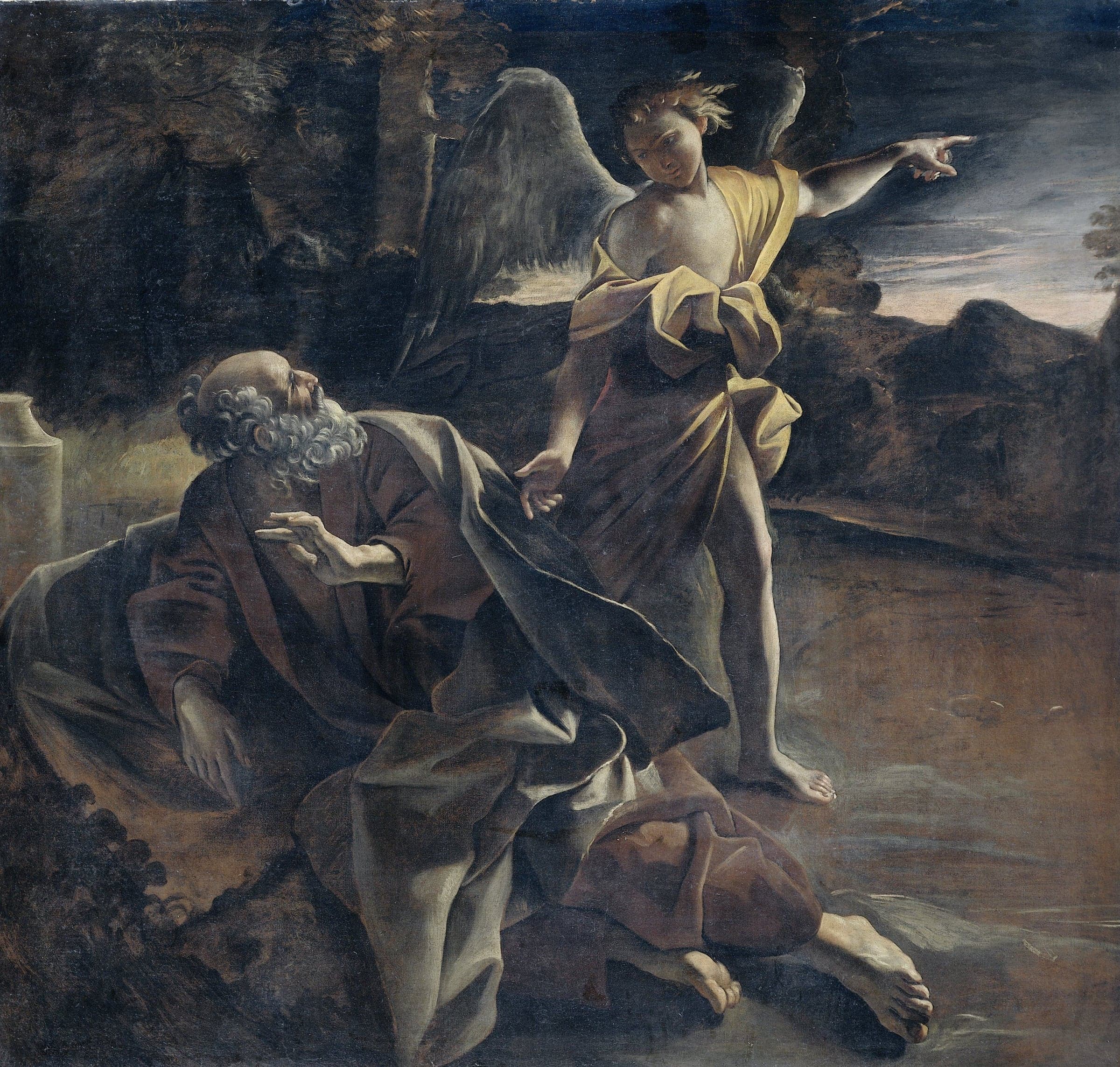
Elijah fled from Jezebel to Horeb, the mountain of God (1 Kings 19:3 to 8). There he told the LORD, “I have been very zealous for the LORD, the God of Hosts” (1 Kings 19:10).
After the earthquake there was a fire, but the LORD was not in the fire. And after the fire came a still, small voice.
1 Kings 19:12BSB The LORD answers the prophet's complaint in a quiet voice.
Read the page on Elijah 12 sections, 13 verses set out
Jehu's zeal mixed with self2 Kings 10
Jehu said, “Come with me and see my zeal for the LORD!” (2 Kings 10:16). He wiped out Baal worship in Israel but kept the golden calves (2 Kings 10:28 to 29).
Yet Jehu was not careful to follow the instruction of the LORD, the God of Israel, with all his heart. He did not turn away from the sins that Jeroboam had caused Israel to commit.
2 Kings 10:31BSB The verse weighs his heart.
Saul the persecutorActs 7 to 9
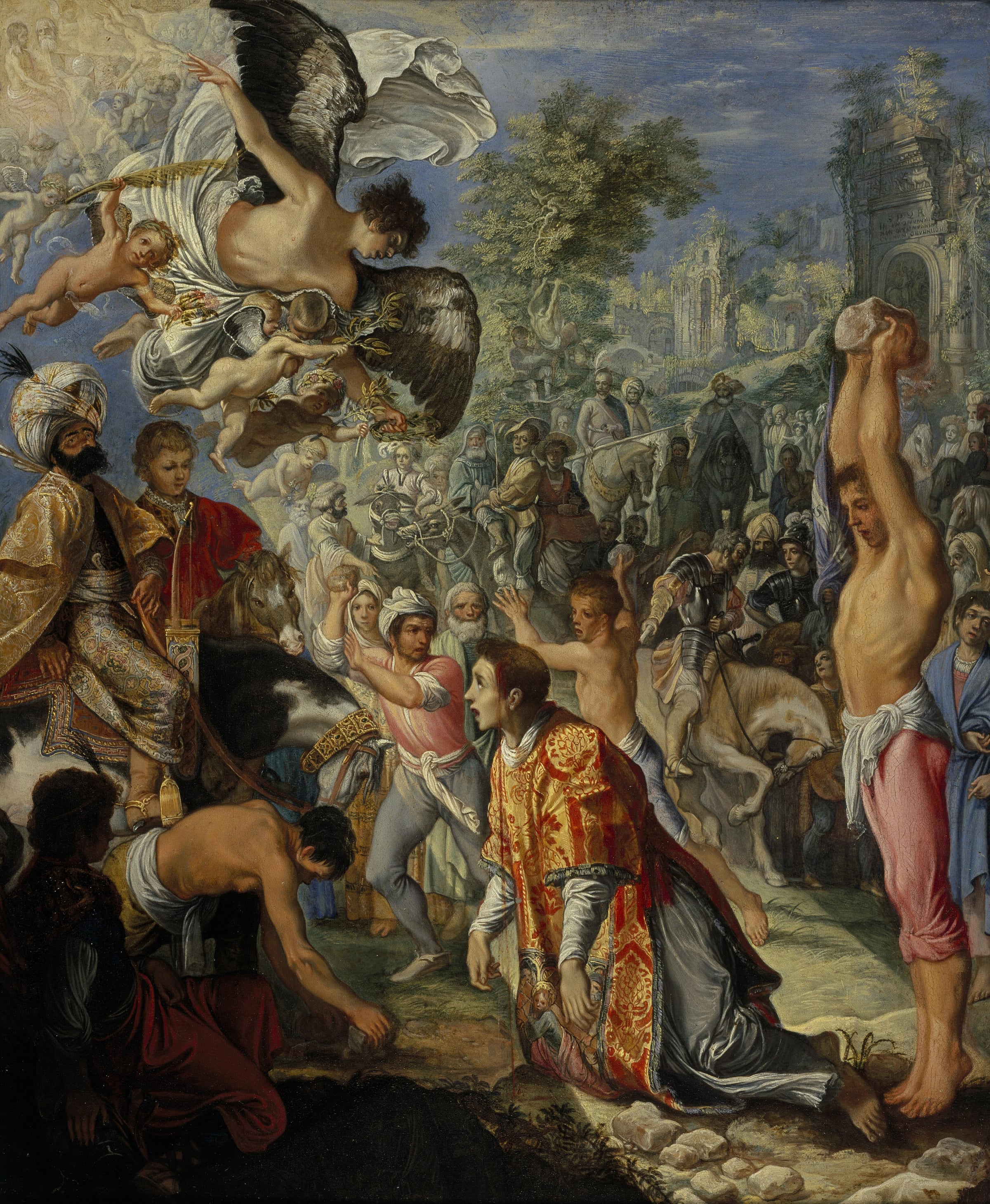
When Stephen was stoned, “the witnesses laid their garments at the feet of a young man named Saul” (Acts 7:58). Later he asked the high priest for letters to arrest believers in Damascus (Acts 9:1 to 2).
I was advancing in Judaism beyond many of my contemporaries and was extremely zealous for the traditions of my fathers.
Galatians 1:14BSB Paul names what his former zeal served.
Read the study of Zeal Without Knowledge 7 sections, 7 verses set out
Elijah at Horeb (1 Kings 19), Jehu's zeal mixed with self (2 Kings 10), Saul the persecutor (Acts 7 to 9)
2 Kings 10:31, Galatians 1:14
Zeal in the Church's History
Three accounts tell of a bishop's sermon on zeal for God's house and of the first preaching in the open fields near Bristol in 1739.
Augustine on zeal for God's houseFifth century
Augustine of Hippo preached on John 2:17 in his Tractates on the Gospel of John (tractate 10). He told his hearers, “let every Christian among the members of Christ be eaten up with zeal of God's house.” Such a Christian, he said, wants to see every wrong there corrected, and “does not rest idle: who if he cannot mend it, endures it, laments it.”
Whitefield preaches to the miners of Kingswood17 February 1739
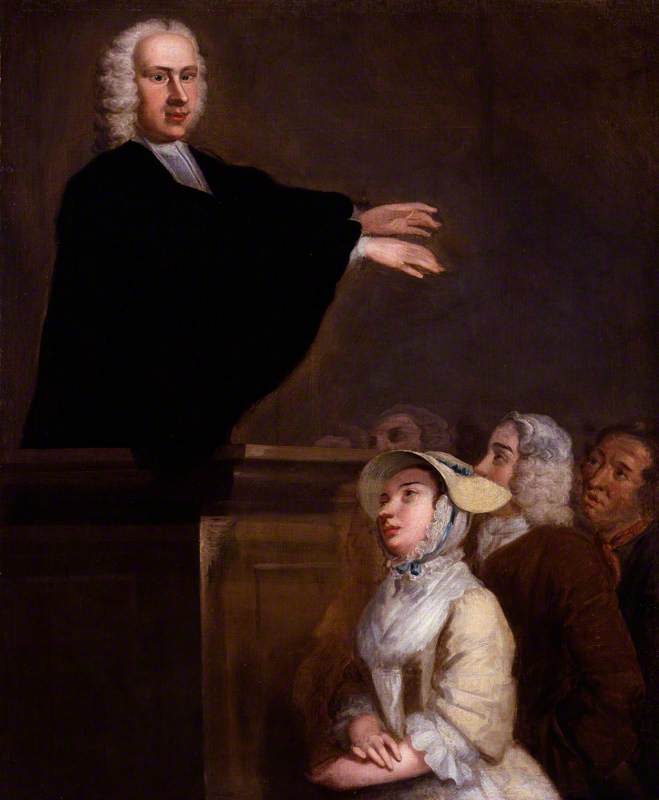
On 17 February 1739 George Whitefield went out to Kingswood, near Bristol, and preached in the open air to the coal miners of the district. His Journal reports more than two hundred hearers that afternoon. Through the weeks that followed he preached at Kingswood and at Rose Green to crowds he counted in thousands, and on 18 March he reported “no less than twenty thousand” at Rose Green.
Read the story of Whitefield and the Fields 6 sections, 2 verses set out
Wesley follows into the fields2 April 1739
John Wesley reached Bristol on 31 March 1739. He wrote in his Journal that at first he “could scarcely reconcile” himself to “this strange way of preaching in the fields”, since he had held all his life to decency and order. On 2 April he preached “from a little eminence in a ground adjoining to the city”, to what he reported as about three thousand people, on Isaiah 61:1.
Read the story of Whitefield and the Fields 6 sections, 2 verses set out
Whitefield preaches to the miners of Kingswood (17 February 1739), Wesley follows into the fields (2 April 1739)
A Voice on Zeal from the Nineteenth Century
Charles Spurgeon read Psalm 69:9 in The Treasury of David as a word about Christ.
1834 to 1892 · Charles Spurgeon
A nineteenth-century reading: the glory of God was the master passion of Christ, and it consumed His strength.
The reading1 paragraph
Charles Spurgeon wrote on Psalm 69:9 in The Treasury of David, volume 3 (1872), that “His burning ardour, like the flame of a candle, fed on his strength and consumed it”. He added that “the master passion with our great leader was the glory of God, jealousy for his name, and love to the divine family”.
How Zeal Has Been Taught
Matthew Henry and John Wesley, both of the eighteenth century, taught that zeal is a form of love.
Henry taught that the zeal of the Old Testament saints stood in Christ in full, as His love for His church.1 paragraph
Matthew Henry wrote on John 2:17 in his Commentary on the Whole Bible (1710). He said that “Jesus Christ was zealously affected to the house of God, his church: he loved it, and was always jealous for its honour and welfare”.
Wesley taught that true zeal is the flame of love and can never persecute.1 paragraph
John Wesley preached a sermon On Zeal, printed as Sermon 92 in the 1872 edition of his works. In it he wrote, “True Christian zeal is no other than the flame of love”. From that ground he judged that “bigotry of every sort, and, above all, the spirit of persecution, are totally inconsistent with it”.
The Studies of Zeal
Each study takes one part of zeal into more depth.
The texts
3 studies
- Passages and psalms · 8 verses set outThe Lukewarm Church
The letter to the church in Laodicea is the last of the seven letters the risen Christ sends to the churches of Asia in Revelation 2 and 3.
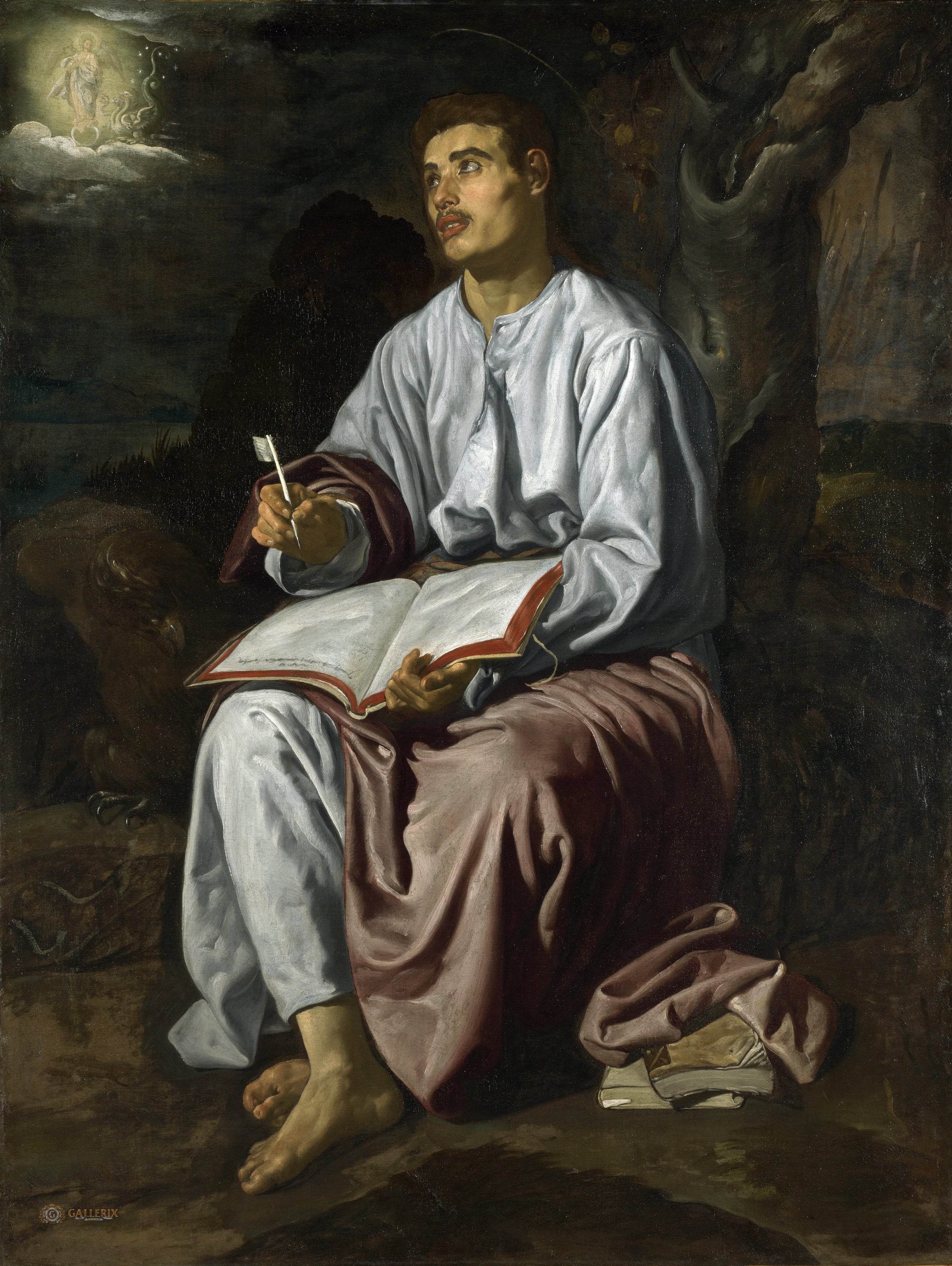
- Passages and psalms · 4 verses set outZeal for Your House
At a Passover early in His ministry Jesus drove the traders out of the temple courts in Jerusalem, as John 2:13 to 22 records.
- Passages and psalms · 7 verses set outZeal Without Knowledge
Romans 10:2 stands in Romans 9 to 11, the chapters on the place of Israel in God's purpose.
- Passages and psalms · 8 verses set outThe Lukewarm Church
The stories
2 studies
- Stories · 2 verses set outWhitefield and the Fields
Two journals of 1739 record how George Whitefield, and after him John Wesley, began to preach out of doors near Bristol.
- Doctrines · 12 verses set outThe Covenant of Phinehas
Numbers 25 tells how a priest's zeal won his line a lasting covenant, and Psalm 106, Malachi 2 and Hebrews 7 read it again.
- Stories · 2 verses set outWhitefield and the Fields
The words
1 study
- Symbols and words · 7 verses set outThe Words Qinah and Zelos
The LORD names Himself Jealous in Exodus 34:14, and the same Hebrew word family names a psalmist's zeal and a neighbour's envy.
- Symbols and words · 7 verses set outThe Words Qinah and Zelos

Zeal for Your House, Zeal Without Knowledge, Whitefield and the Fields, The Covenant of Phinehas, The Words Qinah and Zelos
Where Readers Disagree
Readers disagree on what zeal may do with its hands, on Elijah's zeal at Horeb and on the cold and hot of Revelation 3:15.
What zeal may do with its hands
Read the study of Zeal for Your House 9 sections, 4 verses set out
| Reading | Held by | Work | Objection |
|---|---|---|---|
| Zeal corrects what it can, within the station God has given | Augustine of Hippo (Latin patristic) | Augustine, Tractates on the Gospel of John, tractate 10, as the Catena Aurea of Thomas Aquinas prints it (English translation, Oxford, 1841) | The same passage bids a man coerce his wife severely, and Jesus rebuked the disciples who asked for fire from heaven (Luke 9:55). |
| True zeal is the flame of love and never persecutes | John Wesley (Methodist) | John Wesley, Sermon 92, On Zeal (1872 edition of his works) | Jesus overturned the tables in the temple courts (John 2:15), and the LORD commended Phinehas for the spear he used at Peor (Numbers 25:11). |
Whether Elijah's zeal at Horeb was approved
Read the page on Elijah 12 sections, 13 verses set out
| Reading | Held by | Work | Objection |
|---|---|---|---|
| The still, small voice corrected it | Albert Barnes (American Presbyterian commentary) | Albert Barnes, Notes, Explanatory and Practical, on the Old and New Testaments (1832 to 1869), on 1 Kings 19:12 | The text records no word of rebuke; the LORD gave Elijah men to anoint and told him of seven thousand in Israel who had not bowed to Baal (1 Kings 19:15 to 18). |
| It was honoured, and Elijah was taken up to heaven for it | The author of 1 Maccabees (Jewish writing of the second century before Christ) | 1 Maccabees 2:58 | The LORD put the same question to Elijah a second time at the mouth of the cave (1 Kings 19:13), a question asked of a prophet who had fled. |
What cold and hot mean in Revelation 3:15
Read the study of the Lukewarm Church 7 sections, 8 verses set out
| Reading | Held by | Work | Objection |
|---|---|---|---|
| The cold are unbelievers and the hot are fervent believers | Albert Barnes; Jamieson, Fausset and Brown (Protestant commentary) | Albert Barnes, Notes on Revelation 3:15; Jamieson, Fausset and Brown, Commentary Critical and Explanatory on the Whole Bible (1871), on Revelation 3:15 | The Lord wishes that the church were one of the two, and a wish that a church were unbelieving is hard to read. |
| Hot water and cold water are both useful, and lukewarm water is useless | M. J. S. Rudwick and E. M. B. Green; Colin J. Hemer (Modern historical commentary) | Rudwick and Green, in the Expository Times (1957 to 1958); Colin J. Hemer, The Letters to the Seven Churches of Asia in Their Local Setting (1986) | The letter itself names no water supply, and its call to be earnest speaks of the heart of the church (Revelation 3:19). |
Sources
Scripture is the Berean Standard Bible.
- STEP Bible, Translators Brief lexicon of Extended Strongs for Hebrew and for Greek (Tyndale House, Cambridge), CC BY 4.0, with the Greek brief lexicon based on Abbott-Smith (1922)
- Augustine of Hippo, Tractates on the Gospel of John, tractate 10, on John 2:17 (Nicene and Post-Nicene Fathers, first series, volume 7)
- Augustine of Hippo, Tractates on John, tractate 10, as printed in Thomas Aquinas, Catena Aurea on the Gospel of John (English translation, Oxford, 1841)
- Matthew Henry, Commentary on the Whole Bible (1710), on John 2:17.
- Charles Spurgeon, The Treasury of David, volume 3 (1872), on Psalm 69:9.
- John Wesley, Sermon 92, On Zeal, in The Works of John Wesley (1872 edition)
- George Whitefield, A Continuation of the Reverend Mr. Whitefield's Journal, from his Arrival at London, to his Departure from thence on his Way to Georgia, fourth edition (London: James Hutton, 1739), page 31 and the entries of February and March 1739.
- John Wesley, The Journal of John Wesley, edited by Percy Livingstone Parker (Chicago: Moody Press, 1951), the entries of 31 March and 2 April 1739.
- Albert Barnes, Notes, Explanatory and Practical, on the Old and New Testaments (1832 to 1869), on 1 Kings 19:12 and Revelation 3:15.
- Robert Jamieson, A. R. Fausset and David Brown, Commentary Critical and Explanatory on the Whole Bible (1871), on Revelation 3:15.
- 1 Maccabees 2:58, in the Apocrypha.
- M. J. S. Rudwick and E. M. B. Green, their article on the lukewarm water of Laodicea in the Expository Times (1957 to 1958)
- Colin J. Hemer, The Letters to the Seven Churches of Asia in Their Local Setting (1986)
- James Strong, A Concise Dictionary of the Words in the Hebrew Bible and A Concise Dictionary of the Words in the Greek Testament (1890), whose definitions the lexicon entries carry.
Keep Studying
Studies5
In this value6
People and groups14