
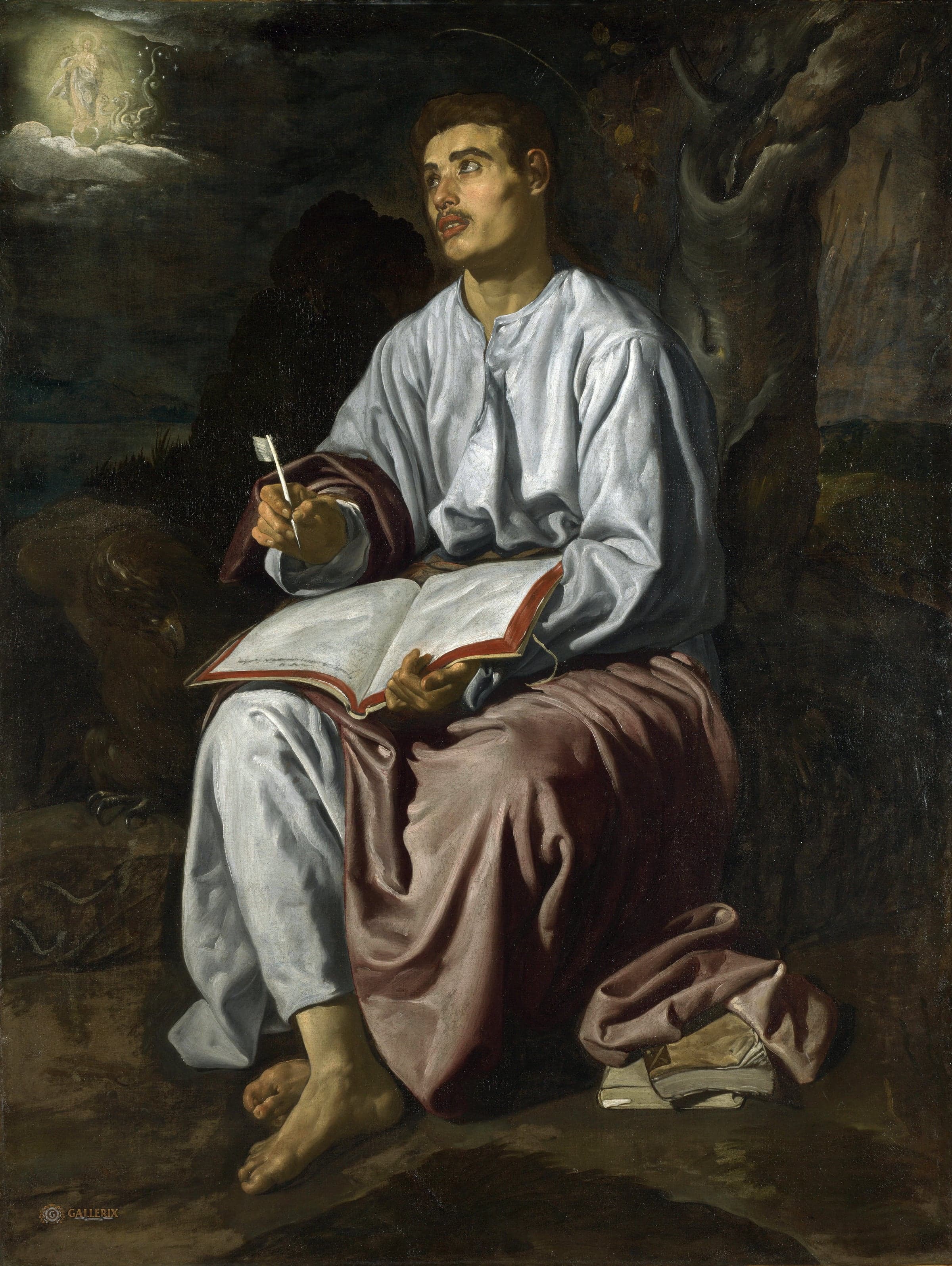
Revelation 3:14 to 22 · Passage · Zeal
The Lukewarm Church
The letter to the church in Laodicea is the last of the seven letters the risen Christ sends to the churches of Asia in Revelation 2 and 3.
Christ's word for the church in Laodicea, lukewarm, is used of no one else in the New Testament.
I know your deeds; you are neither cold nor hot. How I wish you were one or the other!
- The passage
- Revelation 3:14 to 22
- Book
- Revelation
- Hold in memory
- Revelation 3:19, Revelation 3:20
Summary
On the island of Patmos, John heard a voice that told him, "Write on a scroll what you see and send it to the seven churches" (Revelation 1:11). Paul had written of the church in Laodicea in his letter to the Colossians, where he spoke of his struggle "for those at Laodicea" (Colossians 2:1). He asked that the letter be passed on, writing, "make sure that it is also read in the church of the Laodiceans" (Colossians 4:16).
- Laodicea is the one church of the seven to which Christ gives no word of praise.
- The Greek verb behind "be earnest" is spelled as a verb of the zelos family, the New Testament's word for zeal.
- Readers take cold and hot either as unbelief and fervent faith or as two kinds of useful water.
The Seventh Letter
Christ opens His letter to Laodicea with three titles of His own before He gives His verdict.
The Lukewarm Church studies the letter of Revelation 3:14 to 22, in which the risen Christ rebukes a church that has cooled. It belongs to the value of zeal, because it shows zeal lost and the call to regain it.
This study asks what Christ said to Laodicea and what His call to "be earnest and repent" (Revelation 3:19) asks of a church that has cooled. It gives the letter in its seven parts, the church's view of itself set against Christ's, His counsel and His call, and two readings of cold and hot. It also gives the teachers who have read the letter from the fourth century to the nineteenth.
To the angel of the church in Laodicea write: These are the words of the Amen, the faithful and true Witness, the Originator of God’s creation.The rest of the letter speaks with the authority of the One this opening verse names.
The title "the Originator of God's creation" is one of the hard verses taken up in the study of the deity of Christ.
The Letter in Seven Parts
The letter moves from the speaker's titles to a closing call to hear.
The letter to Laodicea moves from Christ's verdict through His counsel to His call and His promise.
| Part | Verses | The Berean words | What it tells the church |
|---|---|---|---|
| The speaker | Revelation 3:14 | "the faithful and true Witness" | The verdict that follows can be trusted. |
| What He knows | Revelation 3:15 to 16 | "you are neither cold nor hot" | He finds the church lukewarm and warns that He will spit it out. |
| The charge | Revelation 3:17 | "I am rich; I have grown wealthy" | The church's boast of wealth meets His word of its need. |
| The counsel | Revelation 3:18 | "buy from Me gold refined by fire" | He offers from Himself what the church lacks. |
| The call | Revelation 3:19 | "be earnest and repent" | The church is called to change its way. |
| The promise | Revelation 3:20 to 21 | "I stand at the door and knock" | He offers fellowship to any who open and a throne to the one who overcomes. |
| The hearing | Revelation 3:22 | "let him hear what the Spirit says" | Christ's words in the letter are the Spirit's word. |
Rich in Its Own Eyes
The church's account of itself and Christ's account of it stand in the same verse.
You say, ‘I am rich; I have grown wealthy and need nothing.’ But you do not realize that you are wretched, pitiful, poor, blind, and naked.The church's own words come first in the verse, so its boast is heard before Christ answers it.
Christ answers the boast of wealth with five words of need, and His counsel offers a remedy for three of them, the poverty, the nakedness and the blindness.
I counsel you to buy from Me gold refined by fire so that you may become rich, white garments so that you may be clothed and your shameful nakedness not exposed, and salve to anoint your eyes so that you may see.Each thing Christ counsels the church to buy answers a lack He has just named, and each is bought from Him.
These verses are taken up in two studies, one of the furnace and refining and one of the metals of Scripture.
Be Earnest and Repent
Christ grounds His rebuke in His love and names the change He asks for.
Those I love, I rebuke and discipline. Therefore be earnest and repent.The section stands on this verse because it is the verse of the letter that tells the church what to do.
The form in the Greek text is ζήλευε, and the tagged text gives it no Strong's number, so it is counted with neither zelos nor zeloo.
Adam Clarke, in his Commentary on the Bible, read the command as a call to zeal and wrote of the church, "They had no zeal; this was their bane."
Do not let your zeal subside; keep your spiritual fervor, serving the Lord.Paul forbids every believer to let zeal subside, which is the state Christ rebukes in Laodicea.
How the Warning Has Been Read
Matthew Henry and Charles Spurgeon read the warning of Revelation 3:16 as a word to lukewarm believers of every age.
1662 to 1714 · Matthew Henry
Henry taught that Christ sees through the fair names a lukewarm church gives to its own state.
Read the page on Matthew Henry
“As lukewarm water turns the stomach, and provokes to a vomit, lukewarm professors turn the heart of Christ against them. He is sick of them, and cannot long bear them. They may call their lukewarmness charity, meekness, moderation, and a largeness of soul; it is nauseous to Christ, and makes those so that allow themselves in it.”
Matthew Henry · Commentary on the Whole Bible · on Revelation 3:15Puritan
Charles Spurgeon preached on the letter in his sermon An Earnest Warning about Lukewarmness, No. 1185 of The Metropolitan Tabernacle Pulpit. His exposition opens with the words "No Scripture ever wears out".
He went on to say that "it has ever been the tendency of human nature, however inflamed with the love of God, gradually to chill into lukewarmness".
Cold and Hot
Both readings take lukewarm (Revelation 3:16) as the state Christ rebukes, and they differ on what cold and hot stand for.
In Revelation 3:15 to 16 the Greek word for cold is psychros and the word for hot is zestos. Zestos stands only in these two verses, and the word for lukewarm is chliaros.
Cold is unbelief and hot is fervent faithVictorinus of Pettau; John Wesley; Albert Barnes; Jamieson, Fausset and Brown
Victorinus of Pettau (died 304), in his Commentary on the Apocalypse, read the words as "neither unbelieving nor believing, for they are all things to all men."
John Wesley, in his Explanatory Notes upon the New Testament (1755), read the word hot by the picture of boiling water. He wrote, "so ought we to be penetrated and heated by the fire of love", and he took Christ's wish as a sign that "he does not work on us irresistibly".
Albert Barnes, in his Notes, Explanatory and Practical (1832 to 1869), took cold to "denote the state where there was no pretension to religion". He took hot to mean "warm and zealous in their love and service".
Jamieson, Fausset and Brown, in their Commentary Critical and Explanatory (1871), named the cold as "those who are of the world, and not yet warmed by the Gospel call". They held that "when called, they may become hot and fervent Christians".
The objection: M. J. S. Rudwick and E. M. B. Green, in The Laodicean Lukewarmness (1957 to 1958), take lukewarm as a picture of a useless faith, where this reading takes it as a half-committed one.
Christ's wish that the church were cold or hot is also hard to read as a wish for unbelief.
Cold and hot are two useful watersM. J. S. Rudwick and E. M. B. Green; Colin J. Hemer
Rudwick and Green, writing in The Expository Times, read cold and hot as two waters that each serve a purpose.
Colin J. Hemer followed them in The Letters to the Seven Churches of Asia in Their Local Setting (1986).
The objection: Mark Wilson, writing in Lycus (2023) and the Tyndale Bulletin (2025), argues from the excavation of the city's springs and aqueducts that the hydrological reading does not hold.
The city, its water and the excavations argued on both sides are taught in the study of the seven churches.
The Door and the Throne
The letter's close turns from the church's failure to what Christ offers it.
Behold, I stand at the door and knock. If anyone hears My voice and opens the door, I will come in and dine with him, and he with Me.Christ speaks to anyone who hears His voice, so the invitation reaches each member of the church He has just rebuked.
To the one who overcomes, I will grant the right to sit with Me on My throne, just as I overcame and sat down with My Father on His throne.Every one of the seven letters holds a promise to the overcomer, and this verse gives the promise made at Laodicea.
He who has an ear, let him hear what the Spirit says to the churches.”Each of the seven letters carries this call, so the word to Laodicea is addressed to every church that hears it.
Sources
Scripture is the Berean Standard Bible.
- STEP Bible TBESG lexicon of Extended Strongs for Greek (Tyndale House, Cambridge), CC BY 4.0, with the Strong's definitions (1890) the rows carry.
- STEP Bible, Translators Amalgamated Greek New Testament, the tagged Greek text (Tyndale House, Cambridge), CC BY 4.0.
- John Wesley, Explanatory Notes upon the New Testament (1755), on Revelation 3:15.
- Adam Clarke, Commentary on the Bible (1832), on Revelation 3:19.
- Matthew Henry, Commentary on the Whole Bible (1710), on Revelation 3:15.
- Albert Barnes, Notes, Explanatory and Practical, on the Old and New Testaments (1832 to 1869), on Revelation 3:15.
- Robert Jamieson, A. R. Fausset and David Brown, Commentary Critical and Explanatory on the Whole Bible (1871), on Revelation 3:15.
- Victorinus of Pettau, Commentary on the Apocalypse of the Blessed John, on Revelation 3:15 to 16.
- Charles Spurgeon, An Earnest Warning about Lukewarmness, The Metropolitan Tabernacle Pulpit, Sermon No. 1185, CCEL edition.
- M. J. S. Rudwick and E. M. B. Green, The Laodicean Lukewarmness, The Expository Times 69 (1957 to 1958)
- Colin J. Hemer, The Letters to the Seven Churches of Asia in Their Local Setting (Sheffield: JSNT Supplement Series 11, 1986)
- Mark Wilson, Did the Laodiceans Drink Lukewarm Water?, Lycus 8 (2023); and Neither Cold nor Hot but Lukewarm, Tyndale Bulletin 76 (2025)
Keep Studying
Read it1
In this value4
People and groups6