
Ruth 4:10
in Ruth 4Moreover, I have acquired Ruth the Moabitess, Mahlon’s widow, as my wife, to raise up the name of the deceased through his inheritance, so that his name will not disappear from among his brothers or from the gate of his home. You are witnesses today.”
BSB
The same verse in ASV and KJV ▾
ASV
Moreover Ruth the Moabitess, the wife of Mahlon, have I purchased to be my wife, to raise up the name of the dead upon his inheritance, that the name of the dead be not cut off from among his brethren, and from the gate of his place: ye are witnesses this day.
KJV
Moreover Ruth the Moabitess, the wife of Mahlon, have I purchased to be my wife, to raise up the name of the dead upon his inheritance, that the name of the dead be not cut off from among his brethren, and from the gate of his place: ye are witnesses this day.
⋯
This verse in Ruth 4
Commentary
6 notes on this verseA commentator
Jamieson, Fausset & Brown1802–1910
Commentary Critical and Explanatory on the Whole Bible (1871)
Ruth the Moabitess . . . have I purchased to be my wife--This connection Boaz not only might form, since Ruth had embraced the true religion, but he was under a legal necessity of forming it.
This site's exposition
that I have bought all
on Ruth 4:9-10
Ye are witnesses this day falls twice in these two verses and nowhere else in Scripture, which is how a sale of this size closes with no document. Boaz names three dead men, Elimelech and Chilion and Mahlon, and states his purpose as raising up the name of the dead upon his inheritance, so the business at the gate is a name before it is a field. Ruth is called the Moabitess in the sentence that makes her a wife in Bethlehem, the fifth and last time the book says it of her. Matthew Henry reads Boaz here as a figure of Christ the redeemer buying back a forfeited inheritance, which is his reading and not something the New Testament says at this verse.
The record, by era
The Church Fathers1 voice
See, for instance, what befell Ruth, how like it is to the things which belong to us. For she was both of a strange race, and reduced to the utmost poverty, yet Boaz when he saw her neither despised her poverty nor abhorred her mean birth, as Christ having received the Church, being both an alien and in much poverty, took her to be partaker of the great blessings. But even as Ruth, if she had not before left her father, and renounced household and race, country and kindred, would not have attained unto this alliance; so the Church too, having forsaken the customs which men had received from their fathers, then, and not before, became lovely to the Bridegroom. Of this therefore the prophet discourses unto her, and saith, "Forget thy people, and thy father's house, so shall the king have pleasure in thy beauty."
The Medieval Church1 voice
It was an old custom that if a groom wished to divorce his bride he took off his sandal and this was the sign of the divorce. Consequently, he was ordered to take off his sandals, lest he approach the church wearing sandals like a …
The Puritans and the Awakening2 voices
Our Lord Jesus is our Goel, our Redeemer, our everlasting Redeemer. He looked, like Boaz, with compassion on the deplorable state of fallen mankind. At a vast expense he redeemed the heavenly inheritance for us, which by sin was mortgaged, and forfeited into the hands of divine justice, and which we should never have been able to redeem.
Moreover, Ruth the Moabitess, the wife of Mahlon, have I purchased to be my wife,.... Which was the condition on which the purchase of the land was, that whoever bought that should take her for his wife; nor did Boaz do evil in marrying her, though a Moabitess.
How the passage was read
What the Jewish commentators add
To perpetuate the name of the deceased upon his inheritance: Since his wife goes and comes on the estate and brings in and takes out [items], people say, “This is Machlon’s wife,” and thereby his name is remembered upon it.
1 more on this passage, in their own words ▾
Like Rachel and like Leah. Even though they were from the tribe of Yehudah and of the descendants of Leah, they conceded that Rachel was the mainstay of the household and they mentioned Rachel before Leah. 8 Alternatively, the blessing was for (Naomi)[Ruth] who was the daughter of idolaters.
This section is reception history: how the passage was read and kept in the Jewish tradition. Where a reading parts from an essential of the Christian faith, the section says so at that point.
Texts and citation data: Sefaria; each excerpt follows its version’s licence. 2 further sources are cited on this chapter that carry no English text this site may quote or only restate the verse.
The words behind it
25 Hebrew wordsEvery Hebrew word of this verse in the order it stands, with what it means and the door to its own study. The last column counts the times a word stands in the whole Bible: the rarer the word, the more the places it appears belong together.
| Hebrew | Sound | Meaning | Word study | In the Bible |
|---|---|---|---|---|
| וְגַ֣ם | vegam | and also | H1571 → | 769 times |
| אֶת־ | ʾet- | <obj.> | H853 → | 10935 times |
| ר֣וּת | rut | Ruth | H7327 → | 12 times |
| הַמֹּאֲבִיָּה֩ | hamoaviyah | the Moabite [woman] | H4125 → | 16 times |
| אֵ֨שֶׁת | ʾeshet | [the] wife of | H802 → | 781 times |
| מַחְל֜וֹן | machlon | Mahlon | H4248 → | 4 times |
| קָנִ֧יתִי | kaniti | I acquire | H7069 → | 84 times |
| לִ֣י | li | for <the> myself | ||
| לְאִשָּׁ֗ה | leishah | to a wife | H802 → | 781 times |
| לְהָקִ֤ים | lehakim | to raise up | H6965 → | 628 times |
| שֵׁם־ | shem- | [the] name of | H8034 → | 864 times |
| הַמֵּת֙ | hamet | the dead [man] | H4191 → | 839 times |
| עַל־ | ʾal- | over | H5921 → | 5755 times |
| נַ֣חֲלָת֔וֹ | nachalato | inheritance his | H5159 → | 222 times |
| וְלֹא־ | velo'- | and not | H3808 → | 5168 times |
| יִכָּרֵ֧ת | yikaret | it will be cut off | H3772 → | |
| שֵׁם־ | shem- | [the] name of | H8034 → | 864 times |
| הַמֵּ֛ת | hamet | the dead [man] | H4191 → | 839 times |
| מֵעִ֥ם | meim | from with | H5973 → | 1050 times |
| אֶחָ֖יו | ʾechav | brothers his | H251 → | |
| וּמִשַּׁ֣עַר | umishaar | and from [the] gate of | H8179 → | 374 times |
| מְקוֹמ֑וֹ | mekomo | place his | H4725 → | 401 times |
| עֵדִ֥ים | ʾedim | [are] witnesses | H5707 → | 70 times |
| אַתֶּ֖ם | ʾatem | you | H859 → | 1094 times |
| הַיּֽוֹם׃ | haiyom | this day | H3117 → | 2304 times |
וְגַ֣םand also
vegamH1571 →769 times
אֶת־<obj.>
ʾet-H853 →10935 times
ר֣וּתRuth
rutH7327 →12 times
הַמֹּאֲבִיָּה֩the Moabite [woman]
hamoaviyahH4125 →16 times
אֵ֨שֶׁת[the] wife of
ʾeshetH802 →781 times
מַחְל֜וֹןMahlon
machlonH4248 →4 times
קָנִ֧יתִיI acquire
kanitiH7069 →84 times
לִ֣יfor <the> myself
li
לְאִשָּׁ֗הto a wife
leishahH802 →781 times
לְהָקִ֤יםto raise up
lehakimH6965 →628 times
שֵׁם־[the] name of
shem-H8034 →864 times
הַמֵּת֙the dead [man]
hametH4191 →839 times
עַל־over
ʾal-H5921 →5755 times
נַ֣חֲלָת֔וֹinheritance his
nachalatoH5159 →222 times
וְלֹא־and not
velo'-H3808 →5168 times
יִכָּרֵ֧תit will be cut off
yikaretH3772 →
שֵׁם־[the] name of
shem-H8034 →864 times
הַמֵּ֛תthe dead [man]
hametH4191 →839 times
מֵעִ֥םfrom with
meimH5973 →1050 times
אֶחָ֖יוbrothers his
ʾechavH251 →
וּמִשַּׁ֣עַרand from [the] gate of
umishaarH8179 →374 times
מְקוֹמ֑וֹplace his
mekomoH4725 →401 times
עֵדִ֥ים[are] witnesses
ʾedimH5707 →70 times
אַתֶּ֖םyou
ʾatemH859 →1094 times
הַיּֽוֹם׃this day
haiyomH3117 →2304 times
A shaded row is a word that stands 400 times or fewer in the Bible.
The walk
8 stopsEach card is a verse this one points to, and under it the verses that one points to in turn. Where several paths arrive at the same place, that place is listed first: the text keeps returning to it.
Through
Ephesians 5:25Husbands, love your wives, just as Christ loved the church and gave Himself up for her
it leads to
- 1 Peter 3:7
Husbands, in the same way, treat your wives with consideration as a delicate vessel, and with honor as fellow heirs of the gracious gift of life, so that your prayers will not be hindered.
- Colossians 3:19
Husbands, love your wives and do not be harsh with them.
- Ephesians 5:28
In the same way, husbands ought to love their wives as their own bodies. He who loves his wife loves himself.
- Genesis 2:24
For this reason a man will leave his father and mother and be united to his wife, and they will become one flesh.
- Ephesians 5:33
Nevertheless, each one of you also must love his wife as he loves himself, and the wife must respect her husband.
- 1 Peter 3:7
Through
Psalms 34:16But the face of the LORD is against those who do evil, to wipe out all memory of them from the earth.
it leads to
- Job 18:17
The memory of him perishes from the earth, and he has no name in the land.
Reached by 2 separate paths from here.
- Proverbs 10:7
The memory of the righteous is a blessing, but the name of the wicked will rot.
- Jeremiah 17:13
O LORD, the hope of Israel, all who abandon You will be put to shame. All who turn away will be written in the dust, for they have abandoned the LORD, the fountain of…
- Job 18:17
Where this verse is studied
On this page
Studies4
About Ruth
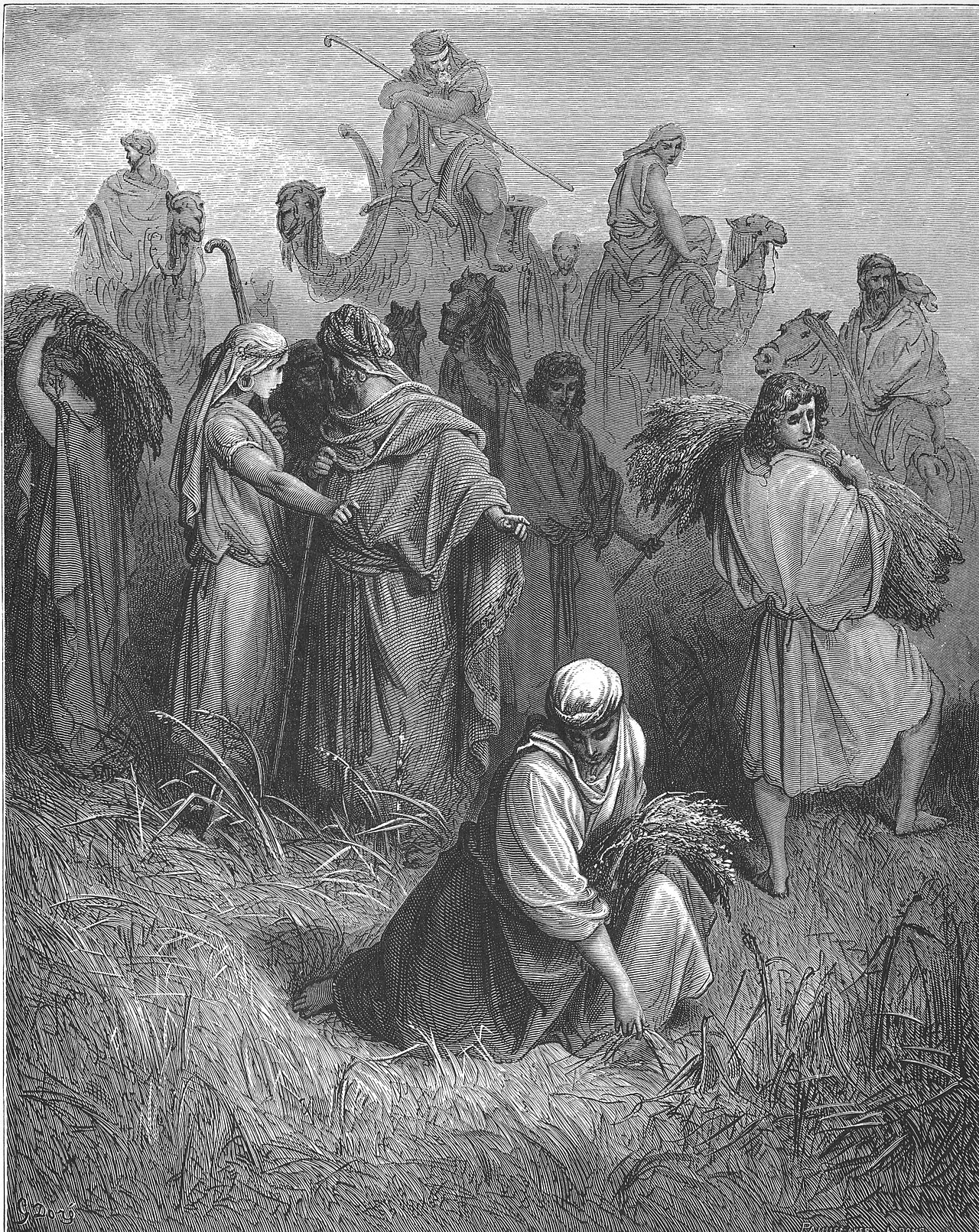
Who and where
1 name in this verse with a page on the site.
This page draws on Isidore of Seville, ON RUTH; Jamieson, Fausset & Brown, Commentary Critical and Explanatory on the Whole Bible; John Chrysostom, Homily on Matthew 3; John Gill, Exposition of the Old Testament (1748-1763) and Matthew Henry, Commentary on the Whole Bible.