
Ruth 4:1
in Ruth 4Meanwhile, Boaz went to the gate and sat down there. Soon the kinsman-redeemer of whom he had spoken came along, and Boaz said, “Come over here, my friend, and sit down.” So he went over and sat down.
BSB
The same verse in ASV and KJV ▾
ASV
Now Boaz went up to the gate, and sat him down there: and, behold, the near kinsman of whom Boaz spake came by; unto whom he said, Ho, such a one! turn aside, sit down here. And he turned aside, and sat down.
KJV
Then went Boaz up to the gate, and sat him down there: and, behold, the kinsman of whom Boaz spake came by; unto whom he said, Ho, such a one! turn aside, sit down here. And he turned aside, and sat down.
⋯
This verse in Ruth 4
Commentary
8 notes on this verseA commentator
Albert Barnes1798–1870
Notes, Explanatory and Practical, on the Old and New Testaments (1832-1869)
The gate is the place of concourse, of business, and of justice in Oriental cities (see Jdg 19:15 note; Gen 34:20; Deu 16:18). Ho, such a one! - Indicating that the name of the kinsman was either unknown or purposely concealed 1Sa 21:2; 2Ki 6:8.
This site's exposition
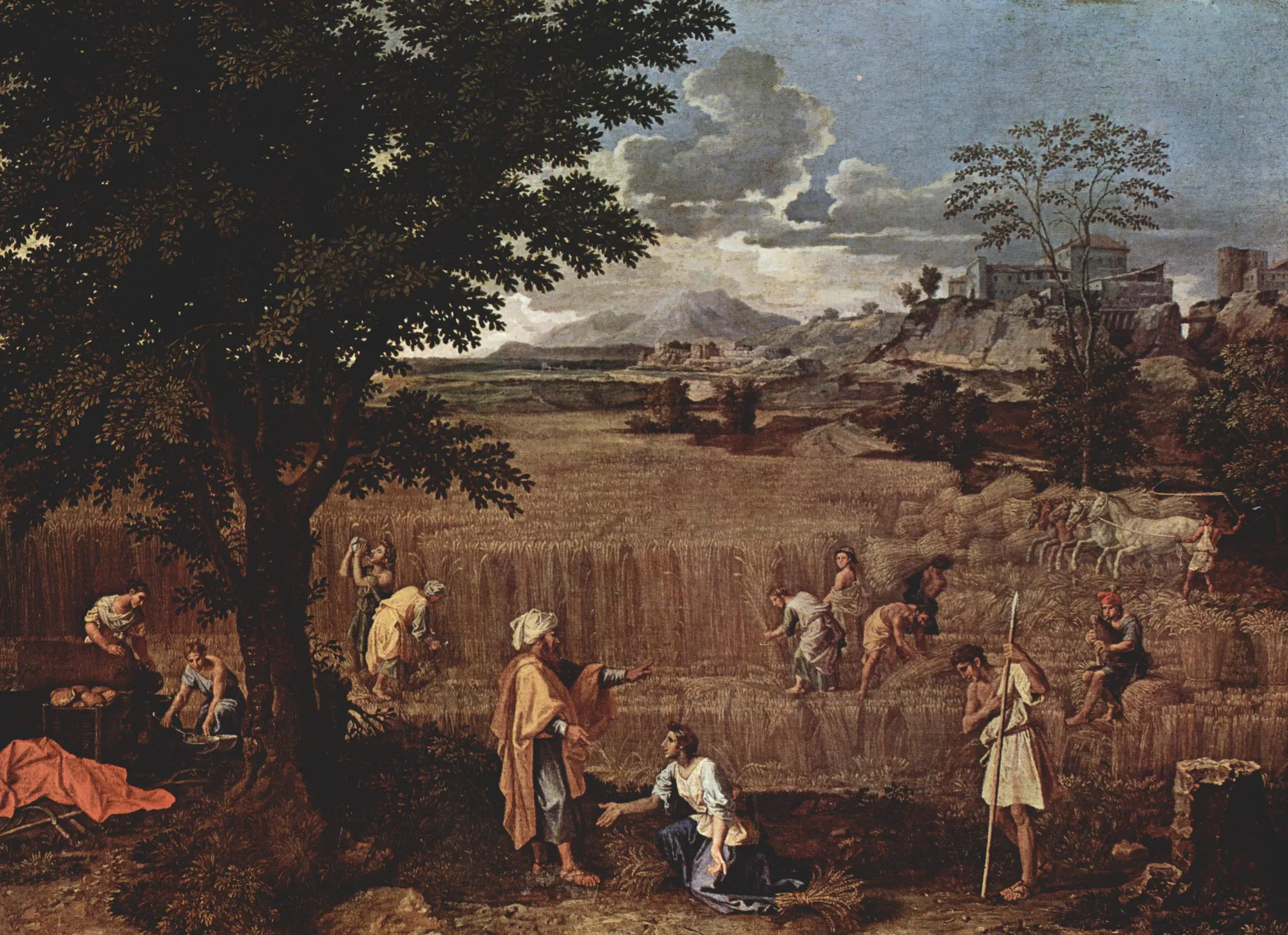
Meanwhile, Boaz went to the gate and sat down there
on Ruth 4:1-2
The gate is where Deuteronomy 25:7 sends this exact case, so Boaz opens the matter where a ruling could be made and witnessed. The law fixes no number of elders, and John Gill and Adam Clarke report that Jewish practice set ten for marriage and inheritance.
The record, by era
The Church Fathers1 voice
The man was so virtuous that he did not rush into a marriage outside the law, but he spoke with his neighbors about the marriage. However, his words are also worthy of admiration. For his first words were not about the marriage but about the …
The Medieval Church1 voice
When Ruth entered the land of Israel with her mother-in-law, it was provided (on account of the merits of her prayers) that she be married to a man of the lineage of Abraham and whom, indeed, she at first believed to be her closest kinsman. …
The Puritans and the Awakening2 voices
Great affairs are sometimes much furthered by small circumstances, which facilitate and expedite them. He proposes to the other kinsman the redemption of Naomi's land, which, it is probable, had been mortgaged for money to buy bread with when the famine was in the land (
quarantine:debris (2026-07-29) — unbalanced-parens
Then went Boaz up to the gate,....
The Nineteenth Century1 voice
A commentator
Jamieson, Fausset & Brown1802–1910
Commentary Critical and Explanatory on the Whole Bible (1871)
Then went Boaz up to the gate of the city--a roofed building, unenclosed by walls; the place where, in ancient times, and in many Eastern towns still, all business transactions are made, and where, therefore, the kinsman was most likely to be found.
1 more voice on this verse
The Nineteenth Century1 voice
Then went Boaz up to the gate - We have often had occasion to remark that the gate or entrance to any city or town was the place where the court of justice was ordinarily kept. For an account of the officers in such places, see the note on Deu 16:18. Ho, such a one! - sit down here - This familiar mode of compellation is first used here. The original is שבה פה פלני אלמני shebah poh, peloni almoni! “Hark ye, Mr. Such-a-one of such a place! come and sit down here.” This is used when the person of the individual is known, and his name and residence unknown. אלמני almoni comes from אלם alam, to be silent or hidden, hence the Septuagint render it by κρυφε thou unknown person: פלני peloni comes from פלה palah, to sever or distinguish; you of such a particular place. Modes of compellation of this kind are common in all languages.
How the passage was read
What the Jewish commentators add
So-and-so. But his name was not written because he did not wish to redeem. 1 The person’s name was Tov (See above:13). His name is omitted because he did not discharge his duty as a kinsman. He therefore did not merit to be recorded as Tov [=good].
This section is reception history: how the passage was read and kept in the Jewish tradition. Where a reading parts from an essential of the Christian faith, the section says so at that point.
Texts and citation data: Sefaria; each excerpt follows its version’s licence. 2 further sources are cited on this chapter that carry no English text this site may quote or only restate the verse.
The words behind it
19 Hebrew wordsEvery Hebrew word of this verse in the order it stands, with what it means and the door to its own study. The last column counts the times a word stands in the whole Bible: the rarer the word, the more the places it appears belong together.
| Hebrew | Sound | Meaning | Word study | In the Bible |
|---|---|---|---|---|
| וּבֹ֨עַז | uvoaz | and Boaz | H1162 → | 24 times |
| עָלָ֣ה | ʾalah | he went up | H5927 → | |
| הַשַּׁעַר֮ | hashaar | the gate | H8179 → | 374 times |
| וַיֵּ֣שֶׁב | vaiyeshev | and he sat down | H3427 → | 1079 times |
| שָׁם֒ | sham | there | H8033 → | 834 times |
| וְהִנֵּ֨ה | vehineh | and there! | H2009 → | 843 times |
| הַגֹּאֵ֤ל | hagoel | the kinsman-redeemer | H1350 → | 104 times |
| עֹבֵר֙ | ʾover | [was] passing by | H5674 → | |
| אֲשֶׁ֣ר | ʾasher | whom | H834 → | 5497 times |
| דִּבֶּר־ | diber- | he had spoken | H1696 → | 1141 times |
| בֹּ֔עַז | boaz | Boaz | H1162 → | 24 times |
| וַיֹּ֛אמֶר | vaiyomer | and he said | H559 → | 5305 times |
| ס֥וּרָה | surah | turn aside ! | H5493 → | |
| שְׁבָה־ | shevah- | sit ! | H3427 → | 1079 times |
| פֹּ֖ה | poh | here | H6311 → | |
| פְּלֹנִ֣י | peloni | a certain one | H6423 → | |
| אַלְמֹנִ֑י | ʾalmoni | a certain one | H492 → | |
| וַיָּ֖סַר | vaiyasar | and he turned aside | H5493 → | |
| וַיֵּשֵֽׁב׃ | vaiyeshev | and he sat down | H3427 → | 1079 times |
וּבֹ֨עַזand Boaz
uvoazH1162 →24 times
עָלָ֣הhe went up
ʾalahH5927 →
הַשַּׁעַר֮the gate
hashaarH8179 →374 times
וַיֵּ֣שֶׁבand he sat down
vaiyeshevH3427 →1079 times
שָׁם֒there
shamH8033 →834 times
וְהִנֵּ֨הand there!
vehinehH2009 →843 times
הַגֹּאֵ֤לthe kinsman-redeemer
hagoelH1350 →104 times
עֹבֵר֙[was] passing by
ʾoverH5674 →
אֲשֶׁ֣רwhom
ʾasherH834 →5497 times
דִּבֶּר־he had spoken
diber-H1696 →1141 times
בֹּ֔עַזBoaz
boazH1162 →24 times
וַיֹּ֛אמֶרand he said
vaiyomerH559 →5305 times
ס֥וּרָהturn aside !
surahH5493 →
שְׁבָה־sit !
shevah-H3427 →1079 times
פֹּ֖הhere
pohH6311 →
פְּלֹנִ֣יa certain one
peloniH6423 →
אַלְמֹנִ֑יa certain one
ʾalmoniH492 →
וַיָּ֖סַרand he turned aside
vaiyasarH5493 →
וַיֵּשֵֽׁב׃and he sat down
vaiyeshevH3427 →1079 times
A shaded row is a word that stands 400 times or fewer in the Bible.
The walk
8 stopsEach card is a verse this one points to, and under it the verses that one points to in turn. Where several paths arrive at the same place, that place is listed first: the text keeps returning to it.
Through
Job 29:7When I went out to the city gate and took my seat in the public square,
it leads to
- Ruth 4:1–2
Meanwhile, Boaz went to the gate and sat down there. Soon the kinsman-redeemer of whom he had spoken came along, and Boaz said, “Come over here, my friend, and sit down.” So he went…
Reached by 2 separate paths from here.
- Deuteronomy 16:18
You are to appoint judges and officials for your tribes in every town that the LORD your God is giving you. They are to judge the people with righteous judgment.
Reached by 2 separate paths from here.
- Zechariah 8:16
These are the things you must do: Speak truth to one another, render true and sound judgments in your gates,
- Ruth 4:1–2
Through
Deuteronomy 16:18You are to appoint judges and officials for your tribes in every town that the LORD your God is giving you. They are to judge the people with righteous judgment.
it leads to
- 1 Chronicles 23:4
“Of these,” said David, “24,000 are to oversee the work of the house of the LORD, 6,000 are to be officers and judges,
- Exodus 18:25–26
So Moses chose capable men from all Israel and made them heads over the people as leaders of thousands, of hundreds, of fifties, and of tens.
- Deuteronomy 19:17–18
both parties to the dispute must stand in the presence of the LORD, before the priests and judges who are in office at that time.
- 1 Chronicles 23:4
Through
Ruth 3:12Yes, it is true that I am a kinsman-redeemer, but there is a redeemer nearer than I.
it leads to
- 1 Thessalonians 4:6
and no one should ever violate or exploit his brother in this regard, because the Lord will avenge all such acts, as we have already told you and solemnly warned you.
- Matthew 7:12
In everything, then, do to others as you would have them do to you. For this is the essence of the Law and the Prophets.
- 1 Thessalonians 4:6
Where this verse is studied
On this page
Studies18
On this verse
On this chapter
About Ruth
Who and where
1 name in this verse with a page on the site.
This page draws on Adam Clarke, Commentary on the Bible; Albert Barnes, Notes, Explanatory and Practical, on the Old and New Testaments (1832-1869); Isidore of Seville, ON RUTH; Jamieson, Fausset & Brown, Commentary Critical and Explanatory on the Whole Bible; John Gill, Exposition of the Old Testament; John Gill, Exposition of the Old Testament (1748-1763); Matthew Henry, Commentary on the Whole Bible and Theodoret of Cyrus, QUESTIONS ON RUTH.