
Ruth 1:19
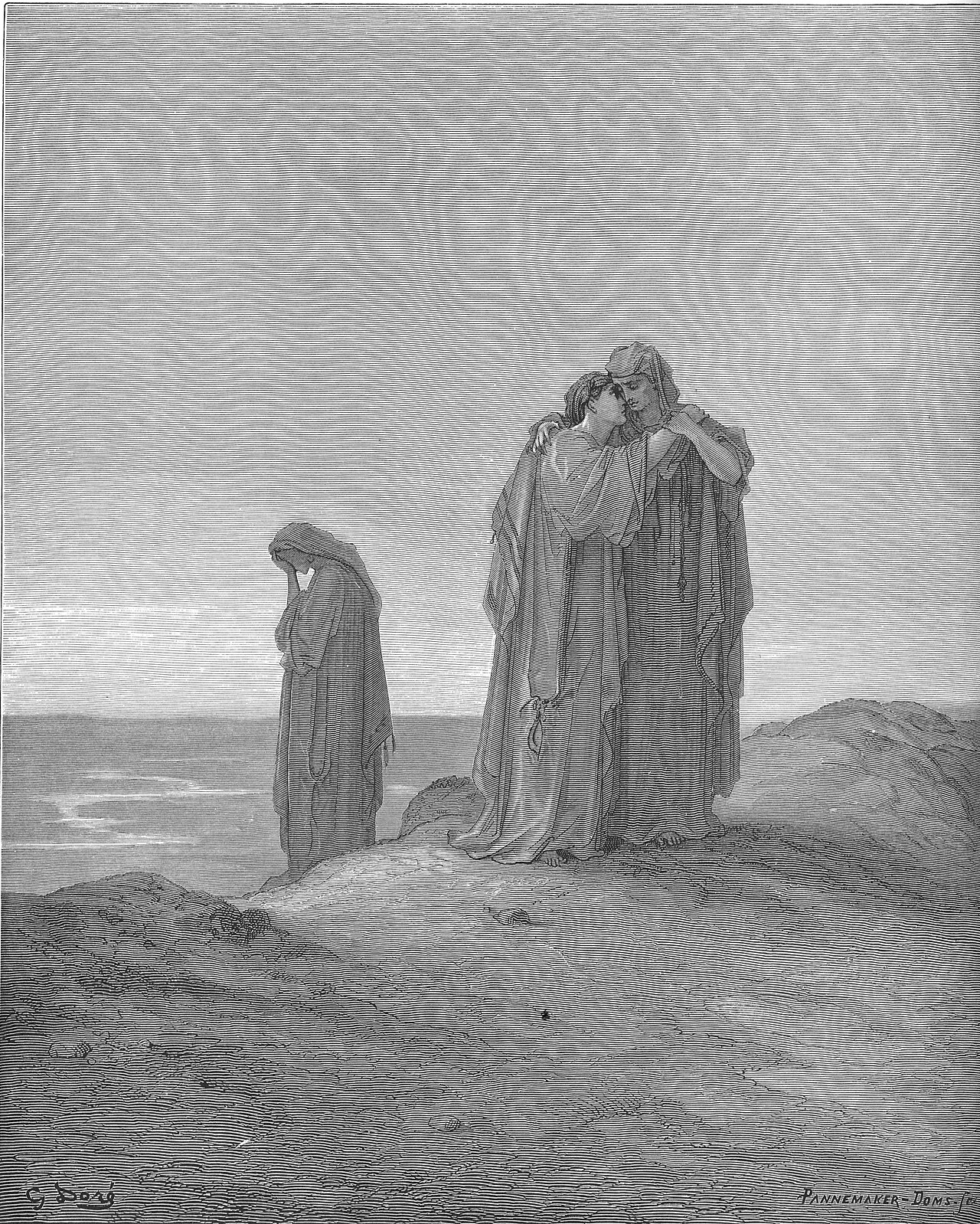
in Ruth 1So Naomi and Ruth traveled until they came to Bethlehem. When they entered Bethlehem, the whole city was stirred because of them, and the women of the city exclaimed, “Can this be Naomi?”
BSB
The same verse in ASV and KJV ▾
ASV
So they two went until they came to Beth-lehem. And it came to pass, when they were come to Beth-lehem, that all the city was moved about them, and the women said, Is this Naomi?
KJV
So they two went until they came to Beth–lehem. And it came to pass, when they were come to Beth–lehem, that all the city was moved about them, and they said, Is this Naomi?
⋯
This verse in Ruth 1
Commentary
8 notes on this verseAll the city was moved about them - It appears that Naomi was not only well known, but highly respected also at Bethlehem; a proof that Elimelech was of high consideration in that place.
This site's exposition
So Naomi and Ruth traveled until they came to Bethlehem
on Ruth 1:19-21
The town asks "Can this be Naomi?", which shows how much ten years and three graves had changed her. She renames herself Mara, bitter, against Naomi, pleasant, and twice calls God the Almighty, which is Shaddai, the name God used of himself to Abram at Genesis 17:1. Her summary, "I went away full, but the LORD has brought me back empty", is overturned at 4:14-17 by the same women.
The record, by era
The Puritans and the Awakening4 voices
3 And Elimelech Naomi's husband died; and she was left, and her two sons. 4 And they took them wives of the women of Moab; the name of the one was Orpah, and the name of the other Ruth: and they dwelled there about ten years. 5 And Mahlon and Chilion died also both of them; and the woman was left of her two sons and her husband.
quarantine:scripture (2026-07-29) — verbatim-scripture
Is this - Is this she that formerly lived in so much plenty and honour? How marvelously is her condition changed?
So they two went until they came to Bethlehem,....
So unlike is the rose when it is withered to what it was when it was blooming. What a poor figure does Naomi make now, compared with what she made in her prosperity!
The Nineteenth Century1 voice
A commentator
Jamieson, Fausset & Brown1802–1910
Commentary Critical and Explanatory on the Whole Bible (1871)
proposed
all the city was moved about them--The present condition of Naomi, a forlorn and desolate widow, presented so painful a contrast to the flourishing state of prosperity and domestic bliss in which she had been at her departure.
quarantine:debris (2026-07-29) — starts-lowercase
1 more voice on this verse
The Nineteenth Century1 voice
A commentator
Albert Barnes1798–1870
Notes, Explanatory and Practical, on the Old and New Testaments (1832-1869)
proposed
And they said - i. e. the women of Bethlehem said. “They” in the Hebrew is feminine.
The words behind it
17 Hebrew wordsEvery Hebrew word of this verse in the order it stands, with what it means and the door to its own study. The last column counts the times a word stands in the whole Bible: the rarer the word, the more the places it appears belong together.
| Hebrew | Sound | Meaning | Word study | In the Bible |
|---|---|---|---|---|
| וַתֵּלַ֣כְנָה | vatelakhnah | and they went | H1980 → | 1546 times |
| שְׁתֵּיהֶ֔ם | sheteihem | [the] two of them | H8147 → | 768 times |
| עַד־ | ʾad- | until | H5704 → | 1261 times |
| בֹּאָ֖נָה | boanah | came they | H935 → | 2568 times |
| בֵּ֣ית | beit | Beth- | H1035 → | 82 times |
| לָ֑חֶם | lachem | -lehem | H1035 → | 82 times |
| וַיְהִ֗י | vayhi | and it was | H1961 → | 3559 times |
| כְּבֹאָ֙נָה֙ | kevoanah | when came they | H935 → | 2568 times |
| בֵּ֣ית | beit | Beth- | H1035 → | 82 times |
| לֶ֔חֶם | lechem | -lehem | H1035 → | 82 times |
| וַתֵּהֹ֤ם | vatehom | and it was excited | H1949 → | |
| כָּל־ | kol- | all | H3605 → | 5413 times |
| הָעִיר֙ | hair | the city | H5892 → | 1090 times |
| עֲלֵיהֶ֔ן | ʾaleihen | on them | H5921 → | 5755 times |
| וַתֹּאמַ֖רְנָה | vatomarnah | and they [fem] said | H559 → | 5305 times |
| הֲזֹ֥את | hazot | ¿ [is] this | H2063 → | 603 times |
| נָעֳמִֽי׃ | noomi | Naomi | H5281 → | 21 times |
וַתֵּלַ֣כְנָהand they went
vatelakhnahH1980 →1546 times
שְׁתֵּיהֶ֔ם[the] two of them
sheteihemH8147 →768 times
עַד־until
ʾad-H5704 →1261 times
בֹּאָ֖נָהcame they
boanahH935 →2568 times
בֵּ֣יתBeth-
beitH1035 →82 times
לָ֑חֶם-lehem
lachemH1035 →82 times
וַיְהִ֗יand it was
vayhiH1961 →3559 times
כְּבֹאָ֙נָה֙when came they
kevoanahH935 →2568 times
בֵּ֣יתBeth-
beitH1035 →82 times
לֶ֔חֶם-lehem
lechemH1035 →82 times
וַתֵּהֹ֤םand it was excited
vatehomH1949 →
כָּל־all
kol-H3605 →5413 times
הָעִיר֙the city
hairH5892 →1090 times
עֲלֵיהֶ֔ןon them
ʾaleihenH5921 →5755 times
וַתֹּאמַ֖רְנָהand they [fem] said
vatomarnahH559 →5305 times
הֲזֹ֥את¿ [is] this
hazotH2063 →603 times
נָעֳמִֽי׃Naomi
noomiH5281 →21 times
A shaded row is a word that stands 400 times or fewer in the Bible.
The walk
8 stopsEach card is a verse this one points to, and under it the verses that one points to in turn. Where several paths arrive at the same place, that place is listed first: the text keeps returning to it.
Through
Matthew 21:10When Jesus had entered Jerusalem, the whole city was stirred and asked, “Who is this?”
it leads to
- Acts 9:5
“Who are You, Lord?” Saul asked. “I am Jesus, whom you are persecuting,” He replied.
- Isaiah 63:1
Who is this coming from Edom, from Bozrah with crimson-stained garments? Who is this robed in splendor, marching in the greatness of His strength? “It is I, proclaiming vindication, mighty to save.”
- Acts 9:5
Through
Lamentations 2:15All who pass by clap their hands at you in scorn. They hiss and shake their heads at the Daughter of Jerusalem: “Is this the city that was called the perfection of beauty, the…
it leads to
- Jeremiah 18:16
They have made their land a desolation, a perpetual object of scorn; all who pass by will be appalled and shake their heads.
- Psalms 48:2
Beautiful in loftiness, the joy of all the earth, like the peaks of Zaphon is Mount Zion, the city of the great King.
- Psalms 50:2
From Zion, perfect in beauty, God shines forth.
- Ezekiel 25:6
For this is what the Lord GOD says: ‘Because you clapped your hands and stomped your feet and rejoiced over the land of Israel with a heart full of contempt,
- Jeremiah 19:8
I will make this city a desolation and an object of scorn. All who pass by will be appalled and will scoff at all her wounds.
- Jeremiah 18:16
Through
Isaiah 23:7Is this your jubilant city, whose origin is from antiquity, whose feet have taken her to settle far away?
it leads to
- Isaiah 22:2
O city of commotion, O town of revelry? Your slain did not die by the sword, nor were they killed in battle.
- Isaiah 22:2
Where this verse is studied
On this page
Studies3
On this verse
On this chapter
About Ruth
Who and where
3 names in this verse with a page on the site.
- PersonJudgesRuthThe Moabitess who clave to Naomi — "thy people shall be my people, and thy God my God" — gleaned in the field of Boaz, and became…
- PersonJudgesNaomiElimelech's widow who returned from Moab calling herself Mara — "the Almighty hath dealt very bitterly with me" — and whose emptin…
- PlaceBethlehemBethlehemDavid’s town, six miles south of Jerusalem, where Ruth gleaned, where Samuel anointed a shepherd boy, and where Jesus was born as…
This page draws on Adam Clarke, Commentary on the Bible; Albert Barnes, Notes, Explanatory and Practical, on the Old and New Testaments (1832-1869); Jamieson, Fausset & Brown, Commentary Critical and Explanatory on the Whole Bible; John Gill, Exposition of the Old Testament (1748-1763); John Wesley, Explanatory Notes upon the Old Testament; Keil and Delitzsch, Biblical Commentary on the Old Testament: Joshua, Judges, Ruth and Matthew Henry, Commentary on the Whole Bible.