
Numbers 13:24
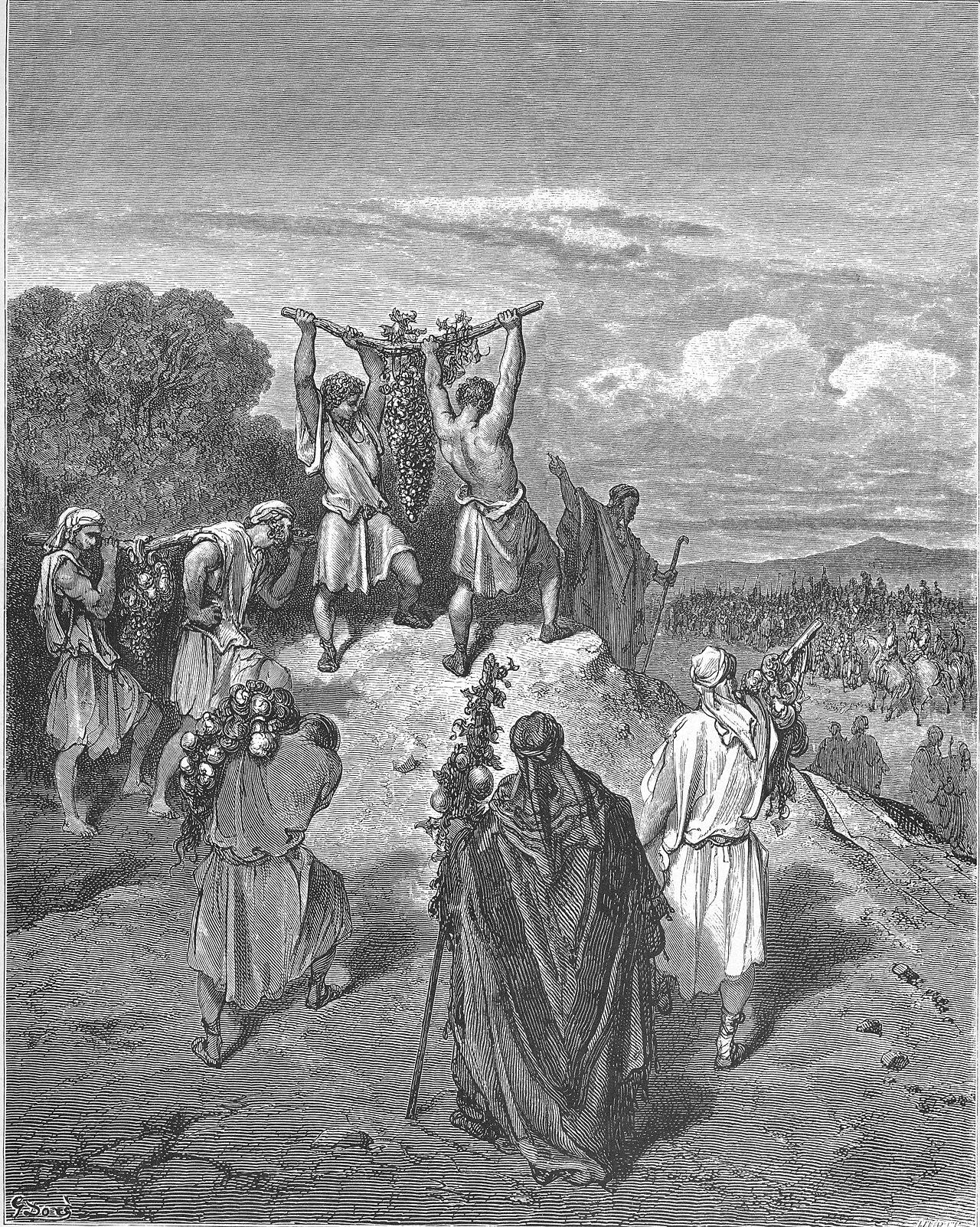
in Numbers 13Because of the cluster of grapes the Israelites cut there, that place was called the Valley of Eshcol.
BSB
The same verse in ASV and KJV ▾
ASV
That place was called the valley of Eshcol, because of the cluster which the children of Israel cut down from thence.
KJV
The place was called the brook Eshcol, because of the cluster of grapes which the children of Israel cut down from thence.
⋯
This verse in Numbers 13
Commentary
6 notes on this verseLater on, a sacred vine put forth a cluster of grapes that was prophetic. To those who had been led by the Educator to a place of rest after their wanderings it was a sign, for the great cluster of grapes is the Word crushed on our account. The Word desired that the "blood of the grape" be mixed with water as a symbol that his own blood is an integral element in salvation.
This site's exposition
they bare it between two upon a staff
on Numbers 13:23-24
One cluster takes two men and a staff, and the pomegranates and figs come back with it, so the evidence for the promise is carried home on the shoulders of the men who will advise against acting on it. The valley takes its name from that cluster, and Genesis 14:13 and 14:24 had already given Eshcol as the name of an Amorite at Hebron who stood with Abram, which Albert Barnes reads as an older place name taken up in a new sense. Clement of Alexandria, in The Instructor, read the great cluster as the Word crushed for us, and that is a reading of the fathers rather than a statement the text makes.
The record, by era
The Puritans and the Awakening3 voices
Jehoshua - Oshea notes a desire of salvation, signifying, Save we pray thee; but Jehoshua, or Joshua, includes a promise of salvation, He will save. So this was a prophecy of his succession to Moses in the government, and of the success of his arms. Josh. is the same name with Jesus, of whom Joshua was a type.
The place was called the brook of Eshcol,....
The major part discourage the people from going forward to Canaan; and justly are the Israelites left to this temptation, for putting so much confidence in the judgment of men, when they had the word of God to trust to. It is a righteous thing with God to give those up to strong delusions who will not receive his truth in the love of it.
The Nineteenth Century1 voice
A commentator
Jamieson, Fausset & Brown1802–1910
Commentary Critical and Explanatory on the Whole Bible (1871)
proposed
So they . . . searched the land--They advanced from south to north, reconnoitering the whole land. the wilderness of Zin--a long level plain, or deep valley of sand, the monotony of which is relieved by a few tamarisk and rethem trees.
The words behind it
13 Hebrew wordsEvery Hebrew word of this verse in the order it stands, with what it means and the door to its own study. The last column counts the times a word stands in the whole Bible: the rarer the word, the more the places it appears belong together.
| Hebrew | Sound | Meaning | Word study | In the Bible |
|---|---|---|---|---|
| לַמָּק֣וֹם | lamakom | <to> the place | H4725 → | 401 times |
| הַה֔וּא | hahu' | <the> that | H1931 → | 1879 times |
| קָרָ֖א | kara' | someone called | H7121 → | 733 times |
| נַ֣חַל | nachal | [the] wadi of | H5158 → | 141 times |
| אֶשְׁכּ֑וֹל | ʾeshkol | Eshcol | H812 → | 6 times |
| עַ֚ל | ʾal | on | H5921 → | 5755 times |
| אֹד֣וֹת | ʾodot | [the] causes of | H182 → | |
| הָֽאֶשְׁכּ֔וֹל | haeshkol | the cluster | H811 → | |
| אֲשֶׁר־ | ʾasher- | which | H834 → | 5497 times |
| כָּרְת֥וּ | karetu | they cut down | H3772 → | 288 times |
| מִשָּׁ֖ם | misham | from there | H8033 → | 834 times |
| בְּנֵ֥י | benei | [the] people of | H1121 → | 4930 times |
| יִשְׂרָאֵֽל׃ | yisrael | Israel | H3478 → | 2507 times |
לַמָּק֣וֹם<to> the place
lamakomH4725 →401 times
הַה֔וּא<the> that
hahu'H1931 →1879 times
קָרָ֖אsomeone called
kara'H7121 →733 times
נַ֣חַל[the] wadi of
nachalH5158 →141 times
אֶשְׁכּ֑וֹלEshcol
ʾeshkolH812 →6 times
עַ֚לon
ʾalH5921 →5755 times
אֹד֣וֹת[the] causes of
ʾodotH182 →
הָֽאֶשְׁכּ֔וֹלthe cluster
haeshkolH811 →
אֲשֶׁר־which
ʾasher-H834 →5497 times
כָּרְת֥וּthey cut down
karetuH3772 →288 times
מִשָּׁ֖םfrom there
mishamH8033 →834 times
בְּנֵ֥י[the] people of
beneiH1121 →4930 times
יִשְׂרָאֵֽל׃Israel
yisraelH3478 →2507 times
A shaded row is a word that stands 400 times or fewer in the Bible.
Where this verse is studied
About Numbers
This page draws on Albert Barnes, Notes on the Old Testament; Clement of Alexandria, The Instructor Book 2; Jamieson, Fausset & Brown, Commentary Critical and Explanatory on the Whole Bible; John Gill, Exposition of the Old Testament (1748-1763); John Wesley, Explanatory Notes upon the Old Testament and Matthew Henry, Commentary on the Whole Bible.