
Leviticus 16:22
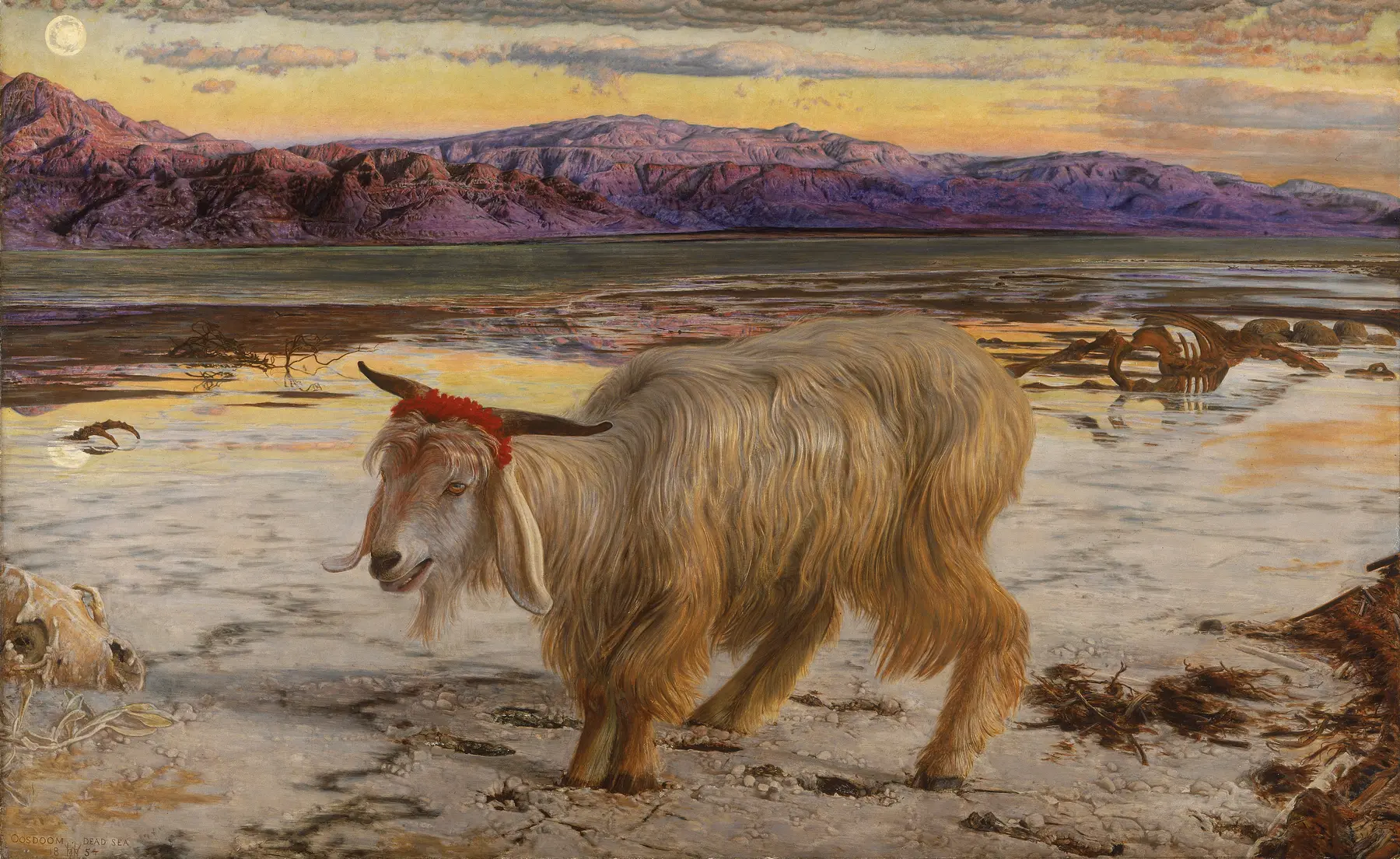
in Leviticus 16The goat will carry on itself all their iniquities into a solitary place, and the man will release it into the wilderness.
BSB
The same verse in ASV and KJV ▾
ASV
and the goat shall bear upon him all their iniquities unto a solitary land: and he shall let go the goat in the wilderness.
KJV
And the goat shall bear upon him all their iniquities unto a land not inhabited: and he shall let go the goat in the wilderness.
⋯
This verse in Leviticus 16
Commentary
4 notes on this verseA commentator
Jamieson, Fausset & Brown1802–1910
Commentary Critical and Explanatory on the Whole Bible (1871)
This last view is grounded on the idea of both goats forming one and the same sacrifice of atonement, and it is supported by Zec 3:1-10, which presents a striking commentary on this passage.
This site's exposition
When Aaron has finished purifying the Most Holy Place
on Leviticus 16:20-22
Over the live goat Aaron confesses "all the iniquities and rebellious acts of the Israelites in regard to all their sins". Hands and words together put the sins on its head, and the goat carries them off to a solitary place.
This site's exposition
into a solitary place
The goat is released, and the chapter follows it no further. Jamieson, Fausset and Brown read both goats as one and the same sacrifice of atonement. They point to Zechariah 3:1 to 10 as a commentary on this passage.
The record, by era
The Puritans and the Awakening1 voice
And the goat shall bear upon him all their iniquities unto a land not inhabited,....
How the passage was read
On Leviticus 16:1-34On Leviticus 16:1-34
The day Israel still fasts
This chapter founds the Day of Atonement, in Hebrew Yom Kippur, the most solemn day of the Jewish year: the one day the high priest entered the innermost room of the sanctuary with blood for the nation's sins. With no Temple standing since AD 70, the day is kept now as a full fast: roughly 25 hours with no food or drink, most of it spent in synagogue prayer, many wearing white.
The Mishnah (the first code of Jewish oral law, about AD 200) defines the day's five abstentions: eating and drinking, washing, anointing, leather shoes, and marital relations (Yoma 8:1). It also carries a saying worth any reader's time: the day atones for sins between a person and God, “but for sins between a person and his fellow, the Day of Atonement does not atone until he has appeased his fellow” (Yoma 8:9). Reconciliation with people is homework done before the day.
This section is reception history: how the passage was read and kept in the Jewish tradition. Where a reading parts from an essential of the Christian faith, the section says so at that point.
Sources: Mishnah Yoma 8:1 (the five abstentions) · Mishnah Yoma 8:9 (appease your fellow first) · The Day of Atonement (this site's study)
The words behind it
13 Hebrew wordsEvery Hebrew word of this verse in the order it stands, with what it means and the door to its own study. The last column counts the times a word stands in the whole Bible: the rarer the word, the more the places it appears belong together.
| Hebrew | Sound | Meaning | Word study | In the Bible |
|---|---|---|---|---|
| וְנָשָׂ֨א | venasa' | and it will bear | H5375 → | 656 times |
| הַשָּׂעִ֥יר | hasair | the male goat | H8163 → | 59 times |
| עָלָ֛יו | ʾalav | on itself | H5921 → | 5755 times |
| אֶת־ | ʾet- | <obj.> | H853 → | 10935 times |
| כָּל־ | kol- | all | H3605 → | 5413 times |
| עֲוֹנֹתָ֖ם | ʾavonotam | iniquities their | H5771 → | 233 times |
| אֶל־ | ʾel- | into | H413 → | 5510 times |
| אֶ֣רֶץ | ʾeretz | a land | H776 → | 2504 times |
| גְּזֵרָ֑ה | gezerah | infertile | H1509 → | |
| וְשִׁלַּ֥ח | veshilach | and he will let go | H7971 → | 845 times |
| אֶת־ | ʾet- | <obj.> | H853 → | 10935 times |
| הַשָּׂעִ֖יר | hasair | the male goat | H8163 → | 59 times |
| בַּמִּדְבָּֽר׃ | bamidbar | in the wilderness | H4057 → | 270 times |
וְנָשָׂ֨אand it will bear
venasa'H5375 →656 times
הַשָּׂעִ֥ירthe male goat
hasairH8163 →59 times
עָלָ֛יוon itself
ʾalavH5921 →5755 times
אֶת־<obj.>
ʾet-H853 →10935 times
כָּל־all
kol-H3605 →5413 times
עֲוֹנֹתָ֖םiniquities their
ʾavonotamH5771 →233 times
אֶל־into
ʾel-H413 →5510 times
אֶ֣רֶץa land
ʾeretzH776 →2504 times
גְּזֵרָ֑הinfertile
gezerahH1509 →
וְשִׁלַּ֥חand he will let go
veshilachH7971 →845 times
אֶת־<obj.>
ʾet-H853 →10935 times
הַשָּׂעִ֖ירthe male goat
hasairH8163 →59 times
בַּמִּדְבָּֽר׃in the wilderness
bamidbarH4057 →270 times
A shaded row is a word that stands 400 times or fewer in the Bible.
The walk
8 stopsEach card is a verse this one points to, and under it the verses that one points to in turn. Where several paths arrive at the same place, that place is listed first: the text keeps returning to it.
Through
1 Peter 2:24He Himself bore our sins in His body on the tree, so that we might die to sin and live to righteousness. “By His stripes you are healed.”
it leads to
- Isaiah 53:4–6
Surely He took on our infirmities and carried our sorrows; yet we considered Him stricken by God, struck down and afflicted.
- Matthew 8:17
This was to fulfill what was spoken through the prophet Isaiah: “He took on our infirmities and carried our diseases.”
- Romans 6:11
So you too must count yourselves dead to sin, but alive to God in Christ Jesus.
- Revelation 22:2
down the middle of the main street of the city. On either side of the river stood a tree of life, bearing twelve kinds of fruit and yielding a fresh crop for each month.…
- Isaiah 53:4–6
Through
John 1:29The next day John saw Jesus coming toward him and said, “Look, the Lamb of God, who takes away the sin of the world!
it leads to
- Isaiah 53:7
He was oppressed and afflicted, yet He did not open His mouth. He was led like a lamb to the slaughter, and as a sheep before her shearers is silent, so He did not…
- 1 John 2:2
He Himself is the atoning sacrifice for our sins, and not only for ours but also for the sins of the whole world.
- 1 John 3:5
But you know that Christ appeared to take away sins, and in Him there is no sin.
- 1 Peter 1:19
but with the precious blood of Christ, a lamb without blemish or spot.
- Isaiah 53:7
Where this verse is studied
On this page
Studies17
On this verse
About Leviticus
This page draws on Jamieson, Fausset & Brown, Commentary Critical and Explanatory on the Whole Bible; John Gill, Exposition of the Old Testament (1748-1763); Matthew Henry, Commentary on the Whole Bible and Sir Robert Anderson, Types in Hebrews.