
Joshua 6:9
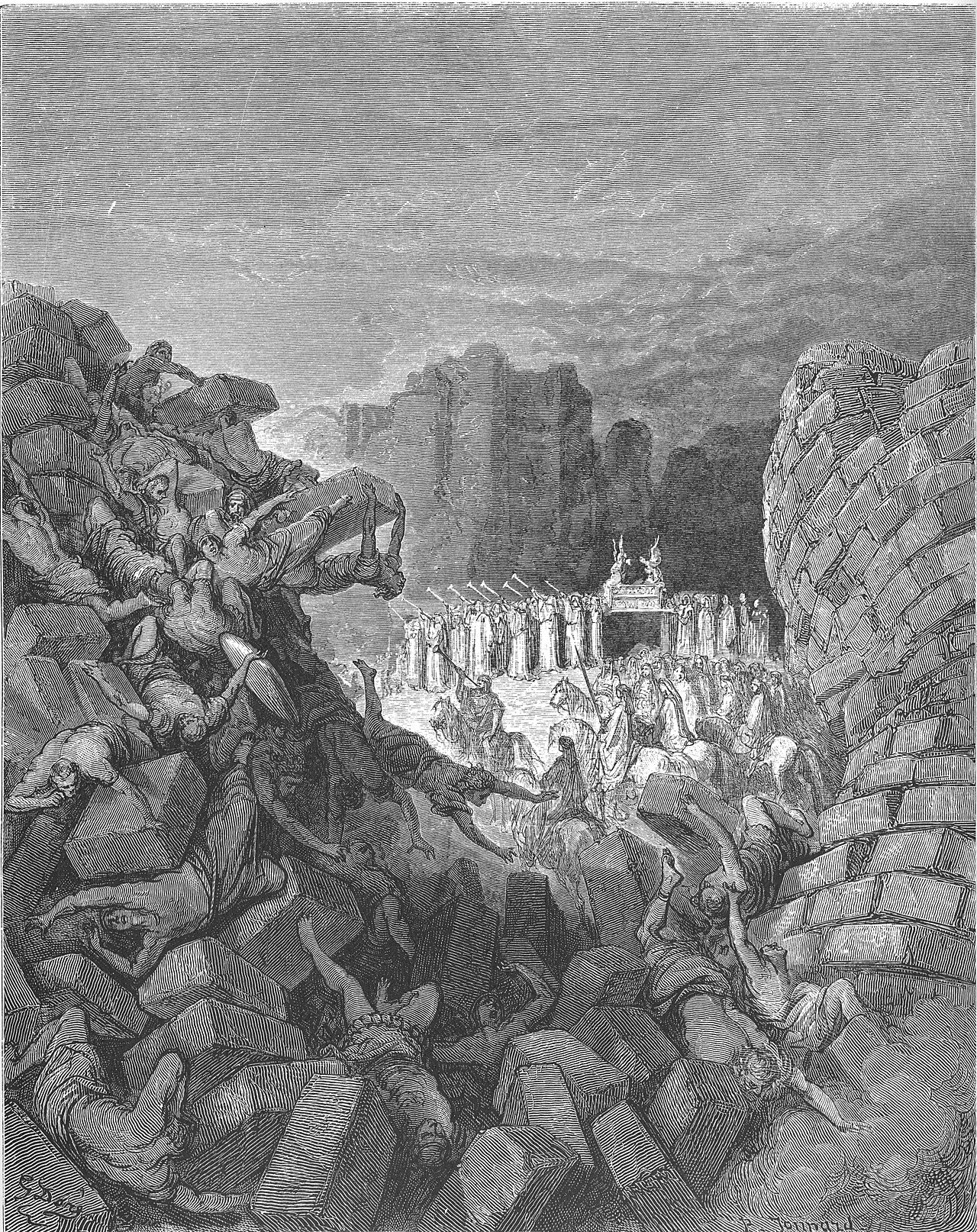
in Joshua 6While the horns continued to sound, the armed troops marched ahead of the priests who blew the horns, and the rear guard followed the ark.
BSB
The same verse in ASV and KJV ▾
ASV
And the armed men went before the priests that blew the trumpets, and the rearward went after the ark, the priests blowing the trumpets as they went.
KJV
And the armed men went before the priests that blew with the trumpets, and the rereward came after the ark, the priests going on, and blowing with the trumpets.
⋯
This verse in Joshua 6
Commentary
6 notes on this verseThe rereward came after the ark - The word מאסף measseph, from אסף asaph, to collect or gather up, may signify either the rereward, as our translation understands it, or the people who carried the baggage of the army; for on the seventh day this was necessary, as much fighting might be naturally expected in the assault, and they would need a supply of arms, darts, etc., as well as conveniences for those who might happen to be wounded: or the persons here intended might be such as carried the sacred articles belonging to the ark, or merely such people as might follow in the procession, without observing any particular order.
This site's exposition
After Joshua had spoken to the people
on Joshua 6:8-9
The order of march is fixed and the text prints it twice, again at verses 12 to 13. Armed men, seven priests blowing, the ark, the rereward. Rereward is the King James word for a rear guard, and Isaiah 52:12 uses it of God himself closing the line behind Israel.
This site's exposition
the rear guard followed the ark
Who made up the rear guard is disputed. Barnes suggests a detachment, perhaps from Dan, told off to close the procession and guard the ark. Clarke derives the word from a verb meaning to gather up, and allows it could mean baggage carriers or people following in no set order.
The record, by era
The Puritans and the Awakening2 voices
And the armed men went before the priests that blew with the trumpets,....
The rereward, either another body of armed men, or Dan's squadron, which marched last through the wilderness, or, as some think, the multitude of the people who were not armed or disciplined for war (as many of them as would) followed the ark, to testify their respect to it, to grace the solemnity, and to be witnesses of what was done.
The Nineteenth Century1 voice
A commentator
Jamieson, Fausset & Brown1802–1910
Commentary Critical and Explanatory on the Whole Bible (1871)
proposed
the seven priests bearing the seven trumpets . . . passed on before the Lord--before the ark, called "the ark of the covenant," for it contained the tables on which the covenant was inscribed.
quarantine:debris,scripture (2026-07-29) — starts-lowercase; scripture-overlap:81%@v6-8
The words behind it
13 Hebrew wordsEvery Hebrew word of this verse in the order it stands, with what it means and the door to its own study. The last column counts the times a word stands in the whole Bible: the rarer the word, the more the places it appears belong together.
| Hebrew | Sound | Meaning | Word study | In the Bible |
|---|---|---|---|---|
| וְהֶחָל֣וּץ | vehechalutz | and the armed [man] | H2502 → | 44 times |
| הֹלֵ֔ךְ | holekh | [was] walking | H1980 → | 1546 times |
| לִפְנֵי֙ | lifnei | <to> before | H6440 → | 2123 times |
| הַכֹּ֣הֲנִ֔ים | hakohanim | the priests | H3548 → | 750 times |
| תֹּקְעֵ֖י | takeu | [who] give a blast on | H8628 → | 69 times |
| הַשּֽׁוֹפָר֑וֹת | hashofarot | <of> the trumpets | H7782 → | 72 times |
| וְהַֽמְאַסֵּ֗ף | vehamasef | and the rearguard | H622 → | 200 times |
| הֹלֵךְ֙ | holekh | [was] walking | H1980 → | 1546 times |
| אַחֲרֵ֣י | ʾacharei | behind | H310 → | 715 times |
| הָאָר֔וֹן | haaron | the ark | H727 → | 202 times |
| הָל֖וֹךְ | halokh | walking | H1980 → | 1546 times |
| וְתָק֥וֹעַ | vetakoa' | and giving blasts | H8628 → | 69 times |
| בַּשּׁוֹפָרֽוֹת׃ | bashofarot | on the trumpets | H7782 → | 72 times |
וְהֶחָל֣וּץand the armed [man]
vehechalutzH2502 →44 times
הֹלֵ֔ךְ[was] walking
holekhH1980 →1546 times
לִפְנֵי֙<to> before
lifneiH6440 →2123 times
הַכֹּ֣הֲנִ֔יםthe priests
hakohanimH3548 →750 times
תֹּקְעֵ֖י[who] give a blast on
takeuH8628 →69 times
הַשּֽׁוֹפָר֑וֹת<of> the trumpets
hashofarotH7782 →72 times
וְהַֽמְאַסֵּ֗ףand the rearguard
vehamasefH622 →200 times
הֹלֵךְ֙[was] walking
holekhH1980 →1546 times
אַחֲרֵ֣יbehind
ʾachareiH310 →715 times
הָאָר֔וֹןthe ark
haaronH727 →202 times
הָל֖וֹךְwalking
halokhH1980 →1546 times
וְתָק֥וֹעַand giving blasts
vetakoa'H8628 →69 times
בַּשּׁוֹפָרֽוֹת׃on the trumpets
bashofarotH7782 →72 times
A shaded row is a word that stands 400 times or fewer in the Bible.
The walk
8 stopsEach card is a verse this one points to, and under it the verses that one points to in turn. Where several paths arrive at the same place, that place is listed first: the text keeps returning to it.
Through
Isaiah 58:8Then your light will break forth like the dawn, and your healing will come quickly. Your righteousness will go before you, and the glory of the LORD will be your rear guard.
it leads to
- Isaiah 52:12
For you will not leave in a hurry nor flee in haste, for the LORD goes before you, and the God of Israel is your rear guard.
- Jeremiah 33:6
Nevertheless, I will bring to it health and healing, and I will heal its people and reveal to them the abundance of peace and truth.
- Psalms 37:6
He will bring forth your righteousness like the dawn, your justice like the noonday sun.
- Jeremiah 30:17
But I will restore your health and heal your wounds, declares the LORD, because they call you an outcast, Zion, for whom no one cares.”
- Malachi 4:2
“But for you who fear My name, the sun of righteousness will rise with healing in its wings, and you will go out and leap like calves from the stall.
- Isaiah 52:12
Through
Joshua 6:13And the seven priests carrying seven rams’ horns kept marching ahead of the ark of the LORD and blowing the horns. The armed troops went in front of them and the rear guard followed…
it leads to
- Galatians 6:9
Let us not grow weary in well-doing, for in due time we will reap a harvest if we do not give up.
- Matthew 24:13
But the one who perseveres to the end will be saved.
- 1 Chronicles 15:26
And because God helped the Levites who were carrying the ark of the covenant of the LORD, they sacrificed seven bulls and seven rams.
- Galatians 6:9
Where this verse is studied
On this page
Studies11
On this verse
About Joshua
This page draws on Adam Clarke, Commentary on the Bible; Albert Barnes, Notes on the Old Testament; Jamieson, Fausset & Brown, Commentary Critical and Explanatory on the Whole Bible; John Gill, Exposition of the Old Testament (1748-1763); Keil and Delitzsch, Biblical Commentary on the Old Testament: Joshua, Judges, Ruth and Matthew Henry, Commentary on the Whole Bible.