
Joshua 6:17
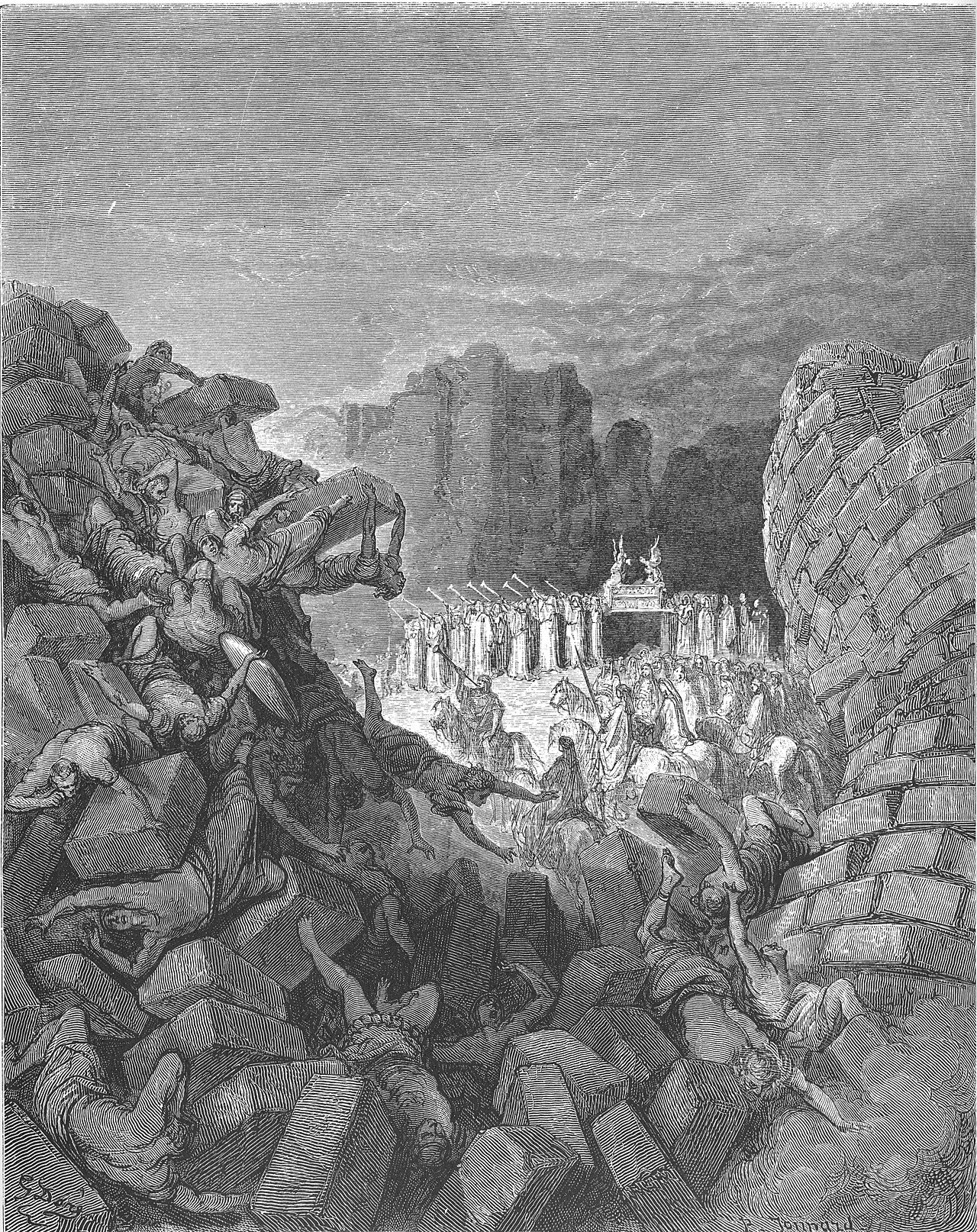
in Joshua 6Now the city and everything in it must be devoted to the LORD for destruction. Only Rahab the prostitute and all those with her in her house will live, because she hid the spies we sent.
BSB
The same verse in ASV and KJV ▾
ASV
And the city shall be devoted, even it and all that is therein, to Jehovah: only Rahab the harlot shall live, she and all that are with her in the house, because she hid the messengers that we sent.
KJV
And the city shall be accursed, even it, and all that are therein, to the Lord: only Rahab the harlot shall live, she and all that are with her in the house, because she hid the messengers that we sent.
⋯
This verse in Joshua 6
Commentary
10 notes on this verseA commentator
Albert Barnes1798–1870
Notes, Explanatory and Practical, on the Old and New Testaments (1832-1869)
Accursed - Better as in margin, (“devoted” (Lev 27:28 note). In other cases the inhabitants only of the towns were slain; their cattle and property became the booty of the victors. But Jericho, as the first Canaanite city that was captured, was devoted by Israel as first-fruits to God, as a token that Israel received all the land from Him. Every living thing was put to death (Rahab and her household excepted) as a sacrifice to God, and the indestructible goods were Jos 6:19 brought into the treasury of the sanctuary.
This site's exposition
the city and everything in it must be devoted to the LORD for destruction
on Joshua 6:17-19
The city is placed under the ban, the Hebrew cherem, by which a thing is handed to God and put past human use. Chapter 7 shows what one man taking it costs. The metals go into the LORD’s treasury, so the ban moves the spoil out of Israel’s reach.
The record, by era
The Church Fathers1 voice
A commentator
John ChrysostomHOMILIES ON REPENTANCE AND ALMSGIVING 7.5.15-16 · Written before 407.
proposed
Pay attention to me; how strange was the preaching of God's love toward humanity! He who says in the law, "You shall not commit adultery" and "You shall not commit prostitution," changes the commandment by clemency and proclaims through the blessed Joshua, "Let Rahab the prostitute live." Joshua the son of Nun, who says, "Let the prostitute live," prefigured the Lord Jesus, who says, "The prostitutes and tax collectors go into the kingdom of the heavens before you." If she must live, how can she be a prostitute? If she is a prostitute, why should she live? "I speak about her previous condition," he says, "so you may marvel at her subsequent change." He asks, "What did Rahab, to whom he granted salvation, do?" She accepted the spies peacefully? Even an innkeeper does this. However, she reaped the fruits of salvation not only by speech but beforehand by faith and by her disposition before God.And so you may learn the abundance of her faith, listen to the very Scripture that describes in full and bears witness to her achievements. She was in a brothel, like a pearl mixed up in mire, like gold thrown in mud, the rose of piety hidden in thorns, a pious soul enclosed in a place of impiety. Pay attention so you may understand well. She accepted the spies and the One whom Israel denied in the desert; Rahab preached this One in the brothel.
The Puritans and the Awakening3 voices
Accursed - That is, devoted to utter destruction. This he speaks by direction from God, as is evident from 1 Kings xvi, 34. To the Lord - Partly because the first-fruits were appropriated to God; partly lest the soldiers being glutted with the spoil of the rich city, should grow sluggish in their work; and partly to strike the greater terror into the rest of their enemies.
And the city shall be accursed,....
And the severe usage of this city would strike a terror upon all the rest and melt their hearts yet more before Israel. Only, when this severity is ordered, Rahab and her family are excepted: She shall live and all that are with her.
The Nineteenth Century1 voice
A commentator
Jamieson, Fausset & Brown1802–1910
Commentary Critical and Explanatory on the Whole Bible (1871)
proposed
And the city shall be accursed--(See on Le 27:28). The cherem, or "anathema," was a devotion to utter destruction (De 7:2; When such a ban was pronounced against a hostile city, the men and animals were killed--no booty was allowed to be taken.
quarantine:debris (2026-07-29) — unbalanced-parens
3 more voices on this verse
The Nineteenth Century3 voices
The Lord divided the Jordan that His people might pass through dry-shod. This miracle greatly dispirited the Canaanites, and so prepared the way for an easy triumph for the invading Israelites. You would have naturally expected that the Lord would have bid His people avail themselves immediately of this terror to strike a heavy blow at once, and press on with might and main before the enemy could take a breath and so sweep the land clear of the adversaries in a single campaign. But it was not so.
The Lord divided the Jordan that His people might pass through dry-shod. This miracle greatly dispirited the Canaanites, and so prepared the way for an easy triumph for the invading Israelites. You would have naturally expected that the Lord would have bid His people avail themselves immediately of this terror to strike a heavy blow at once, and press on with might and main before the enemy could take a breath and so sweep the land clear of the adversaries in a single campaign. But it was not so. Instead of immediate activity, the children of Israel pitched their tents at Gilgal and there tarried for a considerable season. For God is in no hurry. His purposes can be accomplished without haste, and though He would have us redeem the time because our days are evil, yet in His eternity He can afford to wait and by His wisdom He so orders His delays that they prove to be far better than our hurries. Why were the people to delay? That they might be obedient to commands which had been forgotten. In the desert, for many reasons, circumcision and the Passover had been neglected. They were not visited with any chastisement on account of this neglect, for the Lord considered their position and condition, and winked at their error. But before He would use them He would have them fully obedient to His will. It cannot be expected that God should tolerate disobedient servants, and therefore they must stay awhile, till they had been attentive to the two great precepts of the Mosaic Covenant. Dear Friends, let us pause and ask ourselves, as Believers, whether we have been in all respects conscientiously attentive to our Master's commands. If not, we may not expect Him to send a blessing to the Church or to the world through us, until first of all we have yielded our willing obedience to that which He has prescribed for us.
The city shall be accursed - That is, it shall be devoted to destruction; ye shall take no spoils, and put all that resist to the sword. Though this may be the meaning of the word חרם cherem in some places, see the note on Lev 27:29, yet here it seems to imply the total destruction of all the inhabitants, see Jos 6:21; but it is likely that peace was offered to this city, and that the extermination of the inhabitants was in consequence of the rejection of this offer.
How the passage was read
What the Jewish commentators add
And the city shall be consecrated. It shall be sacred, for that day was the holy Shabbos, 3 See Rashi to verse.
This section is reception history: how the passage was read and kept in the Jewish tradition. Where a reading parts from an essential of the Christian faith, the section says so at that point.
Texts and citation data: Sefaria; each excerpt follows its version’s licence. 4 further sources are cited on this chapter that carry no English text this site may quote or only restate the verse.
The words behind it
23 Hebrew wordsEvery Hebrew word of this verse in the order it stands, with what it means and the door to its own study. The last column counts the times a word stands in the whole Bible: the rarer the word, the more the places it appears belong together.
| Hebrew | Sound | Meaning | Word study | In the Bible |
|---|---|---|---|---|
| וְהָיְתָ֨ה | vehayetah | and it will be | H1961 → | 3559 times |
| הָעִ֥יר | hair | the city | H5892 → | 1090 times |
| חֵ֛רֶם | cherem | a devoted thing | H2764 → | 38 times |
| הִ֥יא | hi' | it | H1931 → | 1879 times |
| וְכָל־ | vekhol | and all | H3605 → | 5413 times |
| אֲשֶׁר־ | ʾasher- | that | H834 → | 5497 times |
| בָּ֖הּ | bah | [is] in <the> it | ||
| לַֽיהוָ֑ה | layahweh | to Yahweh | H3068 → | 6520 times |
| רַק֩ | rak | only | H7535 → | 109 times |
| רָחָ֨ב | rachav | Rahab | H7343 → | 5 times |
| הַזּוֹנָ֜ה | hazonah | the prostitute | H2181 → | 94 times |
| תִּֽחְיֶ֗ה | tichyeh | she will live | H2421 → | 282 times |
| הִ֚יא | hi' | she | H1931 → | 1879 times |
| וְכָל־ | vekhol | and every | H3605 → | 5413 times |
| אֲשֶׁ֣ר | ʾasher | [one] who | H834 → | 5497 times |
| אִתָּ֣הּ | ʾitah | [is] with her | H854 → | 929 times |
| בַּבַּ֔יִת | babayit | in the house | H1004 → | 2046 times |
| כִּ֣י | ki | for | H3588 → | 4482 times |
| הֶחְבְּאַ֔תָה | hechbeatah | she hid | H2244 → | 33 times |
| אֶת־ | ʾet- | <obj.> | H853 → | 10935 times |
| הַמַּלְאָכִ֖ים | hamalakhim | the messengers | H4397 → | 213 times |
| אֲשֶׁ֥ר | ʾasher | whom | H834 → | 5497 times |
| שָׁלָֽחְנוּ׃ | shalachenu | we sent | H7971 → | 845 times |
וְהָיְתָ֨הand it will be
vehayetahH1961 →3559 times
הָעִ֥ירthe city
hairH5892 →1090 times
חֵ֛רֶםa devoted thing
cheremH2764 →38 times
הִ֥יאit
hi'H1931 →1879 times
וְכָל־and all
vekholH3605 →5413 times
אֲשֶׁר־that
ʾasher-H834 →5497 times
בָּ֖הּ[is] in <the> it
bah
לַֽיהוָ֑הto Yahweh
layahwehH3068 →6520 times
רַק֩only
rakH7535 →109 times
רָחָ֨בRahab
rachavH7343 →5 times
הַזּוֹנָ֜הthe prostitute
hazonahH2181 →94 times
תִּֽחְיֶ֗הshe will live
tichyehH2421 →282 times
הִ֚יאshe
hi'H1931 →1879 times
וְכָל־and every
vekholH3605 →5413 times
אֲשֶׁ֣ר[one] who
ʾasherH834 →5497 times
אִתָּ֣הּ[is] with her
ʾitahH854 →929 times
בַּבַּ֔יִתin the house
babayitH1004 →2046 times
כִּ֣יfor
kiH3588 →4482 times
הֶחְבְּאַ֔תָהshe hid
hechbeatahH2244 →33 times
אֶת־<obj.>
ʾet-H853 →10935 times
הַמַּלְאָכִ֖יםthe messengers
hamalakhimH4397 →213 times
אֲשֶׁ֥רwhom
ʾasherH834 →5497 times
שָׁלָֽחְנוּ׃we sent
shalachenuH7971 →845 times
A shaded row is a word that stands 400 times or fewer in the Bible.
The walk
8 stopsEach card is a verse this one points to, and under it the verses that one points to in turn. Where several paths arrive at the same place, that place is listed first: the text keeps returning to it.
Through
Galatians 3:10All who rely on works of the law are under a curse. For it is written: “Cursed is everyone who does not continue to do everything written in the Book of the Law.”
it leads to
- Deuteronomy 27:26
‘Cursed is he who does not put the words of this law into practice.’ And let all the people say, ‘Amen!’
- Romans 8:7
because the mind of the flesh is hostile to God: It does not submit to God’s law, nor can it do so.
- Romans 3:19–20
Now we know that whatever the law says, it says to those who are under the law, so that every mouth may be silenced and the whole world held accountable to God.
- Deuteronomy 27:26
Through
Matthew 25:40And the King will reply, ‘Truly I tell you, whatever you did for one of the least of these brothers of Mine, you did for Me.’
it leads to
- Proverbs 19:17
Kindness to the poor is a loan to the LORD, and He will repay the lender.
- Proverbs 14:31
Whoever oppresses the poor taunts their Maker, but whoever is kind to the needy honors Him.
- Matthew 10:42
And if anyone gives even a cup of cold water to one of these little ones because he is My disciple, truly I tell you, he will never lose his reward.”
- Mark 9:41
Indeed, if anyone gives you even a cup of water because you bear the name of Christ, truly I tell you, he will never lose his reward.
- 1 Peter 1:22
Since you have purified your souls by obedience to the truth so that you have a genuine love for your brothers, love one another deeply, from a pure heart.
- Proverbs 19:17
Where this verse is studied
On this page
Studies11
On this verse
About Joshua
Who and where
1 name in this verse with a page on the site.
This page draws on 10 works. Open the list of works
This page draws on Adam Clarke, Commentary on the Bible; Albert Barnes, Notes, Explanatory and Practical, on the Old and New Testaments (1832-1869); Charles Spurgeon, The Metropolitan Tabernacle Pulpit, Sermon No. 795: “Joshua's Vision” (lightly modernized text, CCEL edition); Jamieson, Fausset & Brown, Commentary Critical and Explanatory on the Whole Bible; John Chrysostom, HOMILIES ON REPENTANCE AND ALMSGIVING 7.5.15-16; John Gill, Exposition of the Old Testament; John Gill, Exposition of the Old Testament (1748-1763); John Wesley, Explanatory Notes upon the Old Testament; Keil and Delitzsch, Biblical Commentary on the Old Testament: Joshua, Judges, Ruth and Matthew Henry, Commentary on the Whole Bible.