
Joshua 6:15
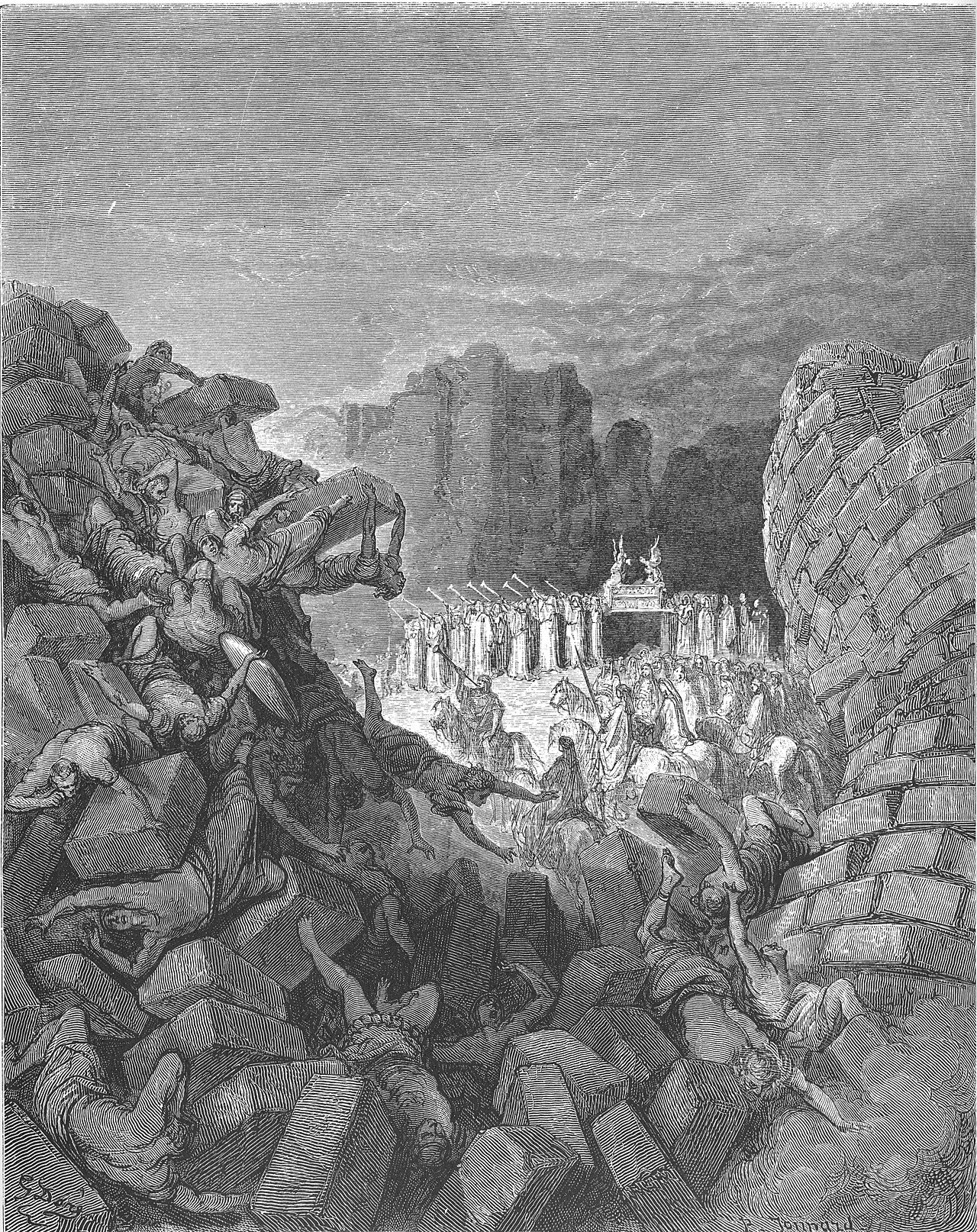
in Joshua 6Then on the seventh day, they got up at dawn and marched around the city seven times in the same manner. That was the only day they circled the city seven times.
BSB
The same verse in ASV and KJV ▾
ASV
And it came to pass on the seventh day, that they rose early at the dawning of the day, and compassed the city after the same manner seven times: only on that day they compassed the city seven times.
KJV
And it came to pass on the seventh day, that they rose early about the dawning of the day, and compassed the city after the same manner seven times: only on that day they compassed the city seven times.
⋯
This verse in Joshua 6
Commentary
9 notes on this verseAnd it came to pass on the seventh day,.... Which Jarchi says was the Sabbath day, and which is a common notion of the Jews (c); but whether it was or not, it is certain that one of these seven days must be a sabbath, in which the several things ordered were done, and the procession made.
This site's exposition
they got up at dawn
on Joshua 6:15-16
The seventh day begins and runs seven circuits, seven times the cost of each day before. Joshua’s order to shout because “the LORD has given you the city” uses the tense God used at verse 2. The shout falls at the end of the thirteenth circuit, after days of silence.
The record, by era
The Church Fathers1 voice
But what was done then to the city of Jericho, as we have said, was done in symbol, since now this very thing happens in reality. For we read that at that time the priests circled the aforementioned city continuously for seven days and that, …
The Puritans and the Awakening1 voice
One of these days must needs be a sabbath day, and the Jews say that it was the last, but this is not certain; however, if he that appointed them to rest on the other sabbath days appointed them to walk on this, that was sufficient to justify them in it; he never intended to bind himself by his own laws, but that when he pleased he might dispense with them.
The Nineteenth Century3 voices
A commentator
Albert Barnes1798–1870
Notes, Explanatory and Practical, on the Old and New Testaments (1832-1869)
On the seventh day - Most probably a Sabbath day. The rising early would be necessary to give time for encompassing the city seven times. Jericho appears to have been a city of considerable size and population; and each passage of the large host round it could hardly have taken less than an hour and a half. Thus, with the necessary intervals of rest, the evening would be at hand when Joshua gave the signal to shout Jos 6:16; and the work of slaughter was probably commenced just as the hours of the Sabbath were passed.
A commentator
Jamieson, Fausset & Brown1802–1910
Commentary Critical and Explanatory on the Whole Bible (1871)
proposed
on the seventh day, that they rose early about the dawning of the day, and compassed the city . . . seven times--on account of the seven circuits they had to make that day. It is evident, however, that the militia only of the Israelites had been called to the march--for it is inconceivable that two millions of people could have gone so frequently round the city in a day.
quarantine:debris (2026-07-29) — starts-lowercase
The Lord divided the Jordan that His people might pass through dry-shod. This miracle greatly dispirited the Canaanites, and so prepared the way for an easy triumph for the invading Israelites. You would have naturally expected that the Lord would have bid His people avail themselves immediately of this terror to strike a heavy blow at once, and press on with might and main before the enemy could take a breath and so sweep the land clear of the adversaries in a single campaign. But it was not so.
2 more voices on this verse
The Nineteenth Century2 voices
The Lord divided the Jordan that His people might pass through dry-shod. This miracle greatly dispirited the Canaanites, and so prepared the way for an easy triumph for the invading Israelites. You would have naturally expected that the Lord would have bid His people avail themselves immediately of this terror to strike a heavy blow at once, and press on with might and main before the enemy could take a breath and so sweep the land clear of the adversaries in a single campaign. But it was not so. Instead of immediate activity, the children of Israel pitched their tents at Gilgal and there tarried for a considerable season. For God is in no hurry. His purposes can be accomplished without haste, and though He would have us redeem the time because our days are evil, yet in His eternity He can afford to wait and by His wisdom He so orders His delays that they prove to be far better than our hurries. Why were the people to delay? That they might be obedient to commands which had been forgotten. In the desert, for many reasons, circumcision and the Passover had been neglected. They were not visited with any chastisement on account of this neglect, for the Lord considered their position and condition, and winked at their error. But before He would use them He would have them fully obedient to His will. It cannot be expected that God should tolerate disobedient servants, and therefore they must stay awhile, till they had been attentive to the two great precepts of the Mosaic Covenant. Dear Friends, let us pause and ask ourselves, as Believers, whether we have been in all respects conscientiously attentive to our Master's commands. If not, we may not expect Him to send a blessing to the Church or to the world through us, until first of all we have yielded our willing obedience to that which He has prescribed for us.
The seventh day - they rose early - Because on this day they had to encompass the city seven times; a proof that the city could not have been very extensive, else this going round it seven times, and having time sufficient left to sack and destroy it, would have been impossible. It is evident that in the course of these seven days there must have been a Sabbath, and that on this Sabbath the host must have encompassed the city as on the other days: the Jews themselves allow this, and Rab. De Kimchi says “He who had ordained the observance of the Sabbath commanded it to be broken for the destruction of Jericho.” But it does not appear that there could be any breach in the Sabbath by the people simply going round the city, the ark in company, and the priests sounding the sacred trumpets. This was a mere religious procession, performed at the command of God, in which no servile work was done. Therefore Marcion’s objection, that the God of the Hebrews showed a changeableness of disposition in commanding the Sabbath to be kept sacred at one time, and then to be broken at another, is without foundation; for I must contend that no breach took place on this occasion, unless it could be made to appear that the day on which Jericho was taken was the Sabbath which is very unlikely, and which none can prove. But if even this were to be conceded, it is a sufficient answer to all such cavils, that the God who commanded the Sabbath to be set apart for rest and religious purposes, has always authority to suspend for a season the operation of merely ceremonial laws, or to abrogate them entirely, when the purpose of their institution is fulfilled. The Son of man is Lord even of the Sabbath.
How the passage was read
What the Jewish commentators add
On the seventh day. This was on the Shabbos. 2 They were permitted to wage war and to kill on Shabbos by the Divine command, that instructed them to lay siege to the city according to the word of God, as told to Yehoshua. See verses 2-5, this chapter.
This section is reception history: how the passage was read and kept in the Jewish tradition. Where a reading parts from an essential of the Christian faith, the section says so at that point.
Texts and citation data: Sefaria; each excerpt follows its version’s licence. 4 further sources are cited on this chapter that carry no English text this site may quote or only restate the verse.
The words behind it
21 Hebrew wordsEvery Hebrew word of this verse in the order it stands, with what it means and the door to its own study. The last column counts the times a word stands in the whole Bible: the rarer the word, the more the places it appears belong together.
| Hebrew | Sound | Meaning | Word study | In the Bible |
|---|---|---|---|---|
| וַיְהִ֣י׀ | vayhi | and it was | H1961 → | 3559 times |
| בַּיּ֣וֹם | baiyom | on the day | H3117 → | 2304 times |
| הַשְּׁבִיעִ֗י | hashevii | <the> seventh | H7637 → | 98 times |
| וַיַּשְׁכִּ֙מוּ֙ | vaiyashkimu | and they rose early | H7925 → | 65 times |
| כַּעֲל֣וֹת | kaalot | when came up | H5927 → | 890 times |
| הַשַּׁ֔חַר | hashachar | the dawn | H7837 → | |
| וַיָּסֹ֧בּוּ | vaiyasobu | and they went around | H5437 → | 161 times |
| אֶת־ | ʾet- | <obj.> | H853 → | 10935 times |
| הָעִ֛יר | hair | the city | H5892 → | 1090 times |
| כַּמִּשְׁפָּ֥ט | kamishpat | according to the custom | H4941 → | 422 times |
| הַזֶּ֖ה | hazeh | <the> this | H2088 → | 1180 times |
| שֶׁ֣בַע | sheva' | seven | H7651 → | 394 times |
| פְּעָמִ֑ים | peamim | times | H6471 → | 118 times |
| רַ֚ק | rak | only | H7535 → | 109 times |
| בַּיּ֣וֹם | baiyom | on the day | H3117 → | 2304 times |
| הַה֔וּא | hahu' | <the> that | H1931 → | 1879 times |
| סָבְב֥וּ | savevu | they went round | H5437 → | 161 times |
| אֶת־ | ʾet- | <obj.> | H853 → | 10935 times |
| הָעִ֖יר | hair | the city | H5892 → | 1090 times |
| שֶׁ֥בַע | sheva' | seven | H7651 → | 394 times |
| פְּעָמִֽים׃ | peamim | times | H6471 → | 118 times |
וַיְהִ֣י׀and it was
vayhiH1961 →3559 times
בַּיּ֣וֹםon the day
baiyomH3117 →2304 times
הַשְּׁבִיעִ֗י<the> seventh
hasheviiH7637 →98 times
וַיַּשְׁכִּ֙מוּ֙and they rose early
vaiyashkimuH7925 →65 times
כַּעֲל֣וֹתwhen came up
kaalotH5927 →890 times
הַשַּׁ֔חַרthe dawn
hashacharH7837 →
וַיָּסֹ֧בּוּand they went around
vaiyasobuH5437 →161 times
אֶת־<obj.>
ʾet-H853 →10935 times
הָעִ֛ירthe city
hairH5892 →1090 times
כַּמִּשְׁפָּ֥טaccording to the custom
kamishpatH4941 →422 times
הַזֶּ֖ה<the> this
hazehH2088 →1180 times
שֶׁ֣בַעseven
sheva'H7651 →394 times
פְּעָמִ֑יםtimes
peamimH6471 →118 times
רַ֚קonly
rakH7535 →109 times
בַּיּ֣וֹםon the day
baiyomH3117 →2304 times
הַה֔וּא<the> that
hahu'H1931 →1879 times
סָבְב֥וּthey went round
savevuH5437 →161 times
אֶת־<obj.>
ʾet-H853 →10935 times
הָעִ֖ירthe city
hairH5892 →1090 times
שֶׁ֥בַעseven
sheva'H7651 →394 times
פְּעָמִֽים׃times
peamimH6471 →118 times
A shaded row is a word that stands 400 times or fewer in the Bible.
The walk
8 stopsEach card is a verse this one points to, and under it the verses that one points to in turn. Where several paths arrive at the same place, that place is listed first: the text keeps returning to it.
Through
2 Peter 1:19We also have the word of the prophets as confirmed beyond doubt. And you will do well to pay attention to it, as to a lamp shining in a dark place, until the day…
it leads to
- Psalms 119:105
Your word is a lamp to my feet and a light to my path.
- Isaiah 9:2
The people walking in darkness have seen a great light; on those living in the land of the shadow of death, a light has dawned.
- Revelation 22:16
“I, Jesus, have sent My angel to give you this testimony for the churches. I am the Root and the Offspring of David, the bright Morning Star.”
- John 5:39
You pore over the Scriptures because you presume that by them you possess eternal life. These are the very words that testify about Me,
- Isaiah 8:20
To the law and to the testimony! If they do not speak according to this word, they have no light of dawn.
- Psalms 119:105
Through
Matthew 28:1After the Sabbath, at dawn on the first day of the week, Mary Magdalene and the other Mary went to see the tomb.
it leads to
- Mark 16:1–8
When the Sabbath was over, Mary Magdalene, Mary the mother of James, and Salome bought spices so they could go and anoint the body of Jesus.
- John 20:1–10
Early on the first day of the week, while it was still dark, Mary Magdalene went to the tomb and saw that the stone had been removed from the entrance.
- Mark 16:1–8
Through
Psalms 119:147I rise before dawn and cry for help; in Your word I have put my hope.
it leads to
- Mark 1:35
Early in the morning, while it was still dark, Jesus got up and slipped out to a solitary place to pray.
- Mark 1:35
Where this verse is studied
On this page
Studies11
On this verse
About Joshua
This page draws on Adam Clarke, Commentary on the Bible; Albert Barnes, Notes, Explanatory and Practical, on the Old and New Testaments (1832-1869); Charles Spurgeon, The Metropolitan Tabernacle Pulpit, Sermon No. 795: “Joshua's Vision” (lightly modernized text, CCEL edition); Jamieson, Fausset & Brown, Commentary Critical and Explanatory on the Whole Bible; John Gill, Exposition of the Old Testament (1748-1763); Keil and Delitzsch, Biblical Commentary on the Old Testament: Joshua, Judges, Ruth; Matthew Henry, Commentary on the Whole Bible and Maximus of Turin, SERMON 94.2.