
Joshua 6:13
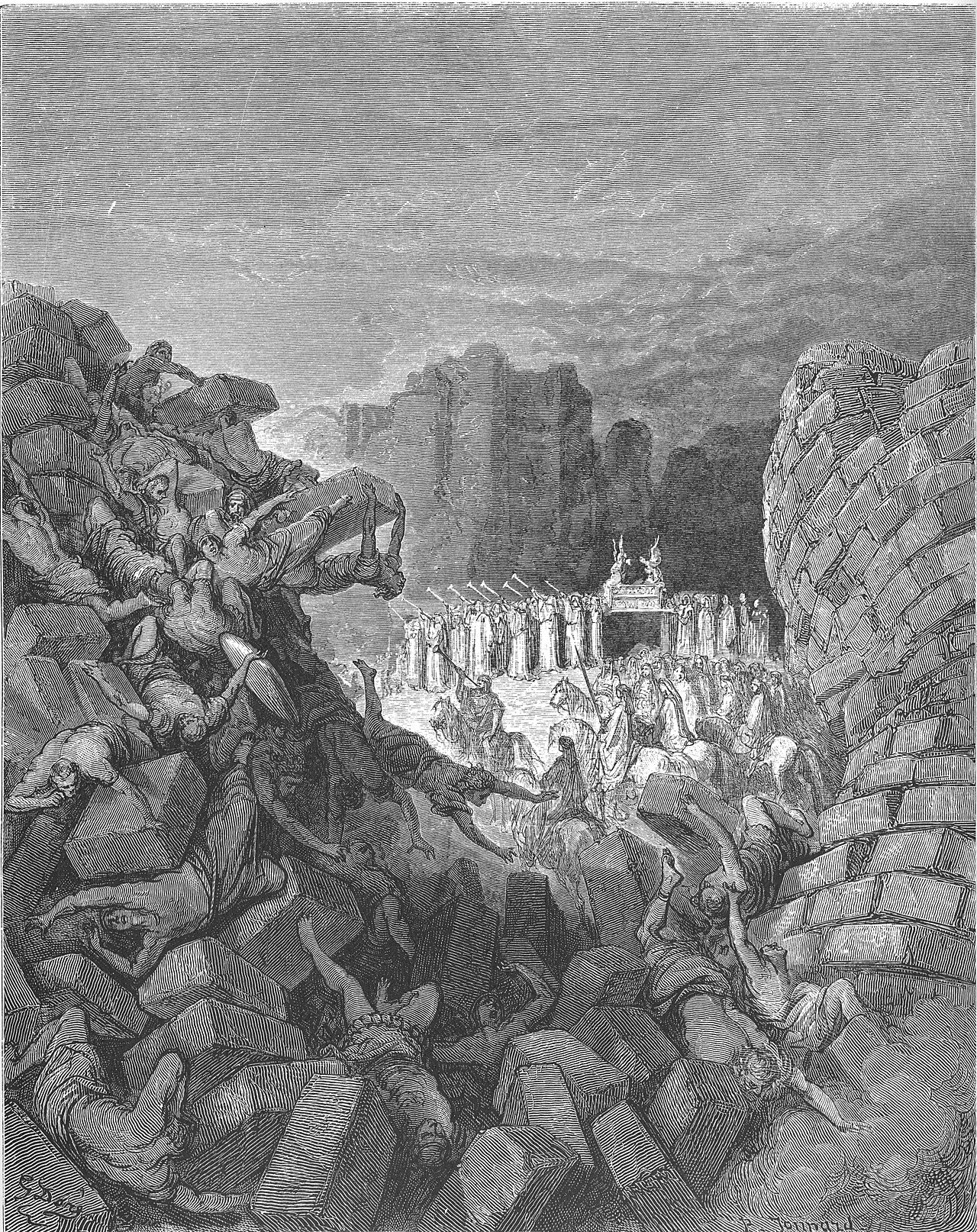
in Joshua 6And the seven priests carrying seven rams’ horns kept marching ahead of the ark of the LORD and blowing the horns. The armed troops went in front of them and the rear guard followed the ark of the LORD, while the horns kept sounding.
BSB
The same verse in ASV and KJV ▾
ASV
And the seven priests bearing the seven trumpets of rams’ horns before the ark of Jehovah went on continually, and blew the trumpets: and the armed men went before them; and the rearward came after the ark of Jehovah, the priests blowing the trumpets as they went.
KJV
And seven priests bearing seven trumpets of rams’ horns before the ark of the Lord went on continually, and blew with the trumpets: and the armed men went before them; but the rereward came after the ark of the Lord, the priests going on, and blowing with the trumpets.
⋯
This verse in Joshua 6
Commentary
5 notes on this verseAnd seven priests bearing seven trumpets of rams' horns before the ark of the Lord,.... See Gill on Jos 6:4, went on continually; or, "going they went" (b): kept on going, making no stop at all, until they had compassed the city: and blew with the trumpets; as they went along: and the armed men went before them, but the rereward came after the ark of the Lord; which the Targum paraphrases as on Jos 6:9, the priests going on, and blowing with the trumpets; See Gill on Jos 6:9. (b) הלכים הלוך "euntes eundo", Montanus.
This site's exposition
Joshua got up early the next morning
on Joshua 6:12-14
These verses repeat verses 8 to 11 almost word for word, and the repetition is the point: the text records nothing happening. Seven days of marching means one of them fell on a sabbath, which Henry and Clarke raise, and the chapter gives neither exemption nor comment.
This site's exposition
kept marching ahead of the ark of the LORD
Gill notes the Hebrew doubles the verb, going they went, and reads it as a march with no halt until the circuit was done. The horns sound the whole way round. Gill cites the Aramaic Targum, which keeps the priests blowing as they walk, as it does at verse 9.
The record, by era
The Nineteenth Century2 voices
The Lord divided the Jordan that His people might pass through dry-shod. This miracle greatly dispirited the Canaanites, and so prepared the way for an easy triumph for the invading Israelites. You would have naturally expected that the Lord would have bid His people avail themselves immediately of this terror to strike a heavy blow at once, and press on with might and main before the enemy could take a breath and so sweep the land clear of the adversaries in a single campaign. But it was not so.
The Lord divided the Jordan that His people might pass through dry-shod. This miracle greatly dispirited the Canaanites, and so prepared the way for an easy triumph for the invading Israelites. You would have naturally expected that the Lord would have bid His people avail themselves immediately of this terror to strike a heavy blow at once, and press on with might and main before the enemy could take a breath and so sweep the land clear of the adversaries in a single campaign. But it was not so. Instead of immediate activity, the children of Israel pitched their tents at Gilgal and there tarried for a considerable season. For God is in no hurry. His purposes can be accomplished without haste, and though He would have us redeem the time because our days are evil, yet in His eternity He can afford to wait and by His wisdom He so orders His delays that they prove to be far better than our hurries. Why were the people to delay? That they might be obedient to commands which had been forgotten. In the desert, for many reasons, circumcision and the Passover had been neglected. They were not visited with any chastisement on account of this neglect, for the Lord considered their position and condition, and winked at their error. But before He would use them He would have them fully obedient to His will. It cannot be expected that God should tolerate disobedient servants, and therefore they must stay awhile, till they had been attentive to the two great precepts of the Mosaic Covenant. Dear Friends, let us pause and ask ourselves, as Believers, whether we have been in all respects conscientiously attentive to our Master's commands. If not, we may not expect Him to send a blessing to the Church or to the world through us, until first of all we have yielded our willing obedience to that which He has prescribed for us.
How the passage was read
What the Jewish commentators add
The rearmost. This refers to the tribe of Dan that traveled last and gathered all those who lagged behind.
This section is reception history: how the passage was read and kept in the Jewish tradition. Where a reading parts from an essential of the Christian faith, the section says so at that point.
Texts and citation data: Sefaria; each excerpt follows its version’s licence. 4 further sources are cited on this chapter that carry no English text this site may quote or only restate the verse.
The words behind it
24 Hebrew wordsEvery Hebrew word of this verse in the order it stands, with what it means and the door to its own study. The last column counts the times a word stands in the whole Bible: the rarer the word, the more the places it appears belong together.
| Hebrew | Sound | Meaning | Word study | In the Bible |
|---|---|---|---|---|
| וְשִׁבְעָ֣ה | veshivah | and seven | H7651 → | 394 times |
| הַכֹּהֲנִ֡ים | hakohanim | the priests | H3548 → | 750 times |
| נֹשְׂאִים֩ | noseim | [who] were carrying | H5375 → | 656 times |
| שִׁבְעָ֨ה | shivah | seven | H7651 → | 394 times |
| שׁוֹפְר֜וֹת | shofrot | [the] trumpets of | H7782 → | 72 times |
| הַיֹּבְלִ֗ים | haiyoelim | <the> rams' horns | H3104 → | 27 times |
| לִפְנֵי֙ | lifnei | <to> before | H6440 → | 2123 times |
| אֲר֣וֹן | ʾaron | [the] ark of | H727 → | 202 times |
| יְהוָ֔ה | yahweh | Yahweh | H3068 → | 6520 times |
| הֹלְכִ֣ים | holekhim | [were] walking | H1980 → | 1546 times |
| הָל֔וֹךְ | halokh | continuously <to walk> | H1980 → | 1546 times |
| וְתָקְע֖וּ | vetakeu | and they gave blasts | H8628 → | 69 times |
| בַּשּׁוֹפָר֑וֹת | bashofarot | on the trumpets | H7782 → | 72 times |
| וְהֶחָלוּץ֙ | vehechalutz | and the armed [man] | H2502 → | 44 times |
| הֹלֵ֣ךְ | holekh | [was] walking | H1980 → | 1546 times |
| לִפְנֵיהֶ֔ם | lifneihem | <to> before them | H6440 → | 2123 times |
| וְהַֽמְאַסֵּ֗ף | vehamasef | and the rearguard | H622 → | 200 times |
| הֹלֵךְ֙ | holekh | [was] walking | H1980 → | 1546 times |
| אַֽחֲרֵי֙ | ʾacharei | behind | H310 → | 715 times |
| אֲר֣וֹן | ʾaron | [the] ark of | H727 → | 202 times |
| יְהוָ֔ה | yahweh | Yahweh | H3068 → | 6520 times |
| הָל֖וֹךְ | holekh | walking | H1980 → | 1546 times |
| וְתָק֥וֹעַ | vetakoa' | and giving blasts | H8628 → | 69 times |
| בַּשּׁוֹפָרֽוֹת׃ | bashofarot | on the trumpets | H7782 → | 72 times |
וְשִׁבְעָ֣הand seven
veshivahH7651 →394 times
הַכֹּהֲנִ֡יםthe priests
hakohanimH3548 →750 times
נֹשְׂאִים֩[who] were carrying
noseimH5375 →656 times
שִׁבְעָ֨הseven
shivahH7651 →394 times
שׁוֹפְר֜וֹת[the] trumpets of
shofrotH7782 →72 times
הַיֹּבְלִ֗ים<the> rams' horns
haiyoelimH3104 →27 times
לִפְנֵי֙<to> before
lifneiH6440 →2123 times
אֲר֣וֹן[the] ark of
ʾaronH727 →202 times
יְהוָ֔הYahweh
yahwehH3068 →6520 times
הֹלְכִ֣ים[were] walking
holekhimH1980 →1546 times
הָל֔וֹךְcontinuously <to walk>
halokhH1980 →1546 times
וְתָקְע֖וּand they gave blasts
vetakeuH8628 →69 times
בַּשּׁוֹפָר֑וֹתon the trumpets
bashofarotH7782 →72 times
וְהֶחָלוּץ֙and the armed [man]
vehechalutzH2502 →44 times
הֹלֵ֣ךְ[was] walking
holekhH1980 →1546 times
לִפְנֵיהֶ֔ם<to> before them
lifneihemH6440 →2123 times
וְהַֽמְאַסֵּ֗ףand the rearguard
vehamasefH622 →200 times
הֹלֵךְ֙[was] walking
holekhH1980 →1546 times
אַֽחֲרֵי֙behind
ʾachareiH310 →715 times
אֲר֣וֹן[the] ark of
ʾaronH727 →202 times
יְהוָ֔הYahweh
yahwehH3068 →6520 times
הָל֖וֹךְwalking
holekhH1980 →1546 times
וְתָק֥וֹעַand giving blasts
vetakoa'H8628 →69 times
בַּשּׁוֹפָרֽוֹת׃on the trumpets
bashofarotH7782 →72 times
A shaded row is a word that stands 400 times or fewer in the Bible.
The walk
8 stopsEach card is a verse this one points to, and under it the verses that one points to in turn. Where several paths arrive at the same place, that place is listed first: the text keeps returning to it.
Through
Galatians 6:9Let us not grow weary in well-doing, for in due time we will reap a harvest if we do not give up.
it leads to
- 1 Corinthians 15:58
Therefore, my beloved brothers, be steadfast and immovable. Always excel in the work of the Lord, because you know that your labor in the Lord is not in vain.
- 2 Thessalonians 3:13
But as for you, brothers, do not grow weary in well-doing.
- Isaiah 40:30–31
Even youths grow tired and weary, and young men stumble and fall.
- Hebrews 10:35–39
So do not throw away your confidence; it holds a great reward.
- Hebrews 12:3
Consider Him who endured such hostility from sinners, so that you will not grow weary and lose heart.
- 1 Corinthians 15:58
Through
Matthew 24:13But the one who perseveres to the end will be saved.
it leads to
- Matthew 10:22
You will be hated by everyone because of My name, but the one who perseveres to the end will be saved.
- Mark 13:13
You will be hated by everyone because of My name, but the one who perseveres to the end will be saved.
- Revelation 2:10
Do not fear what you are about to suffer. Look, the devil is about to throw some of you into prison to test you, and you will suffer tribulation for ten days. Be faithful…
- Matthew 10:22
Where this verse is studied
On this page
Studies11
On this verse
About Joshua
This page draws on Adam Clarke, Commentary on the Bible; Charles Spurgeon, The Metropolitan Tabernacle Pulpit, Sermon No. 795: “Joshua's Vision” (lightly modernized text, CCEL edition); John Gill, Exposition of the Old Testament (1748-1763); John Gill, Exposition of the Old Testament and Keil and Delitzsch, Biblical Commentary on the Old Testament: Joshua, Judges, Ruth.