
Joshua 7:15
in Joshua 7The one who is caught with the things devoted to destruction must be burned, along with all that belongs to him, because he has transgressed the covenant of the LORD and committed an outrage in Israel.’”
BSB
The same verse in ASV and KJV ▾
ASV
And it shall be, that he that is taken with the devoted thing shall be burnt with fire, he and all that he hath; because he hath transgressed the covenant of Jehovah, and because he hath wrought folly in Israel.
KJV
And it shall be, that he that is taken with the accursed thing shall be burnt with fire, he and all that he hath: because he hath transgressed the covenant of the Lord, and because he hath wrought folly in Israel.
⋯
This verse in Joshua 7
Commentary
7 notes on this verseThis site's exposition
Consecrate yourselves for tomorrow
on Joshua 7:13-15
The people consecrate themselves before the search, as at Sinai in Exodus 19:10 and at the Jordan in 3:5. The narrowing runs by tribe, clan, family and man, and Clarke reports older Jewish explanations such as a stone of the high priest’s breastplate losing its light. The Hebrew behind “an outrage in Israel” is kept for a few acts, at Genesis 34:7, Deuteronomy 22:21 and Judges 19 and 20.
This site's exposition
must be burned, along with all that belongs to him
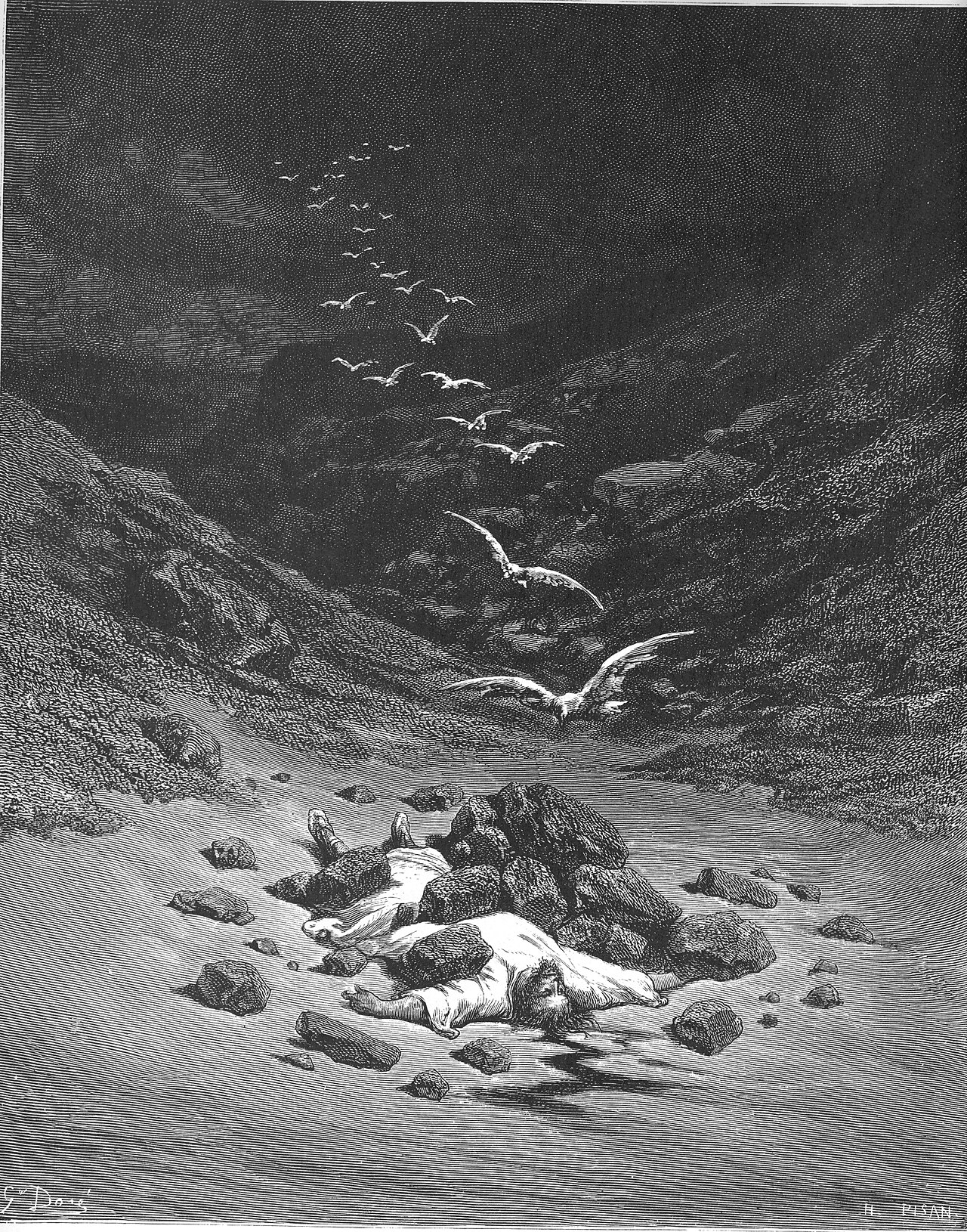
Barnes reads the burning as following death by stoning, as verse 25 records, and points to Leviticus 20:14. Henry explains the fire as the treatment given to devoted goods, so that nothing of the accursed thing remained. The man is handled as part of the ban.
The record, by era
The Puritans and the Awakening3 voices
And it shall be, that he that is taken with the accursed thing shall be burnt with fire,....
However God was hereby glorified, and the judgment executed was thus made the more tremendous. The punishment itself that was inflicted on him. He was stoned (some think as a sabbath breaker, supposing that the sacrilege was committed on the sabbath day), and then his dead body was burnt, as an accursed thing, of which there should be no remainder left.
He and all that he has must be burnt with fire, that there might be no remainders of the accursed thing among them; and the reason given for this severe sentence is because the criminal has, (1.) Given a great affront to God: He has transgressed the covenant of the Lord, who is jealous particularly for the honour of the holy covenant.
The Nineteenth Century2 voices
A commentator
Jamieson, Fausset & Brown1802–1910
Commentary Critical and Explanatory on the Whole Bible (1871)
proposed
the Lord said unto Joshua, Get thee up--The answer of the divine oracle was to this effect: the crisis is owing not to unfaithfulness in Me, but sin in the people.
quarantine:debris (2026-07-29) — starts-lowercase
A commentator
Albert Barnes1798–1870
Notes, Explanatory and Practical, on the Old and New Testaments (1832-1869)
proposed
burnt with fire - i. e. after he had been put to death by stoning Jos 7:25; Lev 20:14.
How the passage was read
What the Jewish commentators add
Burned with fire. His tent and movable property [shall be burned].
2 more on this passage, in their own words ▾
Households. In one family grouping there can be many individual households.
And brought the Bnei Yisroel near. He brought them in front of the Choshen. The Choshen was one of the sacred garments worn by the Kohein Gadol. The Divine decisions were given through the letters inscribed on the Choshen. on which the names of the tribes were inscribed.
This section is reception history: how the passage was read and kept in the Jewish tradition. Where a reading parts from an essential of the Christian faith, the section says so at that point.
Texts and citation data: Sefaria; each excerpt follows its version’s licence. 4 further sources are cited on this chapter that carry no English text this site may quote or only restate the verse.
The words behind it
19 Hebrew wordsEvery Hebrew word of this verse in the order it stands, with what it means and the door to its own study. The last column counts the times a word stands in the whole Bible: the rarer the word, the more the places it appears belong together.
| Hebrew | Sound | Meaning | Word study | In the Bible |
|---|---|---|---|---|
| וְהָיָה֙ | vehayah | and it will be | H1961 → | 3559 times |
| הַנִּלְכָּ֣ד | hanilkad | the [one who] is taken by lot | H3920 → | 121 times |
| בַּחֵ֔רֶם | bacherem | with the devoted thing[s] | H2764 → | 38 times |
| יִשָּׂרֵ֣ף | yisaref | he will be burned | H8313 → | 117 times |
| בָּאֵ֔שׁ | baesh | with <the> fire | H784 → | 378 times |
| אֹת֖וֹ | ʾoto | <obj.> him | H853 → | 10935 times |
| וְאֶת־ | veet | and <obj.> | H853 → | 10935 times |
| כָּל־ | kol- | all | H3605 → | 5413 times |
| אֲשֶׁר־ | ʾasher- | that | H834 → | 5497 times |
| ל֑וֹ | lo | [belongs] to <the> him | ||
| כִּ֤י | ki | for | H3588 → | 4482 times |
| עָבַר֙ | ʾavar | he has transgressed | H5674 → | 556 times |
| אֶת־ | ʾet- | <obj.> | H853 → | 10935 times |
| בְּרִ֣ית | berit | covenant of | H1285 → | 284 times |
| יְהוָ֔ה | yahweh | Yahweh | H3068 → | 6520 times |
| וְכִֽי־ | vekhi- | and for | H3588 → | 4482 times |
| עָשָׂ֥ה | ʾasah | he has done | H6213 → | 2628 times |
| נְבָלָ֖ה | nevalah | disgraceful folly | H5039 → | |
| בְּיִשְׂרָאֵֽל׃ | beyisrael | in Israel | H3478 → | 2507 times |
וְהָיָה֙and it will be
vehayahH1961 →3559 times
הַנִּלְכָּ֣דthe [one who] is taken by lot
hanilkadH3920 →121 times
בַּחֵ֔רֶםwith the devoted thing[s]
bacheremH2764 →38 times
יִשָּׂרֵ֣ףhe will be burned
yisarefH8313 →117 times
בָּאֵ֔שׁwith <the> fire
baeshH784 →378 times
אֹת֖וֹ<obj.> him
ʾotoH853 →10935 times
וְאֶת־and <obj.>
veetH853 →10935 times
כָּל־all
kol-H3605 →5413 times
אֲשֶׁר־that
ʾasher-H834 →5497 times
ל֑וֹ[belongs] to <the> him
lo
כִּ֤יfor
kiH3588 →4482 times
עָבַר֙he has transgressed
ʾavarH5674 →556 times
אֶת־<obj.>
ʾet-H853 →10935 times
בְּרִ֣יתcovenant of
beritH1285 →284 times
יְהוָ֔הYahweh
yahwehH3068 →6520 times
וְכִֽי־and for
vekhi-H3588 →4482 times
עָשָׂ֥הhe has done
ʾasahH6213 →2628 times
נְבָלָ֖הdisgraceful folly
nevalahH5039 →
בְּיִשְׂרָאֵֽל׃in Israel
beyisraelH3478 →2507 times
A shaded row is a word that stands 400 times or fewer in the Bible.
The walk
8 stopsEach card is a verse this one points to, and under it the verses that one points to in turn. Where several paths arrive at the same place, that place is listed first: the text keeps returning to it.
Through
Judges 20:6Then I took my concubine, cut her into pieces, and sent her throughout the land of Israel’s inheritance, because they had committed a lewd and disgraceful act in Israel.
it leads to
- Judges 19:29
When he reached his house, he picked up a knife, took hold of his concubine, cut her limb by limb into twelve pieces, and sent her throughout the territory of Israel.
- Judges 19:23
The owner of the house went out and said to them, “No, my brothers, do not do this wicked thing! After all, this man is a guest in my house. Do not commit this…
- Genesis 34:7
When Jacob’s sons heard what had happened, they returned from the field. They were filled with grief and fury, because Shechem had committed an outrage in Israel by lying with Jacob’s daughter—a thing that…
- Judges 20:10
We will take ten men out of every hundred from all the tribes of Israel, and a hundred out of every thousand, and a thousand out of every ten thousand, to supply provisions for…
- Judges 19:29
Through
Genesis 34:7When Jacob’s sons heard what had happened, they returned from the field. They were filled with grief and fury, because Shechem had committed an outrage in Israel by lying with Jacob’s daughter—a thing that…
it leads to
- Judges 20:6
Then I took my concubine, cut her into pieces, and sent her throughout the land of Israel’s inheritance, because they had committed a lewd and disgraceful act in Israel.
- Deuteronomy 22:21
she shall be brought to the door of her father’s house, and there the men of her city will stone her to death. For she has committed an outrage in Israel by being promiscuous…
- Hebrews 13:4
Marriage should be honored by all and the marriage bed kept undefiled, for God will judge the sexually immoral and adulterers.
- Genesis 20:9
Then Abimelech called Abraham and asked, “What have you done to us? How have I sinned against you, that you have brought such tremendous guilt upon me and my kingdom? You have done things…
- Judges 20:6
Where this verse is studied
On this page
About Joshua
This page draws on Adam Clarke, Commentary on the Bible; Albert Barnes, Notes on the Old Testament; Albert Barnes, Notes, Explanatory and Practical, on the Old and New Testaments (1832-1869); Jamieson, Fausset & Brown, Commentary Critical and Explanatory on the Whole Bible; John Gill, Exposition of the Old Testament (1748-1763) and Matthew Henry, Commentary on the Whole Bible.