
Joshua 6:23
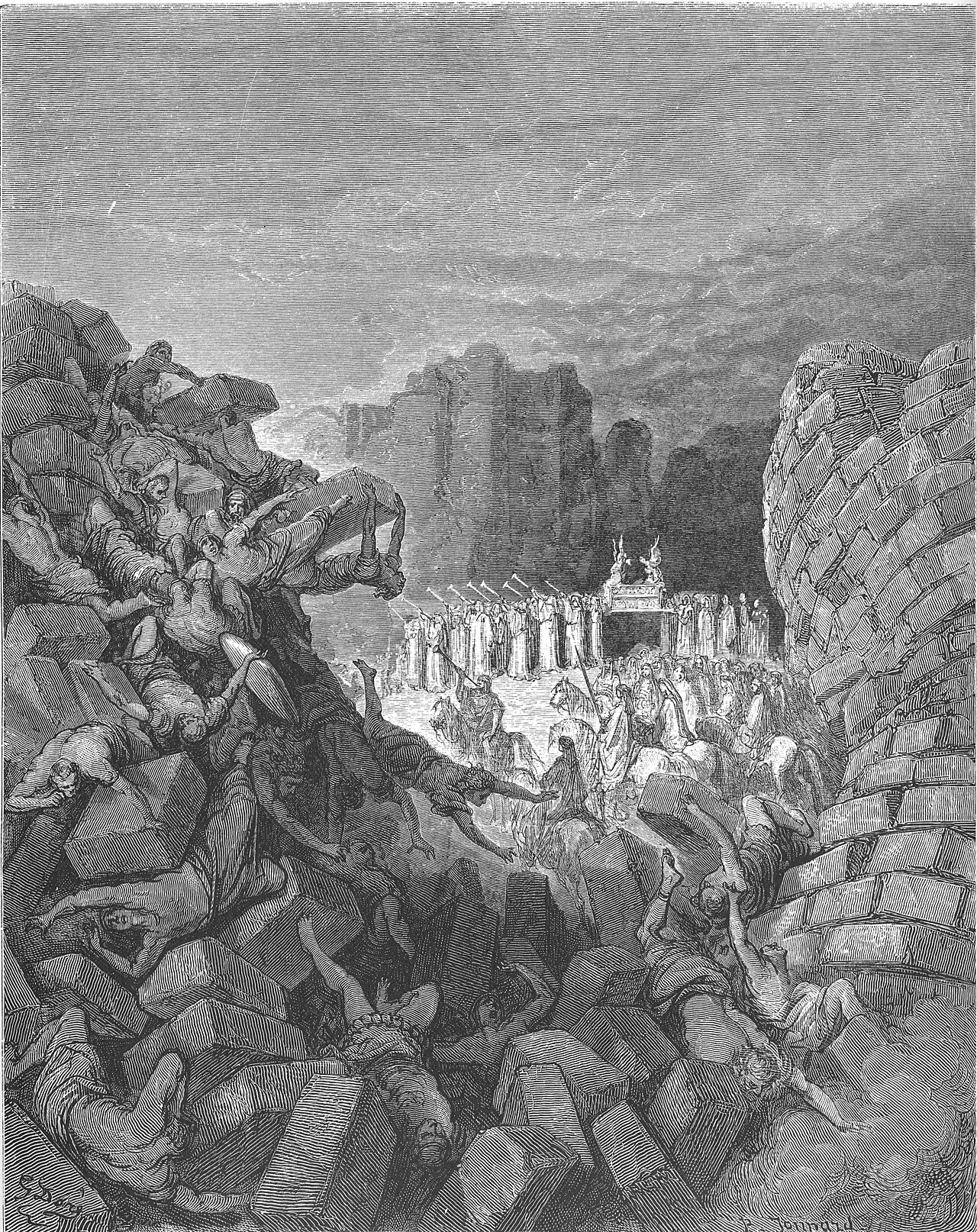
in Joshua 6So the young spies went in and brought out Rahab, her father and mother and brothers, and all who belonged to her. They brought out her whole family and settled them outside the camp of Israel.
BSB
The same verse in ASV and KJV ▾
ASV
And the young men the spies went in, and brought out Rahab, and her father, and her mother, and her brethren, and all that she had; all her kindred also they brought out; and they set them without the camp of Israel.
KJV
And the young men that were spies went in, and brought out Rahab, and her father, and her mother, and her brethren, and all that she had; and they brought out all her kindred, and left them without the camp of Israel.
⋯
This verse in Joshua 6
Commentary
9 notes on this verseAnd the young men that were spies went in, and brought out Rahab,.... Not only went into the city, but into Rahab's house, which they knew again by the scarlet thread hung out at the window of it. But here a difficulty occurs, how they could be said to go into her house, when it was built on the town wall, Jos 2:15; and that was now fallen down flat.
This site's exposition
Joshua told the two men who had spied out the land
on Joshua 6:22-23
The two men sent in are the two who swore the oath. The terms of 2:12-14 covered her father, mother, brothers and sisters, and verse 23 adds “her whole family”. They are settled “outside the camp of Israel” for the moment, where a foreign household waited before being received.
This site's exposition
the young spies went in and brought out Rahab
Rahab's house stood in the town wall, as 2:15 records. Gill raises the difficulty, since the wall fell flat, and Barnes answers that the stretch of wall holding her house must have stood. Gill says the young men knew the house again by the scarlet cord hanging from its window.
The record, by era
The Church Fathers1 voice
Let us prepare ourselves for the sacrifice of the lamb.… Nor let us be under the impression that this yearling lamb can be eaten anywhere.
The Puritans and the Awakening1 voice
They were best able to do it who knew her and her house, and they were fittest to do it, that it might appear it was for the sake of her kindness to them that she was thus distinguished and had her life given her for a prey. All her kindred were saved with her; like Noah she believed to the saving of her house; and thus faith in Christ brings salvation to the house, Acts xvi.
The Nineteenth Century3 voices
A commentator
Albert Barnes1798–1870
Notes, Explanatory and Practical, on the Old and New Testaments (1832-1869)
The part of the wall adjoining Rahab’s house had not fallen along with the rest. Rahab and “all that she had,” i. e., the persons belonging to her household, were brought out and “left without the camp of Israel.” These words literally “made to rest outside the camp of Israel” - indicate that being still in their paganism, they were separated from the camp of the Lord. This was only for a time. They desired, and eventually obtained, admission to the covenant of the chosen people of God Jos 6:25.
The Lord divided the Jordan that His people might pass through dry-shod. This miracle greatly dispirited the Canaanites, and so prepared the way for an easy triumph for the invading Israelites. You would have naturally expected that the Lord would have bid His people avail themselves immediately of this terror to strike a heavy blow at once, and press on with might and main before the enemy could take a breath and so sweep the land clear of the adversaries in a single campaign. But it was not so. Instead of immediate activity, the children of Israel pitched their tents at Gilgal and there tarried for a considerable season. For God is in no hurry. His purposes can be accomplished without haste, and though He would have us redeem the time because our days are evil, yet in His eternity He can afford to wait and by His wisdom He so orders His delays that they prove to be far better than our hurries. Why were the people to delay? That they might be obedient to commands which had been forgotten. In the desert, for many reasons, circumcision and the Passover had been neglected. They were not visited with any chastisement on account of this neglect, for the Lord considered their position and condition, and winked at their error. But before He would use them He would have them fully obedient to His will. It cannot be expected that God should tolerate disobedient servants, and therefore they must stay awhile, till they had been attentive to the two great precepts of the Mosaic Covenant. Dear Friends, let us pause and ask ourselves, as Believers, whether we have been in all respects conscientiously attentive to our Master's commands. If not, we may not expect Him to send a blessing to the Church or to the world through us, until first of all we have yielded our willing obedience to that which He has prescribed for us.
The Lord divided the Jordan that His people might pass through dry-shod. This miracle greatly dispirited the Canaanites, and so prepared the way for an easy triumph for the invading Israelites. You would have naturally expected that the Lord would have bid His people avail themselves immediately of this terror to strike a heavy blow at once, and press on with might and main before the enemy could take a breath and so sweep the land clear of the adversaries in a single campaign. But it was not so.
1 more voice on this verse
The Nineteenth Century1 voice
Brought out Rahab, and her father, etc. - Rahab having been faithful to her vow of secrecy, the Israelites were bound by the oath of the spies, who acted as their representatives in this business, to preserve her and her family alive. And left them without the camp - They were considered as persons unclean, and consequently left without the camp; (see Lev 13:46; Num 12:14). When they had abjured heathenism, were purified, and the males had received circumcision, they were doubtless admitted into the camp, and became incorporated with Israel.
The words behind it
24 Hebrew wordsEvery Hebrew word of this verse in the order it stands, with what it means and the door to its own study. The last column counts the times a word stands in the whole Bible: the rarer the word, the more the places it appears belong together.
| Hebrew | Sound | Meaning | Word study | In the Bible |
|---|---|---|---|---|
| וַיָּבֹ֜אוּ | vaiyavou | and they went | H935 → | 2568 times |
| הַנְּעָרִ֣ים | hanearim | the young men | H5288 → | |
| הַֽמְרַגְּלִ֗ים | hamragelim | who had spied out | H7270 → | 25 times |
| וַיֹּצִ֡יאוּ | vaiyotziu | and they brought out | H3318 → | 1067 times |
| אֶת־ | ʾet- | <obj.> | H853 → | 10935 times |
| רָ֠חָב | racho | Rahab | H7343 → | 5 times |
| וְאֶת־ | veet | and <obj.> | H853 → | 10935 times |
| אָבִ֨יהָ | ʾaviha | father her | H1 → | 1212 times |
| וְאֶת־ | veet | and <obj.> | H853 → | 10935 times |
| אִמָּ֤הּ | ʾimah | mother her | H517 → | 220 times |
| וְאֶת־ | veet | and <obj.> | H853 → | 10935 times |
| אַחֶ֙יהָ֙ | ʾacheiha | brothers her | H251 → | 630 times |
| וְאֶת־ | veet | and <obj.> | H853 → | 10935 times |
| כָּל־ | kol- | every | H3605 → | 5413 times |
| אֲשֶׁר־ | ʾasher- | [one] who | H834 → | 5497 times |
| לָ֔הּ | lah | [belonged] to <the> her | ||
| וְאֵ֥ת | veet | and <obj.> | H853 → | 10935 times |
| כָּל־ | kol- | all | H3605 → | 5413 times |
| מִשְׁפְּחוֹתֶ֖יהָ | mishpechoteiha | famili<es> her | H4940 → | 303 times |
| הוֹצִ֑יאוּ | hotziu | they brought out | H3318 → | 1067 times |
| וַיַּ֨נִּיח֔וּם | vaiyanichum | and they put them | H5117 → | 142 times |
| מִח֖וּץ | michutz | from [the] outside | H2351 → | |
| לְמַחֲנֵ֥ה | lemachaneh | of [the] camp of | H4264 → | 215 times |
| יִשְׂרָאֵֽל׃ | yisrael | Israel | H3478 → | 2507 times |
וַיָּבֹ֜אוּand they went
vaiyavouH935 →2568 times
הַנְּעָרִ֣יםthe young men
hanearimH5288 →
הַֽמְרַגְּלִ֗יםwho had spied out
hamragelimH7270 →25 times
וַיֹּצִ֡יאוּand they brought out
vaiyotziuH3318 →1067 times
אֶת־<obj.>
ʾet-H853 →10935 times
רָ֠חָבRahab
rachoH7343 →5 times
וְאֶת־and <obj.>
veetH853 →10935 times
אָבִ֨יהָfather her
ʾavihaH1 →1212 times
וְאֶת־and <obj.>
veetH853 →10935 times
אִמָּ֤הּmother her
ʾimahH517 →220 times
וְאֶת־and <obj.>
veetH853 →10935 times
אַחֶ֙יהָ֙brothers her
ʾacheihaH251 →630 times
וְאֶת־and <obj.>
veetH853 →10935 times
כָּל־every
kol-H3605 →5413 times
אֲשֶׁר־[one] who
ʾasher-H834 →5497 times
לָ֔הּ[belonged] to <the> her
lah
וְאֵ֥תand <obj.>
veetH853 →10935 times
כָּל־all
kol-H3605 →5413 times
מִשְׁפְּחוֹתֶ֖יהָfamili<es> her
mishpechoteihaH4940 →303 times
הוֹצִ֑יאוּthey brought out
hotziuH3318 →1067 times
וַיַּ֨נִּיח֔וּםand they put them
vaiyanichumH5117 →142 times
מִח֖וּץfrom [the] outside
michutzH2351 →
לְמַחֲנֵ֥הof [the] camp of
lemachanehH4264 →215 times
יִשְׂרָאֵֽל׃Israel
yisraelH3478 →2507 times
A shaded row is a word that stands 400 times or fewer in the Bible.
The walk
8 stopsEach card is a verse this one points to, and under it the verses that one points to in turn. Where several paths arrive at the same place, that place is listed first: the text keeps returning to it.
Through
Ephesians 2:12remember that at that time you were separate from Christ, alienated from the commonwealth of Israel, and strangers to the covenants of the promise, without hope and without God in the world.
it leads to
- Galatians 4:8
Formerly, when you did not know God, you were slaves to those who by nature are not gods.
- Colossians 1:21
Once you were alienated from God and were hostile in your minds, engaging in evil deeds.
- 1 Peter 1:3
Blessed be the God and Father of our Lord Jesus Christ! By His great mercy He has given us new birth into a living hope through the resurrection of Jesus Christ from the dead,
- Jeremiah 31:31–34
Behold, the days are coming, declares the LORD, when I will make a new covenant with the house of Israel and with the house of Judah.
- Galatians 4:8
Through
Hebrews 11:7By faith Noah, when warned about things not yet seen, in godly fear built an ark to save his family. By faith he condemned the world and became heir of the righteousness that comes…
it leads to
- Genesis 6:13
Then God said to Noah, “The end of all living creatures has come before Me, because through them the earth is full of violence. Now behold, I will destroy both them and the earth.
- 1 Peter 3:20
who disobeyed long ago when God waited patiently in the days of Noah while the ark was being built. In the ark a few people, only eight souls, were saved through water.
- Ezekiel 14:14
then even if these three men—Noah, Daniel, and Job—were in it, their righteousness could deliver only themselves, declares the Lord GOD.
- Genesis 6:13
Through
Acts 27:24and said, ‘Do not be afraid, Paul; you must stand before Caesar. And look, God has granted you the lives of all who sail with you.’
it leads to
- Acts 23:11
The following night the Lord stood near Paul and said, “Take courage! As you have testified about Me in Jerusalem, so also you must testify in Rome.”
- Acts 23:11
Where this verse is studied
On this page
About Joshua
Who and where
1 name in this verse with a page on the site.
This page draws on 9 works. Open the list of works
This page draws on Adam Clarke, Commentary on the Bible; Albert Barnes, Notes on the Old Testament; Albert Barnes, Notes, Explanatory and Practical, on the Old and New Testaments (1832-1869); Charles Spurgeon, The Metropolitan Tabernacle Pulpit, Sermon No. 795: “Joshua's Vision” (lightly modernized text, CCEL edition); Jerome, HOMILY ON THE EXODUS 91; John Gill, Exposition of the Old Testament (1748-1763); John Gill, Exposition of the Old Testament; Keil and Delitzsch, Biblical Commentary on the Old Testament: Joshua, Judges, Ruth and Matthew Henry, Commentary on the Whole Bible.