
Joshua 6:18
in Joshua 6But keep away from the things devoted to destruction, lest you yourself be set apart for destruction. If you take any of these, you will set apart the camp of Israel for destruction and bring disaster upon it.
BSB
The same verse in ASV and KJV ▾
ASV
But as for you, only keep yourselves from the devoted thing, lest when ye have devoted it, ye take of the devoted thing; so would ye make the camp of Israel accursed, and trouble it.
KJV
And ye, in any wise keep yourselves from the accursed thing, lest ye make yourselves accursed, when ye take of the accursed thing, and make the camp of Israel a curse, and trouble it.
⋯
This verse in Joshua 6
Commentary
10 notes on this verseThis is what is indicated by these words: Take heed that you have nothing worldly in you, that you bring down with you to the church neither worldly customs nor faults nor equivocations of the age. But let all worldly ways be anathema to you. Do not mix mundane things with divine; do not introduce worldly matters into the mysteries of the church.This is what John also sounds with the trumpet of his epistle, saying, "Do not love the world or the things that are in the world." And likewise Paul: "Do not," he says, "be conformed to this world."
This site's exposition
the city and everything in it must be devoted to the LORD for destruction
on Joshua 6:17-19
The city is placed under the ban, the Hebrew cherem, by which a thing is handed to God and put past human use. Chapter 7 shows what one man taking it costs. The metals go into the LORD’s treasury, so the ban moves the spoil out of Israel’s reach.
This site's exposition
keep away from the things devoted to destruction
Jamieson, Fausset and Brown point to Leviticus 27:28 and note that under such a ban no booty could be taken. Wesley explains how one theft could curse the camp. God might punish the many for the sin of one, or use it as occasion to punish sins of their own.
The record, by era
The Puritans and the Awakening3 voices
A curse - By provoking God to punish them for your sin, in which they may be one way or other involved; or the whole camp having sins of their own, God might take what occasion he saw fit to inflict this punishment.
The entrance that was opened to them into the city by the sudden fall of the walls, or at least that part of the wall over against which they then were when they gave the shout (
quarantine:debris (2026-07-29) — unbalanced-parens
And you in any wise keep yourselves from the accursed thing,....
The Nineteenth Century2 voices
A commentator
Jamieson, Fausset & Brown1802–1910
Commentary Critical and Explanatory on the Whole Bible (1871)
proposed
And the city shall be accursed--(See on Le 27:28). The cherem, or "anathema," was a devotion to utter destruction (De 7:2; When such a ban was pronounced against a hostile city, the men and animals were killed--no booty was allowed to be taken.
quarantine:debris (2026-07-29) — unbalanced-parens
A commentator
Jamieson, Fausset & Brown1802–1910
Commentary Critical and Explanatory on the Whole Bible (1871)
proposed
There was mercy mingled with judgment in employing the sword as the instrument of punishing the guilty Canaanites, for while it was directed against one place, time was afforded for others to repent.
2 more voices on this verse
The Nineteenth Century2 voices
The Lord divided the Jordan that His people might pass through dry-shod. This miracle greatly dispirited the Canaanites, and so prepared the way for an easy triumph for the invading Israelites. You would have naturally expected that the Lord would have bid His people avail themselves immediately of this terror to strike a heavy blow at once, and press on with might and main before the enemy could take a breath and so sweep the land clear of the adversaries in a single campaign. But it was not so.
The Lord divided the Jordan that His people might pass through dry-shod. This miracle greatly dispirited the Canaanites, and so prepared the way for an easy triumph for the invading Israelites. You would have naturally expected that the Lord would have bid His people avail themselves immediately of this terror to strike a heavy blow at once, and press on with might and main before the enemy could take a breath and so sweep the land clear of the adversaries in a single campaign. But it was not so. Instead of immediate activity, the children of Israel pitched their tents at Gilgal and there tarried for a considerable season. For God is in no hurry. His purposes can be accomplished without haste, and though He would have us redeem the time because our days are evil, yet in His eternity He can afford to wait and by His wisdom He so orders His delays that they prove to be far better than our hurries. Why were the people to delay? That they might be obedient to commands which had been forgotten. In the desert, for many reasons, circumcision and the Passover had been neglected. They were not visited with any chastisement on account of this neglect, for the Lord considered their position and condition, and winked at their error. But before He would use them He would have them fully obedient to His will. It cannot be expected that God should tolerate disobedient servants, and therefore they must stay awhile, till they had been attentive to the two great precepts of the Mosaic Covenant. Dear Friends, let us pause and ask ourselves, as Believers, whether we have been in all respects conscientiously attentive to our Master's commands. If not, we may not expect Him to send a blessing to the Church or to the world through us, until first of all we have yielded our willing obedience to that which He has prescribed for us.
How the passage was read
What the Jewish commentators add
On the verses either side of this one
And the city shall be consecrated. It shall be sacred, for that day was the holy Shabbos, 3 See Rashi to verse.
This section is reception history: how the passage was read and kept in the Jewish tradition. Where a reading parts from an essential of the Christian faith, the section says so at that point.
Texts and citation data: Sefaria; each excerpt follows its version’s licence. 4 further sources are cited on this chapter that carry no English text this site may quote or only restate the verse.
The words behind it
17 Hebrew wordsEvery Hebrew word of this verse in the order it stands, with what it means and the door to its own study. The last column counts the times a word stands in the whole Bible: the rarer the word, the more the places it appears belong together.
| Hebrew | Sound | Meaning | Word study | In the Bible |
|---|---|---|---|---|
| וְרַק־ | verak- | and only | H7535 → | 109 times |
| אַתֶּם֙ | ʾatem | you | H859 → | 1094 times |
| שִׁמְר֣וּ | shimru | keep | H8104 → | 468 times |
| מִן־ | min- | from | H4480 → | 1188 times |
| הַחֵ֔רֶם | hacherem | the devoted thing[s] | H2764 → | 38 times |
| פֶּֽן־ | pen- | lest | H6435 → | 133 times |
| תַּחֲרִ֖ימוּ | tacharimu | you should totally destroy | H2763 → | 52 times |
| וּלְקַחְתֶּ֣ם | ulekachtem | and you will take | H3947 → | 966 times |
| מִן־ | min- | any of | H4480 → | 1188 times |
| הַחֵ֑רֶם | hacherem | the devoted thing[s] | H2764 → | 38 times |
| וְשַׂמְתֶּ֞ם | vesamtem | and you will make | H7760 → | 584 times |
| אֶת־ | ʾet- | <obj.> | H853 → | 10935 times |
| מַחֲנֵ֤ה | machaneh | [the] camp of | H4264 → | 215 times |
| יִשְׂרָאֵל֙ | yisrael | Israel | H3478 → | 2507 times |
| לְחֵ֔רֶם | lecherem | into a devoted thing | H2764 → | 38 times |
| וַעֲכַרְתֶּ֖ם | vaakhartem | and you will trouble | H5916 → | 14 times |
| אוֹתֽוֹ׃ | ʾoto | <obj.> it | H853 → | 10935 times |
וְרַק־and only
verak-H7535 →109 times
אַתֶּם֙you
ʾatemH859 →1094 times
שִׁמְר֣וּkeep
shimruH8104 →468 times
מִן־from
min-H4480 →1188 times
הַחֵ֔רֶםthe devoted thing[s]
hacheremH2764 →38 times
פֶּֽן־lest
pen-H6435 →133 times
תַּחֲרִ֖ימוּyou should totally destroy
tacharimuH2763 →52 times
וּלְקַחְתֶּ֣םand you will take
ulekachtemH3947 →966 times
מִן־any of
min-H4480 →1188 times
הַחֵ֑רֶםthe devoted thing[s]
hacheremH2764 →38 times
וְשַׂמְתֶּ֞םand you will make
vesamtemH7760 →584 times
אֶת־<obj.>
ʾet-H853 →10935 times
מַחֲנֵ֤ה[the] camp of
machanehH4264 →215 times
יִשְׂרָאֵל֙Israel
yisraelH3478 →2507 times
לְחֵ֔רֶםinto a devoted thing
lecheremH2764 →38 times
וַעֲכַרְתֶּ֖םand you will trouble
vaakhartemH5916 →14 times
אוֹתֽוֹ׃<obj.> it
ʾotoH853 →10935 times
A shaded row is a word that stands 400 times or fewer in the Bible.
The walk
8 stopsEach card is a verse this one points to, and under it the verses that one points to in turn. Where several paths arrive at the same place, that place is listed first: the text keeps returning to it.
Through
Ephesians 5:11Have no fellowship with the fruitless deeds of darkness, but rather expose them.
it leads to
- Romans 13:12
The night is nearly over; the day has drawn near. So let us lay aside the deeds of darkness and put on the armor of light.
- 1 Timothy 5:20
But those who persist in sin should be rebuked in front of everyone, so that the others will stand in fear of sin.
- 2 Thessalonians 3:6
Now we command you, brothers, in the name of our Lord Jesus Christ, to keep away from any brother who leads an undisciplined life that is not in keeping with the tradition you received…
- 2 John 1:10–11
If anyone comes to you but does not bring this teaching, do not receive him into your home or even greet him.
- Romans 16:17
Now I urge you, brothers, to watch out for those who create divisions and obstacles that are contrary to the teaching you have learned. Turn away from them.
- Romans 13:12
Through
1 John 5:21Little children, keep yourselves from idols.
it leads to
- 1 Corinthians 10:14
Therefore, my beloved, flee from idolatry.
- 1 Corinthians 10:7
Do not be idolaters, as some of them were. As it is written: “The people sat down to eat and to drink, and got up to indulge in revelry.”
- Exodus 20:3–4
You shall have no other gods before Me.
- 1 Corinthians 10:14
Where this verse is studied
On this page
Studies11
On this verse
About Joshua
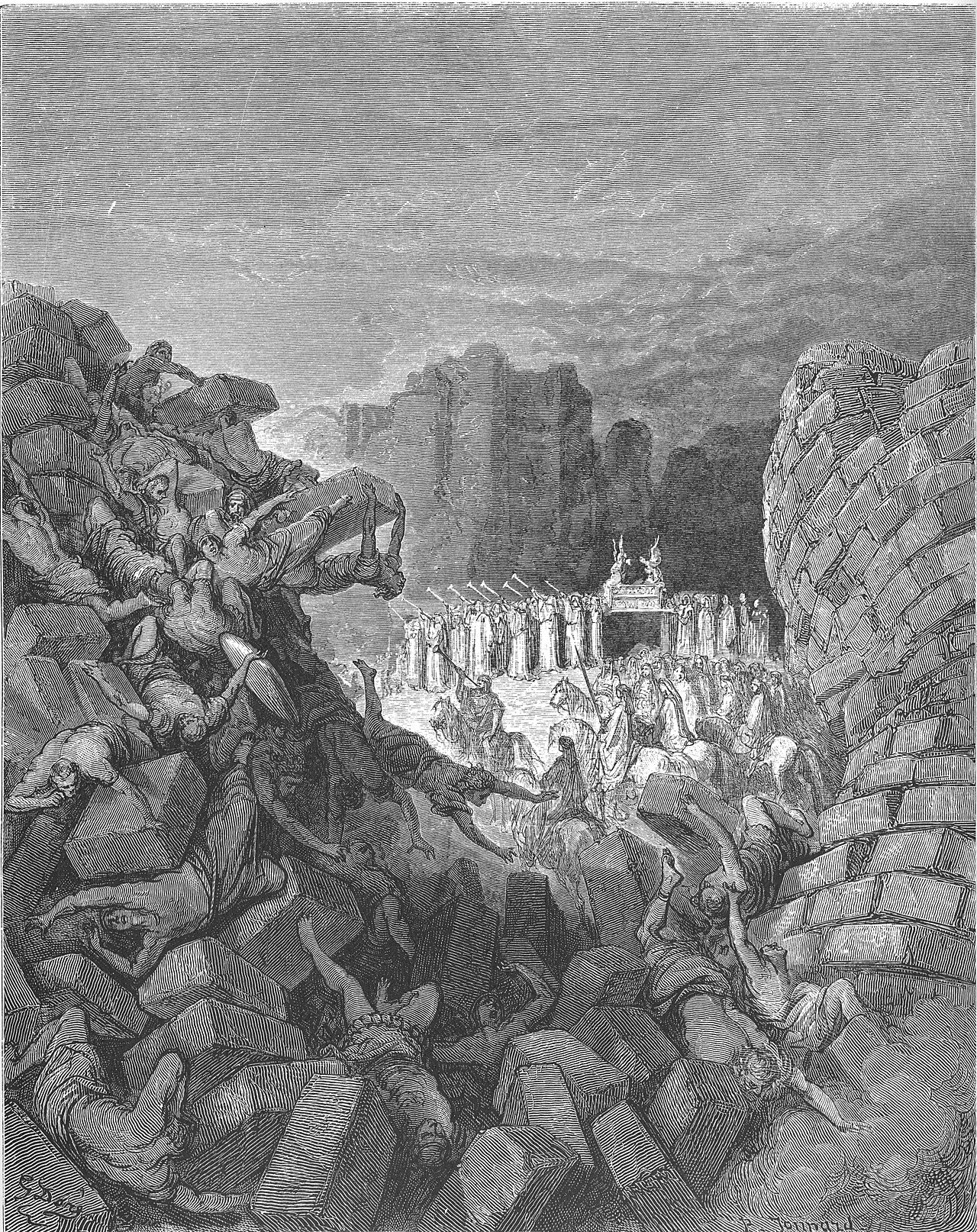
This page draws on Charles Spurgeon, The Metropolitan Tabernacle Pulpit, Sermon No. 795: “Joshua's Vision” (lightly modernized text, CCEL edition); Jamieson, Fausset & Brown, Commentary Critical and Explanatory on the Whole Bible; John Gill, Exposition of the Old Testament; John Gill, Exposition of the Old Testament (1748-1763); John Wesley, Explanatory Notes upon the Old Testament; Keil and Delitzsch, Biblical Commentary on the Old Testament: Joshua, Judges, Ruth; Matthew Henry, Commentary on the Whole Bible and Origen of Alexandria, HOMILIES ON JOSHUA 7.4.