
Genesis 6:7
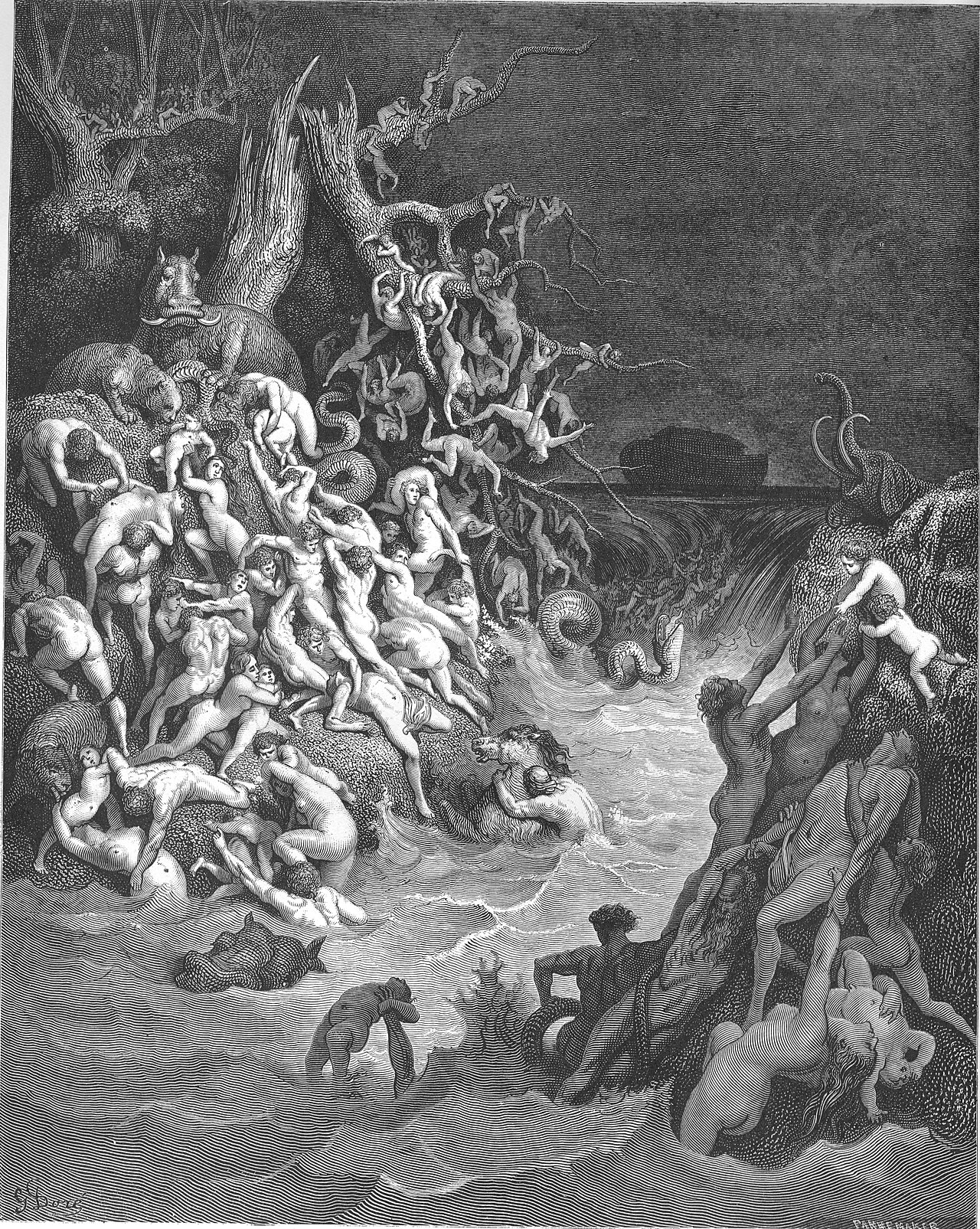
in Genesis 6So the LORD said, “I will blot out man, whom I have created, from the face of the earth—every man and beast and crawling creature and bird of the air—for I am grieved that I have made them.”
BSB
The same verse in ASV and KJV ▾
ASV
And Jehovah said, I will destroy man whom I have created from the face of the ground; both man, and beast, and creeping things, and birds of the heavens; for it repenteth me that I have made them.
KJV
And the Lord said, I will destroy man whom I have created from the face of the earth; both man, and beast, and the creeping thing, and the fowls of the air; for it repenteth me that I have made them.
⋯
This verse in Genesis 6
Commentary
13 notes on this verseA commentator
IrenaeusThe Demonstration of the Apostolic Preaching, Sections 18-19 · Written before 202.
And for a very long while wickedness extended and spread, and reached and laid hold upon the whole race of mankind, until a very small seed of righteousness remained among them: and illicit unions took place upon the earth, since angels were united with the daughters of the race of mankind; and they bore to them sons who for their exceeding greatness were called giants.
This site's exposition
the wickedness of man was great upon the earth
on Genesis 6:5-7
The verdict covers every inclination of his heart, altogether evil all the time. The verb rendered regretted does not mean God changed His mind about right and wrong, and the older writers read it as Scripture giving God's grief in words a man can feel. He was grieved in His heart. Jesus points back to these days at Matthew 24:38, where men ate and drank until the day Noah entered the ark.
This site's exposition
I will blot out man
The list runs backward through creation, from man on the sixth day to the birds of the fifth. Ambrose asked what harm the creatures without reason had done, and answered that they were made for man's use and fell with him. Created is the verb of 1:27.
The record, by era
The Church Fathers5 voices
'I will wipe from the face of the Earth,' He said, 'man, beasts, crawling creatures, and birds of the sky' (Gen. VI, 7). What harm had the irrational creatures done? But because these things had been done for the sake of humanity, once humanity was destroyed, the logical consequence was that these things should also be destroyed, since there was no one to make use of them. However, on a deeper level, this is revealed as the mind of man, which is capable of reason; for man is defined as a living, mortal, rational animal.
And then Michael, Uriel, Raphael, and Gabriel looked down from heaven and saw much blood being shed upon the earth, and all lawlessness being wrought upon the earth.
A commentator
Philo of Alexandria-20–50
QUESTIONS AND ANSWERS ON GENESIS, I · Written before 50.
proposed
(94) Why God, after having threatened to destroy mankind, says that he will also destroy all the beasts likewise; using the expression, "from man to beast, and from creeping things to flying creatures;" for how could irrational animals have committed sin? (#Ge 6:7). This is …
Let us consider how both the solicitude and severity of the Lord are shown equally in all these words. First, he said, "And God saw that the wickedness of man was great." Second, he said, "He was touched inwardly with sorrow of heart."
When God announces the death of all animals on the earth and in the air, the intention is to declare the magnitude of the coming disaster. There is no question here of punishing with death irrational animals as though they were guilty of sin.
5 more voices on this verse
The Church Fathers1 voice
Since the Son of God is always one and the same, He gives to those who believe on Him a well of water [springing up] to eternal life, but He causes the unfruitful fig-tree immediately to dry up; and in the days of Noah He justly brought on the deluge for the purpose of extinguishing that most infamous race of men then existent, who could not bring forth fruit to God, since the angels that sinned had commingled with them, and [acted as He did] in order that He might put a check upon the sins of these men, but [that at the same time] He might preserve the archetype, the formation of Adam. And it was He who rained fire and brimstone from heaven, in the days of Lot, upon Sodom and Gomorrah, "an example of the righteous judgment of God," that all may know, "that every tree that bringeth not forth good fruit shall be cut down, and cast into the fire."
The Medieval Church1 voice
And touched by inner sorrow of the heart, He said, "I will blot out man whom I have created from the face of the earth, from man to animals, from creeping things to the birds of the sky; for I regret that I have made …
The Puritans and the Awakening3 voices
When God repented that he had made man, he resolved to destroy man. Thus those that truly repent of sin will resolve, in the strength of God's grace, to mortify sin and to destroy it, and so to undo what they have done amiss. We do but mock God in saying that we are sorry for our sin, and that it grieves us to the heart, if we continue to indulge it.
And the Lord said,....
When God repented that he had made man, he resolved to destroy man. Thus those that truly repent of sin will resolve, in the strength of God's grace, to mortify sin and to destroy it, and so to undo what they have done amiss. We do but mock God in saying that we are sorry for our sin, and that it grieves us to the heart, if we continue to indulge it.
The words behind it
22 Hebrew wordsEvery Hebrew word of this verse in the order it stands, with what it means and the door to its own study. The last column counts the times a word stands in the whole Bible: the rarer the word, the more the places it appears belong together.
| Hebrew | Sound | Meaning | Word study | In the Bible |
|---|---|---|---|---|
| וַיֹּ֣אמֶר | vaiyomer | and he said | H559 → | 5305 times |
| יְהוָ֗ה | yahweh | Yahweh | H3068 → | 6520 times |
| אֶמְחֶ֨ה | ʾemcheh | I will wipe | H4229 → | 36 times |
| אֶת־ | ʾet- | <obj.> | H853 → | 10935 times |
| הָאָדָ֤ם | haadam | <the> humankind | H120 → | 551 times |
| אֲשֶׁר־ | ʾasher- | which | H834 → | 5497 times |
| בָּרָ֙אתִי֙ | barati | I created | H1254 → | 55 times |
| מֵעַל֙ | meal | from on | H5921 → | 5755 times |
| פְּנֵ֣י | penei | [the] surface of | H6440 → | 2123 times |
| הָֽאֲדָמָ֔ה | haadamah | the ground | H127 → | 225 times |
| מֵֽאָדָם֙ | meadam | from humankind | H120 → | 551 times |
| עַד־ | ʾad- | unto | H5704 → | 1261 times |
| בְּהֵמָ֔ה | behemah | animal[s] | H929 → | 190 times |
| עַד־ | ʾad- | unto | H5704 → | 1261 times |
| רֶ֖מֶשׂ | remes | creeping thing[s] | H7431 → | 17 times |
| וְעַד־ | vead- | and unto | H5704 → | 1261 times |
| ע֣וֹף | of | [the] bird[s] of | H5775 → | 71 times |
| הַשָּׁמָ֑יִם | hashamayim | the heavens | H8064 → | 421 times |
| כִּ֥י | ki | for | H3588 → | 4482 times |
| נִחַ֖מְתִּי | nichamti | I regret | H5162 → | 108 times |
| כִּ֥י | ki | that | H3588 → | 4482 times |
| עֲשִׂיתִֽם׃ | ʾasitim | I have made them | H6213 → | 2628 times |
וַיֹּ֣אמֶרand he said
vaiyomerH559 →5305 times
יְהוָ֗הYahweh
yahwehH3068 →6520 times
אֶמְחֶ֨הI will wipe
ʾemchehH4229 →36 times
אֶת־<obj.>
ʾet-H853 →10935 times
הָאָדָ֤ם<the> humankind
haadamH120 →551 times
אֲשֶׁר־which
ʾasher-H834 →5497 times
בָּרָ֙אתִי֙I created
baratiH1254 →55 times
מֵעַל֙from on
mealH5921 →5755 times
פְּנֵ֣י[the] surface of
peneiH6440 →2123 times
הָֽאֲדָמָ֔הthe ground
haadamahH127 →225 times
מֵֽאָדָם֙from humankind
meadamH120 →551 times
עַד־unto
ʾad-H5704 →1261 times
בְּהֵמָ֔הanimal[s]
behemahH929 →190 times
עַד־unto
ʾad-H5704 →1261 times
רֶ֖מֶשׂcreeping thing[s]
remesH7431 →17 times
וְעַד־and unto
vead-H5704 →1261 times
ע֣וֹף[the] bird[s] of
ofH5775 →71 times
הַשָּׁמָ֑יִםthe heavens
hashamayimH8064 →421 times
כִּ֥יfor
kiH3588 →4482 times
נִחַ֖מְתִּיI regret
nichamtiH5162 →108 times
כִּ֥יthat
kiH3588 →4482 times
עֲשִׂיתִֽם׃I have made them
ʾasitimH6213 →2628 times
A shaded row is a word that stands 400 times or fewer in the Bible.
The walk
8 stopsEach card is a verse this one points to, and under it the verses that one points to in turn. Where several paths arrive at the same place, that place is listed first: the text keeps returning to it.
Through
Proverbs 10:27The fear of the LORD prolongs life, but the years of the wicked will be cut short.
it leads to
- Proverbs 9:11
For through wisdom your days will be multiplied, and years will be added to your life.
- Proverbs 3:2
for they will add length to your days, years and peace to your life.
- Psalms 91:16
With long life I will satisfy him and show him My salvation.”
- Job 15:32–33
It will be paid in full before his time, and his branch will not flourish.
- Proverbs 9:11
Through
Psalms 37:20But the wicked and enemies of the LORD will perish like the glory of the fields. They will vanish; like smoke they will fade away.
it leads to
- Psalms 68:2
As smoke is blown away, You will drive them out; as wax melts before the fire, the wicked will perish in the presence of God.
- Psalms 102:3
For my days vanish like smoke, and my bones burn like glowing embers.
- Luke 13:3
No, I tell you. But unless you repent, you too will all perish.
- Judges 5:31
So may all Your enemies perish, O LORD! But may those who love You shine like the sun at its brightest.” And the land had rest for forty years.
- Psalms 68:2
Where this verse is studied
On this page
Studies11
On this verse
About Genesis
This page draws on 11 works. Open the list of works
This page draws on Ambrose of Milan, On Noah and the Ark, 4.10; Augustine of Hippo, City of God 15.25; Bede, Commentary on Genesis (Hexaemeron); Book of Enoch, 1 Enoch, Chapters 9-11; Irenaeus, The Demonstration of the Apostolic Preaching, Sections 18-19; Irenaeus, Against Heresies 4.36.4; John Calvin, Commentary on Genesis; John Gill, Exposition of the Old Testament (1748-1763); Matthew Henry, Commentary on the Whole Bible; Philo of Alexandria, QUESTIONS AND ANSWERS ON GENESIS, I and Salvian the Presbyter, GOVERNANCE OF GOD 1.7.