
Genesis 6:11
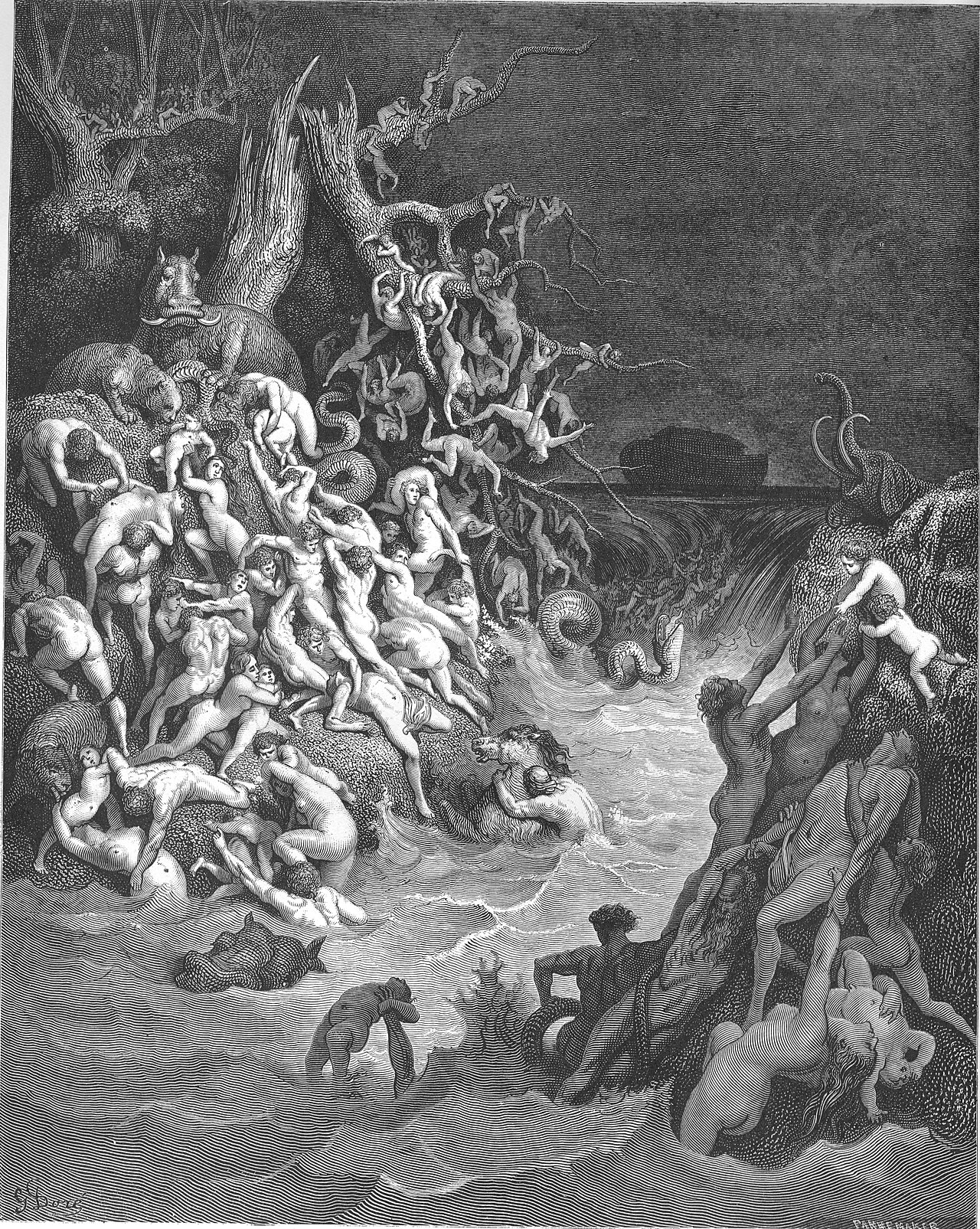
in Genesis 6Now the earth was corrupt in the sight of God, and full of violence.
BSB
The same verse in ASV and KJV ▾
ASV
And the earth was corrupt before God, and the earth was filled with violence.
KJV
The earth also was corrupt before God, and the earth was filled with violence.
⋯
This verse in Genesis 6
Commentary
6 notes on this verseThis site's exposition
the earth was corrupt in the sight of God
on Genesis 6:11-12
The earth is called corrupt three times in these two verses, and full of violence. Corrupt and destroy in verse 13 stand on one root, so the earth had ruined itself before God said He would ruin it. The verdict has gone from very good to corrupt.
The record, by era
The Church Fathers1 voice
Somebody may say to me, "Was Adam, created by God as the first man in the original state of the world, condemned for lack of faith or for sin?" It was not incredulity but disobedience that was the cause for his condemnation and the reason why all his posterity are punished. Cain too was condemned, not for lack of faith but because he killed his brother. Why need I seek further proof when I read that this whole world was destroyed not for incredulity but for wickedness.
The Puritans and the Awakening2 voices
) that the earth was, (1.) Corrupt before God, that is, in the matters of God's worship; either they had other gods before him, or they worshipped him by images, or they were corrupt and wicked in despite and contempt of God, daring him and defying him to his face. (2.) The earth was also filled with violence and injustice towards men.
quarantine:debris (2026-07-29) — leading-punctuation+unbalanced-parens
The earth also was corrupt before God,....
The Nineteenth Century2 voices
A commentator
Jamieson, Fausset & Brown1802–1910
Commentary Critical and Explanatory on the Whole Bible (1871)
proposed
the earth was filled with violence--In the absence of any well-regulated government it is easy to imagine what evils would arise. Men did what was right in their own eyes, and, having no fear of God, destruction and misery were in their ways.
quarantine:debris (2026-07-29) — starts-lowercase
The earth also was corrupt - See the note on Gen 6:5.
How the passage was read
What the Jewish commentators add
On the verses either side of this one
It appears to me that Japheth was the oldest, as it is said, the brother of Japheth the elder, 20 Genesis:21. and so in counting their generations, Scripture mentions the children of Japheth first. 21 Ibid.,:2.
This section is reception history: how the passage was read and kept in the Jewish tradition. Where a reading parts from an essential of the Christian faith, the section says so at that point.
Texts and citation data: Sefaria; each excerpt follows its version’s licence. 5 further sources are cited on this chapter that carry no English text this site may quote or only restate the verse.
The words behind it
7 Hebrew wordsEvery Hebrew word of this verse in the order it stands, with what it means and the door to its own study. The last column counts the times a word stands in the whole Bible: the rarer the word, the more the places it appears belong together.
| Hebrew | Sound | Meaning | Word study | In the Bible |
|---|---|---|---|---|
| וַתִּשָּׁחֵ֥ת | vatishachet | and <it> was corrupt | H7843 → | 146 times |
| הָאָ֖רֶץ | haaretz | the earth | H776 → | 2504 times |
| לִפְנֵ֣י | lifnei | <to> before | H6440 → | 2123 times |
| הָֽאֱלֹהִ֑ים | haelohim | <the> God | H430 → | 2601 times |
| וַתִּמָּלֵ֥א | vatimale' | and <it> was filled | H4390 → | 249 times |
| הָאָ֖רֶץ | haaretz | the earth | H776 → | 2504 times |
| חָמָֽס׃ | chamas | violence | H2555 → | 60 times |
וַתִּשָּׁחֵ֥תand <it> was corrupt
vatishachetH7843 →146 times
הָאָ֖רֶץthe earth
haaretzH776 →2504 times
לִפְנֵ֣י<to> before
lifneiH6440 →2123 times
הָֽאֱלֹהִ֑ים<the> God
haelohimH430 →2601 times
וַתִּמָּלֵ֥אand <it> was filled
vatimale'H4390 →249 times
הָאָ֖רֶץthe earth
haaretzH776 →2504 times
חָמָֽס׃violence
chamasH2555 →60 times
A shaded row is a word that stands 400 times or fewer in the Bible.
The walk
8 stopsEach card is a verse this one points to, and under it the verses that one points to in turn. Where several paths arrive at the same place, that place is listed first: the text keeps returning to it.
Through
Romans 2:13For it is not the hearers of the law who are righteous before God, but it is the doers of the law who will be declared righteous.
it leads to
- James 1:22–25
Be doers of the word, and not hearers only. Otherwise, you are deceiving yourselves.
- 1 John 3:7
Little children, let no one deceive you: The one who practices righteousness is righteous, just as Christ is righteous.
- James 2:21–25
Was not our father Abraham justified by what he did when he offered his son Isaac on the altar?
- James 1:22–25
Through
Romans 3:19Now we know that whatever the law says, it says to those who are under the law, so that every mouth may be silenced and the whole world held accountable to God.
it leads to
- Galatians 3:10
All who rely on works of the law are under a curse. For it is written: “Cursed is everyone who does not continue to do everything written in the Book of the Law.”
- Galatians 3:22–23
But the Scripture pronounces all things confined by sin, so that by faith in Jesus Christ the promise might be given to those who believe.
- Romans 2:12–18
All who sin apart from the law will also perish apart from the law, and all who sin under the law will be judged by the law.
- Romans 3:9
What then? Are we any better? Not at all. For we have already made the charge that Jews and Greeks alike are all under sin.
- Galatians 5:18
But if you are led by the Spirit, you are not under the law.
- Galatians 3:10
Where this verse is studied
On this page
Studies11
About Genesis
This page draws on Adam Clarke, Commentary on the Bible; Augustine of Hippo, CHRISTIAN LIFE 13; Jamieson, Fausset & Brown, Commentary Critical and Explanatory on the Whole Bible; John Calvin, Commentary on Genesis; John Gill, Exposition of the Old Testament; John Gill, Exposition of the Old Testament (1748-1763) and Matthew Henry, Commentary on the Whole Bible.