
Genesis 45:24
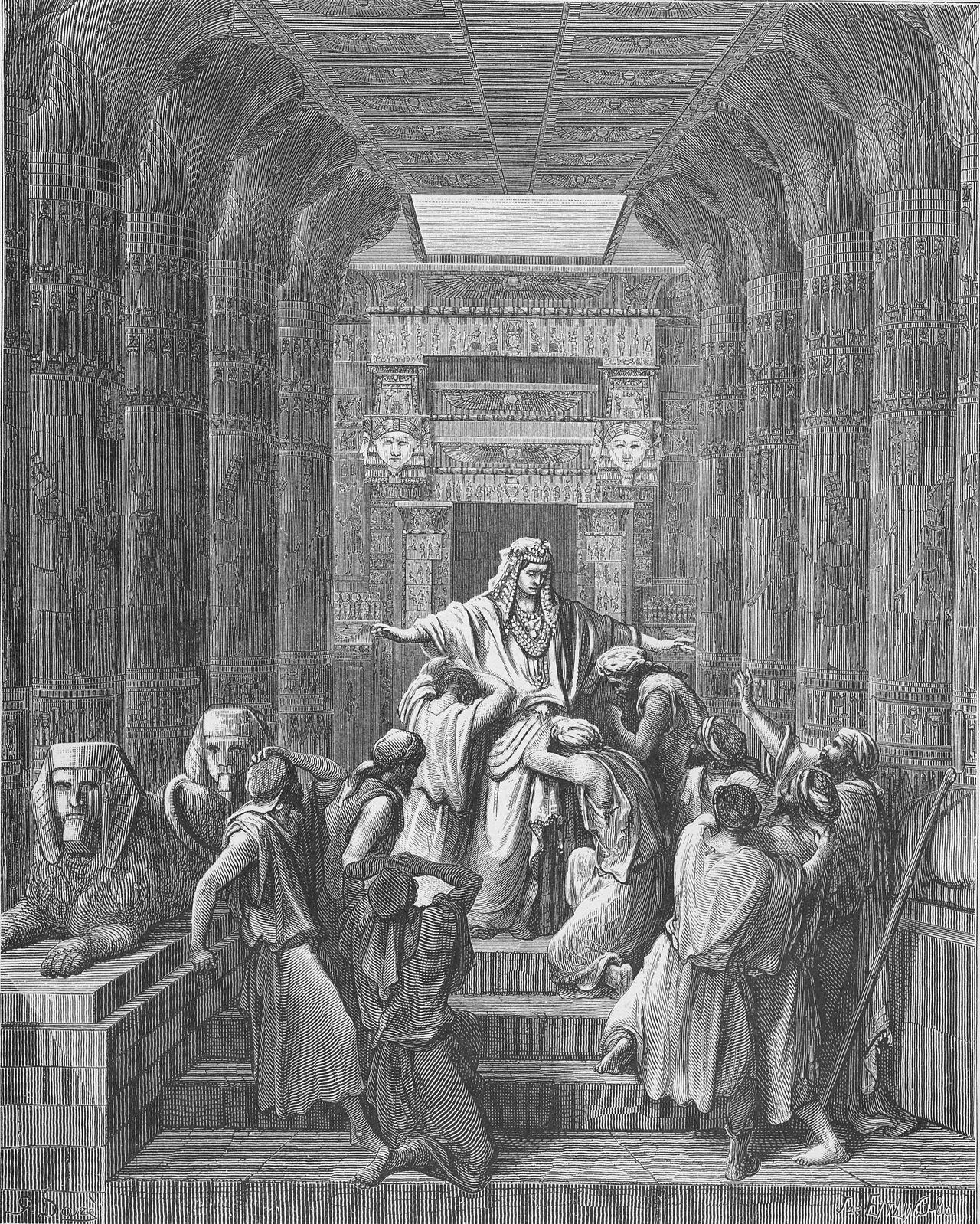
in Genesis 45Then Joseph sent his brothers on their way, and as they were leaving, he said to them, “Do not quarrel on the way!”
BSB
The same verse in ASV and KJV ▾
ASV
So he sent his brethren away, and they departed: and he said unto them, See that ye fall not out by the way.
KJV
So he sent his brethren away, and they departed: and he said unto them, See that ye fall not out by the way.
⋯
This verse in Genesis 45
Commentary
8 notes on this verseNow "he sent away his brothers, and they departed. And Joseph said to them, 'Be not angry on the way.' " How well he teaches us to guard against anger, for that can separate even brothers who love one another.… Is this not what our Lord Jesus said when he was about to depart from this body, when he was sending away his disciples, that they should not be angry on the way? For he says, "Peace I leave with you, my peace I give to you."
This site's exposition
Do not quarrel on the way
Joseph's last word, as the brothers are leaving, is do not quarrel on the way. Adam Clarke reads the warning as guarding two things at once, the blame they would lay on each other for selling him, and the envy of what Benjamin was given. The fear outlived the meeting in Egypt. In chapter 50, with Jacob buried, the brothers still expect Joseph to pay them back.
The record, by era
The Church Fathers2 voices
Joseph commanded them not to quarrel on the way. The quarrel which he forbade them was that one say to another, "It was you who counseled us to throw him into the pit," while another would contend with his brother, saying, "It was you who …
Hence to allay their ill feeling and hostility to one another, Joseph said, "Don't squabble on the way," but rather remember that I hold no grudge against you for what was done to me, and be kindly disposed to one another. Who could adequately admire the virtue of this good man who fulfilled in generous measure the moral values of the New Testament? What Christ recommends to the apostles in these words, "Love your enemies; pray for those who abuse you," this man even surpassed. I mean, not only did he give evidence of such wonderful love for those who did away with him as far as they could, but he did everything to convince them that they had not sinned against him. O what extraordinary good sense! O what marvelous degree of sound values and generosity of love for God! "Surely it was not you who did this against me," he is saying, you see. "It was God's care for me that permitted this to happen so as to guarantee the realization of my dreams and so that I might prove an adequate occasion of survival for you."
The Puritans and the Awakening3 voices
This charge our Lord Jesus has given to us, that we love one another, that we live in peace, that whatever occurs, or whatever former occurrences are remembered, we fall not out. We are brethren, we have all one father. We are his brethren; and we shame, our relation to him, who is our peace, if we fall out.
So he sent his brethren away, and they departed,....
Joseph had observed them to contend about it, ch. xlii. To one they would say, "It was you that first upbraided him with his dreams;" to another, "It was you that said, Let us kill him;" to another, "It was you that stripped him of his fine coat;" to another, "It was you that threw him into the pit," &c.
1 more voice on this verse
The Nineteenth Century1 voice
See that ye fall not out by the way - This prudent caution was given by Joseph, to prevent his brethren from accusing each other for having sold him; and to prevent them from envying Benjamin, for the superior favor shown him by his brother. It is strange, but so it is, that children of the same parents are apt to envy each other, fall out, and contend; and therefore the exhortation in this verse must be always seasonable in a large family. But a rational, religious education will, under God, prevent every thing of this sort.
The words behind it
9 Hebrew wordsEvery Hebrew word of this verse in the order it stands, with what it means and the door to its own study. The last column counts the times a word stands in the whole Bible: the rarer the word, the more the places it appears belong together.
| Hebrew | Sound | Meaning | Word study | In the Bible |
|---|---|---|---|---|
| וַיְשַׁלַּ֥ח | vayshalach | and he sent off | H7971 → | 845 times |
| אֶת־ | ʾet- | <obj.> | H853 → | 10935 times |
| אֶחָ֖יו | ʾechav | brothers his | H251 → | 630 times |
| וַיֵּלֵ֑כוּ | vaiyelekhu | and they went | H1980 → | 1546 times |
| וַיֹּ֣אמֶר | vaiyomer | and he said | H559 → | 5305 times |
| אֲלֵהֶ֔ם | ʾalehem | to them | H413 → | 5510 times |
| אַֽל־ | ʾal- | may not | H408 → | 724 times |
| תִּרְגְּז֖וּ | tirgezu | you stir up | H7264 → | |
| בַּדָּֽרֶךְ׃ | badarekh | on the way | H1870 → | 707 times |
וַיְשַׁלַּ֥חand he sent off
vayshalachH7971 →845 times
אֶת־<obj.>
ʾet-H853 →10935 times
אֶחָ֖יוbrothers his
ʾechavH251 →630 times
וַיֵּלֵ֑כוּand they went
vaiyelekhuH1980 →1546 times
וַיֹּ֣אמֶרand he said
vaiyomerH559 →5305 times
אֲלֵהֶ֔םto them
ʾalehemH413 →5510 times
אַֽל־may not
ʾal-H408 →724 times
תִּרְגְּז֖וּyou stir up
tirgezuH7264 →
בַּדָּֽרֶךְ׃on the way
badarekhH1870 →707 times
A shaded row is a word that stands 400 times or fewer in the Bible.
The walk
5 stopsEach card is a verse this one points to, and under it the verses that one points to in turn. Where several paths arrive at the same place, that place is listed first: the text keeps returning to it.
Through
1 Thessalonians 5:13In love, hold them in highest regard because of their work. Live in peace with one another.
it leads to
- Mark 9:50
Salt is good, but if the salt loses its saltiness, with what will you season it? Have salt among yourselves, and be at peace with one another.”
- Hebrews 12:14
Pursue peace with everyone, as well as holiness, without which no one will see the Lord.
- John 13:34–35
A new commandment I give you: Love one another. As I have loved you, so you also must love one another.
- 1 Corinthians 9:7–11
Who serves as a soldier at his own expense? Who plants a vineyard and does not eat of its fruit? Who tends a flock and does not drink of its milk?
- James 3:18
Peacemakers who sow in peace reap the fruit of righteousness.
- Mark 9:50
About Genesis
Who and where
1 name in this verse with a page on the site.
This page draws on Adam Clarke, Commentary on the Bible; Ambrose of Milan, ON JOSEPH 13.78; Ambrose of Milan, On Joseph; Ephrem the Syrian, COMMENTARY ON GENESIS 40:2; John Chrysostom, HOMILIES ON GENESIS 64.32; John Gill, Exposition of the Old Testament (1748-1763); John Wesley, Explanatory Notes upon the Old Testament and Matthew Henry, Commentary on the Whole Bible.