
Genesis 4:5
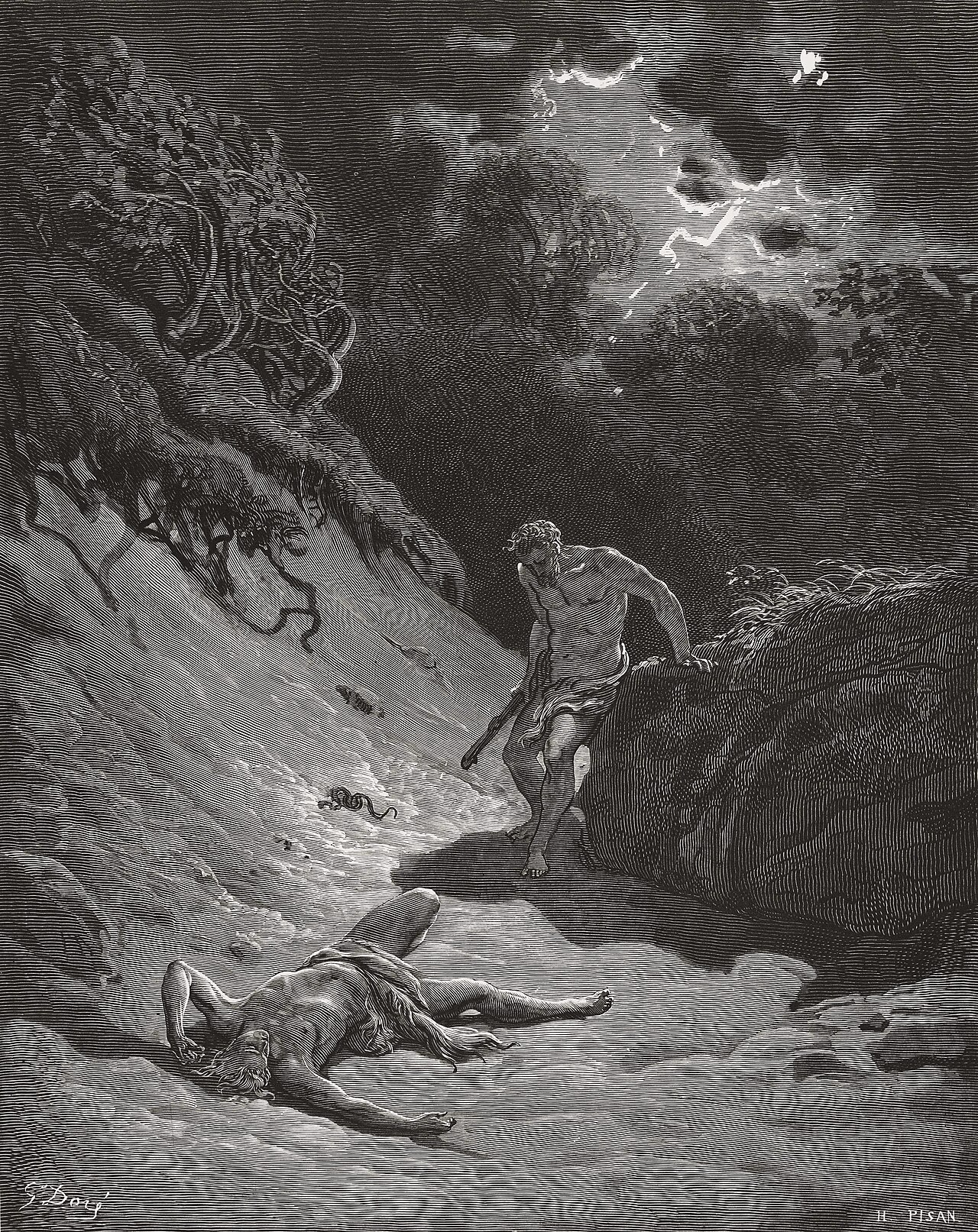
in Genesis 4but He had no regard for Cain and his offering. So Cain became very angry, and his countenance fell.
BSB
The same verse in ASV and KJV ▾
ASV
but unto Cain and to his offering he had not respect. And Cain was very wroth, and his countenance fell.
KJV
But unto Cain and to his offering he had not respect. And Cain was very wroth, and his countenance fell.
⋯
This verse in Genesis 4
Commentary
9 notes on this verseIn the case of Cain his wickedness did not begin when he killed his brother. For even before that God, who knows the heart, had no regard for Cain and his sacrifice. But his baseness was made evident when he killed Abel.
This site's exposition
some of the fruit of the soil
on Genesis 4:3-5
Both brothers brought what they had, and the LORD looked with favor on one offering. The verse names the man before the gift in both cases, Hebrews 11:4 says Abel offered his by faith, and Abel's came from the firstborn of his flock. The younger is preferred again in Genesis.
The record, by era
The Church Fathers4 voices
Abel was very discerning in his choice of offerings, whereas Cain showed no such discernment. Abel selected and offered the choicest of his firstborn and of his fat ones, while Cain either offered young grains or certain fruits that are found at the same time …
A commentator
Philo of Alexandria-20–50
QUESTIONS AND ANSWERS ON GENESIS, I · Written before 50.
proposed
(61) Why, when he had begun with Cain, he still mentions him here in the second place, when he says: "And God had respect unto Abel and unto his offerings; but unto Cain and unto his sacrifices he paid no attention?" (#Ge 4:5). In the …
A commentator
John ChrysostomCommentary (church-history corpus) · Written in the 5th century.
proposed
Since Abel made his offering with a proper attitude and pure intention, "God took notice," the text saysÐthat is, he accepted, he was satisfied, he approved of them; but it called the offerings gifts, by this means dignifying the attitude of the offerer. "And whereas to Cain and his offerings he paid no heed." Notice the precision of Sacred Scripture: by the phrase "he paid no heed" it shows us the rejection of what was offered, and by calling what was offered from the soil offerings he teaches us something else again. I mean, see how he shows us through the very events and terms that the Lord wants all these things to be done by us so that the kind of intention we have should be made clear through the actions we take, and so that we may be in a position to know that we are subject to a Lord and Creator who brought us from nothing to being. In other words, in naming the sheep gifts and calling the things from the earth offerings, Sacred Scripture teaches us that neither the herding of sheep nor the collection of fruits of the earth is what is looked for by the Lord but simply the disposition of one's attitude. Hence in this case, too, one man proved acceptable with his gift on this score, whereas the other was rejected along with his gift on that account. The verse, "God took notice of Abel and his gifts, whereas to Cain and his offering he paid no heed," let us take in a sense befitting God. I mean, the intention in the words is that he communicated to them the awareness that while he was satisfied with one man's choice, he took umbrage at the other's attitude. Such, however, is the way God does things; let us now see what follows. "This annoyed Cain very much and his face fell." What is the meaning of the words, "This annoyed Cain very much"?
Cain was angry because the offering of his brother had been accepted. Cain became angry on account of the fire that had come down and distinguished between the offerings.
The Medieval Church1 voice
And Cain was very angry, and his countenance fell. How did Cain know that the Lord had looked favorably upon Abel and his offerings, but had turned away his face from himself and his offerings, unless, as some have interpreted, the Lord had set fire …
2 more voices on this verse
The Puritans and the Awakening1 voice
But unto Cain and to his offering he had not respect,....
The Nineteenth Century1 voice
Unto Cain - As being unconscious of his sinfulness, and consequently unhumbled, and to his offering, as not being accompanied, as Abel’s was, with faith and a sacrifice for sin, he had not respect - He could not, consistently with his holiness and justice, approve of the one or receive the other. Of the manner in which God testified his approbation we are not informed; it was probably, as in the case of Elijah, by sending down fire from heaven, and consuming the sacrifice.
The words behind it
11 Hebrew wordsEvery Hebrew word of this verse in the order it stands, with what it means and the door to its own study. The last column counts the times a word stands in the whole Bible: the rarer the word, the more the places it appears belong together.
| Hebrew | Sound | Meaning | Word study | In the Bible |
|---|---|---|---|---|
| וְאֶל־ | veel- | and to | H413 → | 5510 times |
| קַ֥יִן | kayin | Cain | H7014 → | 19 times |
| וְאֶל־ | veel- | and to | H413 → | 5510 times |
| מִנְחָת֖וֹ | minchato | offering his | H4503 → | 211 times |
| לֹ֣א | lo' | not | H3808 → | 5168 times |
| שָׁעָ֑ה | shaah | he looked | H8159 → | |
| וַיִּ֤חַר | vaiyichar | and burned | H2734 → | 91 times |
| לְקַ֙יִן֙ | lekayin | to Cain | H7014 → | 19 times |
| מְאֹ֔ד | meod | exceedingly | H3966 → | 300 times |
| וַֽיִּפְּל֖וּ | vaiyipelu | and they fell | H5307 → | 435 times |
| פָּנָֽיו׃ | panav | face his | H6440 → | 2123 times |
וְאֶל־and to
veel-H413 →5510 times
קַ֥יִןCain
kayinH7014 →19 times
וְאֶל־and to
veel-H413 →5510 times
מִנְחָת֖וֹoffering his
minchatoH4503 →211 times
לֹ֣אnot
lo'H3808 →5168 times
שָׁעָ֑הhe looked
shaahH8159 →
וַיִּ֤חַרand burned
vaiyicharH2734 →91 times
לְקַ֙יִן֙to Cain
lekayinH7014 →19 times
מְאֹ֔דexceedingly
meodH3966 →300 times
וַֽיִּפְּל֖וּand they fell
vaiyipeluH5307 →435 times
פָּנָֽיו׃face his
panavH6440 →2123 times
A shaded row is a word that stands 400 times or fewer in the Bible.
The walk
8 stopsEach card is a verse this one points to, and under it the verses that one points to in turn. Where several paths arrive at the same place, that place is listed first: the text keeps returning to it.
Through
Hebrews 11:4By faith Abel offered God a better sacrifice than Cain did. By faith he was commended as righteous when God gave approval to his gifts. And by faith he still speaks, even though he…
it leads to
- Genesis 4:3–5
So in the course of time, Cain brought some of the fruit of the soil as an offering to the LORD,
- Hebrews 12:24
to Jesus the mediator of a new covenant, and to the sprinkled blood that speaks a better word than the blood of Abel.
- 1 John 3:11–12
This is the message you have heard from the beginning: We should love one another.
- Genesis 4:10
“What have you done?” replied the LORD. “The voice of your brother’s blood cries out to Me from the ground.
- Proverbs 15:8
The sacrifice of the wicked is detestable to the LORD, but the prayer of the upright is His delight.
- Genesis 4:3–5
Through
Acts 13:45But when the Jews saw the crowds, they were filled with jealousy, and they blasphemously contradicted what Paul was saying.
it leads to
- Jude 1:10
These men, however, slander what they do not understand, and like irrational animals, they will be destroyed by the things they do instinctively.
- Acts 18:6
But when they opposed and insulted him, he shook out his garments and told them, “Your blood be on your own heads! I am innocent of it. From now on I will go to…
- Jude 1:10
Through
Job 5:2For resentment kills a fool, and envy slays the simple.
it leads to
- Ecclesiastes 7:9
Do not be quickly provoked in your spirit, for anger settles in the lap of a fool.
- Ecclesiastes 7:9
Where this verse is studied
About Genesis
Who and where
1 name in this verse with a page on the site.
This page draws on 10 works. Open the list of works
This page draws on Adam Clarke, Commentary on the Bible; Bede, Commentary on Genesis (Hexaemeron); Ephrem the Syrian, COMMENTARY ON GENESIS 3.2.1; Ephrem the Syrian, COMMENTARY ON GENESIS 3.3.3; John Calvin, Commentary on Genesis; John Chrysostom, Commentary (church-history corpus); John Gill, Exposition of the Old Testament (1748-1763); Matthew Henry, Commentary on the Whole Bible; Origen of Alexandria, ON PRAYER 29.18 and Philo of Alexandria, QUESTIONS AND ANSWERS ON GENESIS, I.