
Genesis 12:9
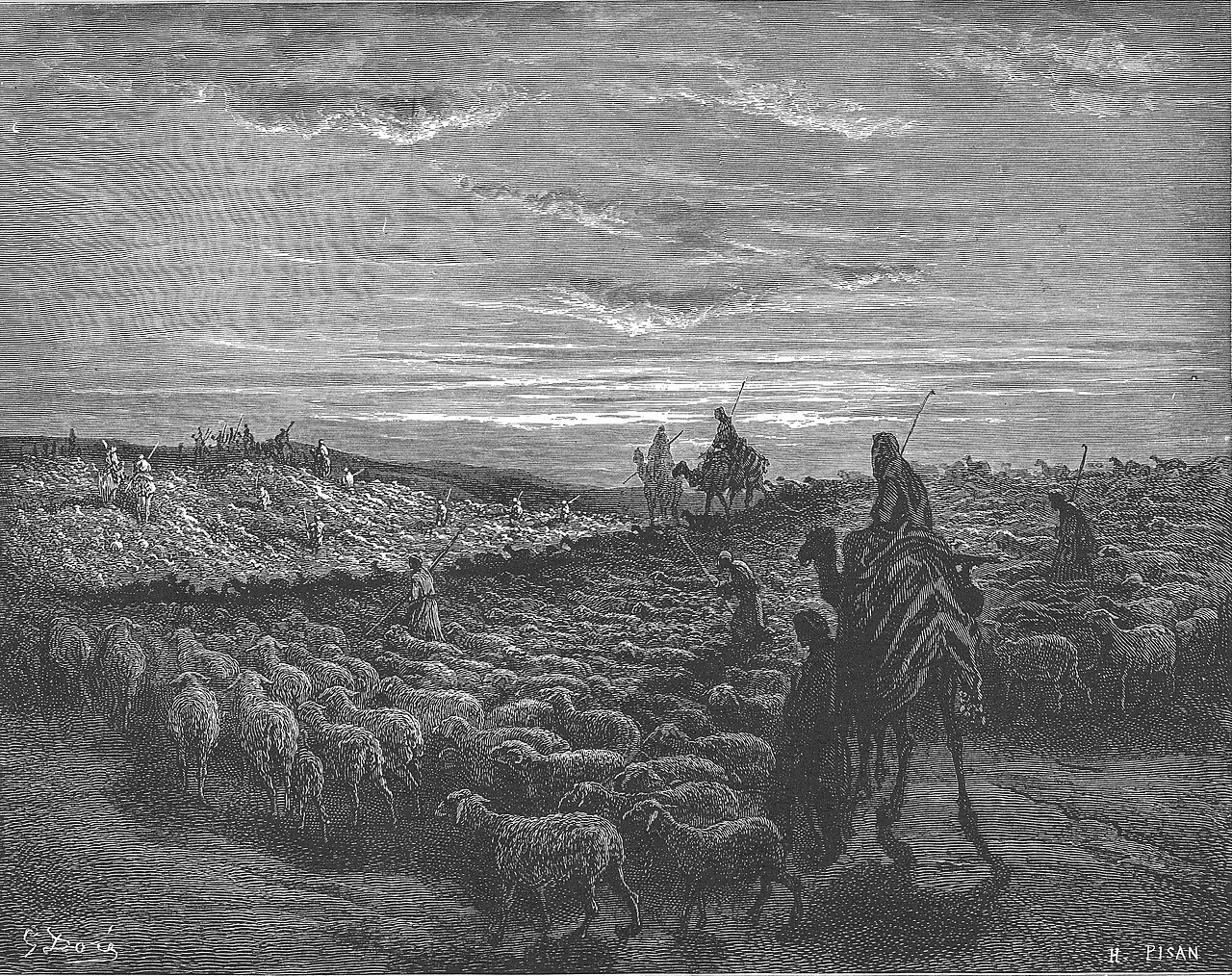
in Genesis 12And Abram journeyed on toward the Negev.
BSB
The same verse in ASV and KJV ▾
ASV
And Abram journeyed, going on still toward the South.
KJV
And Abram journeyed, going on still toward the south.
⋯
This verse in Genesis 12
Commentary
8 notes on this verseAnd Abram journeyed,.... He did not stay long in the mountain between Bethel and Hai, but moved from thence, and kept on journeying in the land of Canaan: going on still toward the south; the southern part of the land of Canaan, which lay nearest Egypt, into which he is said to go next, the occasion of which follows.
This site's exposition
called on the name of the LORD
on Genesis 12:8-9
East of Bethel he pitches his tent and builds a second altar, Bethel lying to the west of him and Ai to the east. The tent moves when he moves, and the altar stays where it was built. There he calls on the name of the LORD.
This site's exposition
Abram journeyed on toward the Negev
The Negev is the southern part of Canaan, the part lying nearest Egypt, as John Gill notes. Matthew Henry takes the frequent moves as the common lot of good men, unsettled in this world. Egypt lies next on that road.
The record, by era
The Church Fathers1 voice
(Verse 9) And Abram, setting out, went into the desert; and famine came upon the land. And in the present and in many other places, for desert, it is written in Hebrew. Therefore, we should take note of this.
The Medieval Church1 voice
And Abram journeyed, going and still progressing towards the south. The southern region, from where the sun is accustomed to shine more ardently upon the world, mystically demonstrates the fervor of love by which the hearts of the elect, lest they become sluggish in the …
The Puritans and the Awakening3 voices
And Abram journeyed,.... He did not stay long in the mountain between Bethel and Hai, but moved from thence, and kept on journeying in the land of Canaan: going on still toward the south; the southern part of the land of Canaan, which lay nearest Egypt, into which he is said to go next, the occasion of which follows.
Observe here, (1.) Sometimes it is the lot of good men to be unsettled, and obliged often to remove their habitation. Holy David had his wanderings, his flittings, Ps. lvi. (2.) Our removes in this world are often into various conditions.
Observe here, (1.) Sometimes it is the lot of good men to be unsettled, and obliged often to remove their habitation. Holy David had his wanderings, his flittings, Ps. lvi. (2.) Our removes in this world are often into various conditions.
How the passage was read
What the Jewish commentators add
On the verses either side of this one
Now Abraham went down to Egypt on account of the famine to dwell there in order to keep himself alive in the days of the drought, but the Egyptians oppressed him for no reason [and attempted] to take his wife.
This section is reception history: how the passage was read and kept in the Jewish tradition. Where a reading parts from an essential of the Christian faith, the section says so at that point.
Texts and citation data: Sefaria; each excerpt follows its version’s licence. 4 further sources are cited on this chapter that carry no English text this site may quote or only restate the verse.
The words behind it
5 Hebrew wordsEvery Hebrew word of this verse in the order it stands, with what it means and the door to its own study. The last column counts the times a word stands in the whole Bible: the rarer the word, the more the places it appears belong together.
| Hebrew | Sound | Meaning | Word study | In the Bible |
|---|---|---|---|---|
| וַיִּסַּ֣ע | vaiyisa' | and he journeyed | H5265 → | 146 times |
| אַבְרָ֔ם | ʾavram | Abram | H87 → | 61 times |
| הָל֥וֹךְ | halokh | going | H1980 → | 1546 times |
| וְנָס֖וֹעַ | venasoa' | and journeying | H5265 → | 146 times |
| הַנֶּֽגְבָּה׃ פ | hanegbah | the south towards | H5045 → | 112 times |
וַיִּסַּ֣עand he journeyed
vaiyisa'H5265 →146 times
אַבְרָ֔םAbram
ʾavramH87 →61 times
הָל֥וֹךְgoing
halokhH1980 →1546 times
וְנָס֖וֹעַand journeying
venasoa'H5265 →146 times
הַנֶּֽגְבָּה׃ פthe south towards
hanegbahH5045 →112 times
A shaded row is a word that stands 400 times or fewer in the Bible.
The walk
8 stopsEach card is a verse this one points to, and under it the verses that one points to in turn. Where several paths arrive at the same place, that place is listed first: the text keeps returning to it.
Through
Genesis 24:62Now Isaac had just returned from Beer-lahai-roi, for he was living in the Negev.
it leads to
- Genesis 20:1
Now Abraham journeyed from there to the region of the Negev and settled between Kadesh and Shur. While he was staying in Gerar,
Reached by 2 separate paths from here.
- Genesis 16:14
Therefore the well was called Beer-lahai-roi. It is located between Kadesh and Bered.
- Genesis 25:11
After Abraham’s death, God blessed his son Isaac, who lived near Beer-lahai-roi.
- Genesis 20:1
Through
Genesis 13:1So Abram went up out of Egypt into the Negev—he and his wife and all his possessions—and Lot was with him.
it leads to
- Joshua 10:40
So Joshua conquered the whole region—the hill country, the Negev, the foothills, and the slopes, together with all their kings—leaving no survivors. He devoted to destruction everything that breathed, just as the LORD, the…
- Genesis 12:9–20
And Abram journeyed on toward the Negev.
- 2 Samuel 24:7
They went toward the fortress of Tyre and all the cities of the Hivites and Canaanites. Finally, they went on to the Negev of Judah, to Beersheba.
- 1 Samuel 27:10
who would ask him, “What have you raided today?” And David would reply, “The Negev of Judah,” or “The Negev of Jerahmeel,” or “The Negev of the Kenites.”
- Joshua 10:40
Through
Genesis 13:3From the Negev he journeyed from place to place toward Bethel, until he came to the place between Bethel and Ai where his tent had formerly been pitched,
it leads to
- Genesis 12:6
Abram traveled through the land as far as the site of the Oak of Moreh at Shechem. And at that time the Canaanites were in the land.
- Genesis 12:6
Where this verse is studied
On this page
Studies12
On this verse
About Genesis
This page draws on Adam Clarke, Commentary on the Bible; Bede, Commentary on Genesis (Hexaemeron); Jerome, Hebrew Questions on Genesis; John Gill, Exposition of the Old Testament (1748-1763); John Gill, Exposition of the Old Testament and Matthew Henry, Commentary on the Whole Bible.